- Home
- Best Foods for Diabetes and What to Avoid
- What Foods Should People With Diabetes Avoid Or Limit
Foods to avoid diabetes
When patients ask me which foods they must avoid with diabetes, I do not hand them a long list of forbidden foods. I help them identify the choices most likely to raise glucose quickly, add excess calories, or increase heart and kidney risk—and then we find realistic portions and substitutes they can continue using.
There is no single food that everyone with diabetes must completely ban. The most useful choices to avoid or keep occasional are sugar-sweetened drinks, large portions of sweets and refined carbohydrates, heavily processed foods high in sodium, and foods high in saturated or trans fat. Whole fruit, beans, corn, whole grains, rice, pasta, and plain dairy can still fit in suitable portions. If you are trying to prevent type 2 diabetes, your overall eating pattern, activity, sleep, weight management when appropriate, and medical follow-up matter more than avoiding one particular food.
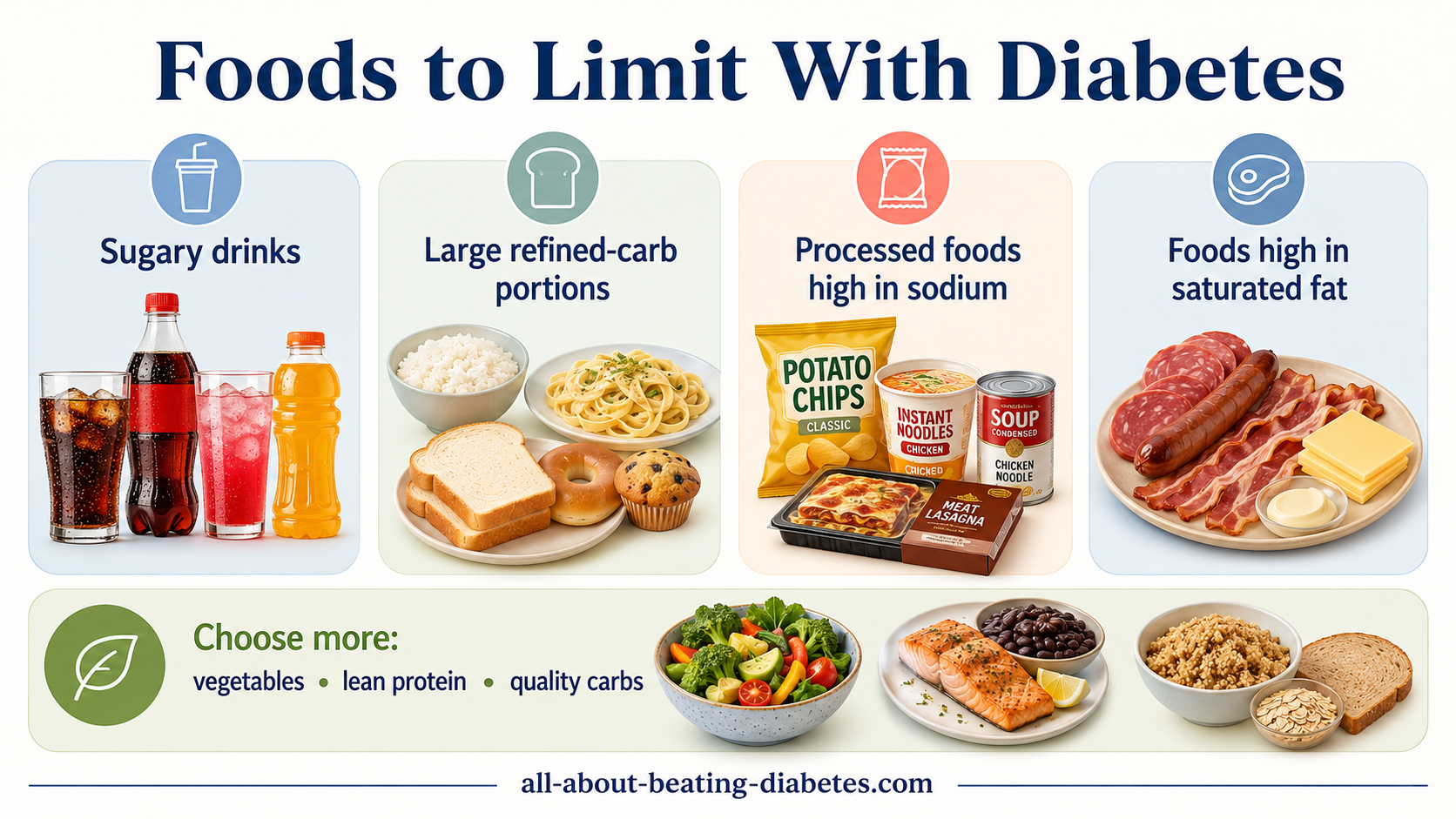

Which Foods Should You Limit Most With Diabetes?
The American Diabetes Association recommends an individualized eating pattern built around non-starchy vegetables, lean or plant-based proteins, quality carbohydrate foods, healthy fats, and fewer foods high in added sugar, refined grains, saturated fat, and sodium. In daily life, these categories deserve the most attention.
1. Sugar-sweetened drinks
Regular soda, sweetened tea or coffee, energy drinks, sports drinks, fruit drinks, and syrup-based beverages can deliver a large carbohydrate amount very quickly and provide little fullness.
2. Large refined-carbohydrate portions
Cakes, pastries, biscuits, candy, sweet cereals, white bread, white rice, and refined pasta are easier to overeat and often contain less fiber. The portion and the complete meal still matter.
3. Highly processed, salty foods
Chips, instant noodles, many ready meals, processed meats, and some fast foods may combine excess sodium, refined starch, saturated fat, and calories. “Packaged” does not automatically mean unhealthy; the label tells you more.
4. Foods high in saturated or trans fat
Frequent large portions of fatty processed meats, butter, cream, shortening, fried fast food, and rich desserts can make heart-health goals harder. Replace some saturated fat with olive oil, nuts, seeds, avocado, or fish when suitable.
Do You Need to Avoid All Carbohydrates?
No. Carbohydrate is found in fruit, milk and yogurt, beans, lentils, grains, starchy vegetables, sweets, and sugary drinks. These foods do not have the same nutritional value, and they do not need to be treated as one group.
I usually ask patients to focus on three questions:
- What is the carbohydrate source? Beans, lentils, vegetables, whole fruit, whole grains, and plain dairy provide more useful nutrients than soda, sweets, and refined snack foods.
- How much is on the plate? Even a nutritious carbohydrate can raise glucose when the portion is larger than your body, medicine, or insulin plan can manage.
- What is eaten with it? A balanced meal with non-starchy vegetables, protein, and a measured carbohydrate portion often produces a different response from eating refined carbohydrate alone.
If you count carbohydrate, use total carbohydrate on the food label—not only “sugars.” Our carbohydrate counter can help you estimate a meal, while the guide to carbohydrates, glycemic index, and glycemic load explains why food quality and portion both matter.
Fruit, Grains, Corn, Rice, Pasta, and Dairy Are Not Automatically Forbidden
A diabetes eating plan should not remove nutritious foods without a medical or personal reason. Here is how I explain several common worries.
| Common worry | More accurate guidance | Practical approach |
|---|---|---|
| “Bananas, mangoes, grapes, strawberries, and dates are forbidden.” | Whole fruit can fit. Fruit contains carbohydrate, but it also provides water, fiber, vitamins, and minerals. | Measure the portion; choose whole fruit more often than juice; count it with the meal or snack. |
| “Rye, corn, rice, bread, and pasta must be removed.” | These are carbohydrate foods, not universal prohibitions. Whole-grain or higher-fiber choices may be more filling, but the portion remains important. | Use a measured serving, add vegetables and protein, and compare your glucose pattern. |
| “Cheese and cottage cheese are too concentrated for diabetes.” | Most cheese contains little carbohydrate, but some types are high in sodium and saturated fat. Cottage cheese can also be salty. | Check the label, choose a suitable portion, and select lower-sodium or lower-saturated-fat options when needed. |
| “All packaged food is junk food.” | Frozen vegetables, canned beans, plain yogurt, canned fish, whole-grain bread, and other packaged foods can be practical choices. | Compare total carbohydrate, fiber, added sugar, saturated fat, sodium, and serving size. |
Fresh food is excellent, but frozen and canned foods can also be nutritious, affordable, and convenient. Look for vegetables without rich sauces, fruit without added syrup, beans with less sodium or rinsed before use, and plain dairy without much added sugar.
What About Sugar, Honey, Stevia, and Artificial Sweeteners?
Table sugar and honey
White sugar, brown sugar, honey, maple syrup, agave, and similar syrups all provide carbohydrate. Honey may sound more natural, but it is still treated as added sugar on nutrition labels. A small amount can sometimes fit, but it should be counted rather than considered a glucose-free food.
Low- and no-calorie sweeteners
Stevia is not the only sweetener that may be used. The U.S. Food and Drug Administration has reviewed several high-intensity sweeteners and established acceptable daily intake levels where applicable. These products can reduce added sugar when they truly replace it, but they are optional and do not make an otherwise nutrient-poor food healthy.
- Read the complete product label; tabletop packets and “sugar-free” foods may contain other carbohydrate ingredients.
- Sugar alcohols such as sorbitol, maltitol, and xylitol can cause gas or diarrhea in some people and are not always carbohydrate-free.
- People with phenylketonuria must avoid or restrict phenylalanine and should follow specific advice about aspartame.
- You do not need to use any sweetener. Water, unsweetened tea, and gradually reducing sweetness are reasonable options.
Simple Food Swaps That Make a Real Difference
| Choose less often | Try more often | Why it may help |
|---|---|---|
| Regular soda, sweet tea, energy drinks | Water, sparkling water, unsweetened tea or coffee | Removes a rapidly absorbed source of added sugar. |
| Fruit drink or a large glass of juice | Measured whole fruit | Whole fruit usually provides more fiber and is easier to eat slowly. |
| Large white-rice or pasta serving | Smaller serving plus vegetables and protein; try a higher-fiber grain if you enjoy it | Reduces the carbohydrate load while keeping the meal satisfying. |
| Sweetened breakfast cereal | Plain oats, higher-fiber cereal, eggs, or plain yogurt with a measured fruit portion | May reduce added sugar and increase protein or fiber. |
| Chips, biscuits, or pastries for a snack | Vegetables with hummus, a small handful of unsalted nuts, plain yogurt, or whole fruit | Adds nutrients and can improve fullness. |
| Processed meat most days | Fish, skinless poultry, eggs, beans, lentils, tofu, or other lean protein | Can reduce saturated fat and sodium, depending on preparation. |
| Creamy or deep-fried meal | Baked, grilled, steamed, roasted, or lightly sautéed meal | Makes the amount and type of added fat easier to control. |
You can use these principles in our diabetes plate method and sample meal plan and easy diabetes-friendly cooking guide.
How to Read a Food Label for Diabetes
The front of a package may say “natural,” “multigrain,” “sugar-free,” or “healthy,” but the Nutrition Facts panel is more useful. Check it in this order:
- Serving size: Compare it with the amount you actually eat. Two servings double the listed nutrients.
- Total carbohydrate: This includes starch, sugars, and fiber and is the main number used for carbohydrate counting.
- Dietary fiber and added sugars: Compare products with the same serving size. More fiber and less added sugar are often helpful.
- Saturated fat and sodium: These matter because diabetes increases cardiovascular and kidney concerns for many people.
- Ingredient list: Ingredients are listed by weight. Look for whole-food ingredients and notice whether added sugars or refined grains appear early.
As a general FDA label guide, 5% Daily Value or less is low and 20% Daily Value or more is high for a nutrient in one serving. Your personal carbohydrate, sodium, potassium, or fat target may be different.
Can Avoiding Certain Foods Prevent Type 2 Diabetes?
No individual food can guarantee prevention. Type 2 diabetes develops through a combination of genetics, age, insulin resistance, body-fat distribution, activity, sleep, medicines, health conditions, and the overall eating pattern. However, lifestyle changes can substantially reduce risk in people with prediabetes or high risk.
In the Diabetes Prevention Program, an intensive lifestyle approach that aimed for modest weight loss and at least 150 minutes of activity per week reduced the incidence of type 2 diabetes by 58% over about three years compared with placebo. This result came from a structured program—not from avoiding one fruit, grain, or ingredient.
Helpful prevention priorities
- Replace sugary drinks with unsweetened choices
- Choose more minimally processed, high-fiber foods
- Use portions that support your weight goals, when weight loss is appropriate
- Build regular physical activity gradually
- Protect sleep and avoid tobacco
What not to rely on
- Detox drinks or cleanses
- A single “diabetes-fighting” food
- Extreme fasting or crash diets
- Herbs or supplements instead of medical care
- Removing all carbohydrate without a safe plan
If you have prediabetes, see our diet guide for insulin resistance and prediabetes. Food changes work best together with appropriate testing, activity, and follow-up.
When Food Advice Must Be Individualized
Insulin or medicines that can cause hypoglycemia
If you use insulin, a sulfonylurea, or a meglitinide, suddenly cutting carbohydrate or skipping meals can cause low glucose. Do not make a major restriction without reviewing medicine timing and your low-glucose plan with your diabetes team.
Pregnancy or gestational diabetes
Pregnancy requires enough energy and nutrients for you and your baby. Do not begin fasting, a very-low-carbohydrate diet, or intentional weight loss unless your obstetric and diabetes team specifically directs it. Meal timing and carbohydrate distribution need to be personalized.
Kidney disease or heart failure
Sodium, potassium, phosphorus, protein, and fluid advice may change with kidney function, laboratory results, dialysis, medicines, or heart failure. Do not automatically use salt substitutes because many contain potassium.
Gastroparesis, celiac disease, or digestive symptoms
High-fiber foods are often helpful, but they may need modification in gastroparesis or another digestive condition. A gluten-free diet is needed for diagnosed celiac disease, not for diabetes alone.
Disordered eating or fear of food
If food rules are causing anxiety, bingeing, purging, insulin omission, or severe restriction, please tell your clinician. Diabetes care should support both physical and mental health.
Alcohol
Alcohol is not a food that everyone with diabetes must completely avoid, but it can cause delayed hypoglycemia—especially with insulin or sulfonylureas—and mixed drinks may contain substantial carbohydrate. Avoid alcohol during pregnancy and when your clinician advises against it because of liver disease, pancreatitis, medicines, hypoglycemia risk, or another health concern. Never drink alcohol to lower blood sugar.
Doctor’s Note
Frequently Asked Questions About Foods to Avoid With Diabetes
What foods should a person with diabetes never eat?
There is no universal “never” list. Sugar-sweetened drinks are best avoided for routine hydration, but even these may be used to treat hypoglycemia. Most other foods are managed through frequency, portion, preparation, and the complete eating pattern.
Should I stop eating all carbohydrates?
No. Many nutritious foods contain carbohydrate, including beans, whole grains, fruit, milk, yogurt, and starchy vegetables. The type and amount should match your glucose goals, medicines, activity, kidney health, pregnancy status, and preferences.
Which fruits should people with diabetes avoid?
Most whole fruits can fit in a measured portion. Bananas, mangoes, grapes, strawberries, and dates are not automatically forbidden. Dried fruit and juice provide carbohydrate in a smaller volume, so portion control is especially important.
Can I eat rice, pasta, bread, potatoes, or corn?
Yes, many people can. These are carbohydrate foods, so measure the serving and count it with the rest of the meal. Choosing higher-fiber versions and adding non-starchy vegetables and protein may help, but your personal glucose response matters.
Is honey better than white sugar for diabetes?
Honey and table sugar both provide carbohydrate and can raise glucose. Honey is not a free food or a diabetes treatment. If you use it, count the amount and include it in your total carbohydrate plan.
Is stevia the only safe sweetener for diabetes?
No. Several low- and no-calorie sweeteners have been reviewed or authorized for use under specified conditions. Stevia is one option, not the only permitted choice. Sweeteners are optional, and the complete product label still matters.
Is cheese bad for diabetes?
Cheese usually contains little carbohydrate, but some varieties are high in saturated fat and sodium. A suitable portion may fit; compare labels and choose options that support your cholesterol, blood pressure, kidney, and calorie goals.
Is fruit juice healthy for diabetes?
Even 100% juice can raise glucose quickly and is less filling than whole fruit. It is usually better to choose whole fruit and keep juice small and occasional, unless measured juice is part of your hypoglycemia treatment plan.
Can I have dessert occasionally?
Many people can include a small dessert occasionally. Plan the portion, count its carbohydrate, avoid drinking extra sugar with it, and consider reducing another carbohydrate in the meal rather than adding dessert on top of an already large meal.
What is the single best food for preventing diabetes?
There is no single preventive food. A sustainable eating pattern, regular activity, weight management when appropriate, sleep, tobacco avoidance, and medical follow-up have stronger evidence than any individual ingredient.
Related Questions From Readers
- Do people with diabetes need strict food restrictions?
- Which foods are better for prediabetes?
- Is a low-carbohydrate diet best for type 2 diabetes?
- Which glycemic-index fruits can I eat with diabetes?
Related Resources
- Diabetes Foods, Fruit, and Blood Sugar
- Diabetes Plate Method and Sample Meal Plan
- Easy Diabetes-Friendly Cooking
- Carbohydrates, Glycemic Index, and Glycemic Load
- Glycemic Index Food Chart
- Carbohydrate Counter
- Diet for Insulin Resistance and Prediabetes
- Blood Sugar Levels After Eating
References
- American Diabetes Association Professional Practice Committee. Facilitating Positive Health Behaviors and Well-being: Standards of Care in Diabetes—2026.
- American Diabetes Association. Eating Well and Managing Diabetes.
- American Diabetes Association. Nutrition and Wellness: Key Nutrition Principles.
- U.S. Food and Drug Administration. How to Understand and Use the Nutrition Facts Label.
- U.S. Food and Drug Administration. Aspartame and Other Sweeteners in Food.
- National Institute of Diabetes and Digestive and Kidney Diseases. Diabetes Prevention Program.
- National Institute of Diabetes and Digestive and Kidney Diseases. Healthy Living With Diabetes.
- American Diabetes Association. Alcohol and Diabetes.