- Home
- blood sugar levels
- normal adult levels
Normal Adult Blood Sugar Level:
Is Your Number in a Healthy Range?
Understand normal adult blood sugar levels before meals, after meals, fasting, and A1C. Learn how to read your number and when to speak with your doctor.
Written by Dr. Albana Greca, MD, MMedSc
Medically reviewed by Dr. Ruden Cakoni, MD, Endocrinologist
Last reviewed: June 2026
Many adults check their blood sugar and quickly ask: “Is my number normal?”
The answer depends on more than the number alone. To understand a blood sugar reading correctly, you need to know:
- When the test was done
- Whether you tested before food or after food
- Whether you already have diabetes
- Whether this was one reading or a repeated pattern
For example, a blood sugar reading before breakfast is not interpreted the same way as a reading after lunch. Also, adults without diabetes and adults living with diabetes may have different target ranges.
This page will help you understand normal adult blood sugar levels in a simple, practical, and medically safe way. You will learn what common fasting, before-meal, after-meal, and A1C numbers may mean — and when a result may be too high, too low, or worth discussing with your doctor.
For a more complete explanation of fasting blood sugar, after-meal readings, A1C, high blood sugar, and low blood sugar, read our full guide: Normal Blood Glucose Reading: What Your Numbers Mean.
Check your adult blood sugar number
Use the table below as a simple guide to understand what your blood sugar reading may mean. Remember that blood sugar targets can vary from person to person, especially if you have diabetes, take medication, are pregnant, or have other health conditions. Your doctor can help you decide what range is safest for you.
Guide for Your Blood Sugar Readings
| Blood Sugar Reading | What It May Mean |
|---|---|
| Below 70 mg/dL | Low blood sugar for many people with diabetes. |
| 70–99 mg/dL fasting | Common normal fasting range for adults without diabetes. |
| 100–125 mg/dL fasting | Prediabetes range. |
| 126 mg/dL or higher fasting | Diabetes range if confirmed by repeat testing. |
| Below 140 mg/dL after meals | Often expected in adults without diabetes. |
| 140–199 mg/dL after meals | May suggest impaired glucose tolerance. |
| 200 mg/dL or higher | May suggest diabetes if confirmed by proper testing. |
| 80–130 mg/dL before meals | Common target for many adults with diabetes. |
| Less than 180 mg/dL 1–2 hours after meals | Common after-meal target for many adults with diabetes. |
Note: This table is for general education only. Blood sugar targets may differ from person to person. Always follow the personal advice of your doctor or diabetes care team.
This table is not a diagnosis by itself. It is a guide to help you understand when your reading looks normal, borderline, high, or low.
Why Timing Matters When Checking Blood Sugar
Blood sugar levels naturally change throughout the day, especially before and after meals. For this reason, a reading should always be interpreted together with the time it was taken. The same number may have a different meaning if it was measured fasting, before a meal, or after eating.
If you tested before breakfast
Fasting blood sugar is the glucose level measured after you have not eaten or drunk anything except water for at least 8 hours. It is often checked in the morning before breakfast and helps show how your body manages blood sugar when no recent food is affecting the result.
For most adults without diabetes, a fasting blood sugar below 100 mg/dL is generally considered within the normal range.
A fasting blood sugar between 100 and 125 mg/dL may indicate prediabetes, meaning blood sugar is higher than normal but not yet in the diabetes range.
A fasting blood sugar of 126 mg/dL or higher may suggest diabetes, but the result should be confirmed by your doctor with repeat testing or another approved blood test.
If you tested before a meal
For many nonpregnant adults living with diabetes, a commonly recommended blood sugar target before meals is 80–130 mg/dL. This range is used to help guide daily diabetes management, but individual targets may vary depending on age, medications, risk of low blood sugar, pregnancy, and other health conditions.
In adults without diabetes, blood sugar levels before meals are usually lower and often fall within the normal fasting range, especially when several hours have passed since the last meal.
If you tested after eating
After eating, blood sugar normally rises as the body digests carbohydrates and absorbs glucose into the bloodstream. This rise is expected and does not necessarily mean that anything is wrong.
In adults without diabetes, blood sugar is often below 140 mg/dL about 2 hours after eating.
For many nonpregnant adults living with diabetes, a common after-meal target is less than 180 mg/dL about 1–2 hours after the start of a meal. However, individual targets may vary depending on your treatment plan, medications, age, pregnancy status, and overall health.
Why Diabetes Status Matters When Interpreting Blood Sugar
Blood sugar readings should be interpreted differently depending on whether a person has diabetes or not. A “normal range” for adults without diabetes is not always the same as a “treatment target” for adults who are already managing diabetes. Treatment targets are often individualized to reduce the risk of both high blood sugar and low blood sugar.
Adults without diabetes
If you have not been diagnosed with diabetes, your doctor may use blood tests such as fasting blood glucose and A1C to evaluate how your body is managing blood sugar. These tests can help show whether your results are within the normal range, suggest prediabetes, or fall within the diabetes range.
For adults without diabetes, the following ranges are commonly used as a guide:
Blood Sugar Levels for Adults Without Diabetes
| Test | Normal | Prediabetes | Diabetes Range |
|---|---|---|---|
| Fasting blood sugar | 99 mg/dL or below | 100–125 mg/dL | 126 mg/dL or higher |
| A1C | Below 5.7% | 5.7–6.4% | 6.5% or higher |
Note: These ranges are commonly used as a guide. A diabetes diagnosis should be confirmed by your doctor with repeat testing or another approved blood test.
A diagnosis of diabetes should always be made by a qualified healthcare professional. A single home blood sugar reading can be useful for monitoring, but it is not enough to confirm diabetes without appropriate laboratory testing and medical evaluation.
Adults with diabetes
If you already have diabetes, blood sugar management is based on safe and individualized treatment targets, not simply on trying to match the blood sugar levels of someone without diabetes at all times. The goal is to keep blood sugar within a range that supports long-term health while also reducing the risk of both hyperglycemia, or high blood sugar, and hypoglycemia, or low blood sugar.
For many nonpregnant adults living with diabetes, the following targets are commonly used as a general guide:
Blood Sugar Levels in Adults With Diabetes
| Time of Test | Common Target |
|---|---|
| Before meals | 80–130 mg/dL |
| 1–2 hours after meals | Less than 180 mg/dL |
| A1C | Often less than 7%, if safe and appropriate |
| Low blood sugar warning | Below 70 mg/dL |
Note: These are common targets for many nonpregnant adults living with diabetes. Your personal blood sugar goals may be different depending on your age, medications, pregnancy status, risk of low blood sugar, and overall health.
Your personal blood sugar target may need to be individualized if you are older, pregnant, have kidney disease or heart disease, experience frequent low blood sugar, or use insulin or other glucose-lowering medications.
Look at the Pattern, Not Just One Number
A single blood sugar reading can be helpful, but it does not always show the full picture. Blood sugar can change from hour to hour depending on food, activity, stress, sleep, illness, and medication.
As I often explain to patients, one number gives us a moment of information, but repeated readings help us understand the pattern. A pattern is much more useful when deciding whether your blood sugar is stable, too high, too low, or needs medical review.
For example, a higher reading soon after eating may have a different meaning than the same number measured first thing in the morning. This is why it is helpful to record your readings and discuss repeated changes with your doctor.
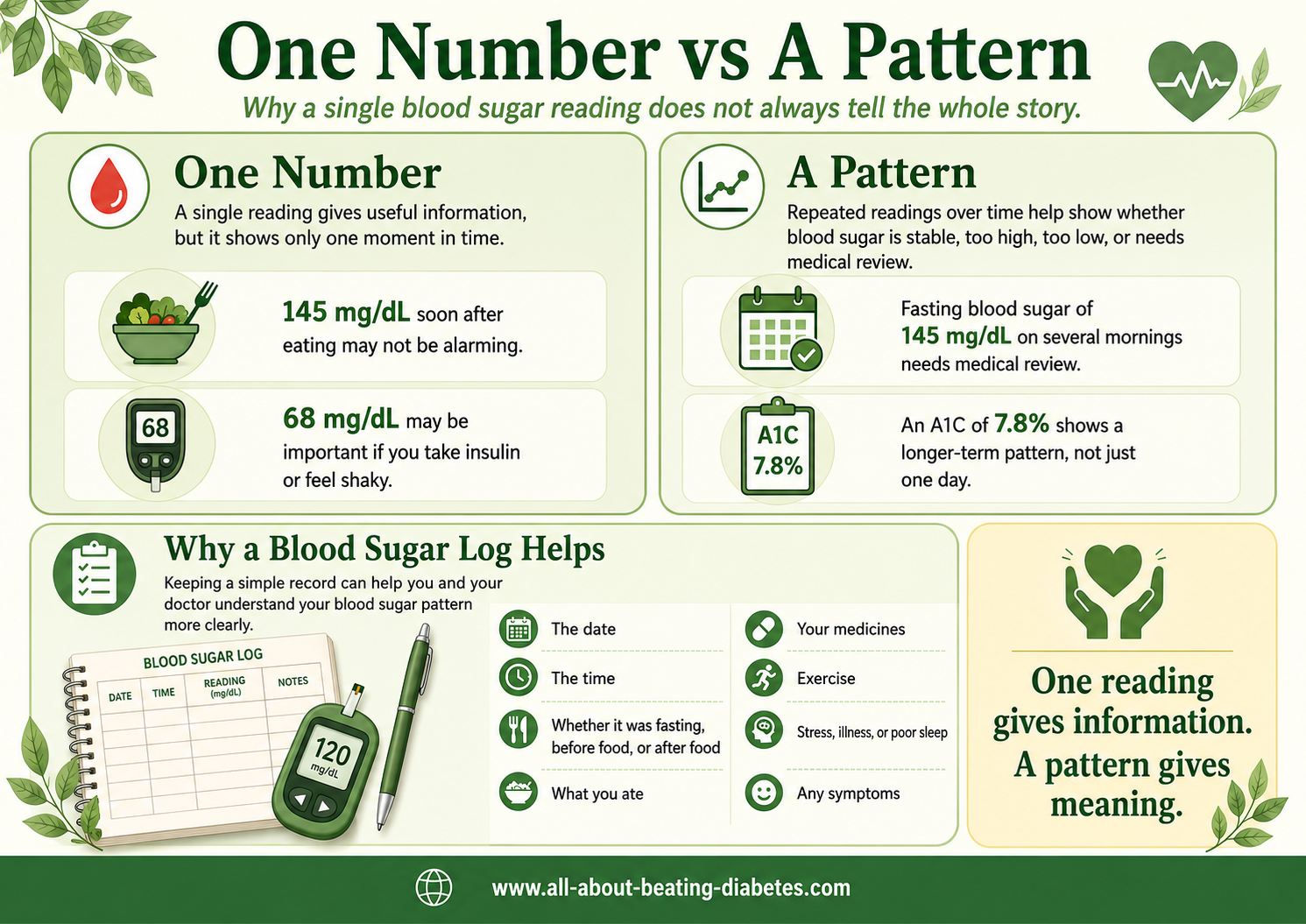
This information helps your doctor identify your true blood sugar pattern and understand whether your readings are stable, repeatedly high, repeatedly low, or affected by meals, medicines, stress, illness, or daily habits.
Common Blood Sugar Questions Adults Often Ask
My fasting blood sugar is 102 mg/dL. Is that normal?
My fasting blood sugar is 102 mg/dL. Is that normal?
A fasting blood sugar of 102 mg/dL is slightly higher than the usual normal fasting range. It may be considered within the prediabetes range, but a single reading is not enough to diagnose prediabetes or diabetes.
Your doctor may recommend repeating the fasting blood sugar test and checking your A1C to better understand your longer-term blood sugar pattern.
My blood sugar is 135 mg/dL after eating. Is that high?
My blood sugar is 135 mg/dL after eating. Is that high?
A blood sugar reading of 135 mg/dL after eating may be acceptable for many adults, especially when measured within 1–2 hours after a meal. However, the meaning of this number depends on several factors, including when the test was taken, what you ate, whether you have diabetes, and whether you have any symptoms.
One reading alone does not give the full picture. Tracking your blood sugar over time can help your doctor understand your usual pattern more accurately.
My blood sugar is 180 mg/dL after a meal. Is that dangerous?
My blood sugar is 180 mg/dL after a meal. Is that dangerous?
For many adults with diabetes, a blood sugar level of less than 180 mg/dL about 1–2 hours after a meal is commonly used as a post-meal target. A single reading of 180 mg/dL is not always a dangerous level, but it should be interpreted in context.
If you do not have diabetes, if this level happens often, or if you have symptoms such as excessive thirst, frequent urination, unusual tiredness, or blurred vision, it is important to discuss it with your doctor. Repeated high readings may need further evaluation, including fasting blood sugar and A1C testing.
My blood sugar is 70 mg/dL. Should I worry?
My blood sugar is 70 mg/dL. Should I worry?
A blood sugar reading of 70 mg/dL is generally considered the threshold for low blood sugar, especially in people with diabetes or those taking insulin or certain diabetes medications.
If you feel symptoms such as shaking, sweating, hunger, dizziness, weakness, blurred vision, or confusion, treat it according to the low blood sugar plan recommended by your doctor. If low readings happen often, or if symptoms are severe, you should contact your healthcare provider for medical guidance.
My fasting blood sugar is 126 mg/dL. Does that mean diabetes?
My fasting blood sugar is 126 mg/dL. Does that mean diabetes?
A fasting blood sugar reading of 126 mg/dL or higher may suggest diabetes. However, diabetes is not usually diagnosed from one reading alone.
Your doctor may recommend repeating the fasting blood sugar test or confirming the result with another diagnostic test, such as an A1C test or an oral glucose tolerance test. This helps ensure the diagnosis is accurate and based on a clear blood sugar pattern.
Why adult blood sugar levels change during the day
Blood sugar levels are not fixed. They change naturally throughout the day.
They often rise after meals and may fall between meals, especially during periods of activity or fasting. Blood sugar can also be influenced by several factors, including:
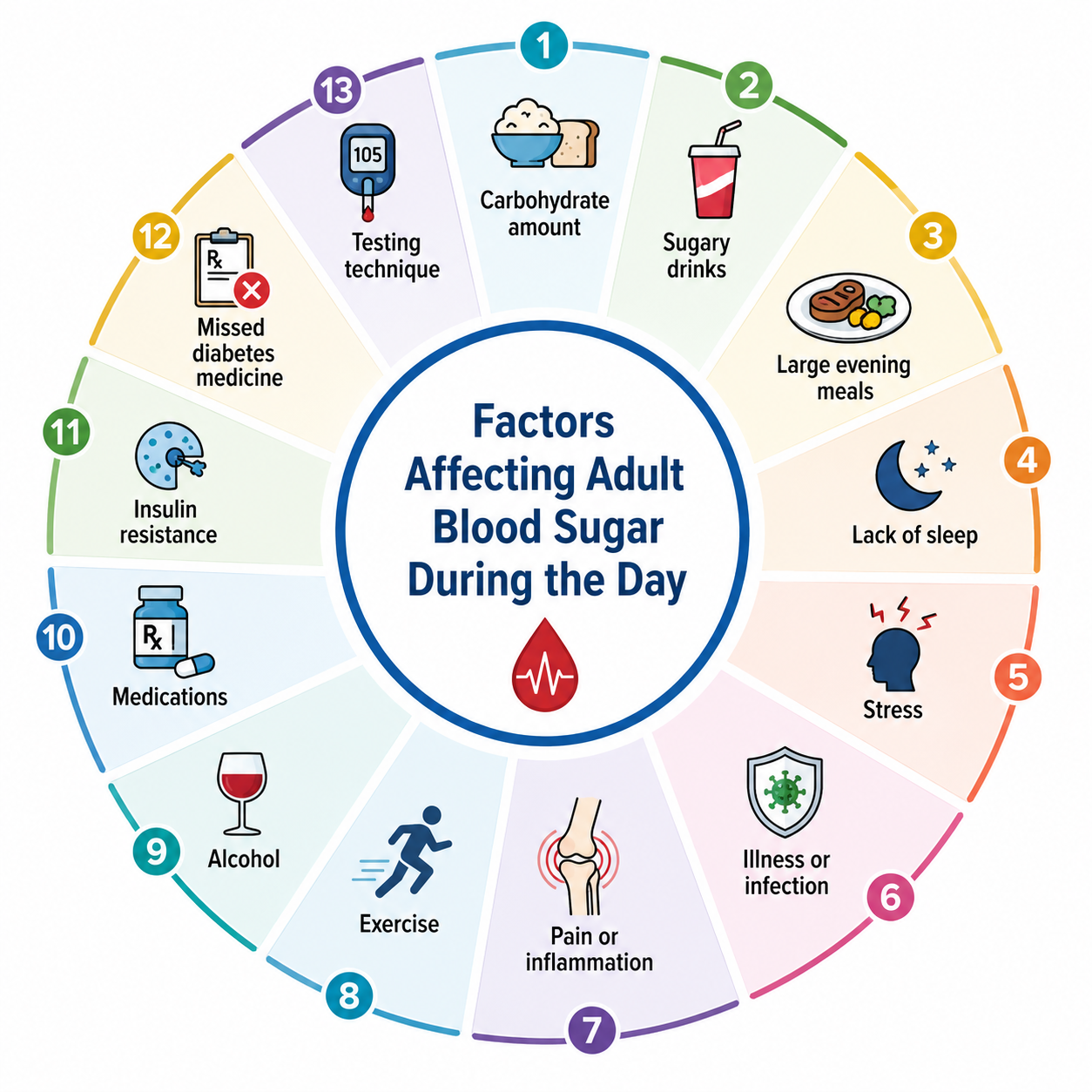
This is why I advise patients not to judge their health based on a single blood sugar reading. One number can provide useful information, but a pattern over time gives a much clearer picture of how the body is managing blood sugar.
When to call your doctor
Call your doctor if:
- Your fasting blood sugar is repeatedly 100 mg/dL or higher.
- Your fasting blood sugar is 126 mg/dL or higher.
- Your after-meal readings are often above your target.
- Your blood sugar is often below 70 mg/dL.
- You have symptoms of high blood sugar, such as thirst, frequent urination, fatigue, blurry vision, or unexplained weight loss.
- You have symptoms of low blood sugar, such as shaking, sweating, dizziness, confusion, or weakness.
- You are unsure how to interpret your readings.
Seek urgent medical help if high blood sugar comes with vomiting, dehydration, confusion, difficulty breathing, severe weakness, or signs of diabetic ketoacidosis.
Final Take-Home Note
When you check your blood sugar, try not to judge the result only as “good” or “bad.” A blood sugar reading is more useful when you understand the situation around it.
Ask yourself:
- When did I test?
- Was I fasting, before a meal, or after eating?
- Did I take my diabetes medicine as prescribed?
- Was I sick, stressed, in pain, or sleeping poorly?
- Is this an occasional reading, or is it happening often?
A single number can give helpful information, but a repeated pattern gives your doctor a clearer picture and helps guide safer decisions.
The goal is not to have perfect blood sugar every minute of the day. The goal is to keep your blood sugar safer, steadier, and less likely to cause dangerous highs or lows.
References
- Centers for Disease Control and Prevention: Manage Blood Sugar
- Centers for Disease Control and Prevention: Diabetes Testing
- Centers for Disease Control and Prevention: A1C Test
- National Institute of Diabetes and Digestive and Kidney Diseases: Low Blood Glucose
- American Diabetes Association: Standards of Care in Diabetes
You might like these
Random Blood Glucose Test: Results, Ranges and Meaning
Learn what a random blood glucose test means, how to read random blood sugar results, when 200 mg/dL may suggest diabetes, and when to call your doctor.
What Blood Sugar Level Is Dangerous? When to Go to the Hospital
Learn what blood sugar levels may be dangerous, including severe highs and lows, DKA and HHS warning signs, and when to go to the hospital.
Normal Fasting Blood Sugar Levels Chart
Learn normal fasting blood sugar levels, what high morning glucose may mean, and when to call your doctor for safe medical advice.