Quick answer
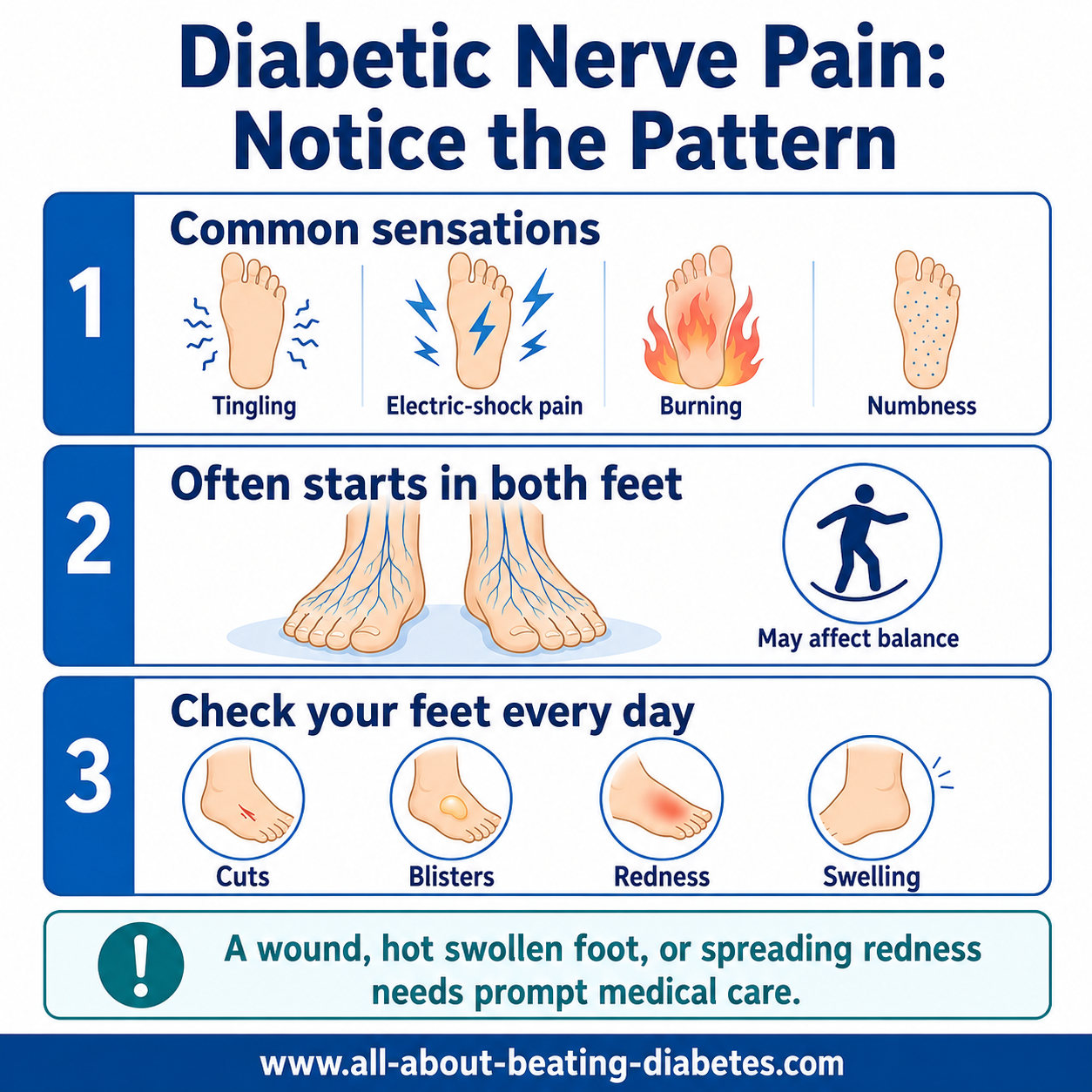
Diabetic nerve pain most often causes tingling, burning, electric-shock, stabbing, or unusually sensitive sensations. It commonly begins in both feet and may later move upward or affect the hands. Numbness and balance problems can also occur. However, pain in a person with diabetes is not automatically diabetic neuropathy. A foot and neurological examination—and sometimes blood tests or nerve studies—help rule out arthritis, poor circulation, vitamin B12 deficiency, thyroid or kidney disease, medication effects, and other causes.
What is diabetic nerve pain?
Diabetic neuropathy is nerve damage associated with diabetes. The most common form is distal symmetric peripheral neuropathy. “Distal” means it starts farthest from the center of the body, usually in the toes and feet; “symmetric” means it often affects both sides.
High blood glucose over time is an important contributor, but blood pressure, cholesterol, weight, smoking, kidney disease, and the duration of diabetes may also affect risk. Some people have pain, while others mainly lose sensation. In fact, nerve damage can be present without obvious pain.
I often meet patients who believe this pain is arthritis. That is why I do not diagnose it from the word “pain” alone. I ask where it started, whether both sides are affected, how the sensation feels, when it is worse, and whether numbness or balance changes are present.
What does diabetic nerve pain feel like?
The sensations can vary from one person to another. In my practice, tingling and electric-shock pain are reported most often. Balance difficulty and numbness commonly follow in the history patients describe.
- tingling or “pins and needles”
- burning, stabbing, shooting, or electric-shock pain
- pain from a light touch, including bedsheets against the feet
- numbness or reduced ability to feel heat, cold, or injury
- symptoms that are worse at night
- weakness, an unsteady walk, or loss of balance
Pain and numbness can exist together. A numb foot is not a harmless foot: you may fail to notice a blister, stone in a shoe, burn, or small wound.
| Feature | Diabetic peripheral neuropathy | Arthritis | Poor circulation |
|---|---|---|---|
| Typical feeling | Burning, tingling, electric shocks, numbness, sensitivity to light touch | Joint pain, stiffness, swelling, reduced joint movement | Cramping with walking, cold foot, slow healing; severe disease may cause pain at rest |
| Usual pattern | Often both feet first, gradually moving upward | Centered around one or more joints | Related to reduced blood flow; pulses or skin changes may be abnormal |
| How it is checked | Sensation, vibration, reflexes, strength, balance, and monofilament testing | Joint examination; imaging when indicated | Pulses, skin color and temperature, capillary refill, and vascular testing when indicated |
This comparison is only a guide. These conditions may overlap, so a clinician should examine persistent or unexplained symptoms.
How diabetic neuropathy is diagnosed
I begin with the symptom history, home glucose records, recent dietary or treatment changes, and a careful examination of both feet. I look at the skin and nails, check pulses and circulation, and assess sensation, vibration, reflexes, strength, gait, and balance. A 10-gram monofilament test helps identify loss of protective sensation.
Blood testing is chosen for the individual rather than ordered as one identical panel for everyone. It may include A1C, vitamin B12, kidney function, thyroid testing, and other basic tests. Vitamin B12 deserves particular attention when a person uses metformin or has another risk for deficiency. Tests such as CRP or D-dimer answer different clinical questions and are used only when the history and examination suggest a reason; they are not routine tests that diagnose diabetic neuropathy.
Nerve-conduction studies, electromyography, imaging, or referral to a neurologist may be appropriate when the pattern is unusual, symptoms are mainly on one side, weakness progresses, the diagnosis remains uncertain, or pain does not improve after suitable treatment.
How diabetic nerve pain is treated
Treatment has two goals: reduce further nerve injury and make the symptoms more manageable. There is currently no treatment that reliably reverses established nerve loss. Better glucose management can prevent or delay neuropathy in type 1 diabetes and may slow progression in type 2 diabetes, but glucose should be adjusted safely with your diabetes team.
1. Review glucose and cardiovascular risk factors
Bring your home glucose readings and medication list to the appointment. Your clinician may also address blood pressure, cholesterol, weight, smoking, kidney health, sleep, and physical activity. Review your individual target rather than trying to lower glucose rapidly on your own.
2. Choose medication for neuropathic pain
Medicines commonly considered include gabapentinoids, serotonin-norepinephrine reuptake inhibitors (SNRIs), tricyclic antidepressants, and certain sodium-channel blockers. The right choice depends on kidney function, age, fall risk, sleep, mood, other medicines, possible side effects, and cost. These drugs treat pain; they do not repair the nerve.
I specifically ask how long the pain has persisted and how long the patient has been taking NSAIDs. Ibuprofen, naproxen, and similar medicines are repeatedly self-used by many patients, but neuropathic pain usually does not respond well to them. Repeated use may also harm the stomach, kidneys, heart, or blood pressure. Opioids are generally not recommended for diabetic nerve pain because their harms can outweigh the benefits.
3. Support movement, sleep, and balance safely
Appropriate activity may support glucose management, mobility, and balance. Choose well-fitting footwear, inspect your feet before and after activity, and ask for an individualized plan if you have loss of sensation, a deformity, poor circulation, or a wound. Mood and sleep also deserve attention because persistent nerve pain can affect both.
4. Be cautious with supplements
No supplement should replace diagnosis, glucose management, foot care, or prescribed treatment. Evidence for products marketed for neuropathy is inconsistent, and supplements can interact with medicines or be unsafe with kidney or liver disease. Discuss any product and dose with your clinician first.
Daily foot safety when sensation is reduced
- Look at the tops, soles, heels, and spaces between the toes every day; use a mirror if needed.
- Check for cuts, blisters, redness, swelling, cracks, drainage, or color change.
- Wash with warm—not hot—water, dry carefully, and moisturize dry skin but not between the toes.
- Check the inside of shoes before putting them on and wear properly fitting shoes and clean socks.
- Do not walk barefoot and do not cut corns or calluses yourself.
- Do not place heating pads, hot-water bottles, ice, or very cold packs directly on a numb foot.
Earlier in my career, patients often reported heating pads or home preparations such as chopped nettle. More recently, I hear more about cold packs suggested online or by relatives. Both heat and intense cold can damage skin when sensation is reduced. A wound should not be treated at home until “something works”; delayed reporting is a frequent and preventable danger.
For a fuller routine, read my practical diabetic foot-care tips.
When to seek urgent medical care
Arrange prompt medical assessment for:
- any new blister, cut, ulcer, drainage, or wound—especially with reduced sensation
- a red, hot, swollen foot, even without a visible wound
- spreading redness, pus, bad odor, fever, or chills
- a pale, blue, or suddenly cold foot; sudden severe pain; or loss of movement
- new one-sided weakness, rapidly worsening symptoms, or repeated falls
A red, hot, swollen foot can represent infection or Charcot neuroarthropathy and needs urgent evaluation. Sudden weakness, facial droop, or speech difficulty may signal a stroke—call emergency services.
Related questions
Can diabetic nerve pain be cured?
Symptoms may improve, but established nerve loss is not reliably reversible. Treatment aims to slow progression, address another treatable cause if present, reduce pain, and prevent foot injury.
Does a normal glucose reading rule out diabetic neuropathy?
No. One reading cannot show your long-term glucose history or exclude neuropathy. Diagnosis uses the symptom pattern, examination, A1C or other glucose information, and evaluation for other causes.
Why is diabetic nerve pain often worse at night?
Many people notice neuropathic symptoms more at night, possibly because there are fewer distractions and light contact from bedding becomes more noticeable. Night pain should still be medically evaluated.
Is walking safe with diabetic neuropathy?
It may be safe and helpful for many people when footwear fits properly and there is no open sore. If you have a wound, severe loss of sensation, deformity, poor circulation, or balance problems, ask your care team which activities are safe.
How often should my feet be examined?
People with diabetes should receive a comprehensive foot evaluation at least yearly. If you have sensory loss, a previous ulcer, or an amputation, your feet should be inspected at every clinical visit.
Related Beating Diabetes resources
References
- American Diabetes Association. Retinopathy, Neuropathy, and Foot Care: Standards of Care in Diabetes—2026.
- American Academy of Neurology. Oral and Topical Treatment of Painful Diabetic Polyneuropathy Practice Guideline Update. Reaffirmed February 8, 2025.
- National Institute of Diabetes and Digestive and Kidney Diseases. Peripheral Neuropathy.