- Home
- Diabetes Complications
- Diabetic Feet Care Tips to Prevent Ulcers and Infections
Diabetic Foot Care: Practical Tips to Protect Your Feet
Written by Dr. Albana Greca, MD, MMedSc, Family Physician
Medically reviewed by Dr. Ruden Cakoni, MD, Endocrinologist
Last medically reviewed: July 2026
If you have diabetes, a few minutes of foot care each day can help you find problems before they become serious. Diabetes may damage the nerves in your feet, reduce circulation, and make wounds slower to heal. Because reduced sensation can prevent you from feeling an injury, even a small blister or cut deserves attention.
I encourage my patients to combine daily foot checks with regular professional examinations, suitable footwear, blood sugar management, and prompt treatment of any wound or infection.
Quick Answer
Check your feet every day, wash them in warm—not hot—water, dry carefully between the toes, moisturize dry skin but not between the toes, and never walk barefoot. Wear properly fitting shoes and clean socks. Arrange a comprehensive foot examination at least once a year, or more often if you have neuropathy, poor circulation, a foot deformity, or a previous ulcer or amputation.
On this page:
Why Is Diabetic Foot Care Important?
High blood sugar over time can contribute to peripheral neuropathy, which may cause numbness, burning, tingling, pain, or loss of protective sensation. Diabetes can also increase the risk of peripheral artery disease, reducing blood flow to the legs and feet.
When reduced sensation and poor circulation occur together, a blister, cut, or pressure injury may go unnoticed and heal slowly. Infection can then spread and, in severe cases, threaten the foot or limb.
Good blood sugar management is important, but it cannot replace daily inspection and professional foot examinations. I also recommend managing blood pressure and cholesterol and avoiding smoking because each can affect circulation and healing.
Learn more about the early signs on our diabetic feet symptoms page.
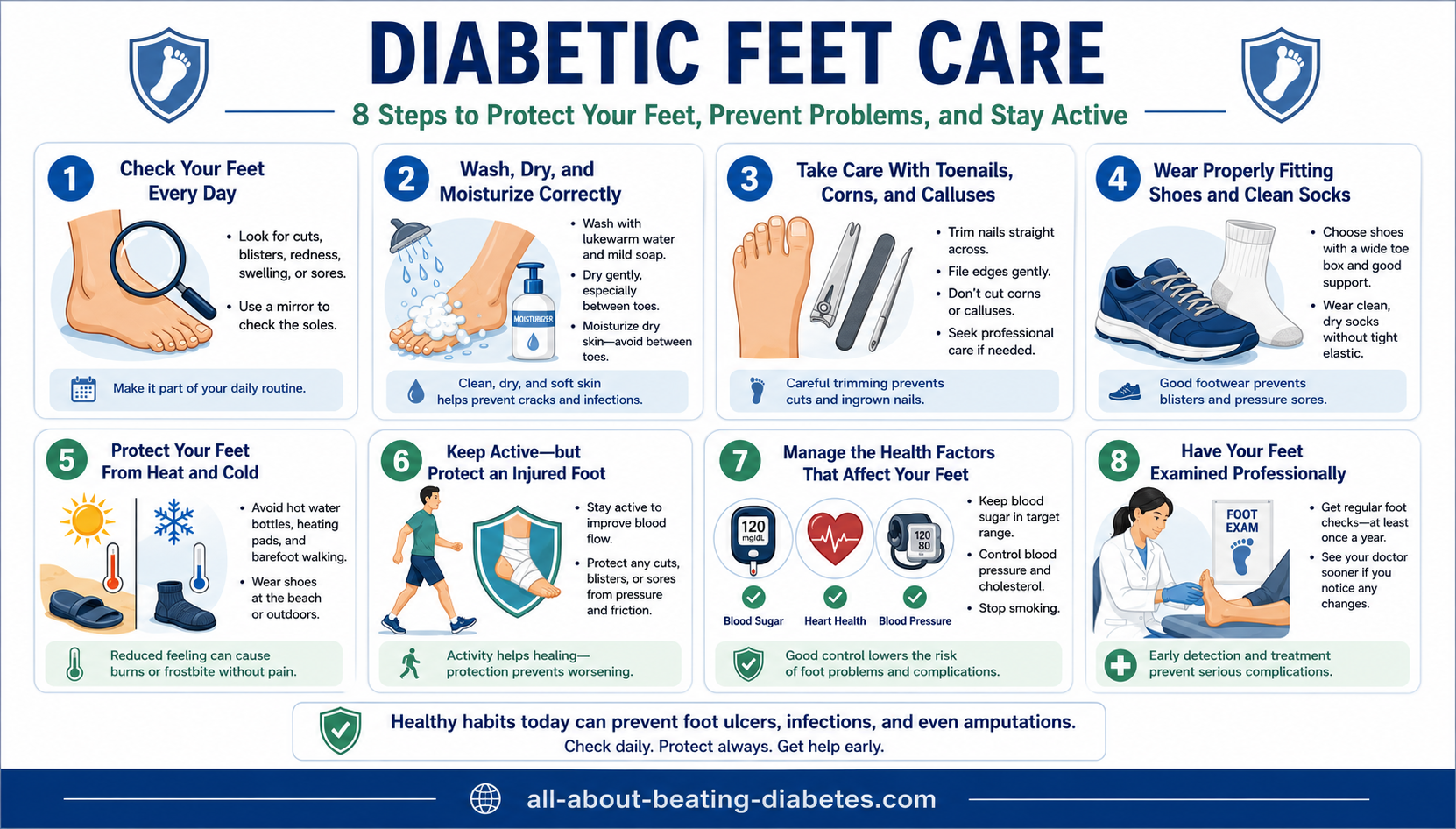

1. Check Your Feet Every Day
Look at the top, soles, heels, sides, nails, and spaces between your toes. Use a mirror to inspect the soles, or ask someone you trust to help if you cannot see or reach your feet safely.
Check for:
- Cuts, cracks, scratches, or punctures
- Blisters or areas where shoes have rubbed
- Redness, warmth, or swelling
- New dark, pale, blue, or unusual skin discoloration
- Drainage, blood, or stains on your socks
- Corns, calluses, or thickened skin
- Ingrown, thickened, or discolored nails
- Changes in foot shape
- New pain, burning, tingling, or numbness
Do not rely on pain to alert you. Neuropathy can make a serious wound painless.
A simple routine
Check your feet at the same time each day—for example, when removing your socks in the evening. This makes the habit easier to remember.
2. Wash, Dry, and Moisturize Correctly
Wash your feet daily with mild soap and warm water. Do not soak them for a long time because prolonged soaking can dry and damage the skin.
If you have reduced sensation, test the water with your elbow or ask someone else to check it. Do not rely on your feet to judge the temperature, as you may not feel that the water is dangerously hot.
After washing:
- Dry your feet gently and thoroughly.
- Dry carefully between every toe.
- Apply moisturizer to dry skin on the tops and bottoms of your feet.
- Do not apply moisturizer between the toes, where trapped moisture can encourage infection.
Keeping your feet completely dry everywhere is not the goal. Dry, cracked skin also creates an opening for infection. The correct balance is to keep the spaces between the toes dry while moisturizing other dry areas.
3. Take Care With Toenails, Corns, and Calluses
If you can see and reach your feet safely and your clinician has not told you otherwise, trim toenails straight across and gently smooth sharp edges with a nail file. Do not cut deeply into the corners.
Ask a podiatrist or other qualified professional to care for your nails if you have:
- Loss of feeling in your feet
- Poor circulation
- Very thick or deformed nails
- An ingrown toenail
- Poor vision or difficulty reaching your feet
- A previous ulcer or amputation
Do not cut corns or calluses yourself. Avoid medicated corn plasters, acid removers, blades, and other sharp instruments. These treatments can damage healthy skin and cause an ulcer, particularly when sensation is reduced.
4. Wear Properly Fitting Shoes and Clean Socks
Never walk barefoot, even inside your home. Wear protective slippers or shoes because a small object, hot surface, or unnoticed injury can damage the skin.
Choose shoes that:
- Fit without rubbing, pinching, or slipping
- Have enough room for your toes
- Have a supportive sole and secure fastening
- Do not contain rough seams or damaged lining
- Protect your feet from sharp objects and hot surfaces
Check inside each shoe before putting it on. Look and feel for stones, folded insoles, rough areas, pins, or other objects that could injure your foot.
Wear clean, dry socks and change them daily. Choose socks that fit comfortably without tight elastic or bulky seams. Cotton can be comfortable, but moisture-wicking materials may be more helpful if your feet perspire heavily.
Not everyone with diabetes needs orthopedic or “diabetic” shoes. Therapeutic footwear may be recommended if you have neuropathy, a foot deformity, a previous ulcer, an amputation, or another high-risk condition. A podiatrist can advise you about the correct footwear.
5. Protect Your Feet From Heat and Cold
Reduced sensation can prevent you from noticing a burn. Do not place heating pads, hot-water bottles, or electric blankets directly against your feet. Keep your feet away from heaters, fires, and hot pavement.
Wear shoes at the beach and around swimming pools. In cold weather, use warm socks and check your feet for changes in color or skin damage.
6. Keep Active—but Protect an Injured Foot
Regular physical activity can support blood sugar management, circulation, mobility, and cardiovascular health. Walking may be appropriate if your feet are healthy and your footwear fits properly.
However, do not assume that walking on an ulcer, blister, swollen foot, or possible Charcot foot will improve circulation. Continued pressure may make the injury worse.
Stop the activity and seek professional advice if you develop:
- A new blister, wound, or bleeding
- Foot pain during activity
- Unusual warmth, redness, or swelling
- A change in foot shape
If you have an active ulcer, severe neuropathy, poor circulation, or a previous amputation, ask your healthcare team which activities and footwear are safe for you.
7. Manage the Health Factors That Affect Your Feet
I encourage you to:
- Work toward your individual blood sugar and A1C targets
- Take prescribed medicines consistently
- Manage blood pressure and cholesterol
- Avoid smoking and seek help to quit if needed
- Stay physically active when it is safe
- Attend diabetes and foot-care appointments
These measures reduce overall risk, but good glucose control does not make a current wound safe to treat at home. A foot wound still requires prompt assessment.
8. Have Your Feet Examined Professionally
The American Diabetes Association recommends a comprehensive foot evaluation at least once a year for everyone with diabetes.
The examination should assess:
- Skin and nail condition
- Foot shape and pressure points
- Sensation using a monofilament and other neurological tests
- Pulses and circulation in the feet
- Previous ulcers, amputations, or vascular procedures
- Symptoms of neuropathy or peripheral artery disease
If you have loss of sensation, a previous ulcer or amputation, Charcot foot, poor circulation, kidney disease, or a foot deformity, you may need examinations at every diabetes visit and ongoing podiatry care.
Read more about wounds on our diabetic foot ulcer page.
When Does a Diabetic Foot Problem Need Urgent Care?
Contact a doctor, podiatrist, or diabetes foot service urgently if you notice:
- A new cut, blister, ulcer, puncture, or break in the skin
- A red, hot, or swollen foot or toe
- New drainage, pus, bleeding, or a bad odor
- Black, blue, unusually pale, or rapidly changing skin color
- A wound that is not starting to improve
- New or unexplained foot pain
- A sudden change in foot shape
- A warm, swollen foot even when there is little or no pain
Seek emergency medical care if redness or swelling is spreading, tissue is turning black, bone is visible, you have fever or chills, you feel severely unwell, or you cannot obtain prompt professional help for a rapidly worsening foot problem.
Do not wait for pain. A serious infection or Charcot foot may cause surprisingly little pain when neuropathy is present.
Daily Diabetic Foot Care Checklist
- ☐ Inspect the tops, soles, heels, and spaces between my toes.
- ☐ Wash my feet in warm—not hot—water.
- ☐ Dry carefully, especially between my toes.
- ☐ Moisturize dry skin, but not between my toes.
- ☐ Put on clean socks and properly fitting shoes.
- ☐ Check inside my shoes before wearing them.
- ☐ Report a new wound, redness, warmth, swelling, or color change promptly.
Related Questions
Related Resources
- Diabetic feet symptoms and warning signs
- Diabetic foot ulcers
- Diabetes complications
- Understanding diabetes blood sugar levels
- Diabetes and kidney disease
References
- American Diabetes Association: Retinopathy, Neuropathy, and Foot Care—Standards of Care in Diabetes—2026
- Centers for Disease Control and Prevention: Your Feet and Diabetes
- International Working Group on the Diabetic Foot: Guidelines on the Prevention of Foot Ulcers
This information is for general education and does not replace an examination, diagnosis, or treatment from your healthcare professional.