Quick answer
Stress can affect diabetes in several ways. Stress hormones such as cortisol and adrenaline may cause the liver to release more glucose and can temporarily reduce insulin sensitivity. Stress may also disturb sleep, appetite, activity, medication routines, and glucose monitoring. Many people see glucose rise, but the response is not identical for everyone. You cannot remove every source of stress; the practical goal is to recognize your pattern, protect your diabetes routine, use healthy coping strategies, and ask for support when stress becomes persistent or overwhelming.
How can stress affect blood sugar?
Stress is part of the body’s survival response. When your brain senses a threat or demanding situation, hormones such as adrenaline and cortisol help make energy available. The liver may release glucose into the bloodstream, heart rate and blood pressure may rise, and the body may become temporarily less sensitive to insulin.
If you have diabetes, this response may make glucose harder to manage. Emotional stress often raises glucose, particularly in type 2 diabetes, but it is not correct to promise one reaction for every person. In type 1 diabetes, readings may rise, fall, or become more variable depending on hormones, food, activity, insulin, sleep, and whether stress changes the usual routine.
Stress may also affect glucose indirectly. You may sleep poorly, skip a meal, eat more comfort food, drink more alcohol, move less, miss medication, or check glucose less often. On the other hand, some people lose their appetite or become more active when anxious, which may contribute to low glucose when insulin or certain diabetes medicines are used.
Emotional stress and physical stress are not the same
Short-term emotional stress
An argument, examination, difficult meeting, traffic, grief trigger, or frightening event can temporarily affect glucose and self-care.
Long-term emotional stress
Financial strain, caregiving, relationship problems, bereavement, unsafe living conditions, or demanding work may affect sleep, mood, blood pressure, and daily diabetes routines.
Physical stress
Infection, fever, injury, surgery, pain, dehydration, or another illness can raise glucose and sometimes increase the risk of ketones or a hyperglycemic crisis.
Diabetes-related stress
Constant decisions about food, medication, glucose numbers, costs, complications, alarms, and fear of hypoglycemia can create a specific burden called diabetes distress.
Stress is associated with health behaviors and metabolic risk, but one study cannot prove that stress alone “doubles” every person’s risk of diabetes. Genetics, weight, sleep, activity, diet, medications, social conditions, and other factors also contribute. The useful message is not to fear stress—it is to recognize and address it.
What is diabetes distress?
Diabetes distress is the emotional burden of living with and managing diabetes. It is not a sign of weakness, and it is not automatically the same as clinical depression or an anxiety disorder. However, these problems can overlap and each deserves attention.
You may be experiencing diabetes distress if you feel:
- overwhelmed by glucose checks, CGM alarms, food choices, medication, or appointments
- afraid of hypoglycemia or future complications
- guilty, ashamed, judged, or discouraged by your numbers
- tired of making diabetes decisions every day
- unable to follow your plan because it feels too complicated or expensive
- alone or unsupported by family, work, school, or your healthcare team
The ADA recommends integrating psychosocial care into diabetes care and screening for diabetes distress, depression, anxiety, fear of hypoglycemia, and disordered eating—at least annually and when treatment, health, or life circumstances change.
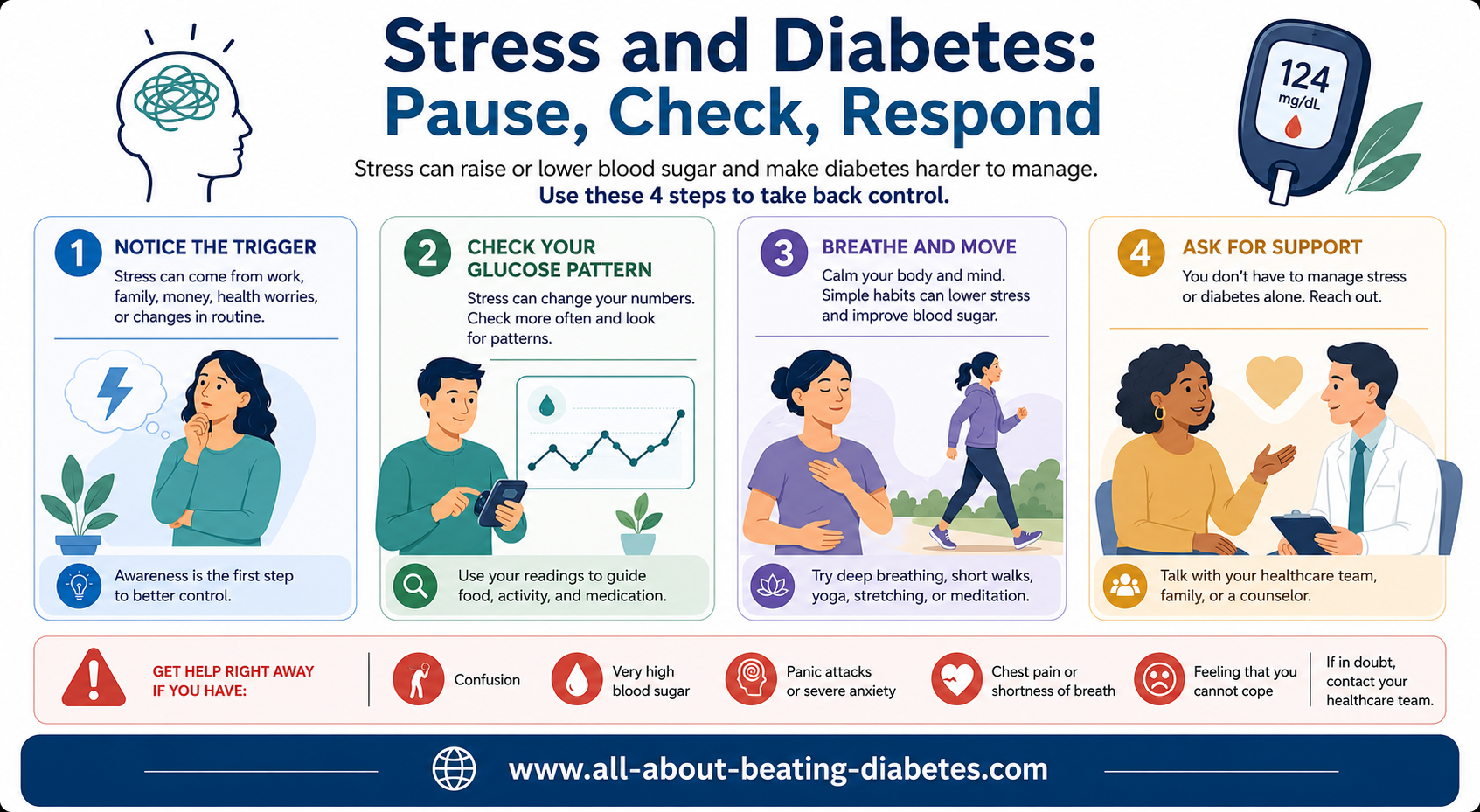

How to find your stress and glucose pattern
A single high or low reading cannot prove that stress caused it. For one or two weeks, you can record a few details without judging yourself. The purpose is to find a pattern that you and your healthcare team can use.
| What to record | Why it helps |
|---|---|
| Time and glucose or CGM trend | Shows whether changes occur before meals, after meals, overnight, or around a repeated situation. |
| Stress event and a simple rating from 0–10 | Helps compare mild and intense stress without needing a long diary. |
| Meals, insulin or medication, activity, and alcohol | Prevents stress from being blamed when another factor may explain the reading. |
| Sleep, illness, infection, pain, menstrual cycle, or steroid use | Identifies physical factors that can alter both stress and glucose. |
| What coping action you tried | Shows whether breathing, walking, support, rest, or another strategy was practical and helpful. |
Do not change insulin or diabetes medication only because you expect a stressful day. Use your prescribed correction plan and contact your diabetes team when a recurring pattern suggests that treatment needs review.
Practical ways to manage stress with diabetes
- Pause your body’s alarm response. Try slow breathing for two to five minutes: breathe in gently, allow a longer comfortable exhale, and relax your shoulders. Stop if you feel dizzy.
- Move in a way that is safe for you. A short walk, stretching, gardening, or another enjoyable activity may improve mood and glucose. Follow your exercise plan if you use insulin or medicines that can cause hypoglycemia.
- Protect the basics. Keep regular meals, medication, hydration, glucose monitoring, and sleep routines as consistent as possible during stressful periods.
- Reduce the next problem—not your whole life. Write down one manageable action, such as calling the pharmacy, preparing tomorrow’s supplies, or asking someone to share a task.
- Limit coping methods that create new risks. Alcohol, smoking, recreational drugs, overeating, or skipping medication may provide temporary distraction but can worsen glucose and health.
- Use your support system. Speak with someone you trust, a diabetes care and education specialist, your clinician, a counselor, a peer group, or a community service.
- Make the diabetes plan easier. Ask whether alarms, monitoring schedules, medication timing, costs, or nutrition plans can be simplified safely.
- Consider evidence-based psychological support. Counseling, cognitive behavioral approaches, mindfulness-based strategies, and problem-solving support may help depending on your needs and preferences.
When should you ask for professional help?
Talk with your clinician or a mental health professional if stress, anxiety, low mood, fear of hypoglycemia, or diabetes burnout lasts more than a week or two; interferes with sleep, work, relationships, eating, or medication; or makes diabetes care feel impossible.
Seek urgent help now if:
- you are thinking about harming yourself or feel unable to stay safe
- you have severe confusion, panic, or behavior that puts you or another person at risk
- very high glucose occurs with vomiting, dehydration, deep breathing, confusion, or moderate/large ketones
- severe low glucose causes seizure, unconsciousness, or inability to swallow safely
Contact local emergency services or a crisis service in your country. Do not remain alone when immediate safety is at risk.
Related questions
Can stress raise blood sugar even if I have not eaten?
Yes. Stress hormones can signal the liver to release glucose and may temporarily reduce insulin sensitivity. But repeated fasting highs should not automatically be blamed on stress; review the pattern with your clinician.
Can stress cause low blood sugar?
Stress itself does not consistently cause hypoglycemia, but appetite loss, delayed meals, extra activity, alcohol, or changes in insulin needs may contribute. Treat glucose below 70 mg/dL according to your hypoglycemia plan.
Can stress cause diabetes?
Stress alone is not considered a single direct cause of type 1 or type 2 diabetes. Long-term stress may influence hormones, sleep, activity, eating, and weight, which can contribute to metabolic risk alongside genetics and other factors.
Why can intense exercise raise glucose?
High-intensity exercise can temporarily raise stress hormones and liver glucose output. Read our related answer: Why does blood sugar go up after exercise?
Should I increase insulin when I feel stressed?
Do not improvise a dose based on stress alone. Use your prescribed correction plan, consider active insulin and ketones, and contact your diabetes team if a consistent pattern requires treatment adjustment.
Related Beating Diabetes resources
References
- American Diabetes Association. Facilitating Positive Health Behaviors and Well-being to Improve Health Outcomes: Standards of Care in Diabetes—2026.
- American Diabetes Association. Glycemic Goals, Hypoglycemia, and Hyperglycemic Crises: Standards of Care in Diabetes—2026.
- Centers for Disease Control and Prevention. 10 Tips for Coping With Diabetes Distress.
- Centers for Disease Control and Prevention. Manage Blood Sugar.