- Home
- What Causes Diabetes and Its Risk Factors
- What Causes Type 1 Diabetes Autoimmune Disease
- Can Glucosamine Raise Blood Sugar in People With Diabetes
Glucosamine Side Effects: Diabetes, Interactions and Safety
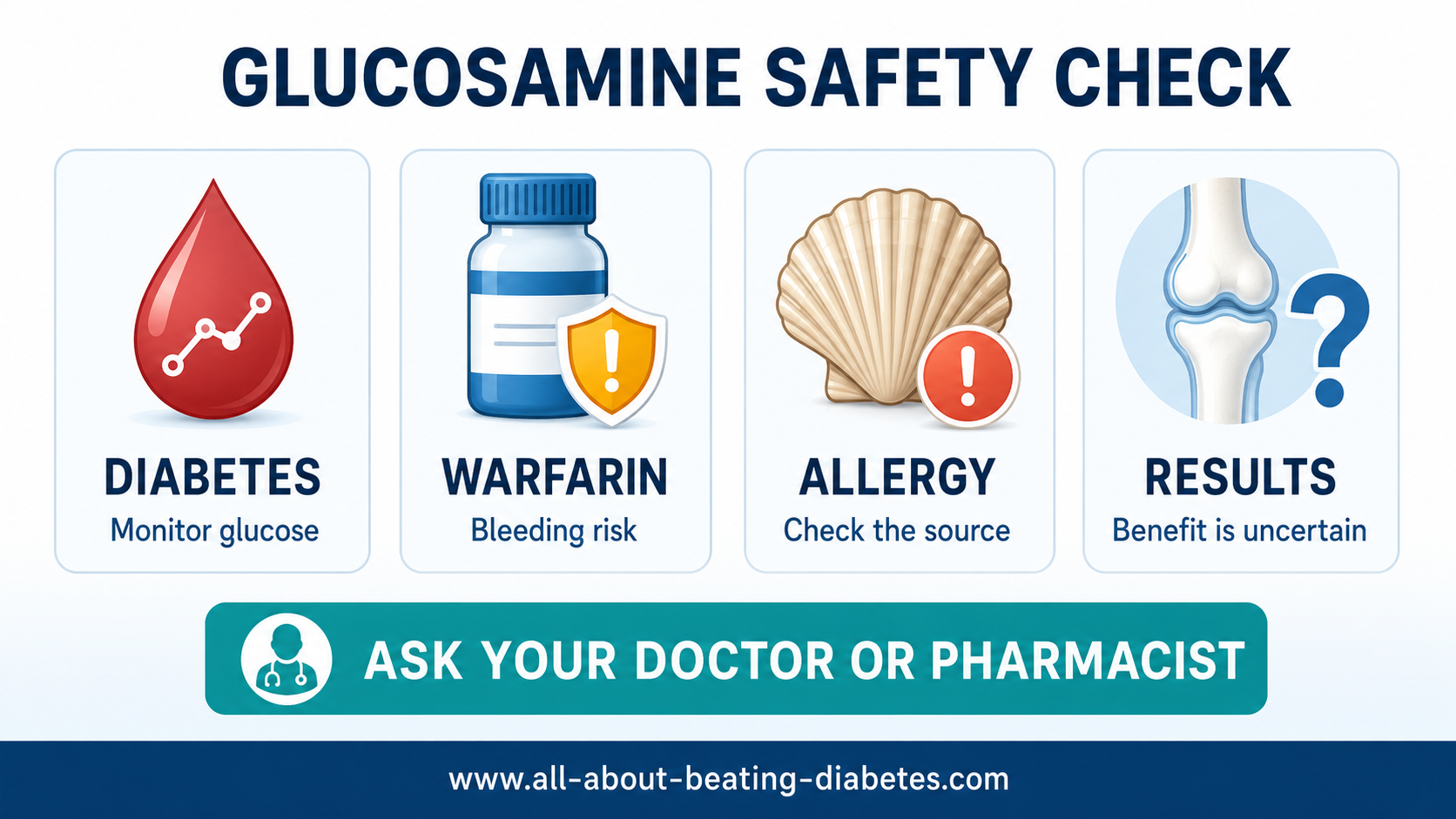
Glucosamine is commonly used for osteoarthritis, but “natural” does not mean risk-free. Most large studies have not identified major safety problems, yet people with diabetes still need to consider possible glucose changes, stomach side effects, warfarin interactions, allergy history, product quality, and whether the supplement is helping at all.
On This Page

What Is Glucosamine?
Glucosamine is a substance found naturally in cartilage. Supplements are commonly marketed for osteoarthritis, particularly knee osteoarthritis. Commercial products may contain glucosamine sulfate, glucosamine hydrochloride, or N-acetyl glucosamine. These forms are not interchangeable, and a study involving one formulation does not prove that every product will have the same effect.
Some glucosamine is made from the shells of shrimp, crab, or other shellfish. Other products use laboratory-made or fermentation-derived ingredients and may be labeled shellfish-free. Combination products often add chondroitin, methylsulfonylmethane (MSM), herbs, minerals, or pain-relieving ingredients. Those additional ingredients can introduce their own side effects and interactions.
Common Glucosamine Side Effects
Many people tolerate glucosamine, and large osteoarthritis studies have not identified major safety problems overall. However, side effects still occur and may be more important in an older person who uses several medicines or has diabetes, kidney disease, heart disease, or liver disease.
Digestive symptoms
Nausea, heartburn, abdominal discomfort, gas, diarrhea, or constipation are among the most commonly reported problems.
Nervous-system symptoms
Headache, tiredness, drowsiness, or dizziness may occur. Avoid driving if the supplement makes you sleepy or lightheaded.
Skin or allergy symptoms
Itching, rash, hives, or swelling may signal hypersensitivity. Breathing difficulty or facial swelling requires emergency care.
Can taking it with food help?
Taking glucosamine with a meal may reduce nausea or heartburn for some people. It does not prevent an allergic reaction, a medicine interaction, or a glucose change. If digestive symptoms continue, stop the product and ask a pharmacist or clinician to review the ingredients rather than increasing or dividing the dose on your own.
Less common concerns
Glucosamine may worsen asthma in some people, and there is concern that it can increase eye pressure in people with glaucoma or ocular hypertension. Liver injury appears uncommon, but people with liver disease or abnormal liver tests should not self-treat. Evidence during pregnancy and breastfeeding is insufficient, so use should be avoided unless the pregnancy care team specifically recommends it.
Can Glucosamine Raise Blood Sugar?
This question matters because glucosamine’s name contains “glucose,” and laboratory research involving the hexosamine pathway raised concern about insulin resistance. However, swallowing glucosamine is not the same as eating table sugar, and the body does not simply convert the entire supplement dose into a large glucose load.
Human studies at usual oral doses are mostly reassuring. Randomized trials in people with type 2 diabetes and in lean or obese adults did not find clinically important worsening of A1C or insulin sensitivity. A longer study in overweight and obese women also found no significant effect on average A1C or new diabetes. Nevertheless, the National Center for Complementary and Integrative Health notes that glucosamine may increase blood glucose in some people.
For that reason, I do not tell a patient with diabetes that glucose monitoring is unnecessary. Individual responses, combination ingredients, illness, pain, reduced activity, steroid treatment, food changes, and medication changes can all alter glucose at the same time.
A Practical Monitoring Plan
- Before starting, record several days of your usual fasting and after-meal readings.
- Do not change your diabetes medicine, food plan, and supplement at the same time unless your clinician directs it.
- For the first one to two weeks, check glucose at consistent times so you can compare like with like.
- Write down the product, dose, start date, joint symptoms, and any side effects.
- Contact your diabetes team if readings rise repeatedly above your usual pattern or you develop symptoms of high or low blood sugar.
Learn how to monitor correctly with diabetes testing strips, and use our guide to blood sugar levels by time of day to understand why timing changes the meaning of a result. An A1C test can show the longer-term pattern, but it is not useful for detecting a change that began only a few days ago; read more about A1C and blood sugar.
Glucosamine Interactions and Who Needs Extra Caution
Warfarin is the most important interaction
Glucosamine, with or without chondroitin, has been associated with increased INR and bleeding in people taking warfarin. Case reports and pharmacovigilance databases include bruising, abnormal coagulation results, and serious bleeding. Do not start, stop, or change glucosamine while taking warfarin unless the clinician managing your anticoagulation approves the plan and arranges INR monitoring.
If you take another anticoagulant or an antiplatelet medicine, such as apixaban, rivaroxaban, dabigatran, clopidogrel, or aspirin, evidence for a direct glucosamine interaction is less established than it is for warfarin. Still, the combination should be reviewed by a doctor or pharmacist because your personal bleeding risk and the product’s added ingredients matter.
Diabetes medicines
Glucosamine is not known to directly cause hypoglycemia in the way insulin or a sulfonylurea can. The concern is that a supplement-related glucose change—or another ingredient in a combination product—may alter your usual pattern. Do not adjust insulin or diabetes tablets based on one isolated reading. Review repeated changes with your healthcare team.
Shellfish allergy
Most shellfish allergy is caused by proteins in shellfish meat rather than the shell itself. Even so, manufacturing contamination, incomplete purification, and individual sensitivity make it unsafe to promise that a shell-derived supplement will never cause a reaction. If you have a serious shellfish allergy, choose only a clinician-approved shellfish-free product or avoid glucosamine. Ask an allergist or pharmacist when the source is unclear.
Before surgery or a procedure
Tell the surgeon, dentist, anesthetist, and pharmacist about every supplement you take. Do not wait until the procedure day. Your team will decide whether and when glucosamine should be stopped, particularly if you also use warfarin or another medicine that affects bleeding.
| Situation | Why it matters | Safer next step |
|---|---|---|
| Warfarin use | INR and bleeding may increase | Do not self-start; contact the anticoagulation clinician |
| Diabetes or prediabetes | Some individuals may have higher glucose | Compare consistent readings before and after starting |
| Shellfish allergy | Some products are shell-derived | Verify the source and seek professional advice |
| Glaucoma or ocular hypertension | Eye pressure might worsen | Ask the eye specialist before use |
| Asthma | Symptoms may worsen in some people | Discuss it first and stop if breathing changes |
| Liver or kidney disease | Safety, impurities, minerals, and multiple medicines need review | Ask the treating clinician and pharmacist |
| Pregnancy or breastfeeding | Safety information is limited | Avoid unless the care team recommends it |
Does Glucosamine Work for Osteoarthritis?
The evidence is inconsistent. Some studies show modest pain relief, while others find no meaningful advantage over placebo. Results may differ because studies have tested different formulations, product quality varies, and some older positive studies had a high risk of bias.
The 2019 American College of Rheumatology/Arthritis Foundation guideline strongly recommended against glucosamine for knee, hip, and hand osteoarthritis because the best evidence did not show important benefit. The Osteoarthritis Research Society International also recommended against it for knee osteoarthritis. In contrast, the American Academy of Orthopaedic Surgeons has said some dietary supplements may help mild-to-moderate knee osteoarthritis while emphasizing that evidence is inconsistent. A European group supports prescription crystalline glucosamine sulfate but discourages other formulations.
Glucosamine is not a risk-free NSAID replacement
Nonsteroidal anti-inflammatory drugs (NSAIDs) can cause stomach bleeding, kidney injury, fluid retention, higher blood pressure, and cardiovascular problems in susceptible people. Those risks are especially relevant in older adults and people with diabetes, kidney disease, heart disease, or anticoagulant use. However, this does not prove that glucosamine will control pain equally well or eliminate all risk.
Osteoarthritis care may include exercise therapy, strengthening, weight management when appropriate, physical therapy, braces, heat or cold, topical medicines, oral medicines, injections, or specialist assessment. The safest choice depends on the joint involved, severity, kidney and heart health, medicines, fall risk, and personal goals.
How to Use Glucosamine More Safely
- Confirm the diagnosis. New joint pain, swelling, redness, fever, injury, or sudden inability to bear weight should not be assumed to be ordinary osteoarthritis.
- Review every medicine and supplement. Include warfarin, other blood thinners, aspirin, diabetes medicines, pain medicines, and combination joint products.
- Choose a transparent product. Prefer a single-ingredient product with a clearly stated source and amount. Independent quality certification can reduce—but not eliminate—quality concerns.
- Use only one new product at a time. This makes side effects and glucose changes easier to recognize.
- Monitor a meaningful outcome. Record pain during a specific activity, morning stiffness, walking distance, or function instead of relying on a vague impression.
- Set a review date. If there is no meaningful benefit after an agreed trial, discuss stopping it rather than taking it indefinitely.
- Keep medical care in place. Do not replace diabetes treatment, arthritis assessment, or prescribed pain management with a supplement.
In the United States, dietary supplements are not approved by the Food and Drug Administration for safety and effectiveness before sale in the same way prescription medicines are. Product labels and independent certification therefore matter, but neither guarantees that the supplement will work for you.
Stop and Seek Urgent Help
Get emergency help for trouble breathing, wheezing, swelling of the face, lips, tongue, or throat, fainting, or a rapidly spreading rash. Seek urgent medical advice for black or bloody stool, vomiting blood, blood in the urine, unusual bruising, prolonged bleeding, a severe headache while taking a blood thinner, or a major unexplained change in blood glucose.
When a patient with diabetes asks me about glucosamine, I do not answer only “yes” or “no.” I first review the exact product, whether warfarin or another blood thinner is being used, the patient’s allergy history, kidney and liver health, eye disease, current glucose pattern, and what improvement they expect. If a carefully chosen trial is reasonable, we agree on what to monitor and when to stop. Continuing a supplement without measurable benefit only adds cost, pill burden, and avoidable uncertainty.
Frequently Asked Questions
Is glucosamine safe for people with diabetes?
Many people with diabetes can tolerate glucosamine, and human trials at usual doses have generally not shown clinically important worsening of A1C or insulin sensitivity. However, glucose may increase in some people, so monitor your usual pattern after starting and discuss repeated changes with your clinician.
Does glucosamine contain sugar?
Glucosamine is an amino sugar compound, but it is not equivalent to table sugar and does not simply become a large dose of glucose in the body. The name alone does not predict its effect on your blood sugar.
Can glucosamine raise A1C?
Most controlled human studies have not found a clinically meaningful A1C increase, but individual responses are possible. Because A1C reflects roughly two to three months, short-term changes are better assessed with consistently timed glucose readings.
Can I take glucosamine with metformin or insulin?
There is no well-established direct interaction that automatically prevents use with metformin or insulin. Still, people using diabetes medicines should monitor glucose when starting any supplement and should not change medication doses without medical advice.
Why should glucosamine not be combined with warfarin without supervision?
Reports associate glucosamine, sometimes combined with chondroitin, with increased INR and bleeding in warfarin users. The anticoagulation clinician should approve any start, stop, or dose change and decide when INR testing is needed.
Can I take glucosamine if I am allergic to shellfish?
Some glucosamine is manufactured from shellfish shells. Although shellfish allergy usually involves proteins in the meat, contamination and individual reactions are possible. Ask an allergist or pharmacist, verify the source, or use a clinician-approved shellfish-free product.
Which is better: glucosamine sulfate or glucosamine hydrochloride?
They are not interchangeable. Some positive studies involved prescription crystalline glucosamine sulfate, while many studies of other products were negative or inconsistent. Do not assume that any over-the-counter formulation has the same evidence.
How will I know whether glucosamine is working?
Choose a specific outcome before starting, such as pain during stairs, walking distance, morning stiffness, or use of rescue pain medicine. Review it after an agreed trial. If there is no meaningful improvement, discuss stopping rather than continuing indefinitely.
Related Questions and Resources
References
- National Center for Complementary and Integrative Health. Glucosamine and Chondroitin for Osteoarthritis: What You Need To Know.
- Kolasinski SL, Neogi T, Hochberg MC, et al. 2019 American College of Rheumatology/Arthritis Foundation Guideline for the Management of Osteoarthritis of the Hand, Hip, and Knee. Arthritis Rheumatol. 2020;72(2):220–233.
- Scroggie DA, Albright A, Harris MD. The Effect of Glucosamine-Chondroitin Supplementation on Glycosylated Hemoglobin Levels in Patients With Type 2 Diabetes Mellitus. Arch Intern Med. 2003;163(13):1587–1590.
- Monauni T, Zenti MG, Cretti A, et al. Oral Glucosamine for 6 Weeks at Standard Doses Does Not Cause or Worsen Insulin Resistance or Endothelial Dysfunction. Diabetes. 2006;55(11):3142–3150.
- Runhaar J, Deroisy R, van Middelkoop M, et al. The Effect of Prolonged Glucosamine Usage on HbA1c Levels and New-Onset Diabetes Mellitus. Am J Med. 2017;130(6):731–737.e6.
- Knudsen JF, Sokol GH. Potential Glucosamine-Warfarin Interaction Resulting in Increased International Normalized Ratio. Pharmacotherapy. 2008;28(4):540–548.
- U.S. Food and Drug Administration. Is It Really “FDA Approved”?
- Mayo Clinic. Glucosamine: Evidence, Safety and Interactions.