How confident are you about blood sugar, A1C, low blood sugar, insulin, food, and daily diabetes safety? I designed this short test to help you find what you already understand and which topics may deserve another look.
Quick answer
This free diabetes knowledge test contains 15 questions in three short steps. You will receive immediate feedback, your final score, the correct answers, and explanations. It is an educational self-check—not a medical test, diagnosis, or substitute for diabetes self-management education and support.
Diabetes Knowledge Test
Step 1 of 3: Blood sugar basics
Your result
Review your answers
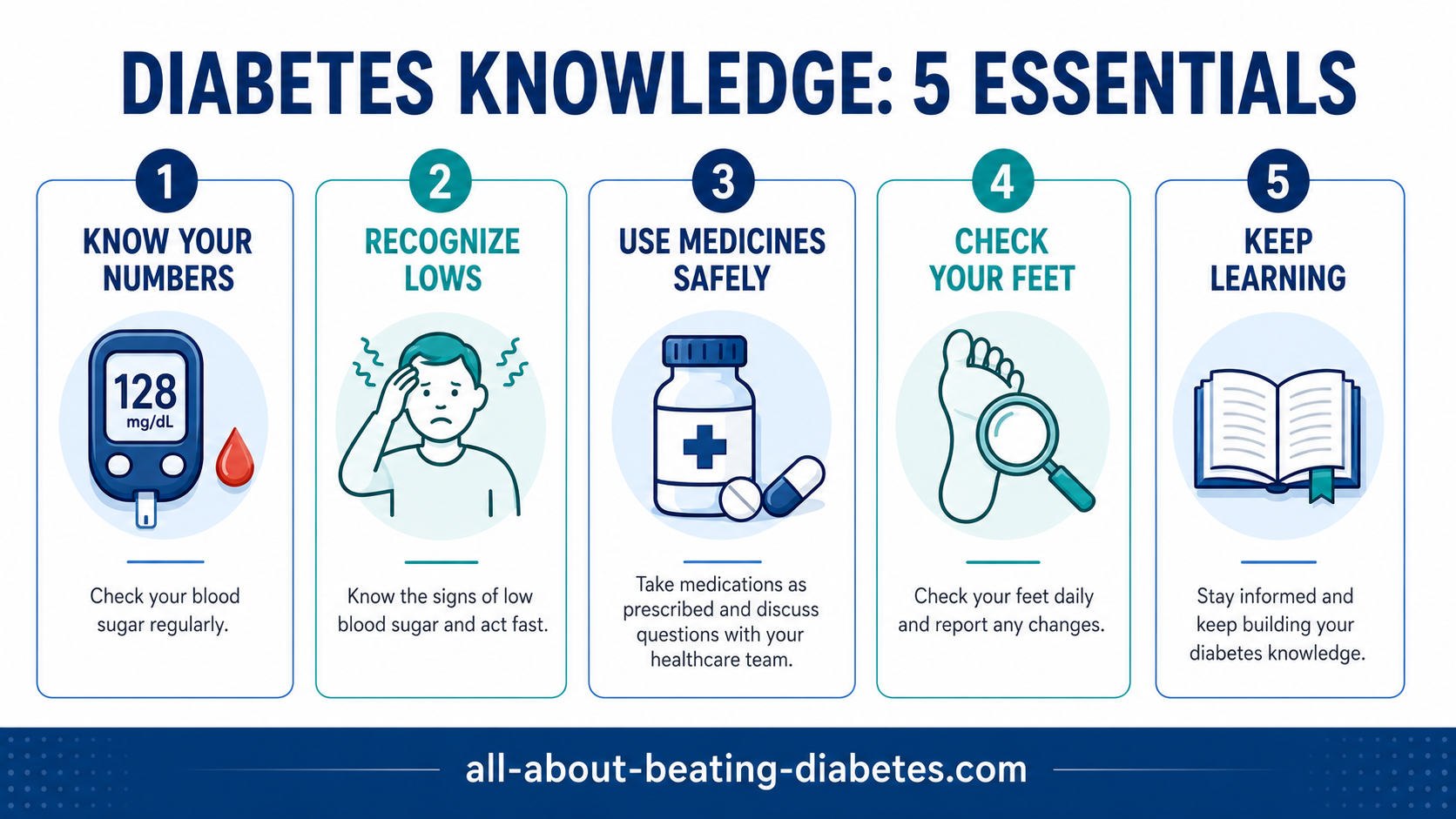

Why take a diabetes knowledge test?
This quiz is not about passing or failing. A wrong answer identifies a topic worth reviewing. Knowing when glucose is low, how to treat it, why A1C differs from a daily reading, and when to ask for help can make daily self-management safer.
It is also important to recognize the limits of general information. Your personal glucose, blood-pressure, nutrition, and medication targets may differ because of age, pregnancy, diabetes type, heart or kidney disease, hypoglycemia risk, and other factors.
Common diabetes myths corrected
Fact: Type 1 diabetes is an autoimmune disease. Type 2 diabetes develops through interacting genetic, metabolic, environmental, and lifestyle factors. Frequent sugary drinks can contribute to weight gain and type 2 diabetes risk, but the cause is not one food alone.
Fact: Overweight and obesity increase type 2 diabetes risk, but people at any body size can develop type 1 or type 2 diabetes.
Fact: Small portions may fit some individualized meal plans. Total carbohydrate, portion size, medicine use, and glucose response matter.
Fact: Type 2 diabetes can develop slowly with few or no noticeable symptoms. Blood testing is needed for diagnosis.
Fact: Knowledge supports self-care, but it does not replace A1C, glucose data, examinations, laboratory tests, medication review, and personal follow-up.
How to understand your score
0–7 correct: Start with the essentials
Please do not feel discouraged. I recommend beginning with blood sugar numbers, A1C, low-blood-sugar recognition and treatment, and medicine safety. Review the explanations and retake the test after reading the related resources.
8–12 correct: A useful foundation
You understand many important points. Use the questions you missed to guide your next reading or discussion with your healthcare professional. One corrected misunderstanding can improve safety.
13–15 correct: Strong basic knowledge
You have a strong grasp of the essentials. Continue applying what you know and stay open to updated guidance. Even an excellent score cannot replace individualized medical advice.
Frequently asked questions
Is this an official diagnostic test?
No. It is a patient-education quiz. It cannot diagnose diabetes, measure treatment success, or certify diabetes-management competency.
What score should I aim for?
The goal is to understand the explanations, not to collect a perfect score. Review any missed question and retake the quiz when ready.
Can family members or caregivers take it?
Yes. The questions cover basic safety information that may also help people supporting someone with diabetes.
Does the quiz apply equally to everyone?
No. It covers general principles. Pregnancy, childhood, older age, diabetes type, medication use, and other health conditions may require different targets and instructions.
Related questions from readers
Related resources
References
- American Diabetes Association. Standards of Care in Diabetes—2026.
- National Institute of Diabetes and Digestive and Kidney Diseases. Diabetes Tests & Diagnosis.
- American Diabetes Association. Signs, Symptoms, and Treatment for Hypoglycemia.
- Centers for Disease Control and Prevention. Your Feet and Diabetes.
- Centers for Disease Control and Prevention. Your Diabetes Care Schedule.
- Fitzgerald JT, et al. The Reliability and Validity of a Brief Diabetes Knowledge Test.