- Home
- blood sugar levels
- level 200-250 after eating
Blood Sugar 200–250 mg/dL: Fasting, After Eating, and Medication-Related
A blood sugar reading between 200 and 250 mg/dL is above the usual target range and should not be ignored. Its meaning depends on whether you tested while fasting or after eating, your diabetes treatment, and whether you have symptoms. Here, I explain the possible causes, practical next steps, and when you should contact your healthcare professional.
Written by: Dr. Albana Greca Sejdini, MD, MMedSc
Medically reviewed by: Dr. Ruden Cakoni, MD, Endocrinologist
Last medically reviewed: July 2026
A blood sugar reading between 200 and 250 mg/dL—approximately 11.1 to 13.9 mmol/L—is high. However, one reading does not have the same meaning in every situation. Interpretation depends on whether it was measured fasting, during a formal glucose-tolerance test, randomly with symptoms, or after an ordinary meal.
Is Blood Sugar of 200–250 mg/dL Diabetes?
It may be in the diagnostic range, but the answer depends on the type and timing of the test.
| Testing situation | How 200–250 mg/dL is interpreted | What usually happens next |
|---|---|---|
| Fasting laboratory glucose After at least eight hours without calories |
Clearly within the diabetes range because the diagnostic threshold is 126 mg/dL or higher. | Confirmation is generally required unless hyperglycemia is unequivocal or classic symptoms are present. |
| Two-hour 75-g oral glucose tolerance test | A two-hour plasma glucose of 200 mg/dL or higher is within the diabetes range. | The clinician confirms and classifies the diagnosis as appropriate. |
| Random laboratory glucose | A result of 200 mg/dL or higher can diagnose diabetes when classic symptoms or a hyperglycemic crisis are present. | Without classic symptoms, another abnormal diagnostic test is usually needed. |
| One to two hours after an ordinary meal | Above the common post-meal target for many adults who already have diabetes. | Review the pattern, meal, medicine, timing, and standardized laboratory testing. A home result alone does not diagnose diabetes. |
| During pregnancy | Pregnancy uses lower and different glucose targets and diagnostic thresholds. | Contact the pregnancy or diabetes team promptly for individualized advice. |
Read our guide to fasting glucose, HbA1c, and oral glucose tolerance testing for the full diagnostic criteria.
Fasting Blood Sugar 200–250 vs. After-Meal Blood Sugar
Fasting reading
A true fasting glucose of 200–250 mg/dL is substantially above the diabetes threshold and requires prompt medical evaluation. Possible explanations include undiagnosed diabetes, insufficient diabetes treatment, the dawn phenomenon, illness, corticosteroid use, dehydration, or missed medication or insulin.
Do not begin insulin or another diabetes medicine solely because of an online interpretation. Your clinician should confirm the result when required, assess symptoms and ketones when relevant, and select treatment according to diabetes type, HbA1c, kidney and heart health, pregnancy status, weight priorities, and risk of hypoglycemia.
After-meal reading
Blood glucose normally rises after eating, but the size and duration of the rise depend on the meal, insulin response, diabetes treatment, activity, and health status. For many nonpregnant adults with diabetes, a common postprandial goal is below 180 mg/dL one to two hours after the beginning of the meal. Individual targets may differ.
A result of 200–250 mg/dL may occur after a high-carbohydrate meal, but repeated elevations can also indicate that the meal plan, medicine, insulin dose, or insulin timing needs review. Learn more in our blood sugar after eating guide.
Common Causes of Blood Sugar Between 200 and 250 mg/dL
- Diabetes that has not yet been diagnosed or has progressed.
- A meal containing more carbohydrate than expected, especially sugary drinks, juice, sweets, refined grains, or a large portion.
- Missed, delayed, or insufficient medicine or insulin.
- Insulin delivery problems, including a blocked pump set, damaged insulin, injection problems, or incorrect storage.
- Infection or illness, even when eating less than usual.
- Physical or emotional stress, pain, surgery, or injury.
- Dehydration, which can make glucose more concentrated and impair kidney function.
- Reduced activity compared with the usual routine.
- Dawn phenomenon or overnight glucose changes when the high reading occurs in the morning.
- Medicines that raise glucose.
Use the blood sugar levels by time of day guide to compare fasting, before-meal, after-meal, and bedtime patterns.
Can Medication Cause Blood Sugar of 200–250 mg/dL?
Yes. Medication-related hyperglycemia is possible, particularly in people who already have diabetes or metabolic risk.
Glucocorticoids such as prednisone and dexamethasone are among the most common causes. They often raise glucose later in the day and may affect after-meal readings more strongly than fasting glucose, depending on the medicine, dose, and timing.
Other medicines associated with worsened glucose regulation in some patients include certain second-generation antipsychotics, immunosuppressive medicines, thiazide diuretics, some beta-blockers, selected HIV medicines, and several less commonly used drugs. Statins are associated with a small increase in diabetes risk in susceptible people, but their cardiovascular benefits often outweigh that risk.
Symptoms of High Blood Sugar
Some people have no obvious symptoms at 200–250 mg/dL, particularly when glucose rose gradually. Others may notice:
- increased thirst or dry mouth;
- frequent urination, including during the night;
- fatigue or weakness;
- blurred vision;
- headache;
- difficulty concentrating;
- unexplained weight loss when hyperglycemia is prolonged;
- recurrent infections or slow wound healing.
Symptoms do not reliably indicate the exact glucose level. A person may feel relatively well despite a serious elevation, while another may feel unwell at a lower number.
What Should You Do About a Reading of 200–250 mg/dL?
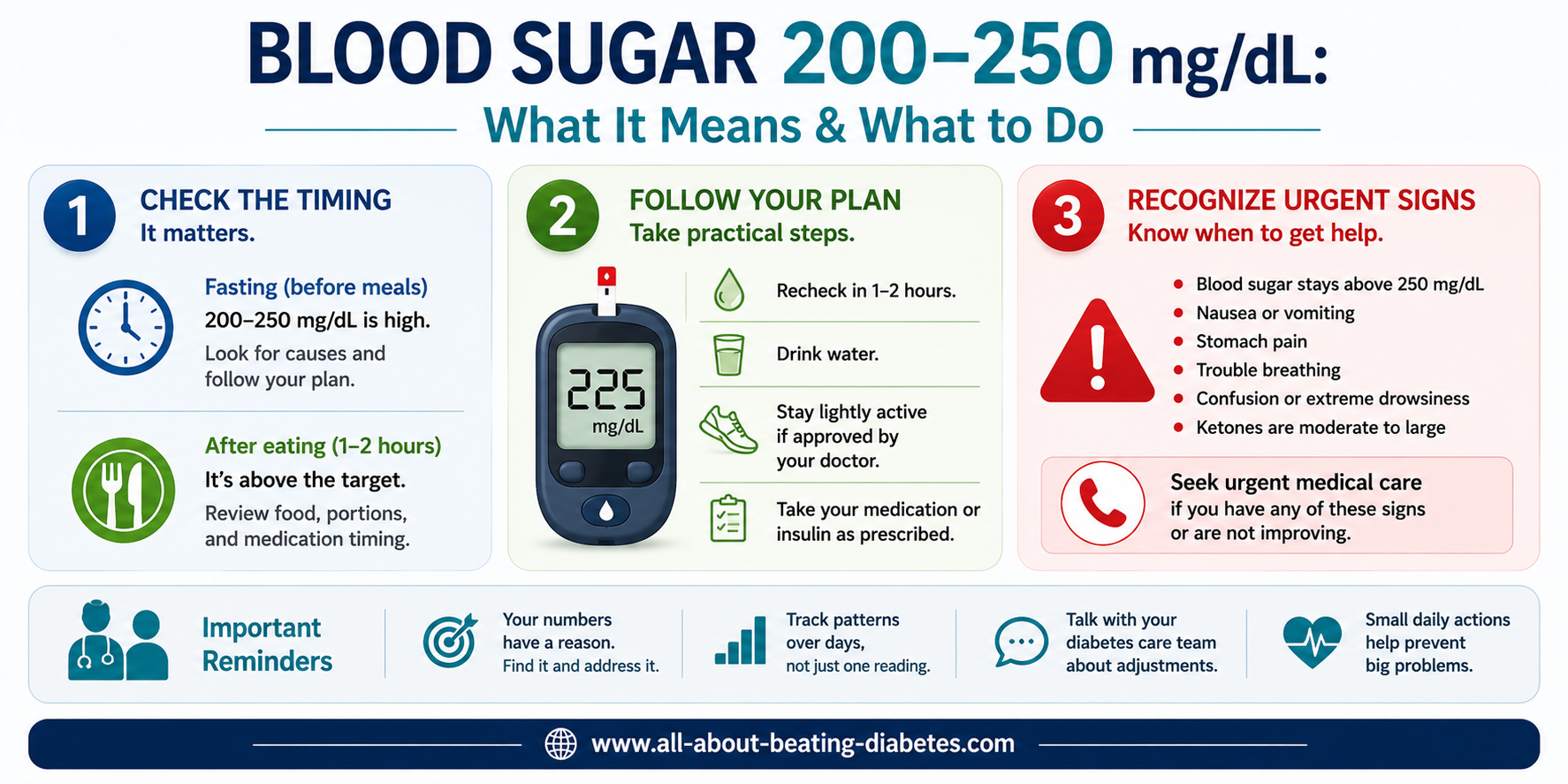
If your blood sugar is between 200 and 250 mg/dL, first confirm when it was measured and recheck it as directed in your diabetes plan. Drink water, take your prescribed medication or insulin as instructed, and look for possible causes such as a missed dose, illness, stress, or a high-carbohydrate meal. Seek medical advice if the reading remains high, rises further, or occurs with ketones, vomiting, breathing difficulty, confusion, or severe weakness.

1. Confirm an unexpected home reading
Wash and dry your hands and repeat the test with an in-date strip. Sugar or food residue on the fingers may falsely raise a finger-stick result. If the meter repeatedly gives unexpected results, check the control solution or compare it with a laboratory measurement.
2. Record the context
Write down whether the reading was fasting or how long it was after the first bite of food. Include the meal, medicine or insulin, physical activity, illness, stress, and symptoms. This information helps distinguish an isolated spike from a repeatable pattern.
3. Follow your prescribed correction or sick-day plan
People using insulin should use only the correction factor and instructions supplied by their diabetes team. Do not guess an extra dose or repeatedly “stack” rapid-acting insulin because this can cause delayed hypoglycemia.
4. Drink fluids appropriately
Water or another sugar-free drink may help prevent dehydration if you can drink normally and have not been told to restrict fluids for heart or kidney disease. Water does not “wash sugar out” as a complete treatment and does not replace insulin or other prescribed therapy.
5. Know when to check ketones
Check blood or urine ketones according to your sick-day plan, especially if you have type 1 diabetes, use insulin, take an SGLT2 inhibitor, feel ill, or glucose reaches approximately 240–250 mg/dL or higher. Positive ketones require prompt professional advice, and moderate-to-large ketones with symptoms require emergency evaluation.
6. Contact your healthcare team for repeated highs
Call for advice when readings remain above your target, occur repeatedly on several days, rise after a new medicine, or do not respond to your established plan. Treatment may need adjustment, but the correct response depends on the cause.
Should You Exercise When Blood Sugar Is 200–250 mg/dL?
Light activity after a meal may help some people lower post-meal glucose, but exercise is not an automatic or universally safe treatment for a high reading.
- Do not exercise when ketones are present, you are vomiting, dehydrated, acutely ill, or have symptoms of DKA.
- Use caution if insulin or a medicine that can cause hypoglycemia is active.
- Follow your clinician’s plan if you have heart disease, neuropathy, foot ulcers, proliferative retinopathy, or another condition affecting exercise safety.
- When well and ketone-free, a gentle walk after eating may be reasonable if it is already part of your approved routine.
Do not exercise aggressively to “burn off” an unexplained or persistent glucose elevation.
How Is Blood Sugar of 200–250 mg/dL Treated?
Treatment is based on the cause and the overall glucose pattern—not one number alone.
- New diabetes: confirm and classify the diagnosis, check HbA1c, and create an individualized treatment plan.
- Known type 2 diabetes: review food, adherence, medicines, kidney and heart health, weight priorities, and glucose trends.
- Insulin-treated diabetes: review basal and mealtime insulin, correction factors, injection technique, insulin storage, and pump or CGM data.
- Illness-related hyperglycemia: follow sick-day rules, maintain appropriate hydration, monitor more often, and check ketones when indicated.
- Medication-related hyperglycemia: coordinate with the prescriber rather than stopping the medicine independently.
Drug therapy is not automatically the first response to every isolated after-meal reading. Some people need changes in food portions or medicine timing; others require a new or adjusted glucose-lowering medicine or insulin. See our diabetes medications guide for an overview of treatment options.
How to Prevent Repeated Blood Sugar Spikes
- Take prescribed medicine and insulin consistently.
- Use a realistic meal plan with measured carbohydrate portions.
- Choose water or unsweetened drinks instead of sugar-sweetened beverages.
- Pair carbohydrate with vegetables, protein, and other fiber-rich foods.
- Stay physically active according to your medical abilities.
- Keep written sick-day and ketone-testing instructions.
- Review glucose-raising medicines with the prescriber before starting them.
- Check insulin expiration, storage, injection technique, and pump supplies.
- Use HbA1c, meter, or CGM patterns to guide treatment reviews.
- Address sleep, infection, stress, and other factors that repeatedly affect glucose.
The diabetes plate-method and meal-planning guide can help you build meals without eliminating every carbohydrate food.
When Is Blood Sugar of 200–250 mg/dL Urgent?
The number alone is not always an emergency, but the symptoms and circumstances can make it urgent.
Pregnant people, children, people with type 1 diabetes, insulin-pump users, and people taking SGLT2 inhibitors may need earlier assessment. SGLT2 inhibitors can rarely be associated with ketoacidosis even when glucose is not extremely high.
Use our dangerous blood sugar levels guide for a broader explanation of warning signs.
Related Questions
- Is Blood Sugar of 190 mg/dL After Eating High?
- What Does Blood Sugar of 196 mg/dL Two Hours After Food Mean?
- What Do Fasting Glucose 140 and Post-Meal Glucose 240 Mean?
- How Can I Manage High Postprandial Blood Sugar?
Related Resources
- Blood Sugar Levels After Eating
- Blood Sugar Levels by Time of Day
- Dangerous Blood Sugar Levels
- Blood Tests for Diabetes
- Diabetes Medications: Benefits and Side Effects
Medical disclaimer: This page provides general education and does not diagnose diabetes or replace your personal correction, sick-day, medication, or emergency plan. Do not start, stop, or change insulin or another medicine without individualized medical guidance.
References
- American Diabetes Association: Diagnosis and Classification of Diabetes—Standards of Care in Diabetes 2026
- American Diabetes Association: Glycemic Goals, Hypoglycemia, and Hyperglycemic Crises—Standards of Care in Diabetes 2026
- American Diabetes Association: Hyperglycemia—High Blood Glucose
- Centers for Disease Control and Prevention: Diabetic Ketoacidosis
- National Institute of Diabetes and Digestive and Kidney Diseases: Diabetes Tests and Diagnosis
- Endotext: Atypical Forms and Secondary Causes of Diabetes