- Home
- normal range
- Good Blood Sugar Levels
Good Blood Sugar Levels: Fasting, After Meals, A1C, and When to Call a Doctor
Written by: Dr. Albana Greca, MD, MMedSc
Medical review: Dr. Ruden Cakoni, MD, Endocrinologist
Last reviewed: June 2026
Good blood sugar levels depend on when you test. For many nonpregnant adults with diabetes, common targets are 80–130 mg/dL before meals and less than 180 mg/dL 1–2 hours after starting a meal. For people without diabetes, fasting blood sugar is usually below 100 mg/dL. These numbers are general education, not personal medical advice.
This guide will help you understand common blood sugar targets in mg/dL and mmol/L, what your numbers may mean, and when you should speak with your doctor.
Quick Answer
Good blood sugar levels depend on when you test and whether you are checking for diabetes, monitoring prediabetes, or managing diabetes treatment.
For many nonpregnant adults with diabetes, common blood sugar targets are:
| Time of test | Common target | mmol/L |
|---|---|---|
| Before meals / fasting | 80–130 mg/dL | 4.4–7.2 mmol/L |
| 1–2 hours after meals | Less than 180 mg/dL | Less than 10.0 mmol/L |
| Low blood sugar alert | Below 70 mg/dL | Below 3.9 mmol/L |
| A1C goal for many adults | Often less than 7% | Less than 53 mmol/mol |
Important Safety Warning
Seek urgent medical help now if you have very high blood sugar together with vomiting, dehydration, confusion, severe weakness, fruity-smelling breath, stomach pain, fast or difficult breathing, or you cannot keep fluids down.
Low blood sugar can also be dangerous. Get emergency help if a person has low blood sugar with confusion, seizure, loss of consciousness, or cannot swallow safely.
This page is for education only. It cannot diagnose or treat an emergency. If symptoms are severe or you are unsure what to do, contact emergency medical services or your local urgent care provider.
Important: These numbers are general targets, not personal medical instructions. Your own target may be different if you are pregnant, older, a child or teenager, using insulin, having frequent low blood sugar, or living with kidney disease, heart disease, or other medical conditions.
For a more complete chart comparing normal, ideal, fasting, after-meal, and A1C numbers, see Normal and Ideal Blood Sugar Levels.
For an easy handout you can print or keep with your glucose meter, see the Printable Diabetic Blood Sugar Chart.
Good Blood Sugar Levels for Many Adults With Diabetes
The table below shows common blood sugar targets for many nonpregnant adults with diabetes. These are general educational targets, not personal medical advice. Your doctor may recommend different goals based on your age, medications, pregnancy status, kidney health, heart health, and risk of low blood sugar.
| Time of Test | Common Target in mg/dL | Common Target in mmol/L | What It Means |
|---|---|---|---|
| Before breakfast / fasting | 80–130 mg/dL | 4.4–7.2 mmol/L | Often used as a common fasting target for many adults with diabetes |
| Before meals | 80–130 mg/dL | 4.4–7.2 mmol/L | A common pre-meal target, if it is safe for the individual patient |
| 1–2 hours after starting a meal | Less than 180 mg/dL | Less than 10.0 mmol/L | A common after-meal target for many adults with diabetes |
| Bedtime | Individualized | Individualized | Your doctor may set a bedtime goal based on your treatment plan |
| A1C | Often less than 7%, if safe | Not measured in mmol/L | A common goal for many adults, but not right for everyone |
Medical note: These numbers are commonly used diabetes targets for many nonpregnant adults, but they are not the right goal for everyone. People who are pregnant, older adults, children, teenagers, people using insulin, and people with kidney disease, heart disease, or frequent low blood sugar may need individualized targets.
Special Safety Notes: Pregnancy, Children, and Teenagers
Pregnancy
Blood sugar interpretation is different during pregnancy. If you are pregnant, planning pregnancy, or have gestational diabetes, do not use general adult blood sugar ranges as your personal target.
Pregnancy may require lower and more specific blood sugar goals to protect both mother and baby. Your obstetrician, endocrinologist, or diabetes care team should guide your targets, testing schedule, diet plan, and medication decisions.
Children and Teenagers
Children and teenagers need individualized evaluation. Their blood sugar targets may differ from adult targets depending on age, growth, puberty, activity level, symptoms, and whether they already have diabetes.
Contact a pediatrician promptly if a child or teenager has repeated high blood sugar readings, repeated low readings, excessive thirst, frequent urination, unexplained weight loss, unusual tiredness, vomiting, confusion, or rapid breathing.
Medical note: These sections are included for safety. General adult blood sugar charts are helpful for education, but they should not replace individualized medical guidance during pregnancy or childhood.
What Does a Good Blood Sugar Level Mean?
A good blood sugar level is not judged by one number alone. To understand what your result means, it is important to look at when the test was taken, why it was taken, and whether the result is part of a repeated pattern.
In my medical practice, I explain to patients that the goal is not simply to “get a good number.” The more important goal is to understand your blood sugar pattern. One high or low reading can happen because of a meal, stress, poor sleep, illness, exercise, dehydration, hormone changes, or medication timing. However, repeated high or low readings give you and your doctor more useful information about your diabetes risk, diabetes control, and treatment plan.
This is why blood sugar results should always be interpreted in context. A number that is acceptable for one person may not be the safest target for another person. Your ideal blood sugar range may be different if you are pregnant, older, taking insulin or sulfonylureas, have kidney or heart disease, experience frequent low blood sugar, or have other medical conditions.
For this reason, do not focus only on a single reading. Look at the overall trend, write down your results in your blood sugar log sheet, notice what may be affecting them, and review repeated patterns with your doctor. This helps create a safer, more personal, and more effective diabetes care plan.
Blood Sugar Ranges for Diabetes Diagnosis
The following blood sugar ranges are commonly used by healthcare professionals to help understand whether a result is within the normal range, suggests prediabetes, or may indicate diabetes.
However, a single blood sugar result is not enough to make a diagnosis in most cases. These numbers should be interpreted together with your symptoms, medical history, risk factors, and sometimes repeated testing.
If your result is higher or lower than expected, do not panic and do not diagnose yourself from one reading. Please discuss the result with your doctor, who can confirm what it means and advise you on the safest next step.
| Test | Usually Normal | Prediabetes Range | Diabetes Range |
|---|---|---|---|
| Fasting blood sugar | Below 100 mg/dL Below 5.6 mmol/L |
100–125 mg/dL 5.6–6.9 mmol/L |
126 mg/dL or higher 7.0 mmol/L or higher |
| 2-hour oral glucose tolerance test | Below 140 mg/dL Below 7.8 mmol/L |
140–199 mg/dL 7.8–11.0 mmol/L |
200 mg/dL or higher 11.1 mmol/L or higher |
| A1C | Below 5.7% | 5.7%–6.4% | 6.5% or higher |
Source Note: Diagnostic cutoffs are based on current American Diabetes Association Standards of Care. This table is simplified for patient education and should not be used for self-diagnosis.
These diagnostic ranges help show whether blood sugar is normal, in the prediabetes range, or in the diabetes range. For a broader patient-friendly overview of daily targets and ideal numbers, visit Normal and Ideal Blood Sugar Levels.
As I explain to my patients, diagnosis and treatment are two different steps. Diagnostic ranges help identify whether diabetes may be present, while daily treatment targets are personalized according to age, medications, pregnancy, other health conditions, risk of low blood sugar, and the overall treatment plan.
For this reason, your doctor may recommend blood sugar goals that are slightly different from the diagnostic ranges shown here.
Good Fasting Blood Sugar Levels
Fasting blood sugar is usually checked in the morning before eating or drinking anything except water. It shows the level of glucose in your blood after several hours without food, and it is one of the common tests used to understand blood sugar control.
For people without diabetes, fasting blood sugar is usually below 100 mg/dL, or below 5.6 mmol/L. For many nonpregnant adults already living with diabetes, a common fasting or before-meal treatment target is 80–130 mg/dL, or 4.4–7.2 mmol/L.
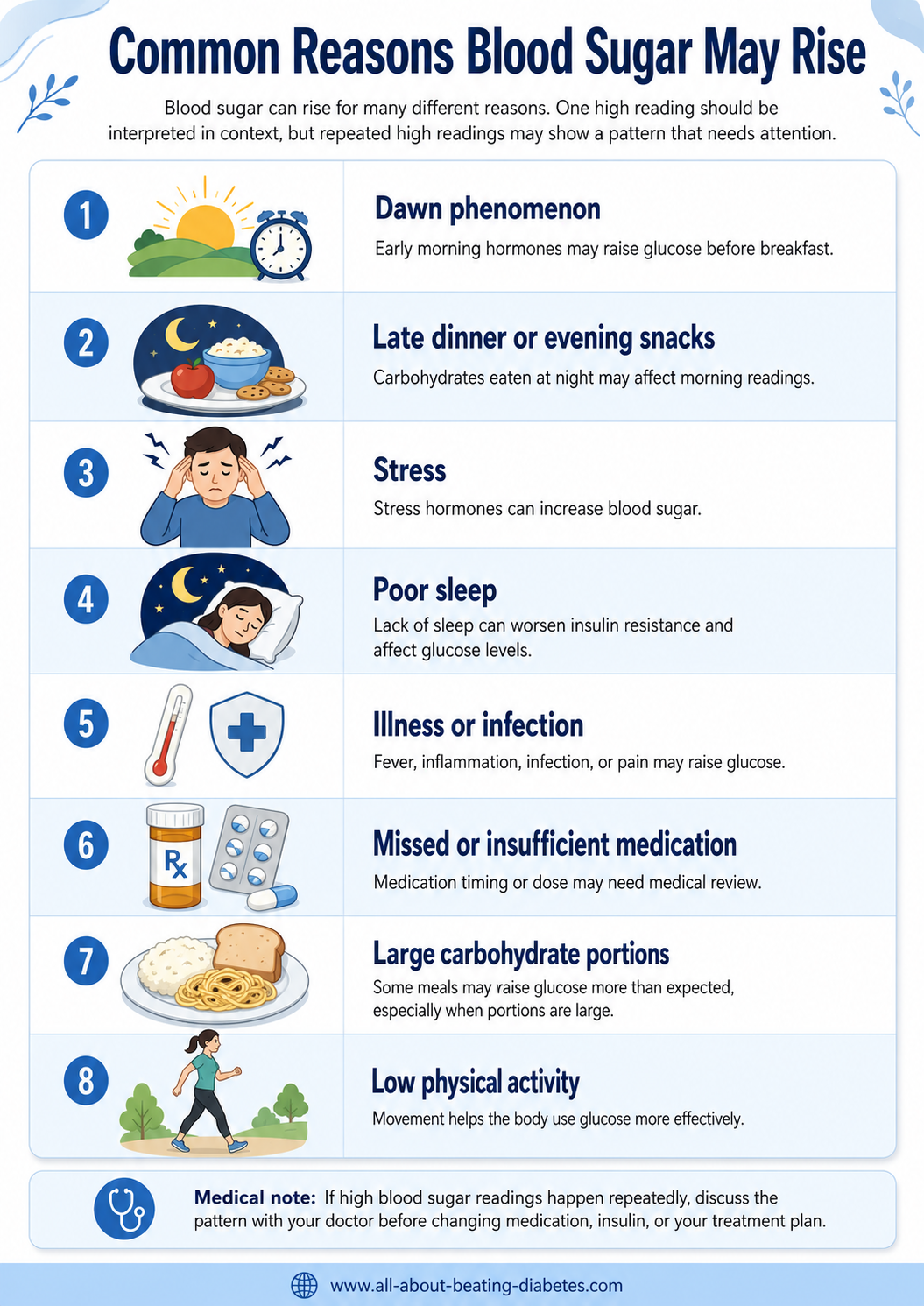
As I explain to my patients, one high morning reading does not always mean that you have done something wrong. Fasting blood sugar can rise for several reasons, including the dawn phenomenon, late evening meals or snacks, poor sleep, stress, illness, dehydration, reduced physical activity, hormone changes, or the timing and dose of diabetes medication.
What matters most is the pattern. If your fasting blood sugar is often above your target range, write down your readings, note what happened the evening before, and discuss the pattern with your doctor. Your treatment plan may need adjustment, but this should be done safely and personally, based on your overall health, medications, risk of low blood sugar, and diabetes goals.
Good Blood Sugar Levels After Eating
Blood sugar normally rises after eating, especially after meals that contain carbohydrates. For this reason, the timing of your blood sugar test is very important. A reading taken immediately after eating, one hour after a meal, or two hours after a meal may show different results.
For many nonpregnant adults with diabetes, a common after-meal target is less than 180 mg/dL, or less than 10.0 mmol/L, measured 1 to 2 hours after the beginning of a meal.
As I explain to my patients, one high after-meal reading does not define your overall diabetes control. What matters more is whether high readings happen repeatedly and whether they are linked to certain meals, portion sizes, sugary drinks, snacks, reduced physical activity, stress, illness, or the timing of diabetes medication.
If your after-meal blood sugar is often above your target range, it may be helpful to write down what you ate, the portion size, the time of the meal, and the time of the blood sugar test. This information helps you and your doctor understand the pattern and decide whether changes are needed in your meal plan, activity, medication timing, or treatment goals.
Your personal blood sugar targets may be different depending on your age, pregnancy status, other medical conditions, medications, and risk of low blood sugar. Always discuss repeated high or low readings with your healthcare professional before making changes to your treatment plan.
Good A1C Levels
The A1C test estimates your average blood sugar level over the past 2 to 3 months. This makes it different from a finger-stick or glucose meter reading, which shows your blood sugar at one specific moment.
As I explain to my patients, both types of information are important. Daily glucose readings help you understand how food, activity, stress, illness, sleep, and medication timing affect your blood sugar from day to day. The A1C test gives a broader view of your overall blood sugar control over time.
For many nonpregnant adults with diabetes, an A1C goal of less than 7% is commonly used. However, this goal should not be the same for everyone. Current diabetes guidance emphasizes that A1C targets should be individualized, using shared decision-making between the patient and healthcare professional.
Some people may benefit from a lower A1C goal if it can be reached safely without frequent low blood sugar. Others may need a safer, higher goal, especially if they are older, have frequent hypoglycemia, use insulin or certain diabetes medications, have heart or kidney disease, have several medical conditions, or have difficulty recognizing low blood sugar symptoms.
Your A1C goal should always be discussed with your doctor. This is especially important if you are pregnant, planning pregnancy, using insulin, having repeated low blood sugar, living with other medical conditions, or finding your current treatment plan difficult to follow safely.
The goal is not only to lower the A1C number. The real goal is to improve long-term health while avoiding dangerous low blood sugar and creating a treatment plan that is safe, realistic, and personal for you.
To better understand how A1C relates to average blood sugar, you can use our online diabetes calculators, including the A1C to average glucose calculator.
Why Your Blood Sugar May Be Higher Than Expected
|
Blood sugar can rise for many different reasons, and it is not always caused by food alone. As I explain to my patients, one high reading should be interpreted in context, but repeated high readings deserve attention. Common reasons for higher blood sugar may include the following, as presented in the next infographic. If your blood sugar readings remain high over several days, keep a written record of your results, including the time of testing, meals, physical activity, stress, illness, and medication timing. This pattern can help your doctor understand what may be affecting your glucose levels and decide whether your treatment plan needs to be reviewed safely. |
When Blood Sugar Is Too Low
Blood sugar below 70 mg/dL, or 3.9 mmol/L, is generally considered low blood sugar, also called hypoglycemia. This level should be taken seriously, especially if you have symptoms or if you use insulin or diabetes medications that can lower blood sugar.
Symptoms of low blood sugar may include shaking, sweating, sudden hunger, dizziness, weakness, headache, fast heartbeat, blurred vision, irritability, confusion, or difficulty concentrating. In more severe cases, hypoglycemia may cause drowsiness, loss of coordination, fainting, seizure, or loss of consciousness.
As I explain to my patients, low blood sugar should not be ignored. If you are awake and able to swallow safely, many diabetes plans use fast-acting carbohydrate treatment, followed by rechecking blood sugar after about 15 minutes. However, your personal hypoglycemia plan should be discussed with your doctor, especially if you take insulin or medicines that can cause low blood sugar.
Seek urgent medical help if the person is confused, very drowsy, unable to swallow safely, has a seizure, loses consciousness, or if blood sugar does not improve after treatment.
If low blood sugar happens repeatedly, please review your readings with your caring healthcare proffessional. Your medication dose, meal timing, physical activity, alcohol intake, or treatment goals may need to be adjusted safely.
When Blood Sugar Needs Medical Attention
Blood sugar readings should always be understood together with your symptoms, your usual target range, your medications, and your overall health condition. As I explain to my patients, one unusual reading may happen from time to time, but repeated high or low readings should not be ignored.
Please contact your doctor if your fasting blood sugar is repeatedly above your personal target range, your after-meal readings are often high, or your blood sugar drops below 70 mg/dL or 3.9 mmol/L. You should also seek medical advice if you have symptoms such as shaking, sweating, dizziness, weakness, confusion, blurred vision, or a fast heartbeat.
It is also important to speak with your caring healthcare proffessional if you are unsure whether your medication dose, meal plan, physical activity, or blood sugar testing schedule is right for you. Do not change insulin, diabetes medication, or treatment targets without medical guidance.
Seek urgent medical help if very high blood sugar is accompanied by vomiting, dehydration, confusion, difficulty breathing, severe weakness, fruity-smelling breath, or inability to keep fluids down. These may be warning signs of a serious diabetes emergency, such as diabetic ketoacidosis or severe dehydration, and should be treated immediately.
Blood Sugar Situations That Need Attention
Some blood sugar readings need prompt medical advice, especially if they are repeated or occur with symptoms.
| Blood Sugar Situation | What It May Mean | What to Do |
|---|---|---|
| Below 70 mg/dL Below 3.9 mmol/L |
Low blood sugar, especially important for people using insulin or sulfonylureas | Treat according to your diabetes plan and contact your doctor if it happens often |
| Repeated fasting readings of 100–125 mg/dL 5.6–6.9 mmol/L |
May suggest prediabetes if confirmed by laboratory testing | Ask your doctor about repeat fasting glucose and A1C |
| Fasting blood sugar of 126 mg/dL or higher 7.0 mmol/L or higher |
May be in the diabetes range if confirmed | Contact your doctor for confirmatory testing |
| Very high blood sugar with vomiting, dehydration, confusion, severe weakness, or difficulty breathing | Possible serious medical emergency | Seek urgent medical help immediately |
How to Support Better Blood Sugar Levels Safely
Better blood sugar control usually comes from consistent, realistic habits rather than from one perfect meal or one perfect day. As I explain to my patients, the safest approach is to build daily routines that you can continue over time and adjust with your healthcare professional when needed.
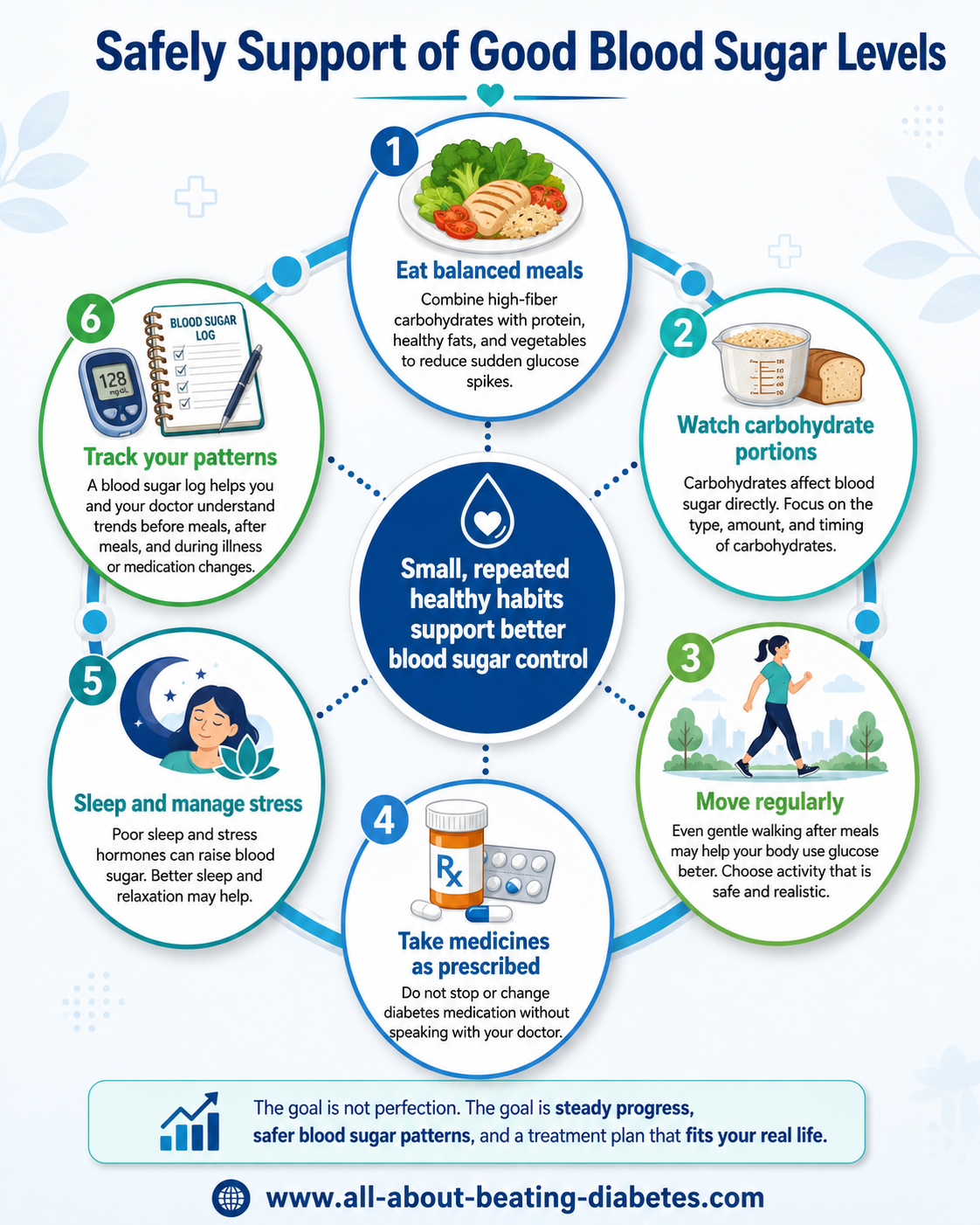


When you record your readings, include the time of testing, meals, activity, stress, illness, sleep, and medication timing. This gives a clearer picture and helps your doctor decide whether your plan needs adjustment.
The goal is not perfection. The goal is steady progress, safer blood sugar patterns, and a treatment plan that fits your real life.
What to Discuss With Your Doctor
Before your appointment, bring your glucose meter, written blood sugar log, or continuous glucose monitor report if you use one. These records help your doctor understand your blood sugar patterns more clearly and make safer decisions about your treatment plan.
You may ask:
- What is my personal fasting blood sugar target?
- What should my blood sugar be after meals?
- What A1C goal is safe for me?
- When should I call the clinic?
- What should I do if my blood sugar is low?
- Do my medicines need adjustment?
- Should I test more often during illness, travel, or medication changes?
Frequently Asked Questions
What is a good fasting blood sugar level?
What is a good fasting blood sugar level?
For people without diabetes, fasting blood sugar is usually below 100 mg/dL, or below 5.6 mmol/L. For many nonpregnant adults with diabetes, a common fasting or before-meal target is 80–130 mg/dL, or 4.4–7.2 mmol/L. Your doctor may recommend a different target for you.
What is a good blood sugar level after eating?
What is a good blood sugar level after eating?
For many nonpregnant adults living with diabetes, a commonly used after-meal blood sugar target is below 180 mg/dL, which is below 10.0 mmol/L, when measured about 1 to 2 hours after the start of a meal.
In my practice, I explain this as a general guide, not a fixed rule for every patient. Your personal target may be different depending on your age, diabetes type, medications, risk of low blood sugar, pregnancy status, kidney or heart disease, and your doctor’s treatment plan.
Is 135 mg/dL high blood sugar?
Is 135 mg/dL high blood sugar?
A blood sugar reading of 135 mg/dL, or 7.5 mmol/L, depends on the time of testing.
If this reading is taken fasting, before eating in the morning, it is higher than the usual normal fasting range and should be discussed with your doctor, especially if it happens more than once.
If 135 mg/dL is measured after a meal, it may be acceptable for some people, depending on how long after eating the test was done and what personal blood sugar targets your doctor has recommended.
What A1C is considered good?
What A1C is considered good?
For many nonpregnant adults living with diabetes, an A1C below 7% is commonly used as a general treatment goal. This level is often associated with better long-term blood sugar control and a lower risk of diabetes-related complications.
However, the safest A1C goal is personal. Some patients may benefit from a lower target, while others may need a higher and safer goal, especially if they are older, have heart or kidney disease, use insulin, have frequent low blood sugar, or have other medical conditions.
When should I call a doctor about blood sugar?
When should I call a doctor about blood sugar?
Call your doctor if your blood sugar is repeatedly above your target range, if you have readings below 70 mg/dL, if you have symptoms, or if you are unsure how to adjust your food, activity, or medication plan safely.
Final Message
Your blood sugar numbers are not a judgment. They are information. When we look at them carefully, we can understand your body better and make safer decisions together.
Please do not focus only on one reading. Look at the pattern, write down what may have affected the result, and review repeated highs or lows with your doctor.
With the right plan, many people can improve their blood sugar control step by step, safely and realistically.
References
- American Diabetes Association Professional Practice Committee for Diabetes. Diagnosis and Classification of Diabetes: Standards of Care in Diabetes—2026. Diabetes Care. 2026;49(Suppl. 1):S27–S49. doi:10.2337/dc26-S002.
- American Diabetes Association Professional Practice Committee for Diabetes. Glycemic Goals, Hypoglycemia, and Hyperglycemic Crises: Standards of Care in Diabetes—2026. Diabetes Care. 2026;49(Suppl. 1):S132–S149. doi:10.2337/dc26-S006.
- American Diabetes Association Professional Practice Committee for Diabetes. Summary of Revisions: Standards of Care in Diabetes—2026. Diabetes Care. 2026;49(Suppl. 1):S6–S12. doi:10.2337/dc26-SREV.
- Battelino T, Danne T, Bergenstal RM, et al. Clinical Targets for Continuous Glucose Monitoring Data Interpretation: Recommendations From the International Consensus on Time in Range. Diabetes Care. 2019;42(8):1593–1603. doi:10.2337/dci19-0028.
- National Institute of Diabetes and Digestive and Kidney Diseases. Low Blood Glucose (Hypoglycemia). National Institutes of Health. Updated 2026.