- Home
- Diabetes Complications
- Diabetic Autonomic Neuropathy Symptoms Diagnosis and Treatment
Diabetic Autonomic Neuropathy: Signs, Diagnosis, and Treatment
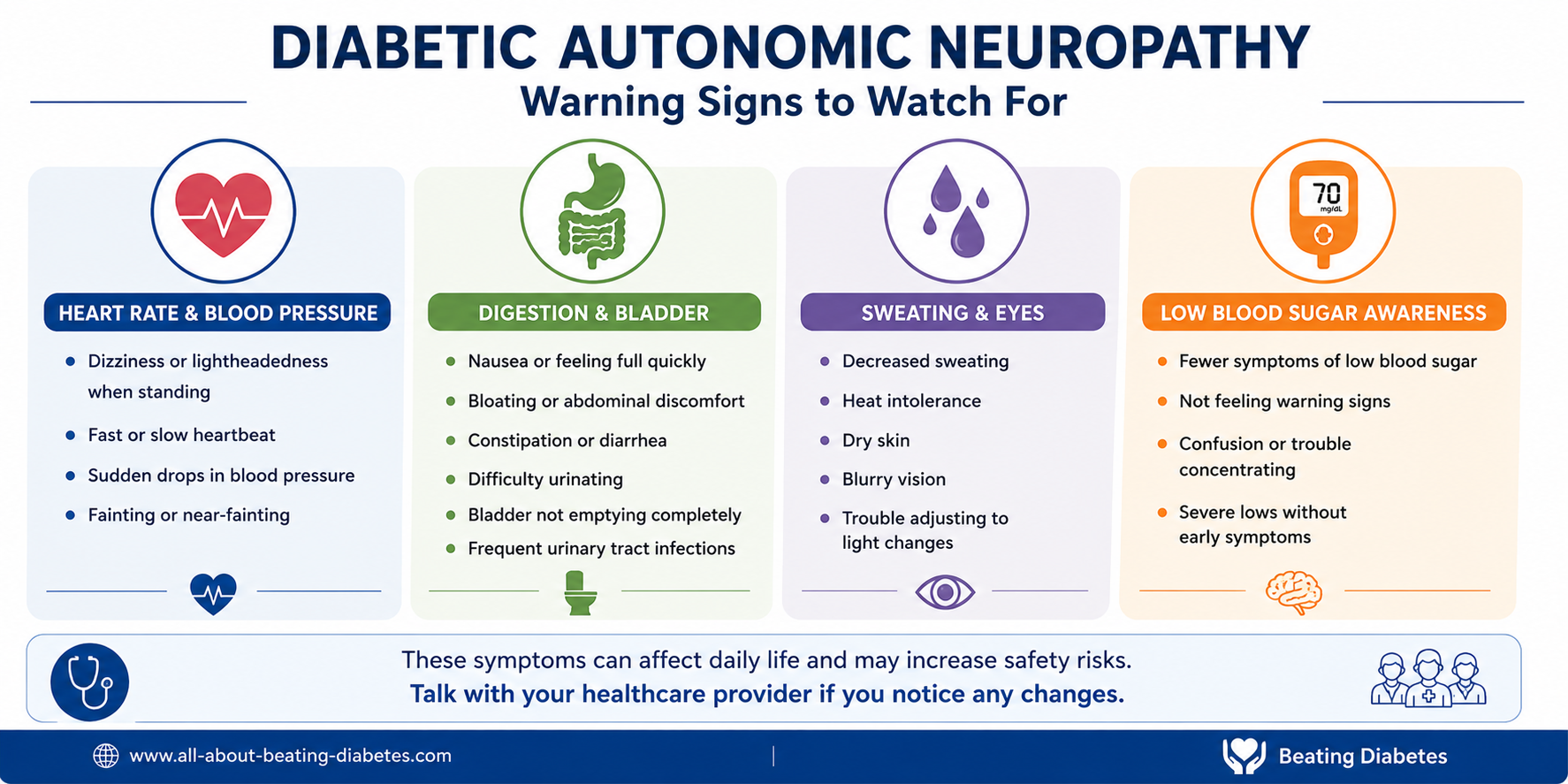
Diabetic autonomic neuropathy is nerve damage affecting the automatic functions of the body, including heart rate, blood pressure, digestion, bladder emptying, sexual response, sweating, pupil adjustment, and awareness of low blood sugar.
Written by: Dr. Albana Greca Sejdini, MD, MMedSc
Medically reviewed by: Dr. Ruden Cakoni, MD, Endocrinologist
Last medically reviewed: July 2026
Diabetic autonomic neuropathy develops when diabetes damages the nerves that control automatic body functions. It may affect heart rate and blood pressure, digestion, bladder function, sweating, sexual health, and awareness of low blood sugar. On this page, I explain the warning signs, how doctors diagnose the condition, and the treatments used to manage its underlying risks and specific symptoms.
What Is Diabetic Autonomic Neuropathy?
The autonomic nervous system controls functions that usually occur without conscious effort. These include changes in heart rate and blood-vessel tone, stomach and intestinal movement, bladder filling and emptying, sexual response, sweating, pupil adjustment, and some warning responses to hypoglycemia.
Over time, high glucose and other metabolic and cardiovascular risk factors can damage nerves and the small blood vessels that supply them. Autonomic neuropathy may develop gradually and may affect one organ system more than another.
It is different from diabetic peripheral neuropathy, which more commonly causes pain, burning, tingling, or reduced sensation in the feet and hands. A person may have peripheral neuropathy, autonomic neuropathy, both, or neither.
Who Is at Risk, and When Should Screening Begin?
Risk generally increases with longer diabetes duration, persistent hyperglycemia, high blood pressure, abnormal cholesterol, kidney disease, smoking, obesity, and the presence of other diabetes complications. However, no single risk factor proves that autonomic neuropathy is present.
ADA 2026 recommends assessing symptoms and signs of autonomic neuropathy:
- starting at the diagnosis of type 2 diabetes;
- starting five years after the diagnosis of type 1 diabetes;
- at least annually afterward.
Assessment may be needed earlier whenever symptoms develop. Screening is not the same as assuming that every person with diabetes will eventually develop this complication.
Heart Rate and Blood Pressure Symptoms
Cardiovascular autonomic neuropathy can impair the normal adjustment of heart rate and blood-vessel tone during standing, exercise, sleep, stress, or breathing.
Possible symptoms and signs include:
- a persistently fast resting heart rate;
- reduced heart-rate response during exercise;
- unusual exercise intolerance or early fatigue;
- light-headedness, blurred vision, weakness, or fainting after standing;
- blood pressure that falls when moving from lying or sitting to standing;
- unexpected heart-rate variability or palpitations.
Orthostatic hypotension is generally defined as a sustained fall of at least 20 mmHg in systolic pressure or 10 mmHg in diastolic pressure within three minutes of standing. Dehydration, anemia, heart disease, arrhythmia, infection, and medicines such as diuretics or blood-pressure drugs can produce similar symptoms and must be considered.
Autonomic neuropathy may also reduce the warning pain of heart ischemia. This does not mean every person will have a “silent heart attack,” but new shortness of breath, sweating, nausea, unusual fatigue, chest pressure, fainting, or unexplained upper-body discomfort still requires urgent assessment.

Digestive Symptoms
Autonomic nerve damage can affect movement and coordination throughout the digestive tract. Possible symptoms include:
- feeling full after only a few bites;
- bloating, nausea, or vomiting;
- heartburn or difficulty swallowing;
- constipation;
- diarrhea, sometimes worse at night;
- alternating constipation and diarrhea;
- fecal urgency or incontinence;
- unpredictable glucose after meals.
Gastroparesis means delayed stomach emptying without a mechanical blockage. It can make insulin timing and post-meal glucose difficult because food absorption becomes unpredictable. Symptoms alone do not confirm gastroparesis. Doctors generally exclude blockage and other causes before using a standardized gastric-emptying test.
Constipation and diarrhea are common in the general population and may result from food, medicines, infection, thyroid disease, celiac disease, irritable bowel syndrome, metformin, or other conditions. Persistent symptoms should be evaluated rather than automatically labeled neuropathy.
Bladder and Urinary Symptoms
Autonomic nerve damage may reduce awareness that the bladder is full or weaken coordination during emptying. Symptoms may include:
- difficulty starting urination;
- a weak urinary stream;
- feeling that the bladder has not emptied;
- needing to strain to urinate;
- urine leakage or overflow incontinence;
- recurrent urinary tract infections;
- frequent or urgent urination.
A clinician may check urine, measure urine remaining after voiding, order bladder or urinary-tract ultrasound, or perform additional urologic testing.
Sexual Dysfunction
Autonomic neuropathy may contribute to sexual difficulties, but hormones, blood-vessel disease, medicines, stress, depression, relationship factors, and other medical conditions may also play a role.
Possible problems include:
- difficulty achieving or maintaining an erection;
- ejaculation problems;
- vaginal dryness;
- reduced genital sensation;
- difficulty reaching orgasm;
- pain or discomfort during sexual activity.
One episode of erectile or sexual difficulty does not diagnose neuropathy. Persistent symptoms deserve a confidential medical assessment because effective treatments are available. Read more in our diabetes and erectile dysfunction guide.
Sweating, Temperature Control, and Eye Adjustment
Autonomic neuropathy may cause:
- too little sweating in some areas;
- excessive sweating in other areas;
- sweating during meals, especially around the face or neck;
- night sweating unrelated to hypoglycemia;
- heat intolerance or difficulty regulating body temperature;
- dry, cracked skin;
- slow pupil adjustment when moving from bright light into darkness.
Reduced sweating does not automatically cause a fungal infection, but dry or cracked skin can increase the risk of irritation, wounds, or infection. Inspect the skin and feet regularly and report persistent cracks, redness, drainage, or sores.
Slow pupil adaptation may make nighttime driving more difficult. Sudden vision loss, eye pain, flashes, or a curtain-like shadow is not explained by autonomic neuropathy alone and needs urgent eye care.
Hypoglycemia Unawareness
Autonomic neuropathy may weaken early warning symptoms of low glucose, such as shaking, sweating, palpitations, hunger, or anxiety. A person may first notice confusion, unusual behavior, weakness, impaired coordination, or loss of consciousness.
Hypoglycemia unawareness increases the risk of severe low glucose and requires a treatment review. Helpful measures may include:
- more frequent glucose checks or CGM with low alerts;
- temporarily adjusting glucose targets under medical supervision;
- reviewing insulin doses, meal timing, exercise, alcohol, and kidney function;
- keeping ready-to-use glucagon available;
- training family, coworkers, teachers, or caregivers to respond;
- wearing medical identification.
Do not give food or drink to someone who cannot swallow safely. Use glucagon if available and call emergency services. See our guide to recognizing and treating high and low blood sugar.
How Is Diabetic Autonomic Neuropathy Diagnosed?
There is no single test that evaluates every autonomic function. Diagnosis is based on symptoms, medical history, physical examination, targeted tests, and exclusion of other causes.
| Symptom area | Possible evaluation |
|---|---|
| Dizziness or fainting | Lying and standing blood pressure, ECG, medicine review, heart-rate response tests, or tilt-table testing. |
| Exercise intolerance or resting tachycardia | Heart examination, ECG, cardiovascular autonomic reflex testing, and evaluation for anemia, thyroid disease, infection, or arrhythmia. |
| Nausea, early fullness, or vomiting | Medication review, exclusion of blockage, and standardized gastric-emptying testing when indicated. |
| Bladder symptoms | Urinalysis, post-void residual measurement, ultrasound, or urodynamic testing. |
| Abnormal sweating | Skin examination and specialized sweat-function testing when needed. |
| Sexual dysfunction | Medication, vascular, hormonal, neurologic, urologic, gynecologic, and psychological assessment. |
Other causes of autonomic symptoms include amyloidosis, autoimmune disease, thyroid disorders, vitamin deficiencies, infections, inherited disorders, alcohol, and some medicines or cancer treatments. The diagnosis should not be made only because the person has diabetes.
How Is Diabetic Autonomic Neuropathy Treated?
There is no single treatment that repairs every affected autonomic nerve. Management has two goals: slow further nerve injury and treat the symptoms of each affected organ system.
Reduce further nerve and vascular injury
ADA 2026 recommends optimizing glucose management to prevent or delay neuropathy in type 1 diabetes and slow progression in type 2 diabetes. Weight, blood pressure, and lipid management also matter. Tobacco avoidance, physical activity within safe limits, kidney care, and treatment of sleep or cardiovascular conditions may further reduce risk.
A rapid, large glucose improvement can rarely be associated with acute treatment-induced neuropathy. This is not a reason to leave glucose uncontrolled, but major treatment changes should be medically supervised.
Orthostatic hypotension and heart-rate problems
Treatment begins by reviewing dehydration and medicines that may lower blood pressure. Depending on heart and kidney health, a clinician may recommend slow position changes, physical counter-maneuvers, compression garments, elevating the head of the bed, adjusted fluid or salt intake, or prescription medicine.
Do not deliberately increase salt or fluids without advice if you have high blood pressure, heart failure, kidney disease, or swelling.
Digestive symptoms
Treatment depends on the cause. It may include meal-size or texture changes, constipation or diarrhea treatment, nutrition support, and selected prescription medicines. Gastroparesis often requires coordinated adjustment of food and insulin timing. Do not start frequent laxatives, antidiarrheal drugs, or motility medicines without medical guidance.
Bladder dysfunction
Timed urination, treatment of urinary infection, medicine, and intermittent catheterization may be used according to the problem. Urinary retention should be treated because retained urine can contribute to infection and kidney complications.
Sexual symptoms
Erectile dysfunction may be treated with oral medicines, devices, injections, or other approaches after cardiovascular and medication review. Vaginal moisturizers or lubricants and specialist care may help with dryness, pain, or reduced sexual response.
Sweating problems
Cooling strategies, skin care, prescription-strength antiperspirants, and selected medicines may help. Treatment must be individualized because reducing sweating too much can interfere with temperature control.
When Should You Seek Urgent Medical Care?
Seek urgent or emergency assessment for:
- fainting, repeated near-fainting, or injury after a fall;
- chest pressure, new shortness of breath, stroke symptoms, or an irregular rapid heartbeat;
- severe dehydration, confusion, or inability to keep fluids down;
- vomiting with high glucose or ketones;
- sudden inability to urinate or painful lower-abdominal swelling;
- fever, back pain, vomiting, or confusion with urinary symptoms;
- black or bloody stool, severe abdominal pain, or persistent vomiting;
- severe hypoglycemia, seizure, unconsciousness, or inability to swallow safely;
- overheating with confusion, weakness, or reduced sweating.
Related Questions
- What Can Cause a High Heart Rate in a Person With Diabetes?
- Can Hunger, Headache, or Weakness Signal Low Blood Sugar?
- What Causes Poor Digestion and Constipation in Diabetes?
- What Can Cause Mental or Behavioral Changes in Diabetes?
Related Resources
- Diabetic Neuropathy Symptoms
- Diabetic Peripheral Neuropathy
- Diabetic Nerve Pain
- Diabetes and Erectile Dysfunction
- Diabetes Complications and Prevention
- Diabetes and Foot Care
Medical disclaimer: This page provides general education and does not diagnose autonomic neuropathy or determine which organ system is affected. Do not change diabetes, blood-pressure, bladder, digestive, or sexual-function medicines without individualized medical advice.
References
- American Diabetes Association: Retinopathy, Neuropathy, and Foot Care—Standards of Care in Diabetes 2026
- National Institute of Diabetes and Digestive and Kidney Diseases: Autonomic Neuropathy
- National Institute of Diabetes and Digestive and Kidney Diseases: What Is Diabetic Neuropathy?
- American Heart Association: Orthostatic Hypotension in Adults With Hypertension
- Mayo Clinic: Autonomic Neuropathy—Symptoms and Causes
- Mayo Clinic: Autonomic Neuropathy—Diagnosis and Treatment