Quick answer
Diabetes home testing may include a finger-stick blood glucose meter, a continuous glucose monitor (CGM), and blood or urine ketone tests. The right method and testing schedule depend on your diabetes type, medicines, pregnancy status, risk of low blood sugar, illness, and treatment goals. I encourage you to agree on a written testing plan with your diabetes care team—and to know what action to take for high, low, or unexpected results.
Home monitoring gives you information you can act on. A result may show how a meal, activity, medicine, stress, or illness affected your glucose. A series of results is usually more useful than one isolated number.
Home readings do not replace regular medical visits or laboratory testing, including A1C. They should support a treatment plan made with your health care professional—not be used to diagnose diabetes or change prescribed medicine on your own.
What diabetes tests and checks can you do at home?
Blood glucose monitoring (BGM)
A glucose meter measures glucose in a small drop of capillary blood, usually from your fingertip. It gives you a reading for that moment. You need a meter, compatible test strips, a lancing device, fresh lancets, and a safe sharps container.
Continuous glucose monitoring (CGM)
A CGM sensor measures glucose in the fluid under your skin throughout the day and night. It can show trends, arrows, and alerts. Because sensor glucose can lag behind blood glucose—especially when levels are changing quickly—you should keep access to a glucose meter. Follow your device instructions about when to confirm a reading with a finger stick, particularly if your symptoms do not match the CGM result.
Blood or urine ketone testing
Ketones can build up when the body does not have enough effective insulin. Blood ketone meters measure beta-hydroxybutyrate and reflect the current situation more directly; urine strips reflect ketones that accumulated since you last urinated. Your diabetes team should tell you which test to use and what its result means.
Other useful home checks
Depending on your health, your clinician may ask you to monitor blood pressure or weight. I also recommend a daily diabetic foot check for cuts, blisters, redness, swelling, warmth, or drainage—especially if you have reduced sensation. These are useful health checks, but they do not measure blood glucose.
When should you check your blood sugar?
There is no single schedule for everyone. If you use insulin, common times may include fasting, before and after meals, at bedtime, during the night when advised, around exercise, when you suspect low or high glucose, after treating a low, and before or during safety-critical activities such as driving. Pregnancy, illness, treatment changes, and recurrent low glucose may require more frequent monitoring.
If you do not use insulin, structured checks may still help you and your clinician understand patterns and adjust food, activity, or medication. Ask what question each check is meant to answer. Random testing without a plan for using the result may add cost and worry without improving care.
| Possible testing time | What it may help you learn | Important note |
|---|---|---|
| When you wake, before eating | Your fasting pattern overnight | Record late meals, alcohol, illness, and medication timing. |
| Before a meal | Your starting level and, when prescribed, information for a mealtime insulin decision | Use only your prescribed dosing plan. |
| 1–2 hours after the beginning of a meal | How that meal affected glucose | Record the portion and carbohydrate source. |
| Before, during, or after activity | Whether activity is lowering or raising glucose | Extra checks may be needed with insulin or medicines that cause hypoglycemia. |
| When symptoms appear | Whether symptoms may relate to low or high glucose | Treat emergencies according to your care plan; do not delay help for severe symptoms. |
How to use a glucose meter correctly
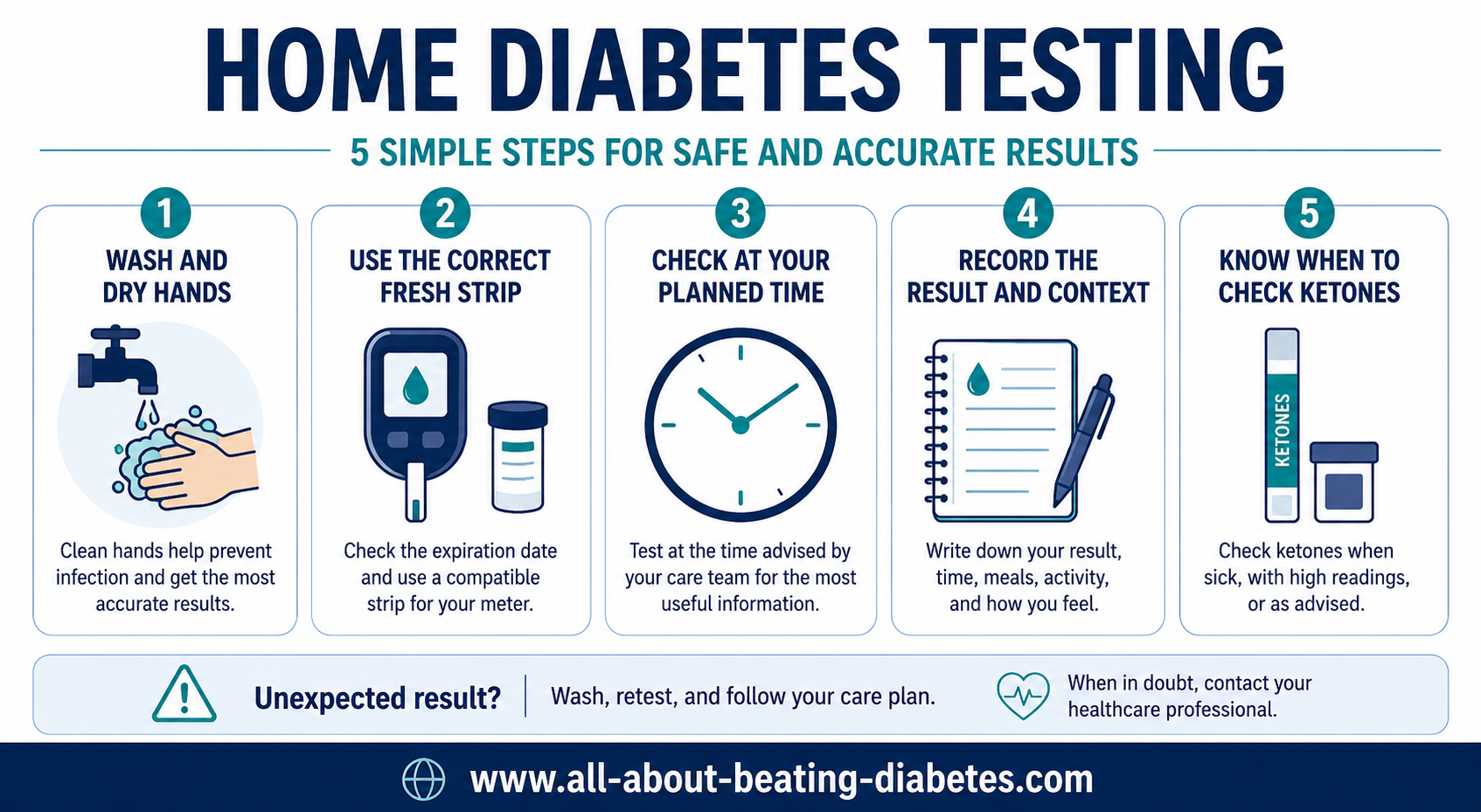
- Prepare. Check that the meter and strips match. Use unexpired strips stored exactly as directed. Do not use opened, damaged, pre-owned, or improperly stored strips.
- Wash and dry your hands. Even a small amount of food or sugar on a finger can cause a falsely high result. Soap and water are preferred when available.
- Insert the strip. Follow the meter instructions, including coding or a control-solution check if required.
- Use a fresh lancet. Prick the side of a fingertip and apply the required blood drop without excessive squeezing.
- Read and record. Note the result, time, relation to food, medicine, activity, stress, and illness.
- Dispose safely. Put the used lancet in an approved sharps container or follow your local disposal rules. Never share a lancing device, lancet, or meter intended for one person.

How should you understand the result?
For many nonpregnant adults with diabetes, commonly used ADA goals are 80–130 mg/dL (4.4–7.2 mmol/L) before meals and below 180 mg/dL (10.0 mmol/L) 1–2 hours after the beginning of a meal. These are general goals, not instructions for every person. Children, pregnancy, older adults, people with severe hypoglycemia, and people with other illnesses may need different targets.
Compare your result with the personal range written in your care plan. Look for repeated patterns at the same time of day. Share your log or downloaded device report with your clinician; include insulin or medicine doses, meals, activity, symptoms, and illness when relevant.
What if the result is below 70 mg/dL (3.9 mmol/L)?
If you are awake and able to swallow, follow your hypoglycemia plan. A common approach is 15 grams of fast-acting carbohydrate, followed by another check after 15 minutes; repeat if the level remains low. Examples include glucose tablets or glucose gel in the amount stated on the package. Young children may require less, so caregivers should follow the child’s specific plan.
If the person is unconscious, having a seizure, confused and unable to swallow safely, or not responding to treatment, use glucagon if available and trained to do so, call emergency services, and do not give food or drink by mouth.
When should you check ketones?
Follow your written sick-day plan. The CDC advises ketone testing when you are sick or when blood glucose is 250 mg/dL (13.9 mmol/L) or higher, and also when symptoms of diabetic ketoacidosis (DKA) occur. People using an insulin pump should know what to do if delivery is interrupted.
If you take an SGLT2 inhibitor, DKA can sometimes occur without very high glucose. Ask your prescriber when to pause the medicine and check ketones during illness, fasting, surgery, vomiting, dehydration, or reduced carbohydrate intake. Do not rely on the glucose number alone if you feel seriously unwell.
Do not exercise when glucose is high and ketones are present unless your diabetes team has specifically told you it is safe. Exercise can worsen ketone production when insulin is insufficient.
When should you seek urgent or emergency help?
Contact your diabetes clinician promptly for repeated readings outside your personal range, unexplained lows, frequent meter errors, illness that is making control difficult, or uncertainty about medication. Never stop insulin or change a prescribed dose solely from this page.
Frequently asked questions
Can a home glucose meter diagnose diabetes?
No. A home meter can identify a concerning reading, but diagnosis should be confirmed with appropriate laboratory testing and clinical evaluation. Arrange medical care if results are repeatedly high or you have symptoms.
Do I need to test four times every day?
Not necessarily. Some people need more checks and others fewer. Your schedule depends especially on insulin use, hypoglycemia risk, pregnancy, illness, and whether the results will guide a treatment decision.
Which finger is best for testing?
You may use the side of a fingertip and rotate sites to reduce soreness. Use an alternative site only if your meter permits it; alternative sites may be less reliable when glucose is changing quickly or when hypoglycemia is suspected.
Why is my CGM different from my finger-stick result?
A CGM reads glucose in interstitial fluid, while a meter reads capillary blood. Differences can occur because of normal device variation and the delay between compartments, especially after meals, insulin, or exercise. Follow the CGM instructions when deciding whether to confirm.
Should I check urine glucose at home?
Urine glucose does not show your current blood glucose accurately and is not a substitute for BGM or CGM. Urine ketone strips have a different purpose: detecting ketones during illness, high glucose, or suspected DKA.
Related questions from readers
- Fasting glucose 159 mg/dL but 2-hour glucose 109 mg/dL—am I diabetic?
- What does blood sugar around 90–120 mean?
- Why can A1C be high when finger-stick readings look normal?
Related Beating Diabetes resources
- Understanding fasting blood glucose
- What is a good A1C level?
- Blood sugar levels by time of day
- Dangerous blood sugar levels and warning signs
References
- American Diabetes Association. Diabetes Technology: Standards of Care in Diabetes—2026.
- American Diabetes Association. Glycemic Goals, Hypoglycemia, and Hyperglycemic Crises: Standards of Care in Diabetes—2026.
- U.S. Food and Drug Administration. Blood Glucose Meters: Getting the Most Out of Your Meter.
- U.S. Food and Drug Administration. Blood Glucose Monitoring Devices.
- Centers for Disease Control and Prevention. Diabetic Ketoacidosis.
- U.S. Food and Drug Administration. Do Not Use Smartwatches or Smart Rings to Measure Blood Glucose Levels.