Quick answer
A child’s blood sugar result must be interpreted according to the reason for testing, the timing of the test, symptoms, meals, activity, illness, and whether the child already has diabetes. For children without diagnosed diabetes, a laboratory fasting glucose of 70–99 mg/dL (3.9–5.5 mmol/L) is generally considered normal. For most children and adolescents who have diabetes, the ADA recommends an individualized plan; an A1C below 7% is appropriate for many, while CGM and daily glucose goals should be set with the pediatric diabetes team. A glucose level below 70 mg/dL (3.9 mmol/L) is low and should be treated according to the child’s hypoglycemia plan.
First, are you checking for diabetes or managing known diabetes?
Parents often ask me for one “normal children’s blood sugar range,” but two different medical questions are hidden inside that request:
- Does a child who has not been diagnosed have a normal laboratory result?
- Is a child who already has diabetes within the personal treatment target?
Diagnostic ranges and treatment targets are not interchangeable. A value used to diagnose diabetes should not be copied into an insulin plan, and an everyday treatment target should not be used to decide whether an undiagnosed child has diabetes.
Blood sugar results in children without diagnosed diabetes
The laboratory criteria used to diagnose diabetes in nonpregnant people generally also apply to children and adolescents. However, a home glucose meter cannot diagnose diabetes by itself. A clinician must consider the child’s symptoms and confirm results with appropriate laboratory testing unless there is unequivocal hyperglycemia or a hyperglycemic emergency.
| Laboratory test | General interpretation | Important context |
|---|---|---|
| Fasting plasma glucose after at least 8 hours without calories | 70–99 mg/dL (3.9–5.5 mmol/L) is generally considered normal; 100–125 mg/dL (5.6–6.9 mmol/L) is in the impaired fasting glucose range; 126 mg/dL (7.0 mmol/L) or higher is in the diabetes range | In the absence of clear symptoms or a crisis, an abnormal result requires confirmation. |
| Two-hour plasma glucose during a properly performed oral glucose tolerance test | Below 140 mg/dL (7.8 mmol/L) is generally normal; 140–199 mg/dL (7.8–11.0 mmol/L) indicates impaired glucose tolerance; 200 mg/dL (11.1 mmol/L) or higher is in the diabetes range | This is a standardized laboratory test—not the same as checking two hours after an ordinary home meal. |
| Laboratory A1C | Below 5.7% is generally normal; 5.7–6.4% is in the prediabetes range; 6.5% or higher is in the diabetes range | A1C has limitations in children and in conditions that alter red blood cells or hemoglobin. Acute-onset type 1 diabetes should not be ruled out by A1C alone. |
| Random plasma glucose | 200 mg/dL (11.1 mmol/L) or higher with classic diabetes symptoms or a hyperglycemic crisis can diagnose diabetes | Classic symptoms include excessive thirst, frequent urination, unexplained weight loss, and marked fatigue. |
Blood sugar targets for children who have diabetes
Modern pediatric diabetes care no longer assigns one broad glucose range only according to age. The child’s diabetes type, insulin plan, CGM access, ability to recognize hypoglycemia, development, school routine, activity, family circumstances, and history of severe low blood sugar all matter.
| Measure | Current general guidance | How to use it safely |
|---|---|---|
| A1C in children and adolescents with diabetes | Below 7% (53 mmol/mol) is appropriate for most children and adolescents | The goal must be individualized and reassessed. A less stringent goal may be appropriate when hypoglycemia risk or treatment burden is high. A goal below 6.5% may be appropriate for selected children when achieved safely. |
| A1C in youth with type 2 diabetes | Below 6.5% (48 mmol/mol) may be considered for many with low hypoglycemia risk | The pediatric diabetes team should individualize the goal, especially when insulin or medicines that can cause hypoglycemia are used. |
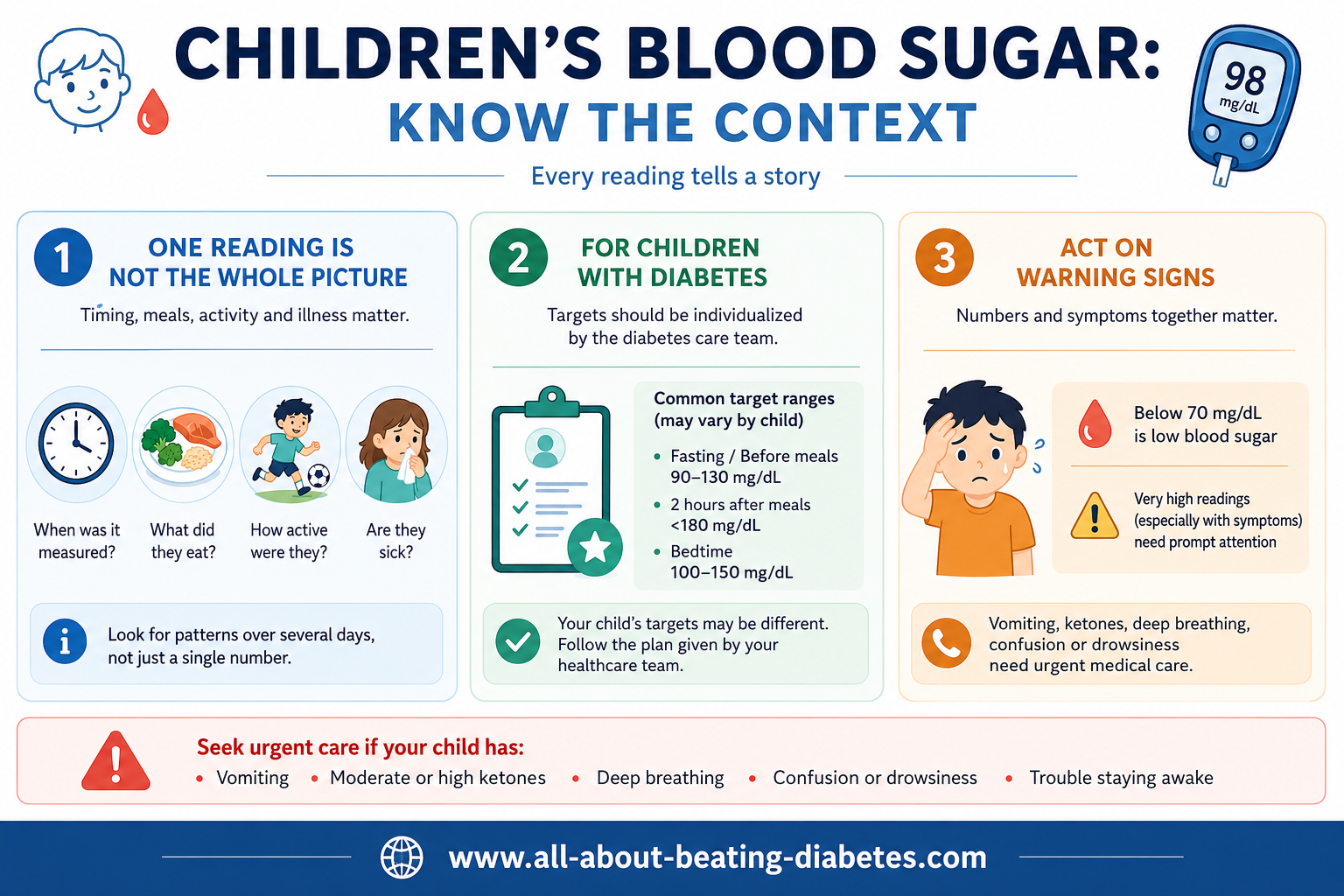
| CGM target range | Commonly 70–180 mg/dL (3.9–10.0 mmol/L) | Interpret time in range together with time below range, time above range, A1C, symptoms, and quality of life. Follow the targets programmed by the child’s diabetes team. |
| Finger-stick targets before meals, after meals, and overnight | No single number is right for every child | Use the written targets given by the pediatric diabetes team. Do not copy adult targets or an internet chart into the child’s insulin decisions. |
The old recommendation of an A1C below 8.5% for all children under age 6 came from 2005 guidance. Technology, insulin delivery, CGM, and evidence have changed. Younger children still need special protection from hypoglycemia because they may not recognize or describe symptoms, but routinely keeping glucose high also has risks.

How often should a child’s glucose be checked?
There is no universal instruction to perform exactly four checks every day. Children with type 1 diabetes should have glucose monitored multiple times daily, preferably with CGM when possible. Finger-stick testing remains essential when CGM is unavailable, does not match symptoms, shows a rapidly changing value, or the device requires confirmation.
The diabetes team may recommend checking or reviewing glucose:
- before meals and snacks when needed for insulin decisions
- before bedtime and sometimes overnight
- before, during, and after exercise according to the activity plan
- during illness, vomiting, fever, or suspected ketones
- when symptoms suggest low or high glucose
- after treating hypoglycemia, according to the child’s plan
- before driving in older adolescents
A1C is commonly assessed about every three months in children and adolescents with diabetes, while CGM reports can show time in range, low glucose, high glucose, and patterns over recent days.
Low blood sugar in children
Glucose below 70 mg/dL (3.9 mmol/L) is hypoglycemia. A value below 54 mg/dL (3.0 mmol/L) is clinically significant and requires immediate action.
Possible symptoms include shaking, sweating, hunger, pallor, irritability, behavior change, headache, weakness, dizziness, confusion, poor coordination, nightmares, or unusual sleepiness. Young children may not be able to explain what they feel.
Follow the child’s written hypoglycemia plan. Treatment amounts may depend on age, body size, glucose level, and diabetes technology, so do not automatically use an adult dose. If the child cannot swallow safely, has a seizure, or is unconscious, do not give food or drink by mouth. Use prescribed glucagon if available and call emergency services.
High blood sugar, illness, and ketones
High glucose may result from insufficient insulin, a missed dose, pump or infusion-set failure, illness, stress hormones, food, medication, or reduced activity. Follow the child’s correction and sick-day plan rather than improvising an insulin dose.
Seek urgent medical care for:
- vomiting or inability to keep fluids down
- moderate or large ketones, or rising blood ketones
- deep, rapid, or difficult breathing
- abdominal pain, severe dehydration, fruity-smelling breath, confusion, or unusual drowsiness
- high glucose that does not improve after following the prescribed correction plan
These may be warning signs of diabetic ketoacidosis. Do not wait for the glucose to reach one particular number when serious symptoms are present.
Related questions
Is 100 mg/dL normal for a child?
The meaning depends on timing. A fasting laboratory result of 100 mg/dL is just above the usual normal fasting range, but one home-meter value does not diagnose prediabetes. A result after eating may be expected. Discuss repeated or concerning readings with the child’s clinician.
Is 180 mg/dL high for a child?
It depends on whether the child has diabetes, when the result was measured, symptoms, food, insulin, activity, and illness. For an undiagnosed child, repeated readings in this range deserve prompt medical review. For a child with diabetes, follow the personal correction and ketone plan.
Should children under 6 have higher glucose targets?
Young children need careful protection from low glucose because they may not recognize symptoms, but current guidance does not automatically assign every child under 6 the old A1C target below 8.5%. Goals should be individualized with the pediatric diabetes team.
Can a normal A1C rule out type 1 diabetes?
No. A1C may miss rapidly developing type 1 diabetes. A child with thirst, frequent urination, weight loss, vomiting, or other concerning symptoms needs prompt glucose and ketone assessment.
Related Beating Diabetes resources
References
- American Diabetes Association. Children and Adolescents: Standards of Care in Diabetes—2026.
- American Diabetes Association. Diagnosis and Classification of Diabetes: Standards of Care in Diabetes—2026.
- American Diabetes Association. Glycemic Goals, Hypoglycemia, and Hyperglycemic Crises: Standards of Care in Diabetes—2026.