- Home
- Diabetes Information for Patients Types Symptoms Tests and Treatment
Diabetes Information for Patients: Types, Symptoms, Tests, and Treatment
Written by: Dr. Albana Greca Sejdini, MD, MMedSc
Medically reviewed by: Dr. Ruden Cakoni, MD, Endocrinologist
Last medically reviewed: July 2026
Diabetes information can become confusing when definitions, blood sugar numbers, food rules, medicines, and complications are presented without a clear order. I created this section to help patients and families begin with the right topic and then move step by step into more detailed guides.
Choose where to start · What diabetes is · Types of diabetes · Prediabetes and insulin resistance · Symptoms and warning signs · Blood tests and diagnosis · Blood sugar and HbA1c · Treatment · Food and physical activity · Complications and prevention · Living with diabetes · Calculators and learning tools
Choose the Starting Point That Matches Your Need
Learn what diabetes means, identify the type, understand the main tests, and prepare for your first treatment discussions.
Start with diabetes basics →Find out whether the result was fasting, after eating, random, or part of a formal diagnostic test.
Understand your test result →Explore treatment, food, monitoring, medicines, complication prevention, and everyday safety.
Build your care plan →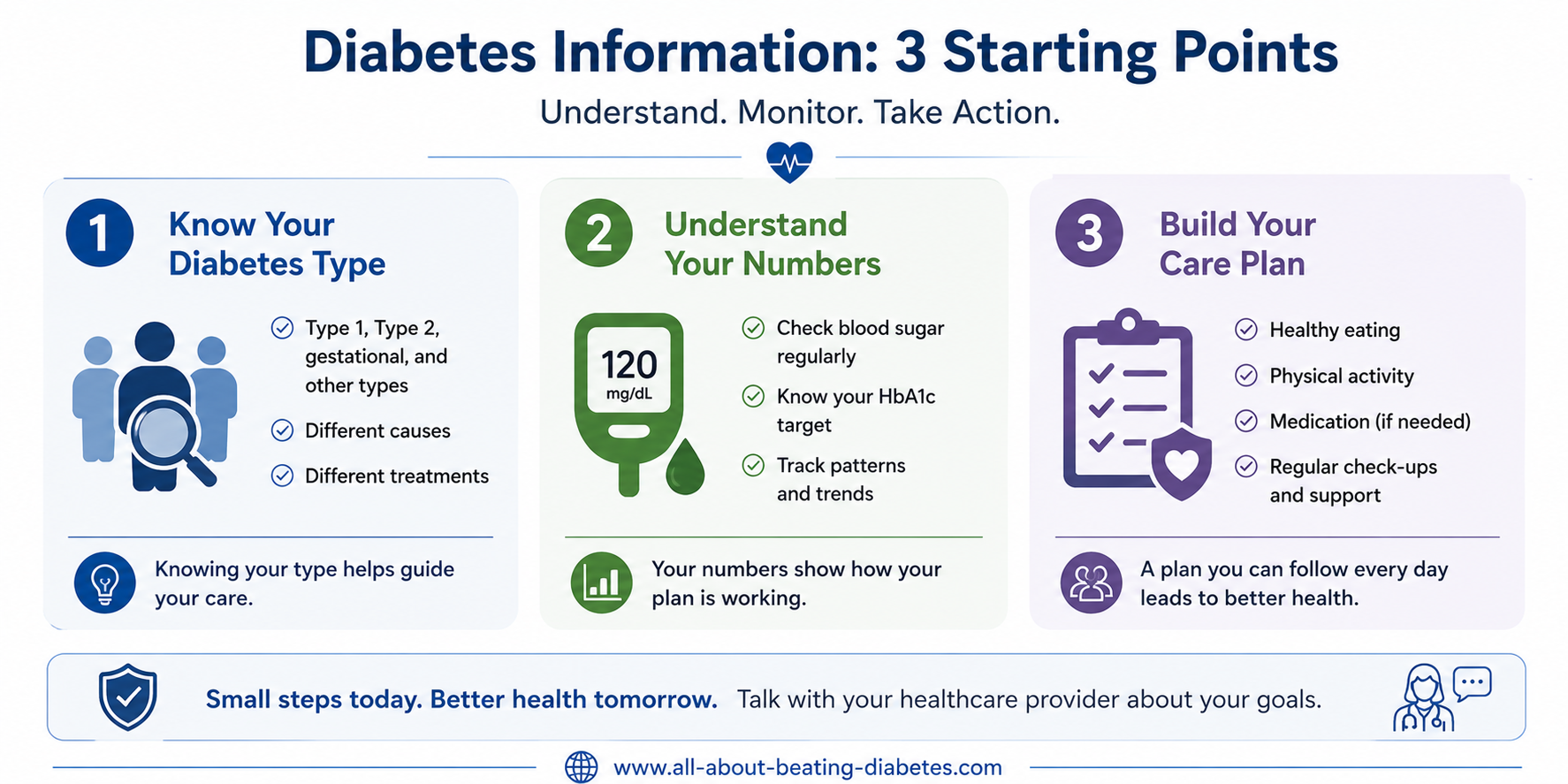

What Is Diabetes?
Diabetes mellitus is a group of metabolic conditions characterized by persistent hyperglycemia—blood glucose that is higher than the healthy range.
Glucose comes from two main sources:
- food: carbohydrate is broken down into glucose during digestion;
- the liver: stored glucose is released between meals and overnight to provide energy.
Insulin is a hormone made by pancreatic beta cells. It helps glucose enter muscle and fat cells and tells the liver when to reduce glucose release. Diabetes develops when insulin production is insufficient, insulin action is impaired, or both.
Diabetes is not defined by one ordinary rise after a meal. Diagnosis uses standardized laboratory criteria. Learn the complete explanation in What Is Diabetes Mellitus?
The Main Types of Diabetes
| Type | What happens | Main treatment principle |
|---|---|---|
| Type 1 diabetes | The immune system destroys insulin-producing beta cells, causing severe insulin deficiency. | Daily insulin is essential for survival. |
| Type 2 diabetes | Insulin resistance and progressive beta-cell dysfunction prevent normal glucose control. | Lifestyle support plus individualized glucose-lowering treatment when needed. |
| Gestational diabetes | Diabetes first diagnosed during pregnancy that was not clearly present before pregnancy. | Pregnancy-specific nutrition, monitoring, activity, and medicine or insulin when needed. |
| Other specific types | May result from pancreatic disease, genetic conditions, medicines, endocrine disorders, or other causes. | Treat the glucose problem and the underlying cause when possible. |
Type 1 diabetes
Type 1 diabetes is an autoimmune condition and can begin at any age. Symptoms may develop rapidly and DKA may be the first presentation. People with type 1 diabetes require insulin, glucose monitoring, ketone education, and a plan for hypoglycemia and sick days.
Start with the complete type 1 diabetes information guide.
Type 2 diabetes
Type 2 diabetes is the most common form. It develops when the body does not use insulin effectively and pancreatic beta cells cannot produce enough insulin to compensate. Genetics, age, visceral fat, physical inactivity, sleep, medicines, pregnancy history, and social or environmental factors may all influence risk.
Read Type 2 Diabetes: Symptoms, Tests, Treatment, and Prevention.
Gestational diabetes
Gestational diabetes is usually identified during pregnancy through pregnancy-specific testing. It can increase pregnancy and newborn risks, but appropriate glucose management improves outcomes. It often resolves after delivery, although the person remains at higher lifelong risk for type 2 diabetes and needs postpartum and ongoing screening.
See gestational diabetes symptoms, testing, diet, and control.
Other forms of diabetes
Not every adult with high glucose has type 2 diabetes. Other possibilities include autoimmune diabetes in adults, monogenic diabetes, pancreatic disease, cystic-fibrosis-related diabetes, medication-induced diabetes, and diabetes related to endocrine disorders.
Classification matters because insulin requirements, family screening, medicine choices, and long-term management may differ.
Prediabetes and Insulin Resistance
Prediabetes and insulin resistance are related, but they are not interchangeable.
- Insulin resistance means muscle, liver, and fat cells respond less effectively to insulin. Glucose can still be normal while the pancreas compensates by producing more insulin.
- Prediabetes means fasting glucose, HbA1c, or two-hour OGTT glucose is above normal but below the diabetes threshold.
- Type 2 diabetes develops when glucose meets diagnostic criteria because insulin resistance and beta-cell dysfunction can no longer be adequately compensated.
Not everyone with insulin resistance or prediabetes develops type 2 diabetes. Regular activity, structured lifestyle support, sustainable weight management when appropriate, and treatment of associated health problems can lower or delay risk.
Explore what insulin resistance means and the prediabetes guide.
Diabetes Symptoms and Warning Signs
Common symptoms can include:
- frequent urination;
- increased thirst or dry mouth;
- increased hunger;
- unexplained weight loss;
- fatigue or weakness;
- blurred vision;
- recurrent urinary, genital, skin, or dental infections;
- slow wound healing;
- tingling or numbness when neuropathy is already present.
Type 1 diabetes symptoms often develop more quickly, while type 2 diabetes may remain unnoticed for years. Gestational diabetes often causes no clear symptoms and is found through routine pregnancy testing.
Read the dedicated warning signs of diabetes guide.
How Is Diabetes Diagnosed?
Diabetes and prediabetes are diagnosed with laboratory blood tests. The four main approaches are:
| Test | Prediabetes range | Diabetes range |
|---|---|---|
| Fasting plasma glucose | 100–125 mg/dL | 126 mg/dL or higher |
| HbA1c | 5.7%–6.4% | 6.5% or higher |
| Two-hour 75-g OGTT | 140–199 mg/dL | 200 mg/dL or higher |
| Random plasma glucose | Not used to diagnose prediabetes | 200 mg/dL or higher with classic symptoms or a hyperglycemic crisis |
In the absence of unequivocal hyperglycemia, an abnormal result in the diabetes range usually needs confirmation. Pregnancy uses different testing pathways and thresholds.
A home meter, CGM, urine glucose strip, fasting insulin result, or online calculator cannot diagnose diabetes by itself. Use the complete blood tests for diabetes guide.
Understanding Blood Sugar and HbA1c
A glucose reading only makes sense when you know the timing. Fasting, before-meal, after-meal, bedtime, and random readings answer different questions.
For many nonpregnant adults with diabetes, commonly used treatment targets include:
- before meals: 80–130 mg/dL;
- one to two hours after the beginning of a meal: below 180 mg/dL.
These are treatment targets—not diagnostic thresholds—and they should be individualized according to age, pregnancy, diabetes type, hypoglycemia risk, comorbidities, and personal circumstances.
HbA1c estimates glucose exposure over approximately the previous two to three months. A common target for many adults with diabetes is below 7%, but a different goal may be safer or more appropriate.
Use the blood sugar levels by time of day guide and the HbA1c explanation.
How Is Diabetes Treated?
Diabetes treatment is individualized. It may combine:
- diabetes self-management education and support;
- medical nutrition therapy;
- physical activity;
- weight-management support when appropriate;
- glucose monitoring with a meter or CGM;
- insulin or non-insulin glucose-lowering medicines;
- blood-pressure, cholesterol, kidney, and cardiovascular treatment;
- sleep, mental-health, and tobacco-cessation support;
- regular screening for complications.
Type 1 diabetes treatment
Insulin is essential. Most plans include basal insulin plus mealtime and correction insulin, delivered through injections, a pump, or an automated insulin-delivery system.
Type 2 diabetes treatment
Treatment depends on glucose level, HbA1c, heart and kidney disease, weight priorities, hypoglycemia risk, medicine cost, side effects, and personal preferences. Metformin remains useful for many people, but it is not automatically the best first or only medicine for every patient.
Gestational diabetes treatment
Pregnancy-specific nutrition, glucose monitoring, safe activity, and insulin or another treatment selected by the pregnancy team may be needed. Treatment decisions should not be copied from nonpregnancy diabetes advice.
Review the diabetes medications guide and the insulin treatment guide.
Food and Physical Activity
There is no single “diabetes diet.” Effective eating patterns are individualized and may include Mediterranean-style, lower-carbohydrate, vegetarian, or other evidence-based approaches.
Practical principles include:
- choose nonstarchy vegetables, legumes, whole fruit, whole grains in suitable portions, nuts, seeds, lean proteins, and unsaturated fats more often;
- reduce sugar-sweetened drinks and heavily processed foods;
- match carbohydrate portions to medicine, insulin, activity, and glucose goals;
- use a plate method, carbohydrate counting, or another structured approach;
- consider kidney disease, pregnancy, gastroparesis, food access, and cultural preferences.
Regular physical activity improves cardiovascular health, fitness, insulin sensitivity, sleep, and emotional well-being. Exercise plans should account for insulin, hypoglycemia risk, heart disease, neuropathy, foot problems, retinopathy, and current fitness.
Start with the diabetic meal-plan and plate-method guide and the carbohydrate and glycemic-index guide.
Diabetes Complications and Prevention
Persistent hyperglycemia can contribute to eye, kidney, nerve, foot, heart, and blood-vessel disease. Complications are not inevitable. Risk can be reduced through glucose management and comprehensive preventive care.
Important follow-up may include:
- blood pressure and cholesterol management;
- urine albumin and eGFR kidney tests;
- dilated eye examinations;
- foot, skin, and nerve assessment;
- dental care;
- vaccination and infection prevention;
- tobacco avoidance;
- cardiovascular-risk assessment;
- screening for depression and diabetes distress.
Read the complete diabetes complications and prevention guide.
Living Well With Diabetes
Diabetes care should fit real life. A strong daily plan explains:
- when and how to monitor glucose;
- how to take medicine and insulin safely;
- how to treat hypoglycemia;
- when to check ketones;
- what to do during illness;
- how to prepare for travel, work, school, exercise, fasting, and celebrations;
- when to contact the diabetes team or seek emergency care.
People with diabetes do not need perfect glucose every minute. The goal is to reduce harmful patterns, prevent emergencies, protect long-term health, and make treatment sustainable.
Use the diabetes travel guide and the high and low blood sugar safety guide.
Diabetes Calculators, Answers, and Learning Tools
Educational tools can help you understand results and prepare for medical appointments. They cannot diagnose diabetes or prescribe treatment.
| Tool or center | What it helps with |
|---|---|
| Diabetes Answers and Tools | Main learning center for blood sugar, HbA1c, food, medicines, questions, and tools. |
| HbA1c to Average Glucose Calculator | Converts HbA1c into estimated average glucose. |
| Blood Sugar Unit Converter | Converts mg/dL and mmol/L. |
| Carbohydrate Counter | Estimates carbohydrate in meals and snacks. |
| Type 2 Diabetes Risk Screener | Reviews common risk factors and indicates when blood testing may be useful. |
Related Questions
- Fasting Glucose 159 but Two-Hour Glucose 109: Am I Diabetic?
- Why Is HbA1c High When Finger-Prick Readings Look Normal?
- Why Did Blood Sugar Rise From 91 at Bedtime to 145 in the Morning?
- What Are the Complications of Blood Sugar 455 mg/dL?
Related Resources
- Diabetes Answers and Tools Learning Center
- Blood Tests for Diabetes
- Blood Sugar Levels by Time of Day
- Diabetic Meal Plan and Plate Method
- Diabetes Medications: Benefits and Side Effects
- Diabetes Complications and Prevention
Medical disclaimer: This page provides general education and does not diagnose diabetes, determine its type, prescribe medicine or insulin, or replace individualized medical care. Do not change treatment, diet, or supplements solely because of an online article or calculator.
References
- American Diabetes Association: Diagnosis and Classification of Diabetes—Standards of Care in Diabetes 2026
- American Diabetes Association: Comprehensive Medical Evaluation and Assessment—2026
- American Diabetes Association: Nutrition, Activity, Education, and Well-being—2026
- National Institute of Diabetes and Digestive and Kidney Diseases: What Is Diabetes?
- National Institute of Diabetes and Digestive and Kidney Diseases: Diabetes Tests and Diagnosis
- Centers for Disease Control and Prevention: Diabetes Basics
- Centers for Disease Control and Prevention: Symptoms of Diabetes