- Home
- Diabetes Information for Patients Types Symptoms Tests and Treatment
- How to Travel Safely With Diabetes and Insulin
Travel With Diabetes: A Complete Safety and Packing Guide
Can you travel with diabetes? Yes. Most people living with type 1, type 2, or gestational diabetes can travel safely when their condition is stable and they prepare for changes in meals, activity, climate, time zones, and access to medical care.
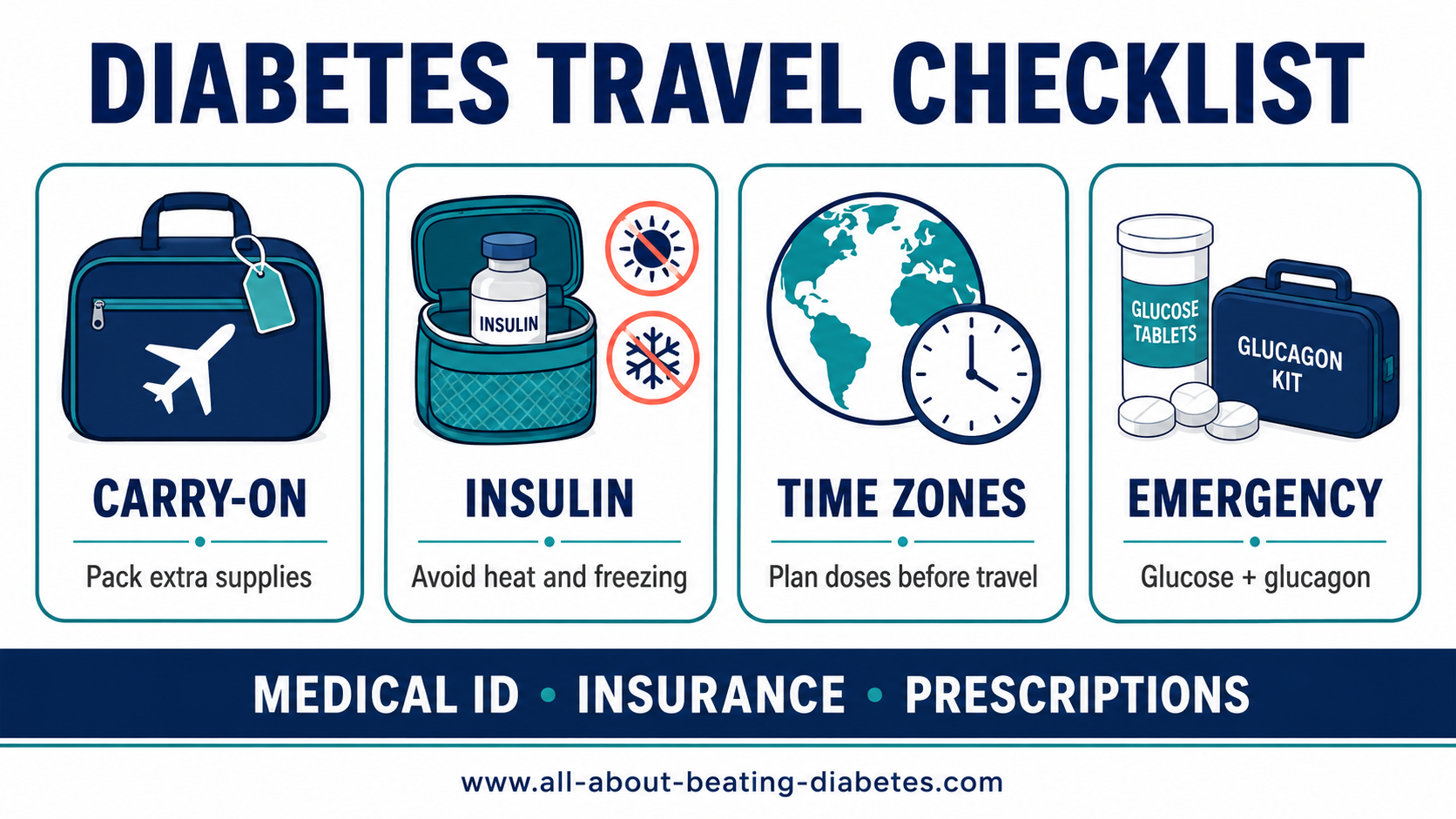
As I explain to my patients, diabetes should not automatically stop you from taking a holiday, visiting family, or traveling for work. The safest journey begins before you leave home: carry more supplies than you expect to use, protect insulin and devices from extreme temperatures, and have a written plan for low blood sugar, illness, and time-zone changes.
Quick Answer
You can travel with diabetes. Keep all essential medicines and supplies in your carry-on bag, pack approximately twice what you expect to need, carry fast-acting glucose and medical identification, and discuss time-zone insulin changes with your diabetes team before departure. Check the medication, customs, security, and insurance rules for every country on your itinerary because they are not the same everywhere.

Before You Travel With Diabetes
For international travel, a cruise, pregnancy, recent illness, frequent hypoglycemia, an insulin pump, or a complicated itinerary, arrange a pre-travel appointment. Ideally, do this four to six weeks before departure so there is time for vaccines, prescriptions, a medication schedule, and any treatment changes to settle. A routine short trip may need less preparation, but you should still know where your medicines, glucose treatment, and emergency contacts will be.
- Review your diabetes plan. Ask how often to check glucose during the journey, when to check ketones, how to handle delayed meals, and what to do if you vomit or cannot eat.
- Make a time-zone plan. If you use insulin or another medicine tied closely to meal times, ask for written instructions for both the outward and return journeys. Do not invent a dose schedule at the airport.
- Organize documents. Carry your prescriptions, a list of generic medication names and doses, your clinician’s contact details, allergy information, and a brief medical letter. A letter is not universally required, but it can help with security, customs, replacement prescriptions, and urgent care.
- Research the destination. Locate pharmacies and medical facilities, check vaccine advice, and confirm whether your medicines and needles are legal in every country you enter or transit.
- Check insurance carefully. Do not assume diabetes is automatically covered. Read the policy wording and disclose your condition accurately.
Documents to keep together
- Passport, insurance details, and 24-hour assistance number
- Medication list using both brand and generic names
- Copies of prescriptions and a clinician’s letter when helpful or required
- Your personal glucose targets, correction instructions, and sick-day plan
- Emergency contacts at home and at the destination
- Device manufacturer support numbers and model information
Diabetes Travel Packing Checklist
The CDC advises travelers with diabetes to pack twice as much medicine as they expect to need. Extra supplies help if a flight is cancelled, a bag is lost, a sensor fails, a pump set becomes dislodged, or illness delays the return journey.
- Insulin and all prescribed diabetes medicines
- Blood glucose meter, test strips, and lancets
- Backup meter and fresh batteries, if possible
- CGM sensors, transmitter, reader, charger, and adhesive
- Pump reservoirs, infusion sets, batteries, and charging cable
- Backup insulin pens or syringes and a written backup dose plan
- Blood or urine ketone strips, especially for type 1 diabetes
- Ready-to-use glucagon if prescribed
- Several measured portions of fast-acting glucose
- Longer-lasting snacks for delays
- Insulated medicine pouch and cool packs when required
- Small hard-sided sharps container
- Medical identification and documents
- Water bottle to fill after airport security
Keep essential supplies together in your personal item or carry-on bag, not in checked luggage. Divide backup supplies between two carry-on bags if you are traveling with a trusted companion and local rules permit it. Before leaving, confirm that your meter strips have not expired and review these testing-strip accuracy and storage tips.
| Travel risk | What to pack or plan | Why it matters |
|---|---|---|
| Delayed or missed meal | Fast glucose plus a more sustaining snack | Helps treat a low promptly and reduces the risk of another drop |
| Pump or CGM failure | Backup meter, extra device supplies, and an injection plan | Technology can fail, detach, lose power, or be damaged |
| Heat or freezing | Insulated pouch and product-specific storage instructions | Extreme temperatures can reduce medication and device reliability |
| Illness or vomiting | Ketone strips, hydration plan, sick-day instructions, insurance contact | Illness can rapidly destabilize glucose and raise the risk of ketoacidosis |
| Loss or delay | Extra supplies, prescriptions, generic drug names, local pharmacy plan | Replacement products and brand names vary between countries |
How to Store Insulin and Diabetes Devices While Traveling
Insulin should be protected from both heat and freezing. Unopened insulin is generally stored in a refrigerator at about 2–8°C (36–46°F), but the permitted room-temperature range and the number of days an opened or in-use product may be kept out of the refrigerator vary by insulin and device. Always follow the label for your exact vial, pen, cartridge, or pump insulin.
The FDA warns that insulin loses effectiveness with exposure to extreme temperatures. Keep it out of direct sunlight, a parked car, a glove compartment, and checked aircraft baggage. If you use a cool pack, separate the insulin from the frozen surface with cloth or its protective pouch. Never allow insulin to freeze, and do not use insulin that has been frozen.
Practical insulin storage tips
- Carry insulin in its original labeled packaging whenever possible.
- Use a purpose-made insulated pouch, but do not place insulin directly against ice or a frozen gel pack.
- Ask the hotel whether the room refrigerator has a reliable temperature range; minibar compartments can become too cold.
- Inspect insulin before use. Replace it if the appearance is unusual for that product, it may have frozen or overheated, or glucose becomes unexpectedly difficult to control.
- Record when an insulin vial, pen, or cartridge was first opened.
- If proper storage is uncertain, contact the manufacturer or a pharmacist rather than guessing.
Insulin pumps and continuous glucose monitors
Bring extra infusion sets, reservoirs, sensors, adhesives, batteries, charging cables, a backup meter, and a backup method of giving insulin. Make sure you know the injection doses to use if the pump fails. Save the device company’s support number and keep a paper copy in case your phone has no power or connection.
Screening instructions differ among device manufacturers. Some pumps and CGMs should not be exposed to certain X-ray or whole-body imaging systems. Read the manufacturer’s travel instructions for your exact model and tell security staff about the device before screening. Ask for an alternative screening method when the manufacturer recommends it.
Flying With Diabetes: Airport Security and Medicines
At U.S. Transportation Security Administration checkpoints, diabetes medicines, supplies, equipment, and medically necessary liquids are permitted after screening. Medically necessary liquids may exceed the usual 3.4-ounce or 100 mL limit, but they should be separated from other belongings and declared to the officer. Cooling accessories used for medically necessary medicine may also be screened.
These are U.S. rules. Airport security, customs, airline, and medication rules may differ in other countries. Check each airport and country on your route, including transit stops. The U.S. Department of State advises checking prescription restrictions with the relevant foreign embassy.
At the checkpoint
- Tell the security officer that you have diabetes and are carrying medicine, needles, liquids, a pump, or a CGM.
- Separate medicines and medically necessary liquids for screening when instructed.
- Keep labels and prescriptions available. TSA does not universally require a prescription, but documentation can make screening easier and another country may require it.
- Do not remove a pump or CGM unless this is safe for your device and your diabetes plan.
- Request hand inspection or another screening option when required by the device manufacturer.
- Allow extra time. In the United States, travelers who want additional assistance can review current options through TSA Cares.
Never put essential diabetes supplies in checked baggage
Checked bags can be delayed or lost, and cargo-hold temperatures may damage insulin, meters, strips, pumps, and sensors. Keep everything needed for the journey and several days afterward within reach. A small hard-sided container can hold used needles and lancets until you can dispose of them according to local rules.
Time Zones, Meals, Activity, and Blood Sugar
Travel changes more than the clock. Delayed meals, unfamiliar food, extra walking, heat, altitude, poor sleep, and stress can all affect glucose. Check more often until you understand your new pattern, even if you use a CGM. Carry a meter because symptoms and sensor readings can occasionally disagree.
Traveling across time zones with insulin
There is no single safe formula for every traveler. An eastward trip creates a shorter day; a westward trip creates a longer day. The right adjustment depends on the type of insulin, dose, injection times, meal pattern, pump settings, pregnancy status, and hypoglycemia risk.
- Ask your diabetes clinician for a written plan for departure, transit, arrival, and return.
- Use alarms and label doses by time zone so you do not accidentally repeat or omit a dose.
- Keep your watch or phone on the reference time recommended in your plan until the transition is complete.
- Do not change long-acting insulin or pump basal settings by guesswork.
- Check glucose more frequently during the first 24–48 hours after arrival.
Eating and drinking safely
You can enjoy local food without trying to make every meal perfect. Estimate carbohydrate portions, keep treatment timing in mind, and choose a balance of vegetables, protein, and higher-fiber carbohydrate when available. These practical ideas for a balanced diabetes plate and meal plan can help when restaurant portions are unfamiliar.
Bring a backup snack because airline meals may be late, unavailable, or different from what you ordered. Fast-acting glucose is for treating a low; a separate snack with carbohydrate and protein may help during a long delay. Alcohol can increase the risk of delayed hypoglycemia in people using insulin or insulin-releasing medicines, so discuss safe limits with your clinician and never use alcohol to replace food.
Foodborne illness and dehydration can destabilize diabetes quickly. Where food or water safety is uncertain, choose food that is thoroughly cooked and served hot, factory-sealed drinks, and fruit you can peel yourself. Avoid unsafe water and ice. The CDC provides destination-sensitive food and water precautions.
Heat, activity, and long journeys
More walking than usual can lower glucose during or several hours after activity. Heat and dehydration may also change glucose patterns and insulin absorption. Check before, during, and after unusually active days, and follow your personal adjustment plan.
During a long flight, train journey, or car ride, move your legs and walk when safe. The CDC recommends walking periodically—about every two to three hours on long trips—and discussing compression stockings or medication with a clinician if you have additional blood-clot risk factors. Do not start aspirin simply to prevent a travel-related blood clot unless your clinician has prescribed it for another reason.
If driving, check glucose before starting and at intervals recommended by your diabetes team. Never continue driving when you have symptoms of hypoglycemia or a low reading. Stop safely, treat the low, recheck, and wait until your glucose and thinking have recovered before driving again.
Diabetes Emergencies While Traveling
Before departure, save the local emergency number and identify the nearest suitable medical facility. In many countries the emergency number is 112, but this is not universal. Do not rely on one number for every destination.
| Situation | Immediate action | When it is an emergency |
|---|---|---|
| Glucose below 70 mg/dL (3.9 mmol/L) | If awake and able to swallow, take 15 g fast-acting carbohydrate, wait 15 minutes, and recheck. Repeat if still low. | Confusion, seizure, unconsciousness, inability to swallow, or no improvement requires glucagon if available and emergency help. |
| High glucose or suspected pump failure | Check glucose, pump/set, insulin, hydration, and ketones according to your plan. Use the prescribed backup method. | Moderate or high ketones, vomiting, deep or difficult breathing, fruity breath, severe abdominal pain, confusion, or worsening dehydration. |
| Vomiting or diarrhea | Follow your sick-day plan, monitor more often, continue insulin as instructed, check ketones when advised, and use safe fluids. | Inability to keep fluids down, breathing difficulty, significant ketones, severe weakness, or altered consciousness. |
| Foot blister, cut, or wound | Clean and protect it, reduce pressure, and inspect it closely. | Spreading redness, warmth, swelling, pus, fever, dark tissue, or a wound that is deep or not healing needs prompt care. |
Emergency Warning
Call local emergency services immediately if a person with diabetes is unconscious, having a seizure, severely confused, unable to swallow safely, having trouble breathing, or showing signs of diabetic ketoacidosis. Do not give food, drink, glucose gel, or tablets by mouth to someone who is unconscious or cannot swallow safely. Give glucagon if it has been prescribed and a trained person is available, place the person on their side, and stay with them while help is coming.
Low blood sugar away from home
A blood sugar below 70 mg/dL (3.9 mmol/L) is considered low. If you are awake and can swallow safely, use the 15–15 rule: take 15 grams of fast-acting carbohydrate, wait 15 minutes, and recheck. Repeat if the reading remains below 70 mg/dL. After recovery, a meal or snack may be needed depending on your medication and schedule.
Examples of approximately 15 grams of fast carbohydrate include four ounces (120 mL) of regular juice or soda, glucose tablets according to the label, or one glucose-gel dose according to its directions. Chocolate and high-fat desserts act too slowly to be first-choice low treatment. See the complete guide to low blood sugar from 45–69 mg/dL.
High glucose, ketones, and sick days
Illness, missed insulin, a blocked pump set, spoiled insulin, dehydration, and unfamiliar meals can raise glucose. Follow your own sick-day plan and never stop basal insulin simply because you cannot eat unless a clinician specifically tells you to do so. Check ketones when your plan advises, particularly if you have type 1 diabetes, are ill, have persistent high glucose, or have symptoms of ketoacidosis.
Seek urgent care for moderate or high ketones, repeated vomiting, inability to keep fluids down, deep or difficult breathing, fruity-smelling breath, severe abdominal pain, marked drowsiness, or confusion. Diabetic ketoacidosis can occasionally occur without extremely high glucose, particularly in pregnancy or in people using an SGLT2 inhibitor. Do not rely on the glucose number alone when serious symptoms or ketones are present. Review the warning signs in this guide to dangerous blood sugar levels.
Foot care during travel
- Wear well-fitting shoes and clean, dry socks; break in new shoes before the trip.
- Inspect the tops, soles, heels, and between the toes every day.
- Never walk barefoot, including at the beach, pool, hotel room, or on hot pavement.
- Keep feet clean and dry, but avoid lotion between the toes.
- Do not cut a blister, corn, or callus yourself.
- Seek medical help promptly for infection, color change, swelling, warmth, drainage, or a wound that is not improving.
If you have neuropathy, poor circulation, a previous ulcer, or an amputation, ask your foot-care clinician whether the journey needs additional precautions. Read these daily diabetic foot-care tips before packing your walking shoes.
Does Travel Insurance Cover Diabetes?
Some travel insurance policies cover diabetes-related emergencies, but coverage is not automatic and policies differ widely. A pre-existing condition exclusion, stability period, missed declaration, pregnancy exclusion, or medication-change clause can affect a claim. The policy may also separate emergency treatment, cancellation, lost supplies, repatriation, and medical evacuation coverage.
Before buying a policy, ask:
- Is my diabetes covered as a declared pre-existing condition?
- Is there a required stability period before departure?
- Are insulin, pump, CGM, and supply replacement costs covered?
- Are complications, hypoglycemia, DKA, and hospital admission covered?
- Does the policy include 24-hour assistance and medical evacuation?
- Are pregnancy and gestational diabetes covered?
- What records, receipts, and prior authorization are required?
- What deductible, claim limit, or destination exclusion applies?
Disclose your diagnosis, complications, recent hospital visits, and medication changes accurately. Carry the policy number and emergency assistance number. If traveling internationally, confirm whether your usual health coverage works abroad; many national or domestic plans offer limited or no overseas coverage.
Travel With Gestational Diabetes
Gestational diabetes does not automatically prevent travel, but both diabetes and pregnancy need to be considered. Discuss the destination, journey length, gestational age, glucose pattern, medicines, blood-clot risk, and access to maternity care with your obstetric and diabetes teams.
Carry your glucose supplies, meal and hydration plan, pregnancy records, emergency contacts, and any prescribed medicine. Ask what to do if readings are repeatedly above target, you cannot keep food or fluids down, fetal movement changes, contractions begin, bleeding occurs, or you develop symptoms of pre-eclampsia. Airline pregnancy restrictions and insurance rules vary, so confirm them directly rather than relying on general advice. You may also review the current approach to gestational diabetes treatment.
Doctor’s Note
My best travel advice is simple: prepare for the day that does not go according to plan. Carry more medicine than you expect to use, keep it with you, know how to treat a low, and have a written backup plan for insulin or device failure. Do not let fear cancel a safe trip—but do not let excitement make you leave your diabetes routine at home.
Frequently Asked Questions
Can you travel safely with diabetes?
Yes. Most people with stable type 1, type 2, or gestational diabetes can travel safely. Preparation is especially important if you use insulin, have frequent low blood sugar, are pregnant, have complications, or will be far from medical care.
Should I pack diabetes supplies in checked or carry-on luggage?
Keep all essential medicines, insulin, devices, testing supplies, glucose, glucagon, and documentation in your carry-on or personal item. Checked bags can be delayed or lost, and cargo-hold temperatures may damage medicines and equipment.
How much insulin and medicine should I take?
The CDC recommends packing about twice as much medicine as you expect to need. Also take extra testing and device supplies. Make sure prescriptions and travel rules allow the quantity, particularly for international travel.
Can insulin go through airport security?
At U.S. TSA checkpoints, insulin and diabetes supplies are allowed after screening. Declare medically necessary liquids and separate them when instructed. Rules elsewhere vary. Follow the screening instructions for your specific pump or CGM and request an alternative inspection if the manufacturer advises it.
How do I keep insulin cold while traveling?
Use an insulated medicine pouch when needed and follow the exact product label. Keep insulin away from direct sun, hot cars, freezing temperatures, and direct contact with ice or frozen packs. Never use insulin that has frozen. In-use storage time and temperature limits vary by product.
How should I change insulin for a new time zone?
Ask your diabetes clinician for an individualized written schedule before travel. The adjustment depends on whether the travel day becomes longer or shorter, the insulin type and timing, meals, pump settings, and your risk of hypoglycemia. There is no universal dose formula that is safe for everyone.
What should my travel companion know?
They should know your signs of low and high blood sugar, where you keep glucose and glucagon, how to use glucagon if trained, when not to give anything by mouth, and how to call local emergency services. They should also know where your medicines, identification, and insurance information are kept.
Does travel insurance automatically cover diabetes?
No. Some policies cover declared pre-existing diabetes, while others apply exclusions, stability periods, or limits. Check emergency treatment, evacuation, cancellation, replacement supplies, pregnancy, and medication-change rules before buying the policy.
Related Questions and Resources
References
- Centers for Disease Control and Prevention. Tips for Traveling With Diabetes.
- CDC Yellow Book. Travelers with Chronic Illnesses.
- Transportation Security Administration. Medications (Liquid).
- American Diabetes Association. What Can I Bring With Me on the Plane?
- U.S. Food and Drug Administration. Information Regarding Insulin Storage and Switching Between Products in an Emergency.
- Centers for Disease Control and Prevention. Treatment of Low Blood Sugar (Hypoglycemia).
- Centers for Disease Control and Prevention. Diabetic Ketoacidosis.
- CDC Travelers’ Health. Food and Drink Considerations When Traveling.
- CDC Travelers’ Health. Blood Clots During Travel.
- U.S. Department of State. Medicine and Health.
Medical disclaimer: This page is for general education and does not replace an examination, diagnosis, personal travel plan, medication instructions, or emergency care from your own healthcare professional. Diabetes targets, insulin schedules, pregnancy advice, medicine storage, and fitness to travel must be individualized. If you have severe symptoms or suspect a diabetes emergency, contact local emergency services immediately.