- Home
- Vitamins and Supplements for Diabetes
- Green Tea and Diabetes Benefits and Safety
Green Tea and Diabetes: Blood Sugar Effects, Safety, and Evidence
Written by: Dr. Albana Greca Sejdini, MD, MMedSc
Medically reviewed by: Dr. Ruden Cakoni, MD, Endocrinologist
Last medically reviewed: July 2026
Green tea is an unsweetened, very-low-calorie beverage made from the leaves of Camellia sinensis. It contains catechins—especially epigallocatechin gallate, or EGCG—and usually contains caffeine. These compounds have been studied for possible effects on glucose, insulin sensitivity, weight, blood pressure, and cholesterol.
What Is Green Tea?
Green, black, and oolong tea come from the same plant, Camellia sinensis. The difference is mainly how the leaves are processed. Green-tea leaves are heated and dried with relatively little oxidation, while black tea is more fully oxidized.
Green tea contains:
- catechins, including EGCG;
- caffeine, with an amount that varies by leaf, serving size, water temperature, and steeping time;
- L-theanine and other naturally occurring plant compounds;
- little or no carbohydrate when prepared without sugar, honey, syrup, milk, or sweetened flavoring.
Matcha is powdered green tea, so the complete leaf is consumed rather than discarded after steeping. Matcha may provide more caffeine and catechins per serving, but product strength varies and it has not been proven superior for diabetes control.
Does Green Tea Lower Blood Sugar?
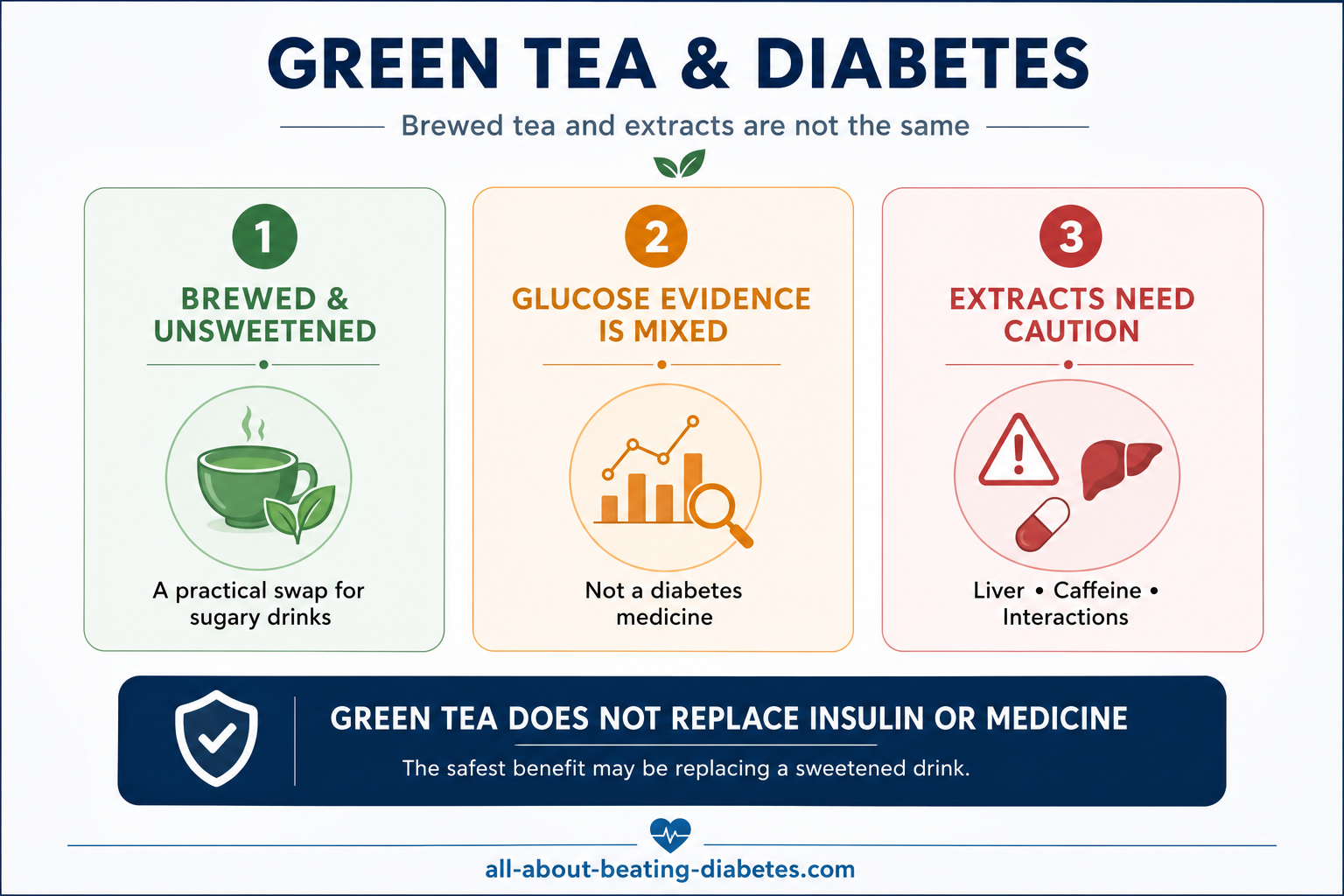
The clinical evidence is mixed.
A 2021 systematic review and meta-analysis of 14 randomized trials in people with type 2 diabetes found no significant overall effect on fasting glucose, fasting insulin, HbA1c, or HOMA-IR. A newer 2024 meta-analysis of 15 studies involving 722 participants reported improvements in fasting glucose, HbA1c, and insulin-resistance measures.
These differing conclusions reflect important limitations:
- small trials;
- different green-tea beverages, powders, catechin products, or extracts;
- different caffeine and EGCG amounts;
- variable treatment durations;
- different starting HbA1c levels and diabetes medicines;
- differences in diet, activity, and participant populations;
- uncertainty about whether statistically significant changes are clinically meaningful.
Because products and studies are inconsistent, no standard green-tea preparation or dose has been established as diabetes treatment. ADA nutrition guidance does not recommend herbs or supplements for glycemic benefit when evidence of efficacy and safety is insufficient.

How Might Green Tea Affect Glucose?
Cell, animal, and early experimental studies have investigated whether green-tea catechins may influence:
- insulin signaling and glucose transport;
- digestive enzymes involved in carbohydrate breakdown;
- intestinal glucose absorption;
- liver glucose production;
- oxidative stress and inflammatory signaling;
- energy expenditure and fat metabolism.
These mechanisms are scientifically interesting, but they do not prove a reliable treatment effect in people. Adding brewed tea to rat fat cells is not comparable to drinking tea with a meal. A laboratory increase in “insulin activity” cannot be translated into a claim that green tea makes insulin work 15 times better in the human body.
Green tea should also not be described as a natural alpha-glucosidase inhibitor equivalent to acarbose. A plant compound affecting an enzyme in a laboratory does not establish a standardized dose, absorption, clinical effect, or safety profile in patients.
Green Tea and Type 1 Diabetes
Type 1 diabetes is an autoimmune disease that destroys insulin-producing pancreatic beta cells. Green tea has not been shown to prevent type 1 diabetes, stop autoimmune progression, restore beta cells, or replace insulin.
Animal findings cannot justify telling people at risk that green tea will prevent type 1 diabetes or telling someone with established type 1 diabetes that it will slow the disease.
People with type 1 diabetes may drink unsweetened green tea as a beverage if it fits their health and caffeine plan. They must still use prescribed insulin, monitor glucose, and follow ketone and sick-day guidance.
Read the complete type 1 diabetes information guide.
Green Tea and Type 2 Diabetes
In type 2 diabetes, green tea is best considered an optional unsweetened beverage—not a treatment program.
It may be useful when it replaces:
- sugar-sweetened tea;
- soda;
- juice drinks;
- sweetened coffee beverages;
- energy drinks;
- high-calorie café drinks.
This substitution reduces added sugar and carbohydrate without requiring green tea to have a direct pharmacologic effect.
Do not use tea to correct a high glucose reading. Do not add extra cups or take an extract when glucose is above target. Review repeated high readings with the diabetes team and use the treatment plan already provided.
See How Foods and Drinks Affect Blood Sugar.
Can Green Tea Prevent Type 2 Diabetes?
Observational studies sometimes associate habitual tea drinking with lower diabetes risk. Such studies cannot prove that tea caused the difference. Tea drinkers may differ in diet, activity, smoking, alcohol use, body weight, income, healthcare access, and other factors.
Randomized trials have not established green tea as a stand-alone diabetes-prevention intervention. Evidence-based prevention for people with prediabetes includes:
- regular physical activity;
- sustainable weight management when appropriate;
- a high-quality eating pattern;
- less sedentary time;
- adequate sleep and treatment of sleep apnea;
- smoking cessation;
- metformin for selected people at particularly high risk.
Unsweetened tea can support this pattern by replacing sweet drinks, but it does not guarantee prevention.
Weight, Cholesterol, Blood Pressure, and Heart Health
Weight
Green-tea catechins and caffeine may have a modest effect on energy expenditure, but clinical weight loss is generally small and inconsistent. A cup of tea does not “burn off” a meal, and an extract should not be used as a shortcut to weight loss.
Cholesterol
NCCIH reports that green-tea products may produce a small reduction in total and LDL cholesterol. Most trials studied extracts rather than ordinary beverages, and green tea did not consistently improve HDL cholesterol or triglycerides.
Blood pressure and cardiovascular disease
Green tea has not been established as a replacement for blood-pressure or cholesterol medicine. Caffeine can temporarily raise blood pressure in sensitive people, while some concentrated extracts list increased blood pressure among reported side effects.
Do not begin green tea to prevent a heart attack or stroke. Comprehensive cardiovascular protection includes blood-pressure control, lipid treatment, smoking cessation, activity, glucose management, kidney protection, and appropriate medicines.
Brewed Green Tea Is Not the Same as Green-Tea Extract
| Feature | Brewed green tea | Green-tea extract |
|---|---|---|
| Form | Leaves or tea bag steeped in water | Capsule, tablet, powder, liquid concentrate, or multi-ingredient product |
| Concentration | Usually lower and diluted in water | May deliver high catechin, EGCG, or caffeine doses quickly |
| Main practical use | Unsweetened beverage | Supplement promoted for glucose, cholesterol, or weight loss |
| Evidence | No established diabetes dose or reliable treatment effect | Trials remain mixed; formulations are not interchangeable |
| Safety | Generally considered safe for adults in beverage amounts, with caffeine precautions | More concern about nausea, abdominal symptoms, blood pressure, medicine interactions, and uncommon liver injury |
EFSA found that supplemental EGCG doses of 800 mg per day may be associated with early signs of liver injury and could not identify a universally safe supplement dose. That threshold is a safety signal—not a recommended dose.
A Simple Unsweetened Green Tea Recipe
- Use one tea bag or approximately one teaspoon of loose green-tea leaves per cup.
- Heat fresh water. Follow the package instructions; many green teas taste less bitter when the water is hot but not aggressively boiling.
- Pour the water over the leaves.
- Steep for approximately two to three minutes, or according to the package.
- Remove the bag or strain the leaves.
- Drink it unsweetened. Lemon, mint, or another sugar-free flavoring may be added if tolerated.
Longer steeping may increase bitterness and caffeine extraction. It does not guarantee a larger glucose benefit.
For iced tea, prepare it normally, cool it promptly, refrigerate it, and avoid sugar, honey, syrups, sweetened condensed milk, or sweetened bottled-tea mixes.
How Much Green Tea Should a Person With Diabetes Drink?
There is no guideline-approved number of cups for diabetes control. “Twice daily” is not a medically established treatment dose.
For a person who tolerates caffeine and has no relevant interaction, one or several cups of ordinary unsweetened tea may fit within the daily beverage plan. The appropriate amount depends on:
- total caffeine from coffee, tea, cola, chocolate, pre-workout products, and medicines;
- pregnancy or breastfeeding;
- sleep quality;
- heart rhythm, palpitations, or blood pressure;
- anxiety, tremor, reflux, or bladder symptoms;
- medicine interactions;
- how much fluid is appropriate with heart or kidney disease.
Decaffeinated green tea contains less caffeine but is not always completely caffeine-free. Matcha and concentrated products may provide more caffeine than a standard brewed cup.
Caffeine and Blood Sugar
Caffeine sensitivity varies. In some people, caffeine can temporarily raise glucose or make insulin sensitivity appear worse. In others, it produces little noticeable glucose change.
Possible caffeine effects include:
- restlessness, tremor, or anxiety;
- insomnia or reduced sleep quality;
- headache or dizziness;
- palpitations or faster heart rate;
- temporary blood-pressure elevation;
- reflux or stomach discomfort;
- increased urination or bladder urgency.
Poor sleep itself can make glucose management harder. Avoiding caffeinated tea late in the day may be more useful than drinking additional tea for a theoretical metabolic benefit.
Green Tea Side Effects and Liver Safety
Brewed tea
NCCIH reports no safety concerns for green tea consumed as a beverage by adults, apart from the need to consider caffeine and individual tolerance.
Concentrated extracts
Green-tea extract supplements may cause:
- nausea;
- constipation;
- abdominal pain or discomfort;
- headache or stimulant effects;
- increased blood pressure;
- uncommon but potentially serious liver injury.
Liver injury has been reported mainly with tablet or capsule extracts rather than ordinary brewed tea. Product dose, fasting use, genetics, contamination, and other ingredients may influence risk, but an individual reaction cannot be predicted reliably.
People with liver disease, abnormal liver tests, heavy alcohol use, or medicines that may affect the liver should not start an extract without professional review.
Green Tea and Medicine Interactions
NCCIH reports that high-dose green tea can reduce blood levels and effectiveness of nadolol, a beta-blocker. Green-tea extract may reduce atorvastatin levels, and an interaction has also been reported with raloxifene. Other interactions are possible.
Additional caution is appropriate with:
- insulin, sulfonylureas, or meglitinides when several glucose-lowering products are being combined;
- stimulant medicines or high-caffeine products;
- blood-pressure or heart-rhythm medicines;
- liver-affecting medicines;
- cancer treatment or transplant medicines;
- multiple herbal or weight-loss supplements.
Brewed tea does not usually cause hypoglycemia by itself. However, when diet, activity, weight, medicine, and supplements change together, glucose patterns may change. Do not reduce medication because one reading improves after tea.
Show the exact supplement label to a clinician or pharmacist. “Green tea complex” products may also contain caffeine, guarana, bitter orange, vitamins, minerals, or unrelated herbs.
Pregnancy, Breastfeeding, Children, and Special Conditions
Pregnancy
Green tea contributes to total caffeine intake. During pregnancy, caffeine should remain within the limit recommended by the obstetric clinician. Count coffee, tea, cola, chocolate, energy products, and medicines together.
Concentrated green-tea extracts should not be used casually during pregnancy. Gestational diabetes requires pregnancy-specific glucose targets, monitoring, nutrition, and medication decisions.
Breastfeeding
Caffeine passes into breast milk. High maternal intake can contribute to infant fussiness or poor sleep, while low-to-moderate intake is usually better tolerated. Discuss intake when the infant is premature, very young, unusually irritable, or sleeping poorly.
Children and teenagers
Do not give green-tea extracts or weight-loss products to a child for diabetes prevention or glucose control. Caffeine intake should be discussed with the pediatric clinician.
Heart, kidney, reflux, anxiety, and sleep conditions
Caffeine and fluid intake may need adjustment with arrhythmias, uncontrolled blood pressure, severe anxiety, insomnia, reflux, bladder urgency, advanced kidney disease, heart failure, or a prescribed fluid restriction.
How to Check Whether Green Tea Affects Your Glucose
- Use brewed unsweetened tea. Do not test a sweetened café drink or multi-ingredient supplement.
- Keep the meal similar. A different carbohydrate portion will obscure the comparison.
- Record the timing. Note whether the tea was before, with, or after the meal.
- Use the testing schedule in your care plan. This may include before-meal and one-to-two-hour readings or CGM data.
- Repeat the comparison. One reading cannot establish an effect.
- Record caffeine symptoms and sleep. A small glucose change is not worthwhile if tea worsens palpitations, anxiety, or insomnia.
- Do not adjust medicine independently. Show repeated patterns to the prescribing clinician.
Use the blood sugar log sheet to record the complete context.
Most Asked Questions
Can green tea cure type 2 diabetes?
No. Green tea has not been proven to cure type 2 diabetes. Some people may achieve remission through substantial and sustained metabolic improvement, but tea is not an established remission treatment.
Can green tea replace metformin or insulin?
No. It does not have the standardized dose, predictable effect, safety monitoring, or outcome evidence required to replace prescribed treatment.
Is green tea better before or after a meal?
No reliable diabetes evidence establishes one best time. Choose timing based on tolerance, caffeine, sleep, reflux, and your meal plan.
Can I add honey?
Honey is added sugar and carbohydrate. It may raise glucose and changes the drink from unsweetened tea. Use the amount within your carbohydrate plan or choose no sweetener.
Is matcha better for blood sugar?
It is more concentrated because the powdered leaf is consumed, but it has not been proven more effective for diabetes and may provide more caffeine and catechins.
Can green tea cause low blood sugar?
Brewed tea alone is not a common cause of hypoglycemia. Risk becomes more difficult to predict when concentrated products are combined with insulin, sulfonylureas, fasting, alcohol, or major carbohydrate reduction.
Does green tea burn belly fat?
Any effect on body weight is generally small and inconsistent. Green tea does not selectively remove abdominal fat.
Related Questions
- What Does Blood Sugar of 196 mg/dL Two Hours After Food Mean?
- How Can I Manage High Post-Meal Blood Sugar?
- High and Low Blood Sugar With High Blood Pressure
Related Resources
- Green Tea and Blood Sugar Lowering
- Foods and Drinks That Affect Blood Sugar
- Diabetic Herbs: Evidence, Limits, and Safety
- Cinnamon and Diabetes
- Diabetes Medications: Benefits and Side Effects
- Is My Blood Sugar Too High or Too Low?
Medical disclaimer: This page provides general education and does not recommend a green-tea extract, therapeutic dose, or medication change. Do not replace insulin or diabetes medicine with tea, herbs, or supplements. Seek urgent care for severe hyperglycemia, ketones, vomiting, deep breathing, confusion, seizure, unconsciousness, or another emergency.
References
- American Diabetes Association: Facilitating Positive Health Behaviors and Well-being—Standards of Care in Diabetes 2026
- National Center for Complementary and Integrative Health: Green Tea—Usefulness and Safety
- National Center for Complementary and Integrative Health: Herb–Drug Interactions and Green Tea
- Asbaghi and colleagues: Green Tea and Glycemic Control in Type 2 Diabetes—Systematic Review and Meta-analysis
- Jia and colleagues: Effect of Green Tea in Type 2 Diabetes—Meta-analysis
- European Food Safety Authority: Scientific Opinion on the Safety of Green Tea Catechins
- National Institute of Diabetes and Digestive and Kidney Diseases LiverTox: Green Tea