Enzymes for Type 1 Diabetes - Real Remedy or Trick?

by Martynas
(Vilnius)


Question from Martynas: I have had type 1 diabetes for three years, and my insulin doses are slowly increasing. Can enzymes reduce my insulin needs, or are they another trick?


Quick Answer


Martynas, there is no proven over-the-counter enzyme product that can restore insulin production, stop the autoimmune process, or safely replace insulin in established type 1 diabetes. Digestive pancreatic enzymes are useful only when a person has confirmed exocrine pancreatic insufficiency. Enzymes studied in laboratories—such as 12-lipoxygenase—are research targets, not supplements. Please do not reduce insulin without reviewing your glucose patterns with your diabetes team.


Answer by Dr. Albana Greca, MD, MMedSc


Dear Martynas,


Thank you for asking before trying a product. The word enzyme is used for several very different things, which is why online information can become confusing.
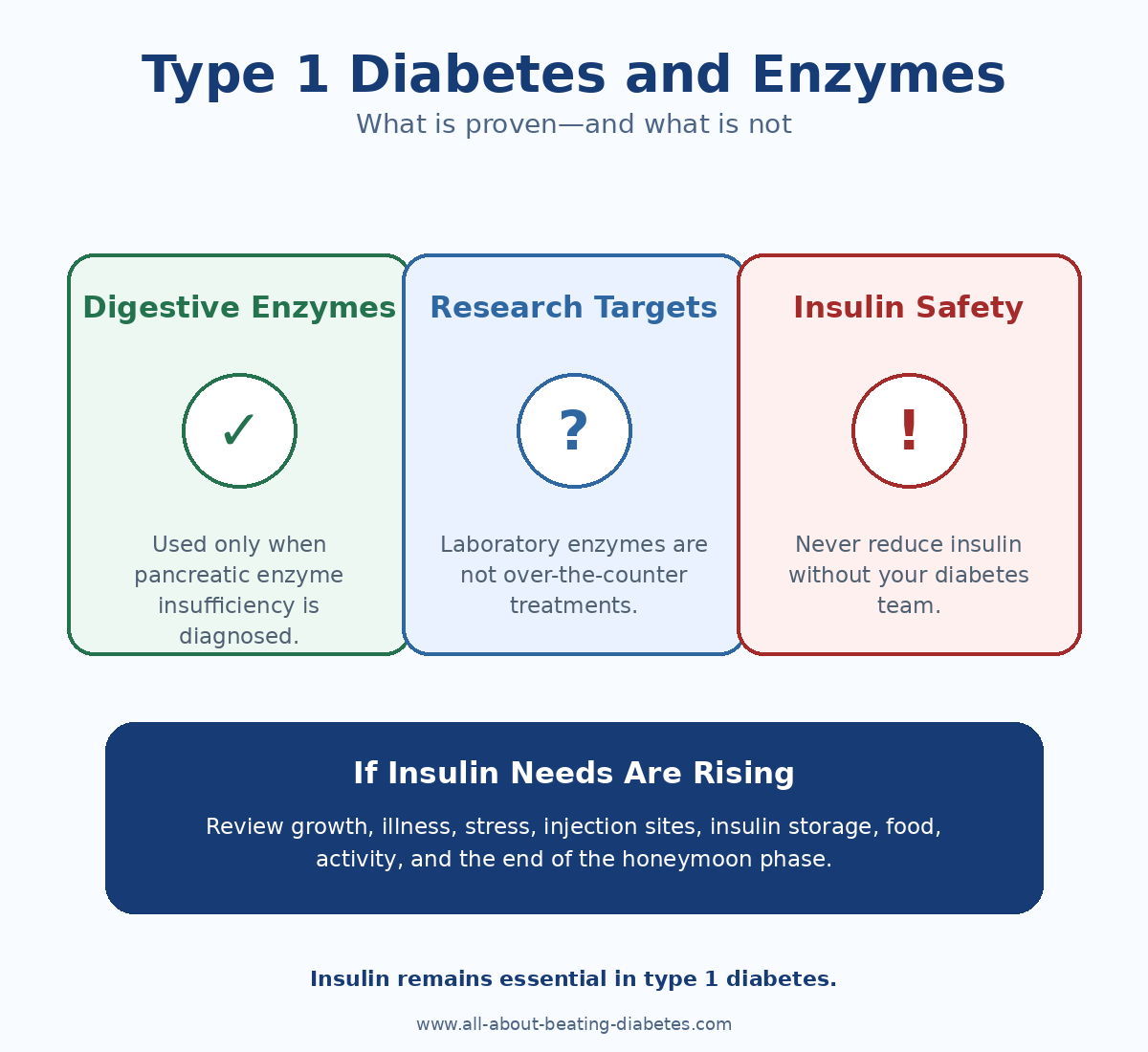


Type 1 diabetes and enzymes infographic explaining digestive enzymes, research targets, insulin safety, and rising insulin needs


1. Digestive Pancreatic Enzymes


The pancreas has two main jobs. Its endocrine cells make hormones such as insulin, while its exocrine cells make digestive enzymes that help break down fat, protein, and carbohydrate.


Prescription pancreatic enzyme replacement therapy, or PERT, is used for exocrine pancreatic insufficiency. It improves digestion when the pancreas does not make enough digestive enzymes.


Symptoms that may suggest this problem include:


  • Greasy, pale, bulky, or difficult-to-flush stools

  • Persistent diarrhea

  • Bloating and excess gas

  • Unexplained weight loss

  • Deficiencies of fat-soluble vitamins

  • Poor growth in a child


PERT may be helpful when this condition is properly diagnosed, but it does not replace insulin or treat the autoimmune destruction of beta cells.


2. Enzymes Mentioned in Type 1 Diabetes Research


Researchers study enzymes and immune pathways involved in inflammation and beta-cell injury. Examples include 12-lipoxygenase, often shortened to 12-LO, and enzymes connected with immune-cell signaling.


These are scientific targets. They are not enzyme capsules that a person can buy and take to regenerate beta cells. A laboratory finding may help scientists design a future medicine, but it does not prove that taking an enzyme supplement treats type 1 diabetes.


GAD, or glutamic acid decarboxylase, is an enzyme found in beta cells and is also an important autoantigen. Tests for antibodies against GAD and other islet targets can help identify autoimmune diabetes or detect early-stage type 1 diabetes. The test predicts or classifies disease risk; it is not an enzyme treatment.


3. Current Immune and Disease-Modifying Research


Teplizumab is an immune medicine—not an enzyme. It is approved for selected people in specific early stages of type 1 diabetes. It is not a general cure for established type 1 diabetes and does not automatically eliminate insulin.


Why Might Your Insulin Dose Be Increasing?


An increasing insulin dose does not mean that insulin has damaged your body or that you are becoming “addicted” to it.


Possible reasons include:


  • The honeymoon phase is ending and the pancreas is making less of its own insulin

  • Growth or puberty

  • Weight gain or reduced physical activity

  • Stress, poor sleep, pain, infection, or illness

  • Steroid medicines

  • Changes in food portions or carbohydrate counting

  • Injecting into thickened or lumpy tissue

  • Insulin that has expired, frozen, or overheated

  • Problems with a pump site, tubing, or cannula


What I Suggest You Review


Before buying an enzyme supplement, ask your diabetes team to review:


  • Your continuous glucose monitor or meter patterns

  • Basal and mealtime insulin doses

  • Carbohydrate counting and correction calculations

  • Injection or pump sites

  • Insulin storage and expiration

  • Recent weight, activity, illness, or medicine changes

  • Whether digestive symptoms suggest pancreatic enzyme insufficiency


Important Insulin Safety Warning


Never reduce or stop basal insulin because of an enzyme, herb, supplement, diet, or online claim. In type 1 diabetes, insufficient insulin can cause ketones and diabetic ketoacidosis. Seek urgent care for high glucose with vomiting, abdominal pain, deep breathing, dehydration, confusion, or moderate to large ketones.


How to Judge an “Enzyme Cure” Claim


Be cautious when a product:


  • Promises to regenerate beta cells or cure type 1 diabetes

  • Says you can stop or sharply reduce insulin

  • Uses laboratory research as proof that a supplement works in humans

  • Relies only on testimonials

  • Claims that doctors or regulators are hiding the cure


Judge any product by clinical evidence, transparent risks, and whether the results apply to people with type 1 diabetes.


Doctor’s Note


Martynas, my main concern is not that your insulin dose is larger than it was three years ago. I want to know whether your glucose is in range, whether you are having lows, whether the dose matches your meals and activity, and whether an avoidable problem is increasing your needs. Insulin is replacing a hormone your body cannot produce adequately; using the dose you need is not a treatment failure.


Educational safety note: Do not begin pancreatic enzymes or another supplement unless the purpose, diagnosis, product, dose, and interactions have been reviewed by a qualified clinician.


Related Questions


Related Resources


Last reviewed: July 2026


Comments for Enzymes for Type 1 Diabetes - Real Remedy or Trick?

Average Rating starstarstarstarstar

Click here to add your own Comment / Follow up

Feb 07, 2013
Rating
starstarstarstarstar
Confused!!
by: Ernie C


Question from Ernie: I have type 2 diabetes and previously used Gymnema sylvestre and bitter melon. My recent readings are 82–96 mg/dL, but I feel as though I am having hypoglycemia. Has my pancreas started producing more insulin?


Quick Answer


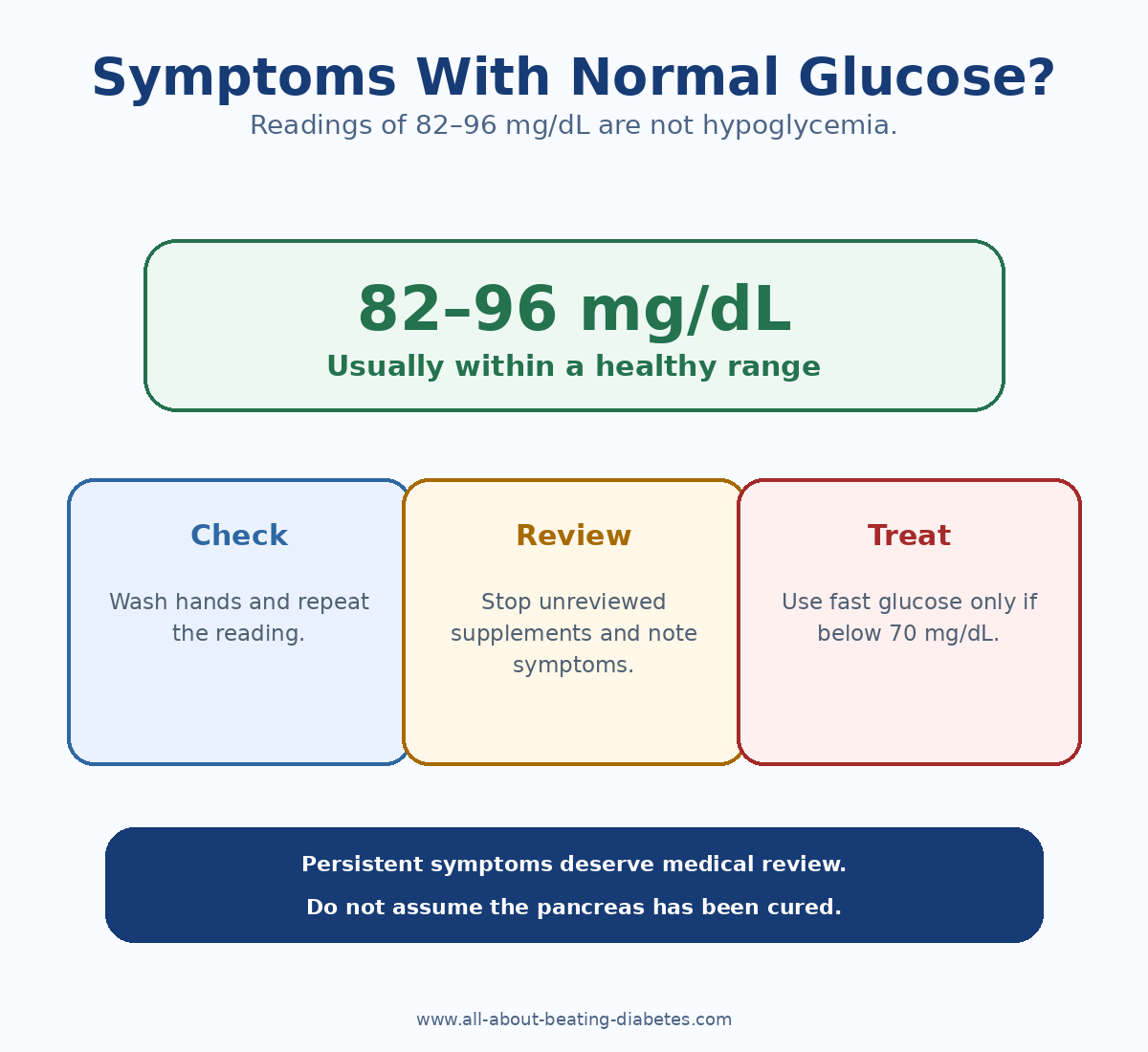
Ernie, readings of 82, 86, 94, and 96 mg/dL are not hypoglycemia. They are generally within a healthy glucose range. Some people feel low-glucose symptoms when their glucose falls rapidly from previously high levels, even though the number remains above 70 mg/dL. However, symptoms should not automatically be blamed on "relative hypoglycemia." Recheck the glucose, review the supplements with your clinician, and investigate other possible causes if the symptoms continue.


Answer by Dr. Albana Greca, MD, MMedSc


Dear Ernie,


I understand why these symptoms are confusing. The first point I want to clarify is that your reported readings are not dangerously low. Hypoglycemia is generally defined as glucose below 70 mg/dL, while a reading below 54 mg/dL is clinically significant and requires prompt treatment.


Infographic explaining symptoms of hypoglycemia with normal glucose readings of 82 to 96 mg/dL


Why Can You Feel "Low" at a Normal Reading?


If your body has been accustomed to higher glucose, a rapid fall toward normal may trigger shakiness, sweating, hunger, anxiety, palpitations, or weakness before the glucose reaches the true hypoglycemia range. This is sometimes called relative hypoglycemia.


The sensation usually improves as the body adapts to safer glucose levels, but it should not be assumed without checking. Similar symptoms can also come from dehydration, anxiety, caffeine, low blood pressure, an abnormal heart rhythm, thyroid disease, anemia, illness, or another medical problem.


Has Your Pancreas Started Producing Insulin Again?


In type 2 diabetes, the pancreas usually continues producing insulin. The main problems are insulin resistance and, over time, reduced beta-cell function.


Normal readings may mean that your own insulin is currently working more effectively because of changes in food intake, weight, activity, stress, illness, sleep, or other factors. They do not prove that the pancreas has suddenly repaired itself or that diabetes has been cured.


An HbA1c test and laboratory glucose are more useful than a few home readings for assessing your overall control. Read more about healthy blood sugar levels.


What About Gymnema and Bitter Melon?


Gymnema sylvestre and bitter melon have been studied for possible glucose-lowering effects, but the evidence is limited and inconsistent. Supplement dose, purity, and strength can vary between products.


Because your symptoms began while using them, stopping the supplements until they are reviewed was a reasonable safety step. I would not restart them simply because the current readings look normal.


Bring the exact product bottles, doses, and ingredient lists to your doctor or pharmacist. Some supplements contain several ingredients or may interact with other medicines. See our guides to diabetic herbs and supplement safety and natural approaches to diabetes.


What to Do When the Symptoms Occur


  1. Stop what you are doing and sit somewhere safe.

  2. Wash and dry your hands, then repeat the finger-stick test with a fresh strip.

  3. Record the glucose, time, symptoms, meal, activity, caffeine, and supplements.

  4. If glucose is below 70 mg/dL, take 15 grams of fast-acting carbohydrate and recheck after 15 minutes.

  5. If glucose is 70 mg/dL or higher, do not automatically eat sweets. Rest, hydrate, and follow your normal meal plan unless your clinician has given different instructions.


Eating sugar every time symptoms occur at a normal glucose level may create unnecessary spikes and make it harder to understand the true cause.


Check the Meter and the Pattern


Home meters are useful but not perfectly exact. Use unexpired strips, wash and dry your hands, and make sure the strips were stored correctly. If a reading seems inconsistent with how you feel, repeat it.


Please arrange a medical review if:


  • The symptoms continue despite normal readings

  • You record any value below 70 mg/dL

  • The episodes occur while fasting, driving, or sleeping

  • You are losing weight without trying

  • You have palpitations, chest discomfort, fainting, or shortness of breath

  • Your HbA1c has changed unexpectedly


Confirmed hypoglycemia in a person who uses no insulin or glucose-lowering medicine deserves medical evaluation rather than self-treatment with supplements.


When to Seek Emergency Help


Call emergency services for severe confusion, fainting, seizure, loss of consciousness, chest pain, difficulty breathing, or inability to swallow safely. Do not give food or drink to an unconscious person.


Doctor’s Note


Ernie, your numbers are encouraging, but symptoms still matter. I would confirm the readings, check your HbA1c, review the herbal products, and consider other causes rather than assuming your pancreas has restarted or advising you to keep using the supplements. The goal is normal glucose without unexplained symptoms and with a treatment plan that is safe and measurable.


Educational safety note: Do not diagnose or treat suspected hypoglycemia from symptoms alone. Confirm the glucose whenever possible and seek medical advice for recurrent or unexplained episodes.


Related Questions


Related Resources


Last reviewed: July 2026


Feb 08, 2013
Rating
starstarstarstarstar
Confused
by: Ernie C

Hi Dr. Alba,

Thank you so much for responding, I will be seeing my doctor
Next week.
Regarding the herbs, Gymnema , and Bitter melon, I stopped
using it, cause I was afraid my sugar levels, would go down even lower.
I will let you know the outcome in the next few weeks.
Best regards,
Ernie C.

Click here to add your own Comment / Follow up

Ask the Doctor now? Simply click here to return to Type 1 diabetes information.