Foods for pre diabetes
Question: Can healthy food and exercise prevent prediabetes from becoming type 2 diabetes? Are the food rules the same as for diabetes, can snacks still fit, and can the same plan improve high cholesterol?
Quick Answer
Prediabetes does not always progress to type 2 diabetes. Healthy eating, regular activity, and weight loss when appropriate can substantially lower or delay the risk, although no plan can guarantee prevention. The food principles are similar to those used for diabetes, but most people do not need a list of completely forbidden foods. Planned snacks and occasional treats can fit in suitable portions. The same eating pattern may also improve LDL cholesterol, triglycerides, blood pressure, and weight.
Answer by Dr. Albana Greca, MD, MMedSc
Hello,
I want to reassure you that prediabetes is a warning sign, not a promise that you will definitely develop diabetes. Genetics, age, weight, sleep, activity, medicines, pregnancy history, and other factors all influence risk—but lifestyle changes can make a real difference.
Can Prediabetes Be Prevented From Becoming Diabetes?
Yes, type 2 diabetes can often be delayed or prevented. In the Diabetes Prevention Program, an intensive lifestyle plan aimed for about 7% weight loss and at least 150 minutes of moderate activity each week. It reduced progression to type 2 diabetes by about 58% during the main study period.
This does not guarantee that diabetes will never occur, but regular activity can still lower risk even without full weight loss.
Glucose or HbA1c should usually be checked at least yearly.
Are Foods for Prediabetes the Same as Foods for Diabetes?
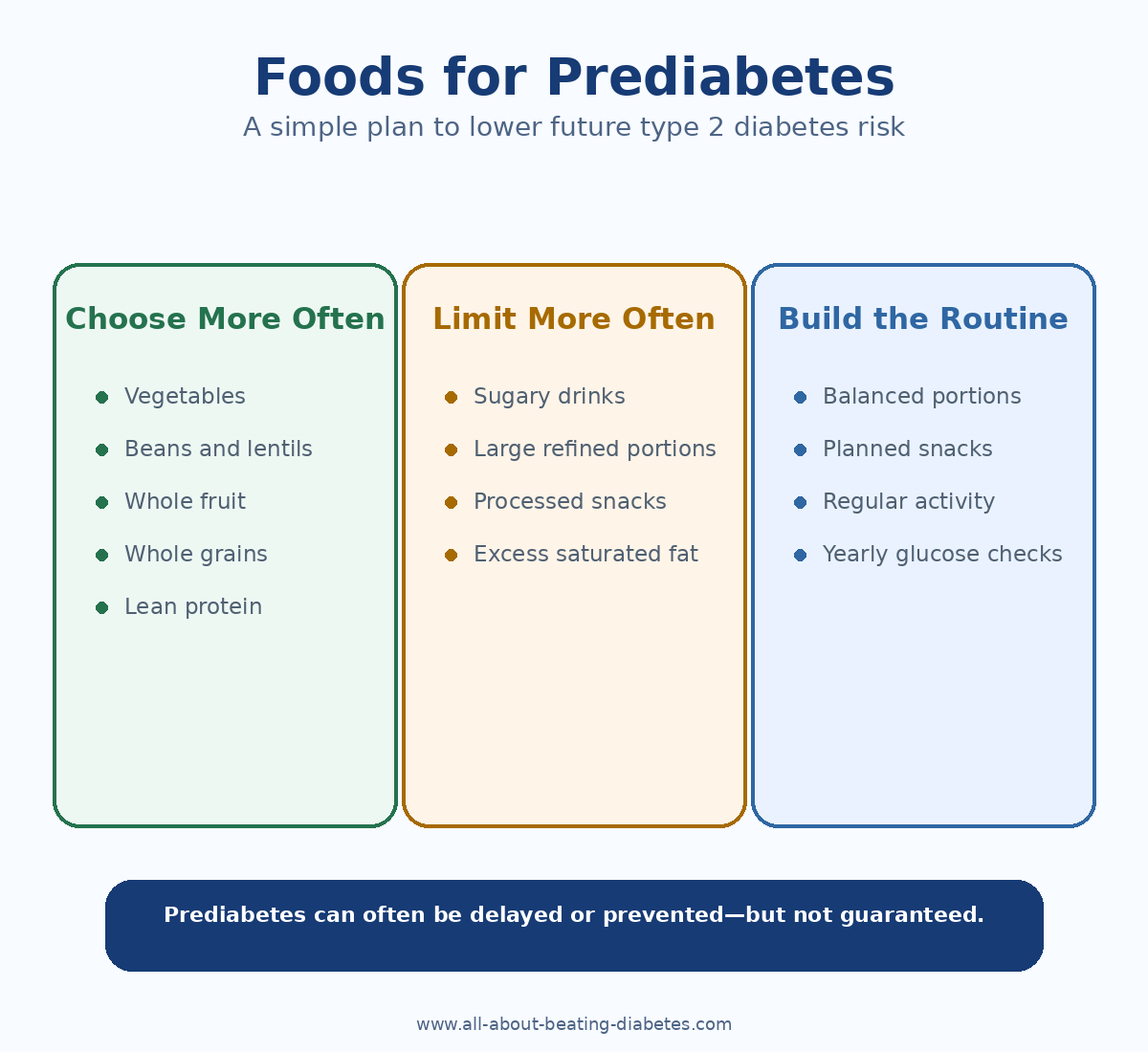
The basic pattern is very similar:
- Eat more non-starchy vegetables.
- Choose beans, lentils, whole fruit, and higher-fiber grains.
- Include fish, eggs, poultry, tofu, yogurt, or other suitable protein.
- Limit sugary drinks, large refined-carbohydrate portions, and heavily processed foods.
Carbohydrates do not need to be eliminated. The amount, type, portion, and meal combination matter. Our foods for prediabetes guide provides a practical list and meal examples.
Are Any Foods Completely Forbidden?
Most people with prediabetes do not need to permanently ban ordinary foods.
It is more useful to limit:
- Regular soda, sweet tea, energy drinks, and large servings of juice
- Candy, cakes, pastries, and frequent large desserts
- Oversized portions of white bread, refined rice, pasta, or chips
- Processed meats and foods high in sodium
A favorite food can fit occasionally in a planned portion.
What Is the Simplest Meal Method?
Use a nine-inch plate:
- Half: non-starchy vegetables
- One quarter: lean or plant protein
- One quarter: beans, lentils, whole grains, potato, corn, or another carbohydrate food
Add water or an unsweetened drink. Portion size still matters, even with nutritious foods. See the best diabetes diet and plate-method guide.
Can Someone With Prediabetes Eat Snacks?
Yes. You do not have to stop all snacks. The important questions are whether you are truly hungry, how large the portion is, and what the snack contains.
Better choices include:
- A small fruit with nuts
- Plain yogurt with berries
- Vegetables with hummus
- A boiled egg with vegetables
- Whole-grain crackers with a suitable protein
For packaged snacks, check the serving size, total carbohydrate, added sugar, sodium, and saturated fat.
Can This Diet Also Improve High Cholesterol?
Yes, the same overall pattern can improve both glucose risk and cardiovascular risk. To support cholesterol:
- Replace butter and fatty processed meats with olive oil, nuts, seeds, fish, beans, or lean protein.
- Eat more soluble fiber from oats, barley, beans, lentils, fruit, and vegetables.
- Limit trans fat and reduce excess saturated fat.
Fish is helpful, but it does not automatically normalize cholesterol. Some people still need cholesterol-lowering medicine.
A Few Important Corrections About Fats and Milk
Cooking oils do not contain carbohydrate. Olive, canola, and other unsaturated oils do not directly raise glucose, but they are calorie-dense, so portions matter.
Milk and yogurt contain carbohydrate. Choose plain products and a portion that fits your glucose and cholesterol goals.
Do Herbs Prevent Diabetes?
I do not recommend glucose-lowering herbs as a primary prevention strategy. Evidence is inconsistent, and supplements can interact with medicines.
Proven prevention focuses on food quality, portions, activity, weight management when needed, sleep, smoking avoidance, and medical follow-up.
How Much Exercise Helps?
A practical goal is at least 150 minutes of moderate activity weekly, plus resistance exercise when safe.
Start gradually and ask about precautions if you have major medical complications.
Doctor’s Note
I do not tell patients with prediabetes that they must eat perfectly. I ask them to choose better foods more often, reduce portions that repeatedly raise glucose, move regularly, and follow their HbA1c over time. The goal is a routine that protects both blood sugar and heart health and can be maintained for years.
Educational safety note: Prediabetes should be confirmed and monitored by a healthcare professional. Pregnancy, kidney disease, liver disease, an eating disorder, unexplained weight loss, or medicines that affect glucose require individualized advice.
Related Questions
- How Can Brown Rice and Indian Meals Fit a Diabetes Plan?
- Can Rambutan or Fruit Extracts Control Blood Sugar?
- Can Herbal Tea Lower Blood Sugar Safely?
Related Resources
Last reviewed: July 2026
Click here to post comments or follow up
Ask the Doctor now? Simply click here to return to Diabetes Diet and Foods.