Trying to beating pre-type 2
by elias
(oregon)
Question
Well I started with taking metformin and glybrite something like that and the stuff i was taking was taking me way under the normal level of sugar that a normal person should be at and i decided to take matters into my own hands and i lost 30 pds and watched what i was eating and tested myself for a month and every morning was 87-112 max.
But when I test before bed 100 i wake up 112 is that normal? And when will my old habbits of being high level be back to normal?
As in my blood test i was over 9.0 level, when will they know if my levels are back to normal?
—Elias, Oregon
Quick Answer
Elias, a bedtime glucose of 100 mg/dL followed by 112 mg/dL in the morning is a small rise and is not concerning by itself. Early-morning hormones can tell the liver to release glucose before waking. For many adults already diagnosed with diabetes, fasting or premeal readings of 80–130 mg/dL are within the usual target range.
However, if “over 9.0” was your HbA1c, that result was in the diabetes range—not merely “pre-type 2.” One month of improved meter readings cannot confirm that diabetes is gone. Your HbA1c should generally be rechecked about three months after major treatment or lifestyle changes.
Answer by Dr. Albana Greca, MD, MMedSc
Hello Elias,
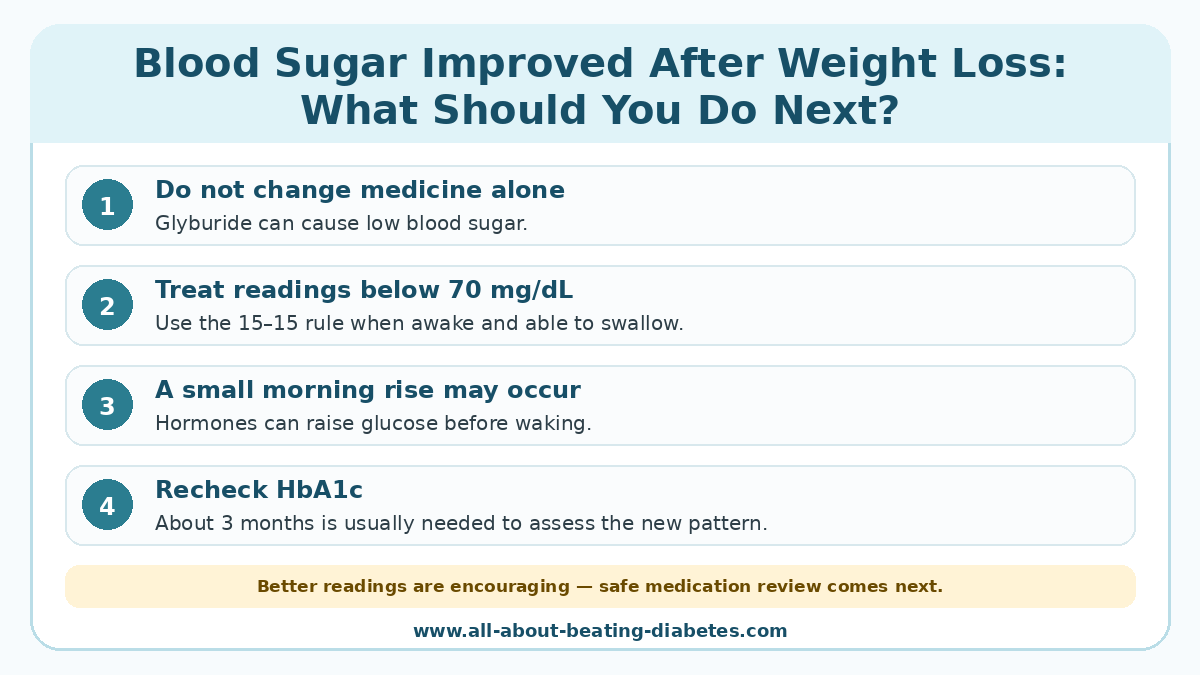
Congratulations on losing 30 pounds and improving your food choices. These changes may improve insulin sensitivity and reduce medication needs. However, repeated lows require prompt medication review, not self-adjustment.
Why Did the Medicine Take You Too Low?
The medicine you remember as “glybrite” was probably glyburide, also called glibenclamide. It stimulates insulin release and can cause hypoglycemia, especially after weight loss, smaller or skipped meals, alcohol, kidney problems, or more activity.
Metformin works differently. It reduces liver glucose production and improves insulin sensitivity; it does not stimulate insulin release and rarely causes hypoglycemia when used alone.
Glucose below 70 mg/dL is low; below 54 mg/dL is clinically significant. Because glyburide-related lows can recur, contact your clinician promptly with the medicine names, doses, and readings. Do not make another treatment change without an agreed plan.
How to Treat a Low Reading
If awake and able to swallow, take 15 grams of fast carbohydrate, recheck after 15 minutes, and repeat if still below 70 mg/dL.
For unconsciousness, seizure, severe confusion, or inability to swallow: put nothing in the mouth. Turn the person onto the side, protect from injury, use prescribed glucagon if available, and call emergency services.
Is 100 at Bedtime and 112 in the Morning Normal?
For someone being treated for diabetes, these values are generally within the common glucose target used for many adults. A mild overnight rise may occur from the dawn phenomenon, when cortisol, glucagon, and other hormones increase liver glucose release before waking.
A home meter is not a laboratory fasting test. In someone without a prior diagnosis, a confirmed fasting result of 112 mg/dL falls in the prediabetes range. For you, it shows better control but does not erase the diagnosis.
When Will They Know Whether Your Levels Improved?
HbA1c estimates average glucose over two to three months. After treatment changes, it is commonly checked about every three months. Your clinician should compare it with your meter record before reducing medication.
For many nonpregnant adults, an HbA1c target below 7% is commonly used, but your goal should be individualized. Read our HbA1c explanation for how the test relates to daily readings.
Does This Mean Diabetes Is in Remission?
It is too early to know. Type 2 diabetes remission is generally defined as HbA1c below 6.5% for at least three months without glucose-lowering medication. Remission is not a cure, so ongoing diabetes monitoring remains necessary.
What I Recommend Next
- Contact the prescriber soon and provide the exact low readings, symptoms, medicine names, doses, and when you stopped them.
- Take your glucose meter or written log to the appointment. Include fasting, before-meal, two-hour after-meal, bedtime, and low readings.
- Arrange HbA1c testing about three months after the major treatment or lifestyle change, or sooner if your clinician advises.
- Ask whether kidney, vitamin B12, cholesterol, blood pressure, and urine albumin checks are due.
- Continue sustainable eating, activity, sleep, and weight-management habits without extreme carbohydrate restriction or skipped meals.
Should You Add Cinnamon, Bitter Melon, or Gymnema?
Evidence for these supplements is inconsistent, and combining them with glyburide may make lows harder to predict. Do not start them without professional review. See our herbs evidence and safety guide.
What I want you to remember: your present readings look much better, and the small morning rise is usually acceptable. The priority now is preventing further hypoglycemia, confirming your current medication plan, and checking HbA1c after enough time has passed.
Written by: Dr. Albana Greca, MD, MMedSc, Family Physician
Medically reviewed by: Dr. Ruden Cakoni, MD, Endocrinologist
Last medically reviewed: August 4, 2026
Related Questions
- Why is glucose higher in the morning than at bedtime?
- Why is glucose still high while taking metformin and glyburide?
Related Resources
References
- ADA Standards 2026: Glycemic Goals and Hypoglycemia
- Consensus Definition of Type 2 Diabetes Remission
- DailyMed: Glyburide Prescribing Information
- DailyMed: Metformin Prescribing Information
Educational safety note: General education only. Medication changes and suspected hypoglycemia require individual clinical review.
Click here to post comments or follow up
Ask the Doctor now? Simply click here to return to Contribute to All About Beating Diabetes.