How can avoid complications from diabetes onset?
by Kate
(Virginia)
Question from Kate, Virginia: I have had diabetes for eight years. My latest HbA1c was 8.8%, and I am worried about future complications. What can I do to reduce my risk?
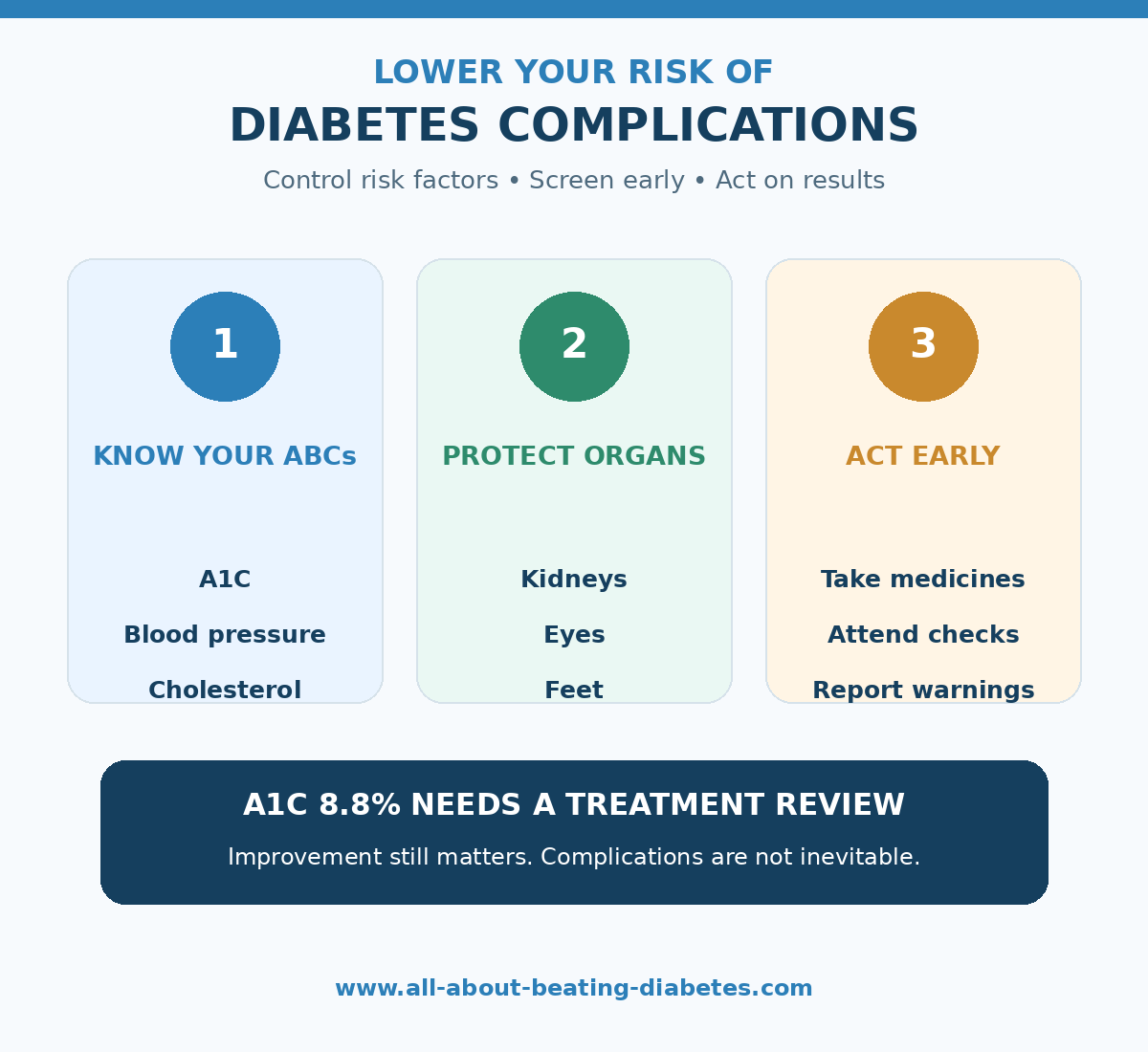
Quick Answer: Kate, an HbA1c of 8.8% is above the usual target for many adults and corresponds to an estimated average glucose of about 206 mg/dL. It does not mean that complications are inevitable, but it is a strong reason to arrange a prompt treatment review. Safer glucose, blood pressure and cholesterol control, avoiding tobacco, and completing kidney, eye and foot checks can lower risk and detect problems early.
Answer by Dr. Albana Greca, MD, MMedSc
Hello Kate,
I understand your worry, but it is not too late to act. Complication risk reflects glucose, blood pressure, cholesterol, smoking, kidney health, genetics, and diabetes duration. Prevention cannot be guaranteed, but your healthcare team can still lower risk.
What Does an HbA1c of 8.8% Mean?
HbA1c reflects average glucose over about two to three months. A result of 8.8% corresponds to an estimated average of about 206 mg/dL, or 11.4 mmol/L. It does not mean every daily reading is near that number.
For many nonpregnant adults, a common goal is below 7%, but your target may differ with age, hypoglycemia risk, other illnesses, and treatment burden. Use our HbA1c calculator to understand the conversion.
Because you are above goal, arrange a diabetes review rather than waiting for an annual visit. Review glucose patterns, missed doses, side effects, food, activity, sleep, kidney function, and whether treatment needs adjustment.
Focus on the Diabetes ABCs
A — HbA1c and glucose
Take medicines as prescribed and report cost, side effects, or missed doses. Glucose monitoring should be individualized; it is especially important with insulin, hypoglycemia-causing medicines, treatment changes, illness, pregnancy, or unstable readings.
B — Blood pressure
For many adults with diabetes and hypertension, a goal below 130/80 mmHg is appropriate when safely attainable. Your target must be individualized.
C — Cholesterol and cardiovascular risk
Cholesterol should not be “greater than 200 mg/dL.” Your clinician should review LDL, triglycerides, age, smoking, kidney disease, and cardiovascular history. Many adults with diabetes benefit from statin treatment based on risk.
S — Stop smoking
If you smoke or use nicotine, ask for help to stop. Tobacco increases heart, stroke, circulation, kidney, eye, and wound-healing risks.

Checks to Arrange
- HbA1c: usually about every three months while treatment is changing or goals are not met; less often when stable.
- Kidneys: urine albumin-to-creatinine ratio and eGFR at least annually in type 2 diabetes and after five years of type 1 diabetes; more often with kidney disease.
- Eyes: a dilated retinal examination at an interval based on diabetes type and previous findings—often every one to two years when normal, and more often with retinopathy.
- Feet: a comprehensive examination at least annually and more often with neuropathy, poor circulation, deformity, or a previous ulcer.
- Heart risk: blood pressure at routine visits and lipid testing based on age, medicines, and risk.
- Dental care: brush, clean between the teeth, and attend dental visits as advised.
Our main diabetes complications guide explains how the heart, kidneys, eyes, nerves, and feet can be protected.
Daily and Weekly Actions That Matter
- Follow an eating plan you can sustain rather than an extreme short-term diet.
- Work toward at least 150 minutes of moderate activity weekly plus resistance exercise two or three times weekly, when safe.
- Discuss weight-management support if excess weight is affecting glucose or health.
- Take medicines consistently and do not stop insulin or another medicine without the prescriber.
- Protect sleep and seek help for diabetes distress, depression, or anxiety.
- Check feet for cuts, blisters, redness, warmth, swelling, drainage, or color change, especially if sensation is reduced.
- Keep appointments and act on abnormal results rather than only collecting test reports.
Ask Whether Organ-Protective Treatment Is Appropriate
Some medicines protect the heart or kidneys beyond lowering glucose. Depending on kidney function, heart disease, weight, and other factors, your clinician may consider an SGLT2 inhibitor, GLP-1–based medicine, blood-pressure treatment, statin, or other therapy. These choices are individualized.
Vaccines Are Part of Prevention
Review influenza, COVID-19, pneumococcal, hepatitis B, shingles, tetanus, and other vaccines according to age, prior doses, health conditions, and local guidance. Pneumococcal timing depends on age and vaccination history.
Seek urgent care for chest pain, stroke symptoms, severe shortness of breath, sudden vision loss, a hot red swollen foot, a spreading infection, black skin, a nonhealing wound, or very high glucose with vomiting, abdominal pain, rapid breathing, confusion, dehydration, or positive ketones.
Educational safety note: This answer provides general education and does not replace an individualized diabetes, blood-pressure, cholesterol, kidney, eye, or foot-care plan. Do not change medicine or insulin without your healthcare professional.
Related Questions
- Will Lowering Blood Sugar Reduce Diabetic Foot Swelling?
- What Causes Afternoon Foot Swelling in Diabetes?
- Could a Hunger Headache Be Low Blood Sugar?
Related Resources
- Diabetes Complications and Prevention
- Diabetes and Kidney Protection
- Diabetic Eye Problems
- Diabetic Foot Ulcers
Last reviewed: July 2026
Click here to post comments or follow up
Ask the Doctor now? Simply click here to return to Complications from diabetes.