- Home
- blood sugar levels
- What Is a Good HbA1c Level for Someone With Diabetes
HbA1c Explained: What It Means and What Is a Good Level?
HbA1c is a blood test that shows your average blood sugar level over the past two to three months. Understanding your result can help you see whether your glucose is within a healthy range, whether you may have prediabetes or diabetes, and how well your current treatment plan is working.
Written by: Dr. Albana Greca, MD, MMedSc, Family Physician and Medical Author.
Medically reviewed by: Dr. Ruden Cakoni, MD, Endocrinologist.
Last reviewed: July 2026.
Quick Answer
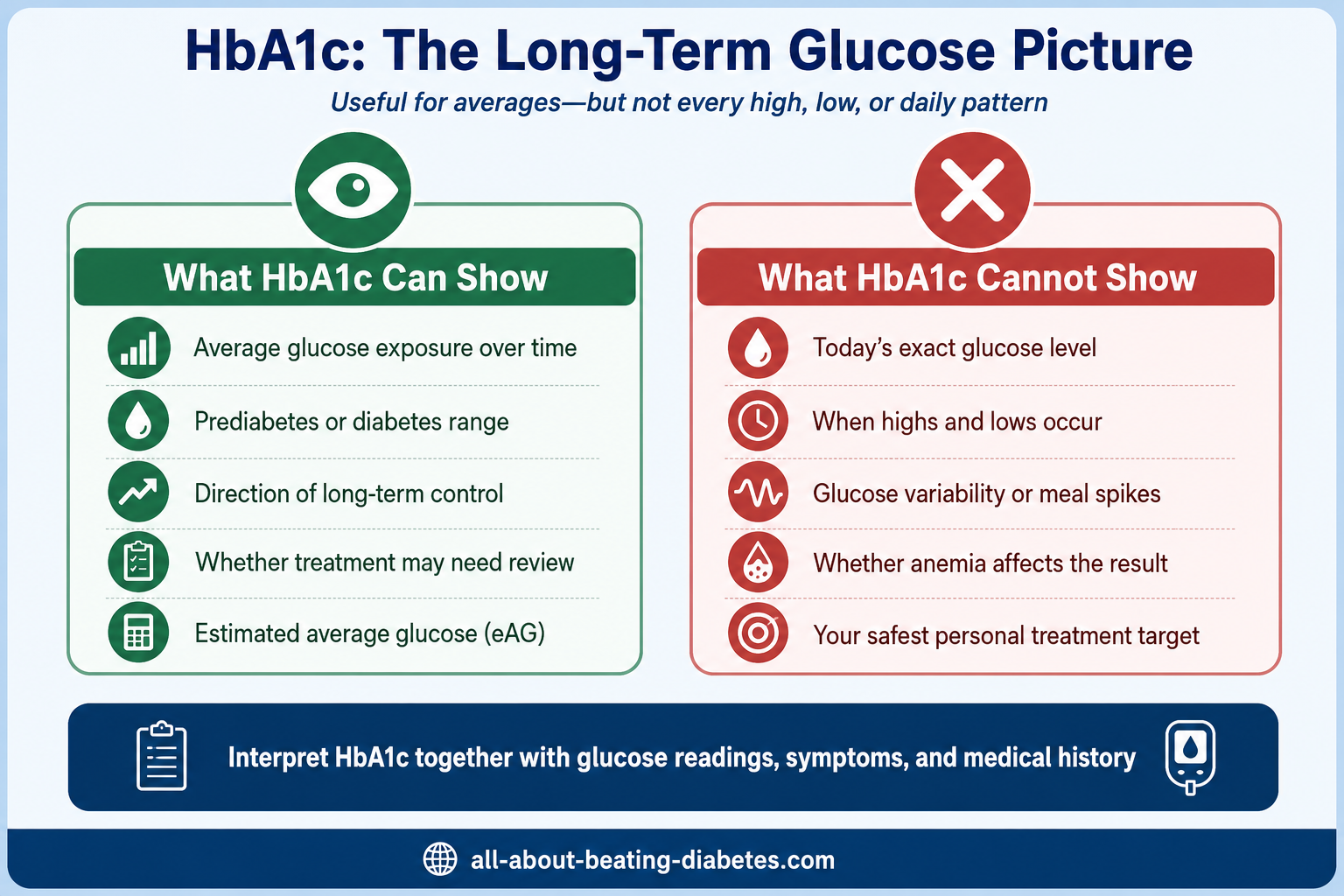
HbA1c—also called A1C or glycated hemoglobin—is a blood test that estimates your average glucose exposure over approximately the previous two to three months. Unlike a finger-stick or continuous glucose monitor reading, it does not show what your glucose is at this exact moment.
For people who have not been diagnosed with diabetes, an HbA1c below 5.7% is generally classified as normal, 5.7–6.4% as prediabetes, and 6.5% or higher as diabetes when confirmed appropriately. For many nonpregnant adults who already have diabetes, a common treatment goal is below 7%, but the safest target must be individualized.
HbA1c is one of the most useful tests in diabetes care because it summarizes glucose exposure over time. It can help screen for and diagnose prediabetes or diabetes, evaluate whether treatment is working, and guide discussions about nutrition, physical activity, medication, insulin, and glucose-monitoring patterns.
However, HbA1c is not a complete report card. It cannot show daily glucose swings, the timing of highs and lows, or whether a person has frequent hypoglycemia. It can also be misleading when a medical condition changes red blood cell lifespan or interferes with the laboratory method.

What Is HbA1c?
Hemoglobin is the oxygen-carrying protein inside red blood cells. Glucose naturally attaches to some hemoglobin molecules in a process called glycation. The higher the glucose concentration has been over time, the larger the percentage of glycated hemoglobin usually becomes.
Red blood cells circulate for roughly 120 days, but HbA1c is commonly described as reflecting the previous two to three months. The result is weighted toward more recent glucose exposure because newer red blood cells make up a substantial part of the sample.
An HbA1c of 7% means that approximately 7% of measured hemoglobin is glycated. It does not mean that 7% of your blood is sugar.
What HbA1c Levels Mean for Diagnosis
For most nonpregnant people, the general diagnostic categories are:
| HbA1c | IFCC equivalent | General interpretation | What usually happens next |
|---|---|---|---|
| Below 5.7% | Below 39 mmol/mol | Usually classified as normal | Routine screening based on age and risk factors |
| 5.7–6.4% | 39–46 mmol/mol | Prediabetes range | Risk assessment, prevention plan, and follow-up testing |
| 6.5% or higher | 48 mmol/mol or higher | Diabetes range | Confirmation and full clinical evaluation unless hyperglycemia is unequivocal |
In the absence of unmistakable hyperglycemia or a hyperglycemic crisis, diabetes diagnosis usually requires two abnormal results. These may be the same test repeated, or two different accepted tests that are both above their diagnostic thresholds.
When HbA1c and fasting glucose disagree, the clinician may repeat the test that is above the diagnostic threshold, review possible laboratory interference, or use another test such as fasting plasma glucose or an oral glucose tolerance test.
A home glucose meter, CGM, or over-the-counter home HbA1c kit should not be used alone to diagnose diabetes.
What Is a Good HbA1c Level for Someone With Diabetes?
For many nonpregnant adults with diabetes, the American Diabetes Association uses an HbA1c target below 7% as a common starting point. This is not a universal target.
A lower goal may be reasonable when it can be achieved safely without significant hypoglycemia, treatment burden, or adverse effects. A less stringent goal may be safer when the risks of intensive treatment outweigh the expected benefit.
Your target may depend on:
- Type and duration of diabetes
- Age and life expectancy
- Pregnancy or plans for pregnancy
- History and risk of hypoglycemia
- Heart, kidney, liver, or neurological disease
- Cognitive or functional limitations
- Use of insulin or medicines that can cause low glucose
- Treatment burden, cost, and personal preferences
- Whether CGM data show frequent highs or lows despite the average
The safest goal is not necessarily the lowest possible number. A low HbA1c achieved through frequent hypoglycemia is not good diabetes control.
For a focused discussion, read what a good HbA1c level may be for different people.
HbA1c to Estimated Average Glucose
Estimated average glucose, or eAG, converts HbA1c into units that resemble glucose-meter readings.
eAG in mg/dL = 28.7 × HbA1c − 46.7
eAG in mmol/L = eAG in mg/dL ÷ 18
| HbA1c | IFCC | Estimated average glucose | Estimated average glucose |
|---|---|---|---|
| % | mmol/mol | mg/dL | mmol/L |
| 5.0% | 31 | 97 | 5.4 |
| 5.7% | 39 | 117 | 6.5 |
| 6.0% | 42 | 126 | 7.0 |
| 6.5% | 48 | 140 | 7.8 |
| 7.0% | 53 | 154 | 8.6 |
| 8.0% | 64 | 183 | 10.2 |
| 9.0% | 75 | 212 | 11.8 |
| 10.0% | 86 | 240 | 13.3 |
| 11.0% | 97 | 269 | 14.9 |
| 12.0% | 108 | 298 | 16.5 |
These are estimates based on the ADAG relationship. Your meter or CGM average may differ because HbA1c and glucose devices measure different things, and because people often check glucose more frequently at certain times of day.
Use the dedicated tool:
HbA1c Versus Daily Blood Sugar
A finger-stick or CGM reading shows glucose at a particular moment. HbA1c summarizes long-term exposure. Neither test replaces the other.
You can have:
- A normal fasting glucose with elevated after-meal readings and a higher HbA1c
- An acceptable HbA1c with frequent highs and lows that average each other out
- A higher meter or CGM average than the eAG predicted from HbA1c
- A lower HbA1c than expected because red blood cells are not surviving normally
- A higher HbA1c than expected because of iron deficiency or another condition
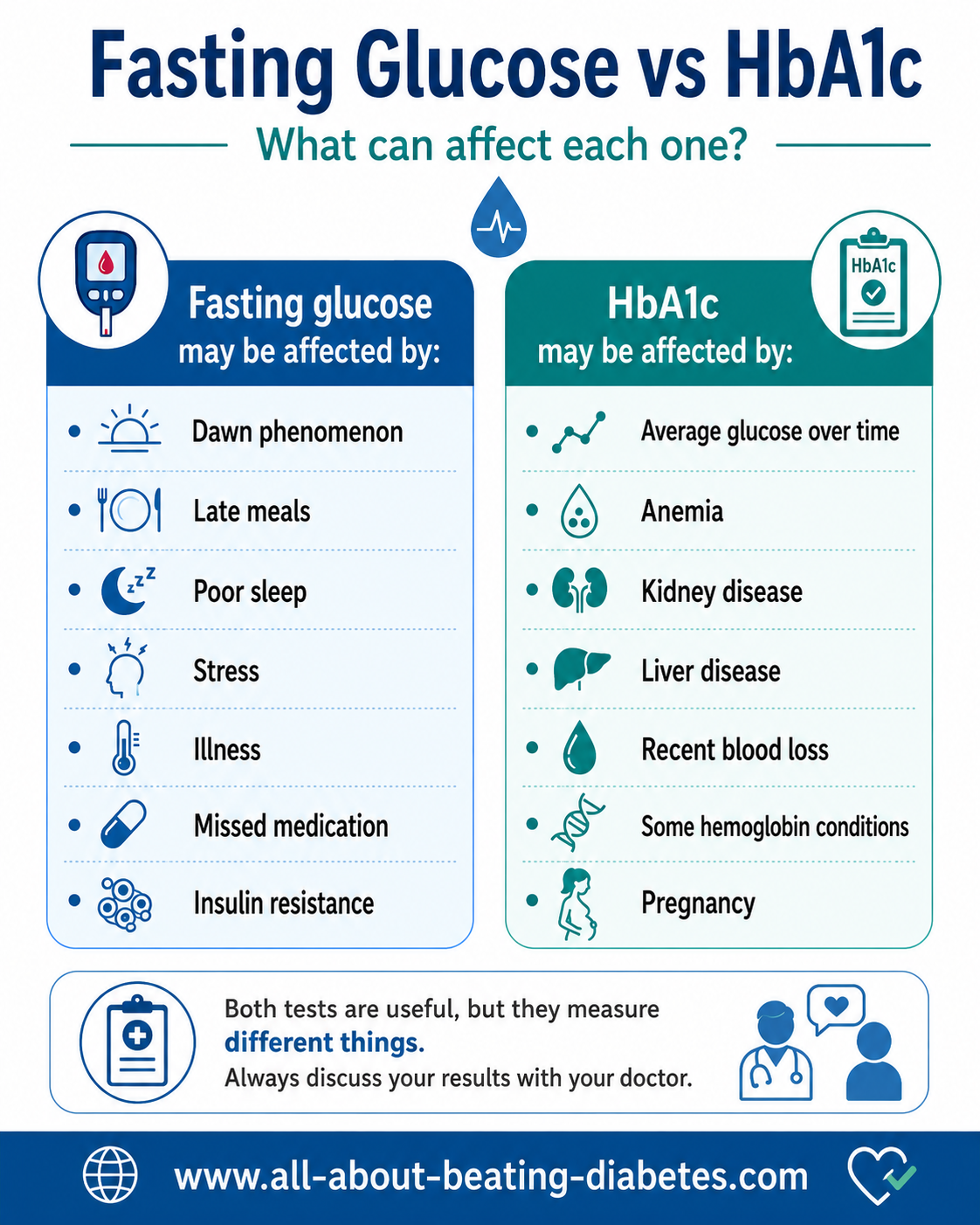
When the results do not match, do not choose whichever result feels more reassuring. Ask your clinician to review the timing and quality of the tests, glucose-monitoring data, red blood cell conditions, kidney and liver health, pregnancy status, and possible hemoglobin variants.
HbA1c, CGM, Time in Range, and GMI
Continuous glucose monitoring can show time in range, time above range, time below range, glucose variability, overnight patterns, and meal-related changes. These details are invisible to HbA1c.
Some CGM reports provide a glucose management indicator, or GMI. GMI estimates an A1C-like value from the CGM average, but it is not a laboratory HbA1c and may differ from the measured result.
A difference between GMI and laboratory HbA1c is not automatically a device failure. It may reflect biological variation, incomplete sensor data, recent glucose changes, anemia, altered red blood cell turnover, or other conditions.
Conditions That Can Make HbA1c Misleading
HbA1c depends on both glucose exposure and red blood cell biology. A result may be falsely high, falsely low, or simply unreliable when either is altered.
| Situation | Possible effect | Clinical response |
|---|---|---|
| Iron-deficiency anemia | May raise HbA1c in some people | Evaluate and treat the anemia; compare with glucose data |
| Hemolysis or recent blood loss | May lower HbA1c by shortening red blood cell lifespan | Use glucose-based assessment or another suitable marker |
| Recent transfusion | May make the result difficult to interpret | Tell the clinician and laboratory when the transfusion occurred |
| Erythropoietin treatment, dialysis, or advanced kidney disease | May alter the relationship between HbA1c and true average glucose | Interpret with CGM, meter data, and kidney-team guidance |
| Hemoglobin variants or hemoglobin disorders | Some laboratory methods may read falsely high or low; HbA1c may be unavailable in some disorders | Use an appropriate certified assay or an alternative approach |
| Pregnancy | Red blood cell and glucose changes can reduce reliability for monitoring and diagnosis | Use pregnancy-specific glucose targets and testing methods |
| Rapid recent improvement or worsening | HbA1c may lag behind the new glucose pattern | Use current meter or CGM data while waiting for the next HbA1c |
Liver disease, vitamin deficiencies, certain medicines, and other blood conditions may also affect interpretation. Tell your clinician about anemia, transfusion, pregnancy, dialysis, or a known hemoglobin condition before relying on HbA1c alone.
HbA1c During Pregnancy
Pregnancy uses tighter and pregnancy-specific glucose targets. HbA1c may be useful before conception and as one part of care, but it is not the best standalone test for day-to-day monitoring during pregnancy.
Gestational diabetes is usually assessed with glucose challenge or oral glucose tolerance testing rather than diagnosed from HbA1c alone. Anyone who is pregnant or planning pregnancy should review targets and medicines with the obstetric and diabetes teams promptly.
How Often Should HbA1c Be Checked?
Many people who are meeting treatment goals and have stable glucose control have HbA1c checked at least twice a year. Testing is often performed about every three months when:
- HbA1c is above the agreed target
- Treatment has changed
- Glucose patterns are unstable
- There are frequent highs or lows
- A major illness, pregnancy, or another clinical change affects management
The schedule should be individualized. Repeating HbA1c too soon may not show the full effect of a treatment change, while waiting too long with clearly uncontrolled glucose may delay necessary care.
What Does an HbA1c of 5.6% Mean?
An HbA1c of 5.6% is below the standard prediabetes cutoff of 5.7%. It does not diagnose prediabetes.
It may still deserve attention when a person has significant risk factors, rising results, abnormal fasting glucose, previous gestational diabetes, polycystic ovary syndrome, high blood pressure, abnormal triglycerides, or a strong family history.
Read the detailed answer to whether HbA1c 5.6% should prompt additional monitoring.
What If HbA1c Is Above Your Target?
Do not change medication based only on the HbA1c percentage. Review the pattern that produced it.
Your clinician may assess:
- Fasting, before-meal, and after-meal glucose
- CGM time in range and hypoglycemia
- Missed or delayed medicine
- Insulin storage, injection technique, and pump sites
- Carbohydrate amounts and meal timing
- Physical activity and prolonged sitting
- Sleep, sleep apnea, stress, pain, or depression
- Infection, steroid treatment, or another illness
- Kidney and liver function
- Whether the HbA1c itself may be unreliable
An elevated HbA1c is a reason to improve the plan—not a reason for shame. Diabetes care should be practical, collaborative, and focused on safety and long-term health.
Ways to Improve HbA1c Safely
- Take insulin and medicines as prescribed.
- Use a glucose log or CGM report to identify repeated patterns.
- Match carbohydrate portions to your treatment plan.
- Choose more vegetables, legumes, whole fruit, fiber-rich foods, and suitable whole grains.
- Reduce sugar-sweetened drinks and oversized refined-carbohydrate portions.
- Be active regularly when medically safe.
- Address poor sleep, sleep apnea, chronic stress, and depression.
- Review medication side effects, costs, and missed doses openly.
- Do not use herbs or supplements as replacements for proven treatment.
Our blood sugar control guide explains how monitoring, meals, activity, sleep, medicines, and sick-day planning work together.
Important Safety Note
Do not increase insulin, double medication, begin a restrictive diet, or use fasting to lower HbA1c without professional guidance. A rapid reduction achieved through repeated hypoglycemia is unsafe.
Seek urgent care for confusion, seizure, unconsciousness, inability to swallow safely, repeated severe low glucose, vomiting with ketones, deep breathing, fruity-smelling breath, severe dehydration, or very high glucose with serious symptoms.
Doctor’s Note
I explain HbA1c as an average—not a verdict. Before changing treatment, we need to know whether the average comes from steady glucose, repeated meal spikes, overnight highs, or a mixture of dangerous highs and lows. We also need to confirm that anemia, kidney disease, pregnancy, blood loss, transfusion, or a hemoglobin condition is not distorting the result.
Most Asked Questions
Is HbA1c the same as average blood sugar?
HbA1c is used to estimate average glucose, but it is not a direct average of your meter or CGM readings. eAG is a calculated estimate derived from HbA1c.
Does HbA1c require fasting?
No. You usually do not need to fast for HbA1c, although other blood tests ordered at the same visit may require fasting.
Can one high meal raise HbA1c?
One meal generally will not meaningfully change HbA1c. Repeated high glucose over days and weeks can raise it.
Can HbA1c be normal while glucose readings are high?
Yes. Intermittent highs may be averaged with normal or low readings, and some medical conditions can make HbA1c falsely low. Review the pattern with your clinician.
Can HbA1c be high while fasting glucose is normal?
Yes. After-meal or overnight glucose may be high, or HbA1c may be affected by iron deficiency, a laboratory issue, or another red blood cell condition.
Is an HbA1c below 7% always good?
No. It is a common goal for many adults, but the result must be interpreted with hypoglycemia, glucose variability, age, pregnancy, other conditions, and treatment burden.
How quickly can HbA1c change?
HbA1c begins responding to glucose changes within weeks, but the full effect of a sustained change is usually assessed over approximately three months.
What should I do if HbA1c and CGM do not match?
Check whether enough CGM data were collected, review recent glucose changes, and ask about anemia, kidney disease, transfusion, pregnancy, and hemoglobin variants. Do not adjust treatment from either number alone.
Educational safety note: This article provides general diabetes education and does not replace personal medical advice, laboratory interpretation, diagnosis, or treatment. Do not start, stop, or change insulin, diabetes medicines, supplements, diet, or exercise based only on an HbA1c result.
Related Questions
- Does HbA1c 5.6% Mean Prediabetes?
- Why Is HbA1c 6.6% When Finger-Prick Readings Look Normal?
- What Does Fasting Glucose 159 mg/dL Mean When the Two-Hour Reading Is 109?
- Is Fasting Blood Sugar of 126 mg/dL High?
- Is Fasting Blood Sugar of 122 mg/dL a Sign of Diabetes?
Related Resources
- HbA1c to Average Glucose Calculator
- How HbA1c and eAG Are Calculated
- What Is a Good HbA1c Level?
- Blood Tests for Diabetes
- Normal Fasting Blood Sugar Levels
- Blood Sugar Levels by Time of Day
- Blood Sugar Log Sheet
References
- American Diabetes Association Professional Practice Committee. Diagnosis and Classification of Diabetes: Standards of Care in Diabetes—2026.
- American Diabetes Association Professional Practice Committee. Glycemic Goals, Hypoglycemia, and Hyperglycemic Crises: Standards of Care in Diabetes—2026.
- American Diabetes Association. Understanding the A1C Test.
- American Diabetes Association. A1C and Estimated Average Glucose.
- National Institute of Diabetes and Digestive and Kidney Diseases. The A1C Test and Diabetes.
- National Institute of Diabetes and Digestive and Kidney Diseases. Diabetes Tests and Diagnosis.
- Centers for Disease Control and Prevention. A1C Test for Diabetes and Prediabetes.
- Nathan DM, et al. Translating the A1C Assay Into Estimated Average Glucose Values. Diabetes Care.