What raises blood glucose level and causes insulin response?
Question: What raises blood glucose, and what causes the pancreas to release insulin?
Quick Answer
Blood glucose rises mainly from carbohydrate absorbed after a meal and from glucose released by the liver between meals, overnight, during illness, or under stress. When glucose rises, pancreatic beta cells release insulin. Gut hormones released after eating—especially GLP-1 and GIP—strengthen this insulin response. Glucagon, adrenaline, cortisol, and growth hormone help raise glucose when the body needs more fuel.
Answer by Dr. Albana Greca, MD, MMedSc
Hello,
This is an excellent question because blood glucose is controlled by several organs and hormones working together. I want to make the process simple for you.
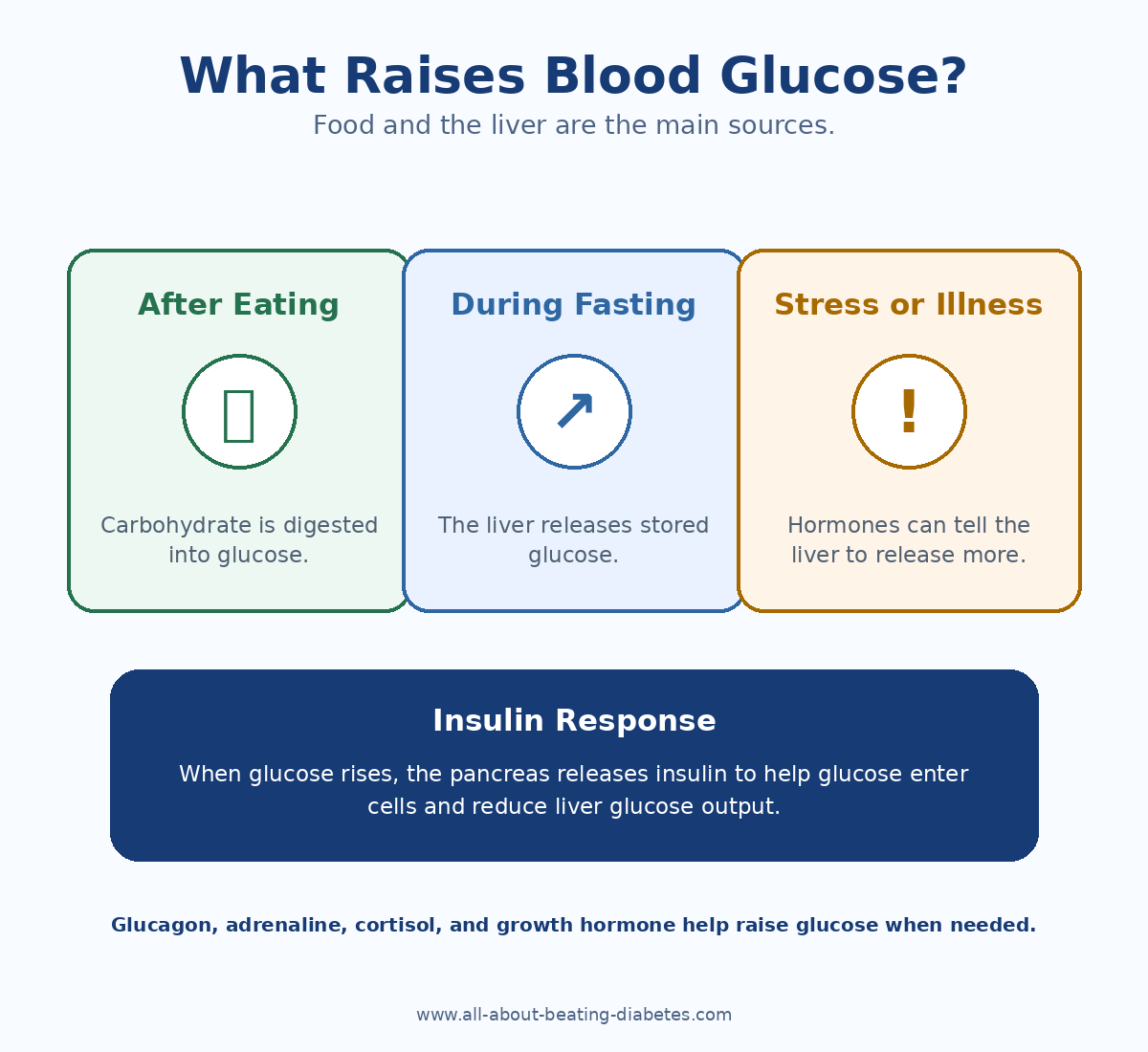

What Raises Blood Glucose?
1. Carbohydrate from food
After you eat bread, rice, pasta, potatoes, fruit, milk, sweets, or another carbohydrate food, digestion breaks much of that carbohydrate into glucose. The glucose enters your bloodstream, and your pancreas responds by releasing insulin.
The size and speed of the rise depend on the portion, the type of carbohydrate, fiber, food processing, and what else you ate. Protein can also stimulate some insulin release. Fat usually slows stomach emptying, although a large high-fat meal may contribute to a later glucose rise.
2. Glucose released by the liver
Your liver stores glucose as glycogen and can also make new glucose. It releases glucose between meals and overnight so your brain and other organs continue receiving energy even when you are not eating.
This is why fasting does not always make glucose fall. In insulin resistance or diabetes, liver glucose production may be higher than needed or insulin may not suppress it effectively. You can read more in our guide to high morning blood sugar.
3. Stress, illness, and morning hormones
Adrenaline, cortisol, glucagon, and growth hormone can tell the liver to release more glucose. This helps the body respond to exercise, fasting, infection, pain, emotional stress, or an approaching low.
These hormones also contribute to the dawn phenomenon, when glucose rises before waking. Thyroid hormones affect overall metabolism, but they are not the main minute-to-minute defense against low blood sugar.
What Triggers Insulin Release?
The main trigger is rising glucose inside the pancreatic beta cells. The beta cells sense the increase and release insulin.
Eating also activates the incretin effect. Gut hormones called GLP-1 and GIP are released after nutrients enter the digestive tract. They strengthen glucose-dependent insulin secretion, which is one reason oral glucose produces a greater insulin response than the same glucose given directly into a vein.
The nervous system and signals from the digestive tract also participate, but it is too simple to say that one “central nerve” controls blood glucose or that stomach stretching is
What Does Insulin Do?
Insulin lowers blood glucose by helping muscle and fat cells take up glucose, reducing glucose production by the liver, and supporting storage of glucose as glycogen.
In type 1 diabetes, the pancreas makes little or no insulin. In type 2 diabetes, the body is resistant to insulin and beta-cell insulin production may gradually become insufficient. Our blood glucose guide explains how these changes affect readings.
What Does Glucagon Do?
Glucagon is produced by pancreatic alpha cells. When glucose is low or the body needs additional fuel, glucagon tells the liver to release glucose.
I also want to clarify that glucagon does not simply rise 20–30 minutes after every meal to cancel insulin. After a carbohydrate-rich meal, glucagon is usually suppressed. Protein can stimulate both insulin and glucagon, helping amino acids enter tissues while protecting against an excessive fall in glucose.
Why Can Blood Glucose Stay High?
Blood glucose may remain high when:
- The pancreas does not make enough insulin.
- The body is resistant to insulin.
- The liver releases too much glucose.
- A meal contains more carbohydrate than the body or medicine can manage.
- Illness, stress, poor sleep, pain, or steroids increase glucose.
- Insulin or diabetes medicine is missed, mistimed, or insufficient.
Look for a repeated pattern rather than judging one isolated reading. Our guide to blood sugar levels by time of day can help you compare fasting and after-meal results.
Important Safety Note
Do not change insulin or diabetes medicine because of one reading. Seek urgent medical help if very high glucose occurs with vomiting, dehydration, abdominal pain, deep or difficult breathing, confusion, severe weakness, or moderate to large ketones. Severe low blood sugar with seizure, unconsciousness, or inability to swallow is also an emergency.
Doctor’s Note
I explain glucose control as a partnership between the gut, pancreas, liver, muscles, fat tissue, brain, and hormones. Food is only one source of blood glucose. Your liver can raise glucose even while you are fasting, and insulin must be sufficient and effective to bring it back toward your target.
Educational safety note: This answer explains normal physiology and does not diagnose the cause of an individual high or low reading. Repeated abnormal results should be reviewed with your healthcare professional.
Related Questions
- Why Is My Blood Sugar Higher Before Breakfast Than Later in the Day?
- Why Does My Blood Sugar Rise the Longer I Fast?
- Can Steroid Medicine Raise Blood Sugar to a Dangerous Level?
Related Resources
- Why Is My Blood Sugar High in the Morning?
- Diabetes Blood Sugar Levels
- Blood Sugar Levels by Time of Day
- Is My Blood Sugar Too High or Too Low?
Last reviewed: July 2026
Click here to post comments or follow up
Ask the Doctor now? Simply click here to return to Diabetes Test and Levels.