Sudden Jump in Fasting Sugar Level
by Rashmi
(United States)
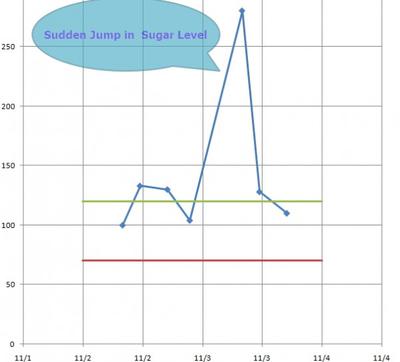

Sudden Jumb Blood Sugar Levels
Original question from Rashmi (United States):
“I am 29 years old and have type 2 diabetes, diagnosed 6 months ago. I am taking Glyburide 2.5 mg and Metformin 500 mg three times a day.
My fasting sugar level in the morning is between 102–110 mg/dL, but after I brush my teeth and wash my face, suddenly the sugar level rises about 20–30 points without eating anything.
At first I thought it might be my toothpaste, but I use the same toothpaste at night and this sudden jump does not happen then. What should I do to avoid this sudden jump in fasting sugar level?”
Quick Answer: A morning rise of 20–30 mg/dL can happen even when you have not eaten. The dawn phenomenon can cause early-morning hormones to signal the liver to release glucose. Part of the difference may also come from normal home glucose-meter variation. Brushing your teeth or washing your face is unlikely to be the main cause. The best approach is to test consistently, confirm unexpected readings, and look for a repeated pattern before changing food or medication.
Written by Dr. Albana Greca, MD, MMedSc
Hi Rashmi,
I want to clarify an important point about your readings. A glucose result taken shortly after waking is not a “false positive.” If your blood sugar rises after you wake, that may represent a real physiologic change, although ordinary meter variation can also account for part of the difference.
For many nonpregnant adults with diabetes, a premeal glucose target of about 80–130 mg/dL is commonly used, although your personal goal may be different. Your readings of 102–110 mg/dL therefore need to be interpreted as part of your individual treatment plan rather than judged by one number alone.

Why Can Blood Sugar Rise After You Wake Up?
The most likely explanation is the dawn phenomenon. In the early morning, hormones such as cortisol and growth hormone help prepare your body to wake up. These signals can tell the liver to release glucose into the bloodstream. In people with diabetes, insulin may not compensate fully, so glucose can rise even though no food has been eaten.
This is explained in more detail in our guide to normal fasting blood sugar levels and morning glucose.
Could the Glucose Meter Explain Part of the Jump?
Yes. Home glucose meters are useful, but they are not laboratory instruments. Two readings taken close together can differ somewhat even when your glucose has not changed dramatically.
If a result seems unusual, wash and dry your hands thoroughly, use a fresh test strip, and repeat the test according to your meter instructions. Sugar or food residue on the fingers can distort a reading. Testing under similar conditions each morning gives you a more useful pattern.
Is Toothpaste Causing the Rise?
Usually, brushing your teeth is not expected to raise blood glucose by 20–30 mg/dL unless you swallow a meaningful amount of a carbohydrate-containing product. The timing is more likely to coincide with normal early-morning glucose release or meter variation.
I would not recommend delaying your glucose test for 20–30 minutes simply to obtain a lower number. Instead, choose a consistent testing time—for example, soon after waking and before eating—and record the result. If you want to investigate the pattern, you can occasionally compare a reading immediately after waking with another 20–30 minutes later.
What Should You Do?
For several mornings, record your glucose when you wake, the time of your last evening meal, what you ate, medication timing, sleep quality, and a second glucose reading if you choose to recheck. Looking at several days is more informative than reacting to a single 20–30 point change.
You can compare your readings with our guide to blood sugar levels by time of day and our explanation of treatment targets for people with diabetes.
I would not recommend severely restricting evening carbohydrates solely because of this observation. Meal size, carbohydrate amount and quality, late-night snacks, alcohol, sleep, illness, stress, and medication timing can all influence morning glucose, so the pattern needs context.
Important Safety Note: Glyburide is a sulfonylurea and can cause hypoglycemia. Do not skip meals, drastically reduce carbohydrate intake, or change your glyburide or metformin dose based on these readings without discussing the pattern with your prescribing clinician. If your glucose is below 70 mg/dL, follow your hypoglycemia treatment plan.
Do You Need a Urine Insulin Test?
No routine urine insulin test is recommended to explain this type of morning glucose rise or to decide how to treat type 2 diabetes. If your morning readings repeatedly move outside your target range, your clinician may instead review your HbA1c, kidney function, medication schedule, home glucose records, and other appropriate laboratory tests.
Doctor’s Note: What matters most here is the pattern. A 20–30 mg/dL difference between two home readings does not automatically mean that something is wrong or that your toothpaste is raising your glucose. I would first confirm the readings carefully and follow the morning pattern for several days before making any treatment decision.
Educational safety note: This information is for general education and does not replace individualized medical advice. Contact your diabetes care team if morning glucose repeatedly exceeds your personal target, if you have recurrent readings below 70 mg/dL, or if you develop symptoms of significant high or low blood sugar.
Related Questions
- Why is my blood sugar level higher first thing in the morning?
- High Morning Blood Sugar
- Glucose Level Paradox
Related Resources
- Normal Fasting Blood Sugar Levels
- Blood Sugar Levels by Time of Day
- Acceptable Blood Glucose Levels for People With Diabetes
Last reviewed: September 2026
Click here to post comments or follow up
Ask the Doctor now? Simply click here to return to Diabetes Test and Levels.