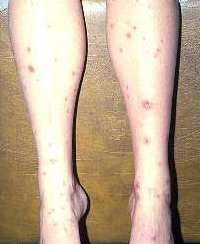
Red spots on Diabetic legs
by kristen
(china)

Diabetes legs red Spots


|


|
QUESTION:
By Kristen, China
I have just noticed red spots on my legs. My legs have hurt for years, and a doctor previously thought the pain might be neuropathy, although nerve tests were normal. The spots look like bruises, but close up they are groups of tiny dots. Could the pain and spots be related?
Quick Answer
Groups of tiny red or purple dots that resemble bruising may be petechiae or purpura—small areas of bleeding under the skin—especially if they do not fade when pressed. They are not automatically caused by diabetes or slow healing. New unexplained spots should be examined promptly because causes range from minor pressure or trauma to medication effects, low platelets, inflammation of blood vessels or infection. Leg pain may be separate, although normal nerve-conduction tests do not always exclude small-fiber neuropathy.
Answer by Dr. Albana Greca, MD, MMedSc
Hello Kristen,
Grouped pinpoint spots need an in-person skin and circulation examination, especially with leg pain.
Do the Spots Fade When Pressed?
Press a clear glass firmly against a spot while looking through it. A simple inflammatory red rash often becomes pale temporarily. Petechiae or purpura generally remain visible because blood has leaked beneath the skin.
This test does not identify the cause or replace care. Arrange same-day medical advice for a new unexplained non-blanching rash, even if you otherwise feel well.
Emergency warning: Seek emergency care if non-blanching spots are spreading rapidly or occur with fever, severe illness, confusion, fainting, breathing difficulty, stiff neck, severe headache, unusual bleeding, blood in urine or stool, or marked weakness.
Could This Be Diabetic Dermopathy?
Diabetic dermopathy, often called shin spots, typically causes round or oval reddish-brown or light-brown patches on the shins. They may begin slightly scaly, later flatten and leave a small depression. They are generally painless, do not itch and do not open into wounds.
A sudden cluster of pinpoint red dots is not the classic description of diabetic dermopathy. Do not assume every leg mark is a diabetes complication. See our diabetes skin-care guide.
Other Possible Causes
- Minor trauma or pressure: Tight clothing, scratching, vigorous exercise or unnoticed impact can break tiny vessels.
- Medicines: Aspirin, anticoagulants, antiplatelet drugs, steroids and some other medicines may increase bruising or bleeding.
- Low platelets or a clotting problem: May also cause easy bruising, nosebleeds or gum bleeding.
- Vasculitis: Inflamed small blood vessels can cause raised red-purple spots, sometimes with joint, abdominal, kidney or nerve symptoms.
- Cellulitis: Usually produces an enlarging area that is red, hot, swollen and painful rather than grouped pinpoint dots.
- Venous disease: Poor vein return may cause ankle swelling, aching, itching and red-brown discoloration.
- Infection or another inflammatory skin condition.
Routine liver tests alone cannot determine the cause. Testing should follow the examination and medication history.
Could the Leg Pain Still Be Neuropathy?
Possibly. Diabetic peripheral neuropathy may cause burning, shooting pain, tingling, numbness or increased sensitivity, often beginning in both feet and moving upward.
Standard nerve-conduction studies mainly evaluate larger nerve fibers. Small-fiber neuropathy can cause burning or painful symptoms while routine nerve-conduction results remain normal. Assessment may include temperature and pinprick sensation, reflexes, foot examination and, in selected cases, specialized small-fiber testing.
However, years of leg pain may also arise from muscles, joints, the spine, vitamin deficiency, circulation problems or another neurological condition. Review our diabetic neuropathy pain guide.
When Leg Pain Suggests a Circulation Emergency
Seek urgent assessment if one leg becomes newly swollen, warm, discolored and painful, particularly in the calf or thigh. These can be signs of deep-vein thrombosis. Chest pain, sudden breathlessness or coughing blood requires emergency care.
A foot that becomes cold, pale or blue with sudden severe pain, numbness or weakness also requires emergency vascular assessment.
What the Clinician May Check
- Whether the spots blanch, are raised, tender, warm or spreading
- Pulses, swelling, skin temperature and circulation in both legs
- Sensation, reflexes and a comprehensive foot examination
- All medicines, supplements and recent infections or injuries
- Complete blood count with platelet count when bleeding under the skin is suspected
- Kidney, liver, clotting, inflammatory or vascular tests when the findings justify them
Bring photographs showing when the spots first appeared and whether they are changing. Record fever, swelling, itching, joint pain, abdominal symptoms, bleeding and recent medicine changes.
What to Do Until You Are Examined
- Do not scratch, massage or apply strong steroid creams without a diagnosis.
- Do not stop aspirin, anticoagulants or other prescribed medicines independently.
- Protect the legs from pressure and inspect both feet daily.
- Keep the skin clean and moisturized, but avoid lotion between the toes.
- Seek prompt care if redness, warmth, swelling, pain or skin breakdown increases.
Glucose management supports skin and nerve health but does not identify a new rash. See our diabetic foot warning-sign guide.
Related Questions
- What should you do when diabetic legs hurt?
- How can you recognize diabetes-related itching?
- Can insulin cause itchy rashes or spots?
Related Pages
This educational answer does not replace examination of a new non-blanching rash or persistent leg pain.
Click here to post comments or follow up
Ask the Doctor now? Simply click here to return to Side effects of Diabetes.