Normal level at bedtime (91), up 35 points in morning (145).
by Frances Rose
(Nashville, NC (USA))
Question from Frances:
Why is my blood sugar 91 mg/dL when I go to bed and 145 mg/dL when I wake up, even though I have nothing to eat or drink during the night?
Quick Answer
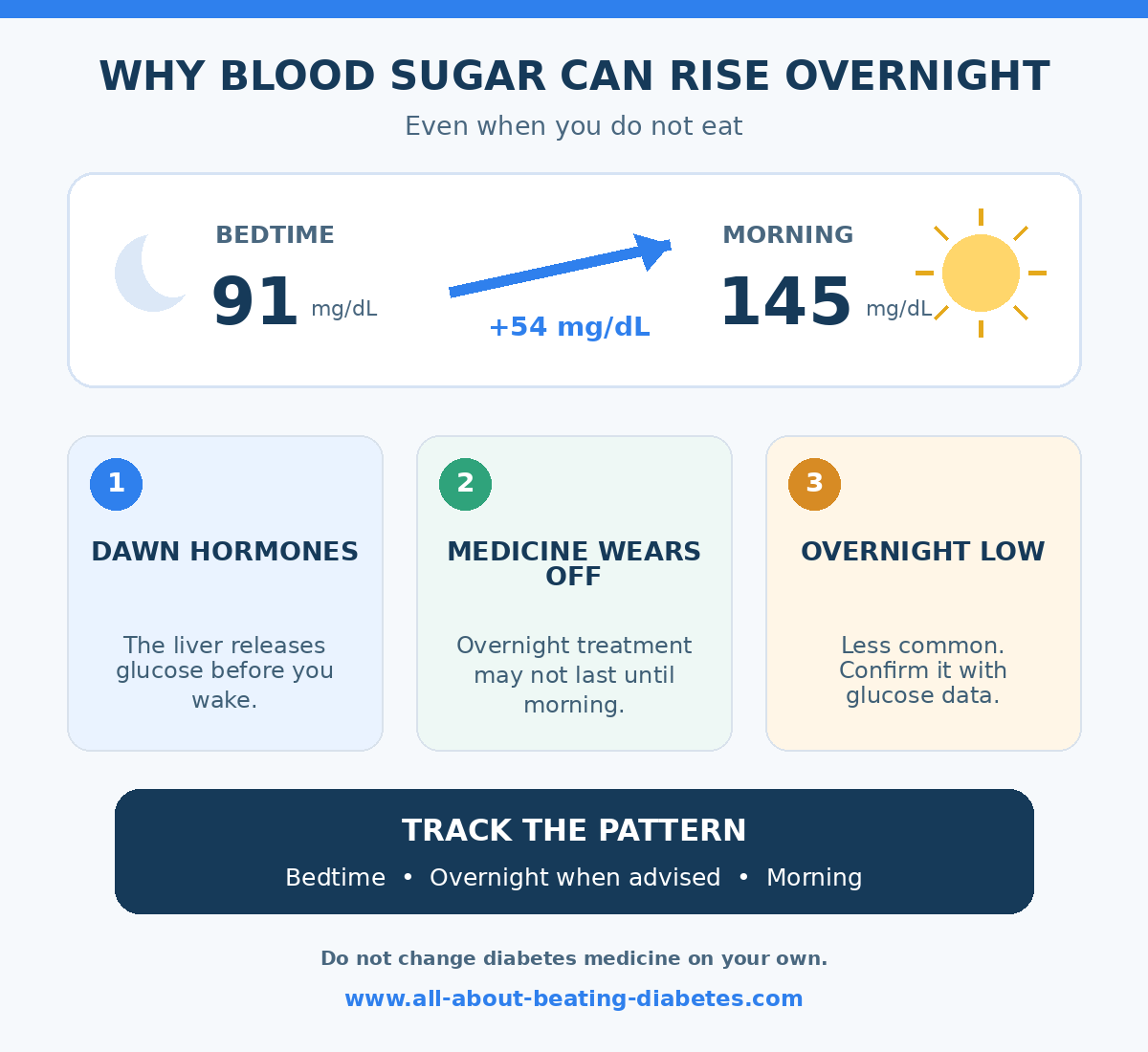
Frances, blood sugar can rise overnight even without food because early-morning hormones tell the liver to release glucose. This is called the dawn phenomenon. Other possibilities include diabetes medicine or insulin wearing off, a late or heavy dinner, poor sleep, illness, stress, or—less commonly—an overnight low followed by a rebound rise.
A bedtime reading of 91 mg/dL is within a common target range for many adults, but 145 mg/dL is above the usual fasting target. The rise from 91 to 145 is 54 mg/dL, not 35. One home reading cannot diagnose diabetes, but repeated fasting readings at this level need medical review and appropriate laboratory testing.
Answer by Dr. Albana Greca, MD, MMedSc
Dear Frances,
I understand why this feels confusing. The body still regulates glucose during sleep. Early-morning cortisol and growth hormone can tell the liver to release glucose and temporarily reduce insulin sensitivity. Without enough effective insulin, glucose may rise before breakfast without eating.
Why Blood Sugar May Rise Overnight
1. Dawn phenomenon
The dawn phenomenon is a gradual rise in glucose during the early-morning hours, often between about 3 a.m. and 8 a.m. It is not preceded by an overnight low. This is a common explanation for this pattern. Our guide on why blood sugar is high in the morning explains this in more detail.
2. Medicine or insulin wearing off
Diabetes medicine or insulin may not last strongly enough until morning. Do not change treatment yourself; an adjustment that lowers morning glucose could cause a dangerous low earlier in the night.
3. Dinner, sleep, stress, or illness
A late or large dinner, bedtime snack, alcohol, poor sleep, sleep apnea, stress, infection, dehydration, or steroid medicine can raise fasting glucose.
4. An overnight low followed by a rise
An overnight low followed by a higher morning reading is sometimes called rebound hyperglycemia or the Somogyi effect. It is much less common and mainly considered in people using insulin or sulfonylureas. Do not add a bedtime snack automatically; without a documented need, it may raise morning glucose.
How to Identify the Pattern
For several days, record:
- Glucose at bedtime and immediately after waking
- Dinner and bedtime-snack timing and content
- Medicine or insulin dose and time
- Evening activity, alcohol, illness, stress, and sleep quality
If you use insulin or a sulfonylurea, or suspect nighttime hypoglycemia, ask about checks around 2–3 a.m. for several nights or a continuous glucose monitor. Repeated readings are more useful than one check.
Pattern clue: A gradual rise toward morning favors dawn phenomenon. A steady rise all night suggests food or insufficient overnight treatment. A documented reading below 70 mg/dL before the rise suggests a possible rebound after hypoglycemia.
What Does 145 mg/dL Mean?
If you have diabetes, 145 mg/dL is above the common premeal target of 80–130 mg/dL for many nonpregnant adults, although goals are individualized.
Without diagnosed diabetes, a fasting laboratory glucose of 126 mg/dL or higher is in the diabetes range when confirmed. A home meter cannot diagnose diabetes by itself. Arrange fasting laboratory glucose and HbA1c testing if readings near 145 mg/dL repeat.
Compare your results with our blood sugar levels by time of day and normal fasting blood sugar guides.
Safe Next Steps
- Repeat bedtime and fasting checks for several days with clean, dry hands and unexpired strips.
- Avoid large late meals and sugary bedtime snacks unless advised to prevent hypoglycemia.
- Consider a gentle after-dinner walk if medically safe.
- Review sleep, snoring, illness, stress, steroids, and medicine timing with your clinician.
- Ask whether HbA1c testing or short-term CGM would help.
Important Safety Note
A reading of 145 mg/dL alone is usually not an emergency. Seek urgent care for high glucose with vomiting, abdominal pain, rapid breathing, confusion, severe weakness, dehydration, chest pain, fainting, or moderate-to-large ketones. Type 1 diabetes, pregnancy, severe infection, or repeated very high readings require prompt medical advice.
If glucose is below 70 mg/dL, follow your hypoglycemia plan. If the person cannot swallow, has a seizure, or is unconscious, use prescribed glucagon if available and call emergency services.
Doctor’s Note
Frances, focus on the pattern rather than assuming you need a snack. Record bedtime and morning glucose for several days and overnight glucose when appropriate. If fasting readings near 145 mg/dL continue, please arrange a review of your HbA1c, laboratory fasting glucose, medicines, evening routine, and sleep.
Educational safety note: This answer is for general education and does not replace personal medical advice, diagnosis, or treatment. Do not change insulin, diabetes medicine, bedtime snacks, supplements, or exercise plans without your healthcare provider.
Related Questions
- Why are my blood sugar readings high upon waking?
- Why is blood sugar high in the morning but normal in the evening?
- What does fasting blood sugar around 130 every morning mean?
Related Resources
- Why Is My Blood Sugar High in the Morning?
- Blood Sugar Levels by Time of Day
- Normal Fasting Blood Sugar Levels
- HbA1c to Average Glucose Calculator
Last reviewed: July 2026
Comments for Normal level at bedtime (91), up 35 points in morning (145).
|
||
|
||
|
||
|
||
|
||
|
||
|
Click here to add your own Comment / Follow up Ask the Doctor now? Simply click here to return to Diabetes Test and Levels. |
