Many patients ask me whether metformin causes weight loss, how quickly it should work, and why the scale may not change. My short answer is that metformin may help some people lose a modest amount of weight, but it is not a guaranteed or rapid weight-loss treatment. Some people lose a few kilograms over time, some mainly avoid weight gain, and others notice little change.
Metformin is primarily a glucose-lowering medicine. In the United States, it is approved for type 2 diabetes, not as a medication for obesity. It is also used in selected people with high-risk prediabetes and is prescribed off-label in some people with polycystic ovary syndrome (PCOS). Those decisions depend on the diagnosed condition, metabolic risk, kidney function, pregnancy plans, side effects, and treatment goals—not on body mass index alone.
Quick Answer
Metformin usually does not cause weight gain and may produce gradual, modest weight loss in some people. In the Diabetes Prevention Program, participants with overweight or obesity and prediabetes assigned to metformin lost an average of about 2.1 kg over 2.8 years. That result describes a study average in a specific population; it does not predict what one person will lose.
Metformin does not “melt fat,” dramatically block carbohydrate absorption, or make everyone less hungry. Do not increase the dose to lose weight faster. Rapid or unexplained weight loss, persistent diarrhea, vomiting, poor appetite, weakness, or symptoms of very high glucose should be medically assessed.
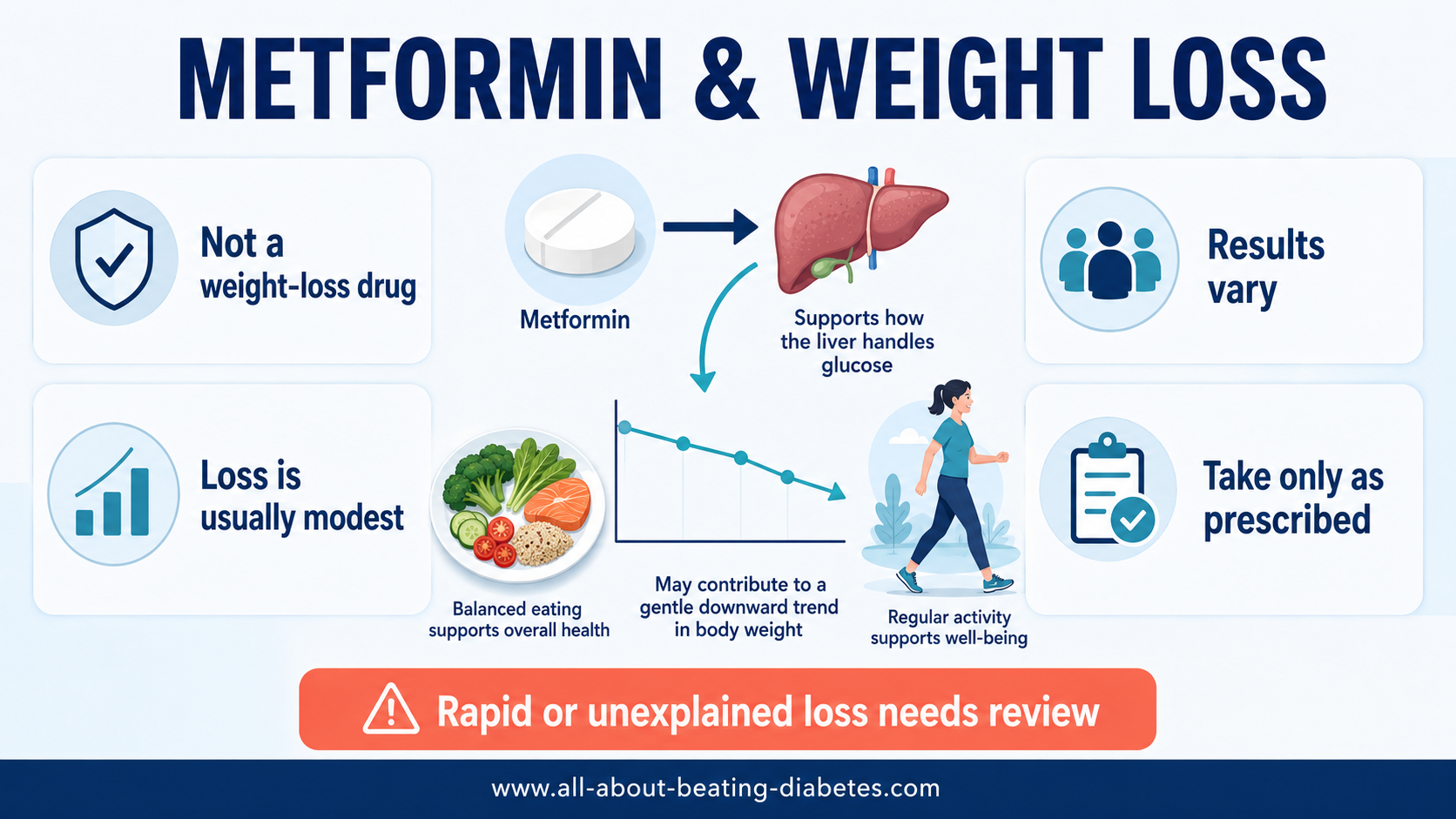

How Much Weight Can You Lose With Metformin?
There is no reliable number for every patient. The best-known long-term evidence comes from the Diabetes Prevention Program (DPP), which enrolled adults at high risk for type 2 diabetes who had elevated glucose and overweight or obesity. Average weight loss over approximately 2.8 years was 2.1 kg in the metformin group, compared with 5.6 kg in the intensive lifestyle group and 0.1 kg in the placebo group.
These findings show two important points. First, metformin can contribute to a modest average reduction in weight. Second, lifestyle intervention produced a larger average reduction in that trial. The study does not mean that every person taking metformin will lose 2.1 kg, nor that the result will occur within a few weeks.
If weight loss occurs, it commonly develops over months rather than days.
Metformin is generally weight-neutral or modestly weight-reducing, not a high-potency obesity medicine.
Starting weight, adherence, appetite, diet, activity, medicines, sleep, and medical conditions all matter.
Long-term DPP follow-up found that weight loss among adherent metformin participants could be maintained, but this still represents group-level evidence. A patient may lose more, less, or nothing. Weight should be reviewed together with waist size, glucose, HbA1c, blood pressure, lipids, fitness, side effects, and quality of life.
How soon should the scale change?
Metformin can begin affecting glucose before a meaningful weight trend appears. If weight changes, several weeks to months is more realistic than a dramatic first-week result. Daily weight can fluctuate because of water, sodium, glycogen, bowel contents, menstrual cycle, and measurement conditions. Compare measurements taken under similar conditions and look at a trend over several weeks.
How Metformin May Affect Weight
Metformin lowers glucose mainly by reducing excessive glucose production by the liver and improving the body’s response to insulin. It also has effects in the gut. It does not force the pancreas to release insulin, which helps explain why it rarely causes hypoglycemia when used alone and why it generally does not cause the weight gain associated with some insulin-releasing medicines.
| Possible effect | What it may mean | Important limit |
|---|---|---|
| Lower liver glucose output | Less excess glucose is released into the bloodstream, especially between meals and overnight. | This improves glucose control; it is not a direct fat-burning mechanism. |
| Improved insulin sensitivity | The body may manage glucose with less compensatory insulin in some situations. | Lower insulin does not automatically produce weight loss if energy intake remains above need. |
| Appetite or gut effects | Some people report earlier fullness, less appetite, or fewer cravings. | Others notice no appetite change; nausea or diarrhea is a side effect, not a healthy weight strategy. |
| Low hypoglycemia risk alone | Fewer lows may mean less need for rescue calories than with medicines that commonly cause hypoglycemia. | Low glucose can still occur with insulin, sulfonylureas, missed meals, alcohol, or strenuous activity. |
Does metformin block carbohydrates?
Descriptions stating that metformin works mainly by “blocking carbohydrates from the intestine” are misleading. Intestinal actions may contribute to its effects, but reduced liver glucose production and improved insulin sensitivity are central clinical explanations. Metformin does not cancel the carbohydrate or calories in a meal. Portion size and total carbohydrate remain important.
Does lower insulin automatically remove hunger?
No. Hunger is regulated by many signals, including meal composition, sleep, stress, medications, activity, gastrointestinal hormones, and the brain. Insulin is part of metabolism, but the statement “more insulin always means more hunger and weight gain” is too simple. People can have insulin resistance and still need an individualized evaluation of food intake, activity, sleep, and other weight-related factors.
Why Am I Not Losing Weight on Metformin?
Not losing weight does not necessarily mean metformin has failed. Its primary purpose may be improved glucose control, and a stable weight can be preferable to medication-related weight gain. I encourage patients to examine the whole treatment response rather than judging metformin only by the scale.
| Possible reason | What to review |
|---|---|
| Expectations are too high | Metformin generally produces much less weight loss than medicines specifically approved for chronic weight management. |
| No sustained calorie deficit | Liquid calories, alcohol, large portions, frequent snacks, restaurant meals, and calorie-dense “healthy” foods may keep intake near maintenance. |
| Other medicines promote weight gain | Insulin, sulfonylureas, some psychiatric medicines, corticosteroids, and other drugs may influence appetite, fluid, or weight. |
| Repeated hypoglycemia | Rescue juice, sweets, or extra snacks can add calories. Treatment may need review if lows are frequent. |
| Sleep, stress, or limited activity | Sleep apnea, chronic stress, pain, fatigue, disability, and sedentary time can make weight management harder. |
| Another health condition | Hypothyroidism, PCOS, depression, Cushing syndrome, edema, menopause-related changes, or another condition may contribute. |
| Measurement noise | Short-term water changes can hide gradual fat loss. Use consistent measurements and a multi-week trend. |
Do not respond by increasing metformin on your own. A higher dose may increase diarrhea, nausea, and dehydration without producing more meaningful fat loss. The correct metformin dosage is based on the indication, glucose response, formulation, kidney function, tolerance, and prescription—not the desired number on the scale.
If weight is a major treatment goal, ask whether you qualify for structured nutrition therapy, a diabetes prevention program, or an obesity treatment plan. Some glucose-lowering medicines also have specific weight and heart or kidney benefits, but suitability, cost, contraindications, pregnancy plans, and adverse effects must be assessed individually.
When Metformin-Associated Weight Loss Becomes a Concern
Small intentional changes may be welcome, but rapid, continuing, or unexplained weight loss should not automatically be credited to metformin. It can reflect poor intake from gastrointestinal side effects, uncontrolled diabetes, dehydration, hyperthyroidism, gastrointestinal disease, infection, depression, cancer, or another condition that needs evaluation.
Contact Your Healthcare Professional Promptly
Arrange medical review if weight loss is faster than intended, continues despite normal eating, or occurs with persistent diarrhea, repeated vomiting, severe loss of appetite, marked thirst, frequent urination, weakness, dizziness, abdominal pain, fever, swallowing difficulty, blood in stool, or a major change in mood.
Seek urgent help for severe weakness, confusion, unusual sleepiness, rapid or difficult breathing, severe dehydration, inability to keep fluids down, chest discomfort, or feeling very cold and seriously unwell. These symptoms require assessment for a serious illness, including the rare possibility of metformin-associated lactic acidosis.
Very high glucose can cause weight loss because glucose and calories are lost in urine and the body cannot use fuel normally. Increased thirst, frequent urination, blurred vision, fatigue, infections, or unexplained weight loss may signal poorly controlled diabetes. Check glucose as directed and contact your diabetes team rather than simply viewing the loss as a positive effect.
Digestive side effects are not a weight-loss plan
Nausea, diarrhea, abdominal discomfort, gas, and reduced appetite are common when metformin is started or increased. These effects often improve, especially with gradual titration and taking the medicine with food as prescribed. Persistent symptoms can cause dehydration, inadequate nutrition, and worsening kidney function. Ask whether the dose, timing, or extended-release formulation should be reviewed; do not make the change yourself.
Who May Be Prescribed Metformin?
Type 2 diabetes
Metformin is FDA-approved, together with diet and exercise, to improve glucose control in adults and children aged 10 years and older with type 2 diabetes. Whether it is the best first or additional medicine depends on HbA1c, symptoms, heart and kidney disease, weight goals, hypoglycemia risk, cost, and personal preferences.
Prediabetes
Metformin is sometimes used for diabetes prevention in selected adults at high risk. ADA guidance particularly considers it in higher-risk groups, including younger adults, people with a higher BMI or higher glucose values, and those with a history of gestational diabetes. Lifestyle intervention remains highly important and produced a larger average reduction in diabetes risk than metformin in the original DPP.
Polycystic ovary syndrome
Metformin is used off-label in PCOS for metabolic and sometimes reproductive indications. The 2023 international PCOS guideline recommends considering it in adults with PCOS and BMI at least 25 kg/m² for anthropometric and metabolic outcomes, while acknowledging more limited evidence below that BMI. This is not the same as prescribing metformin to everyone above BMI 25, and it does not guarantee weight loss.
Weight loss without diabetes
A clinician may occasionally use metformin off-label when there is a specific metabolic reason, but it is not FDA-approved as a general obesity medicine. BMI above 25 alone does not automatically justify a prescription. When weight is the primary condition being treated, approved weight-management medicines and structured lifestyle treatment may offer more appropriate options for eligible patients.
Never use another person’s metformin or buy it from an unverified source. A prescriber needs to review kidney function, other medicines, alcohol intake, acute illness risk, and whether the intended use is evidence-based.
Using Metformin Safely While Managing Weight
- Take the prescribed dose. Do not add tablets, double a missed dose, or change immediate-release and extended-release products without instructions.
- Follow food directions. Taking metformin with meals often improves gastrointestinal tolerance.
- Discuss persistent symptoms. Ongoing diarrhea or vomiting is not something to endure for weight loss.
- Monitor kidney function. Kidney function should be assessed before treatment and periodically afterward.
- Ask about vitamin B12. Long-term use can reduce vitamin B12, especially in people with anemia, neuropathy symptoms, poor intake, or other risk factors.
- Review glucose-lowering combinations. Metformin alone rarely causes hypoglycemia, but insulin or insulin secretagogues may require adjustment as intake, activity, or weight changes.
- Have sick-day and procedure instructions. Acute dehydration, serious infection, surgery, and some contrast-imaging situations may require temporary interruption under professional guidance.
Kidney function and lactic acidosis
Current U.S. labeling states that metformin is contraindicated when estimated glomerular filtration rate (eGFR) is below 30 mL/min/1.73 m², and starting it is not recommended when eGFR is 30–45. The benefit and risk should be reassessed if kidney function falls. Severe kidney impairment, acute kidney injury, dehydration, sepsis, low-oxygen states, liver failure, heavy alcohol use, and overdose increase the risk of metformin accumulation and lactic acidosis.
Exercise and hypoglycemia
Athletes are not automatically prohibited from using metformin. Metformin alone rarely causes low glucose. However, prolonged or intense exercise, inadequate food intake, alcohol, insulin, or sulfonylureas can change hypoglycemia risk. Athletes with diabetes need an individualized hydration, carbohydrate, medication, and glucose-monitoring plan rather than a blanket warning.
A Practical Weight-Management Plan With Metformin
Metformin works best as one part of a complete care plan. You do not need a perfect diet, but you do need repeatable habits that create an appropriate energy balance while supporting glucose, muscle, and nutritional needs.
- Build balanced meals: use half the plate for nonstarchy vegetables, one-quarter for lean protein, and one-quarter for a measured carbohydrate food.
- Watch liquid calories: water and unsweetened drinks are usually better routine choices than soda, juice, sweet tea, or specialty coffee.
- Include protein and fiber: these may support fullness and help preserve muscle during weight loss.
- Use portions that match your needs: olive oil, nuts, avocado, and whole grains are nutritious but still energy-dense.
- Combine aerobic and resistance activity: walking, cycling, swimming, and strength work can improve fitness and insulin sensitivity when medically appropriate.
- Protect sleep: poor sleep and untreated sleep apnea can make appetite and glucose management harder.
- Track a trend: weigh consistently once or several times weekly if this is psychologically safe, and review the average rather than one reading.
For meal-planning help, see the diabetes plate method and sample menu. A fixed calorie level is not right for everyone, but the 2,000-calorie diabetes meal-plan example explains how calories and carbohydrate can be estimated transparently.
If your glucose improves while weight stays stable, that may still be a meaningful treatment benefit. If glucose, weight, or side effects remain outside the agreed goal, bring a food, activity, medicine, and glucose record to your clinician. That allows the plan to be adjusted using evidence rather than guesswork.
Frequently Asked Questions
Is metformin approved for weight loss?
No. In the United States, metformin is approved to improve glucose control in type 2 diabetes. Weight reduction may occur as a secondary effect, and some off-label uses are evidence-based, but metformin is not FDA-approved as an obesity medicine.
How much weight can I expect to lose on metformin?
There is no guaranteed amount. In the DPP population with high-risk prediabetes and overweight or obesity, average loss was about 2.1 kg over 2.8 years. Individual results can be higher, lower, or absent.
How quickly does metformin cause weight loss?
If it occurs, the change is usually gradual over weeks to months. Rapid loss is not an expected goal and should be reviewed if it is unexplained or accompanied by illness, poor intake, dehydration, or high-glucose symptoms.
Why am I not losing weight while taking metformin?
Metformin may be weight-neutral for you. Food intake, activity, sleep, other medicines, hypoglycemia treatment, PCOS, thyroid disease, fluid retention, menopause, and other factors can influence the trend. Review these with your clinician before changing treatment.
Can I increase metformin to lose weight faster?
No. Take only the prescribed dose. Increasing it without medical guidance may worsen nausea, diarrhea, dehydration, or other risks and does not guarantee additional fat loss.
Does metformin reduce belly fat?
Any loss of abdominal fat is part of overall weight and body-composition change; metformin does not selectively target the abdomen. Food intake, activity, sleep, hormones, genetics, and total weight change remain important.
Does metformin cause low blood sugar during exercise?
Metformin alone rarely causes hypoglycemia. Risk is higher with insulin, sulfonylureas, inadequate food, alcohol, prolonged activity, or illness. Ask for an individualized exercise and medication plan.
Should I stop metformin if I lose too much weight?
Do not stop it on your own unless emergency instructions say otherwise. Contact the prescriber promptly so the cause, hydration, glucose, kidney function, nutrition, dose, and other health conditions can be assessed.
Related Questions
Related Resources
References
- DailyMed. Metformin Hydrochloride Tablets: U.S. Prescribing Information.
- Diabetes Prevention Program Research Group. Long-Term Safety, Tolerability, and Weight Loss Associated With Metformin in the Diabetes Prevention Program Outcomes Study.
- Apolzan JW, et al. Long-Term Weight Loss With Metformin or Lifestyle Intervention in the Diabetes Prevention Program Outcomes Study.
- National Institute of Diabetes and Digestive and Kidney Diseases. Diabetes Prevention Program.
- American Diabetes Association. Prevention or Delay of Diabetes and Associated Comorbidities: Standards of Care in Diabetes—2026.
- American Diabetes Association. Obesity and Weight Management for the Prevention and Treatment of Diabetes: Standards of Care in Diabetes—2026.
- International Evidence-based Guideline for the Assessment and Management of Polycystic Ovary Syndrome 2023: Summary.
Medical disclaimer: Educational only—not personal medical advice. Do not start, stop, increase, or reduce metformin or another diabetes or weight-management medicine without guidance from a qualified healthcare professional.