Is My Blood Sugar Too High or Too Low?
Warning Signs, Symptoms, and When to Act
Written by: Dr. Albana Greca Sejdini, MD, MMedSc
Medically reviewed by: Dr. Ruden Cakoni, MD, Endocrinologist
Last medically reviewed: July 2026
A blood sugar reading does not always become an emergency—but some numbers and symptoms do require prompt attention.
The most important question is not only:
“What is the number?”
but also:
“How do you feel, how long has it lasted, and are symptoms getting worse?”
This guide is designed to help you recognize:
- symptoms that need attention
- situations that may require urgent care
- and practical first steps to stay safe
Please take note that this page is safety-oriented, not diagnostic.
High Blood Sugar (Hyperglycemia)
Blood sugar can rise for many temporary reasons. Common causes include eating a large carbohydrate-rich meal, being sick with an infection, feeling stressed, becoming dehydrated, missing diabetes medication, or taking steroid medicines.
In many cases, a single high reading may improve with time, hydration, medication as prescribed, and careful monitoring. However, blood glucose should not be ignored when it stays very high or keeps rising.
High blood sugar can become dangerous, especially when it is linked with symptoms such as extreme thirst, frequent urination, weakness, nausea, vomiting, confusion, or difficulty breathing. In these cases, medical advice is needed urgently.
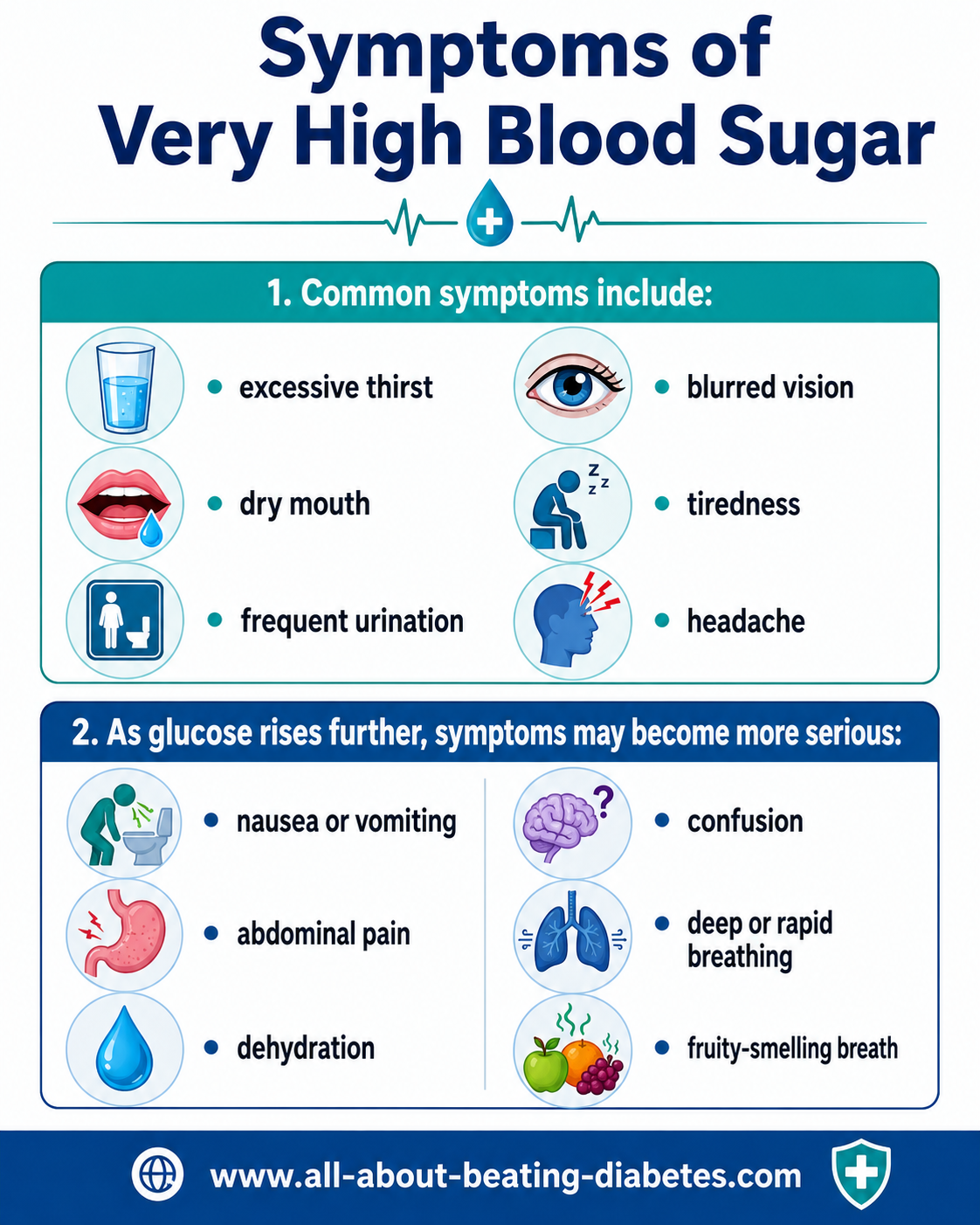
Symptoms of high blood sugar
These symptoms may suggest severe hyperglycemia or diabetic ketoacidosis (DKA), especially in people with type 1 diabetes. Following you can get a wide range of symptoms of very high blood sugar levels:
Blood sugar 200–250 mg/dL after eating
A temporary rise after meals may happen occasionally, especially after a high-carbohydrate meal. However, repeated readings in this range suggest that glucose control may not be stable.
If this happens repeatedly, you should:
- drink water
- avoid sugary drinks
- review meal size and carbohydrate intake
- consider gentle walking after meals if medically safe
- monitor for symptoms
Read full explanation on : Blood sugar 200–250 mg/dL after eating: is it dangerous?
Blood sugar 250–400 mg/dL
This blood sugar range deserves much more attention, especially when it does not come down or when symptoms are present. A very high glucose reading may be a sign that the body is struggling to control sugar levels, and it should not be ignored.
Possible warning signs include increasing thirst, vomiting, unusual weakness, dehydration, abdominal pain, or confusion. These symptoms may suggest that high blood sugar is becoming more serious and that the person may need medical help.
At this level, especially if the reading remains high after rechecking, urgent medical evaluation may be needed. Follow your diabetes care plan, take medicines only as prescribed, drink water if allowed, and contact a doctor or emergency service if symptoms are severe or worsening.
Read full explanation on Blood sugar 250–400 mg/dL: when to seek urgent care
Blood sugar over 400 mg/dL
A blood sugar reading over 400 mg/dL is very high and should never be ignored. At this level, the body may be under significant stress, and the risk of dehydration, ketone buildup, and serious complications can increase, especially in people with diabetes.
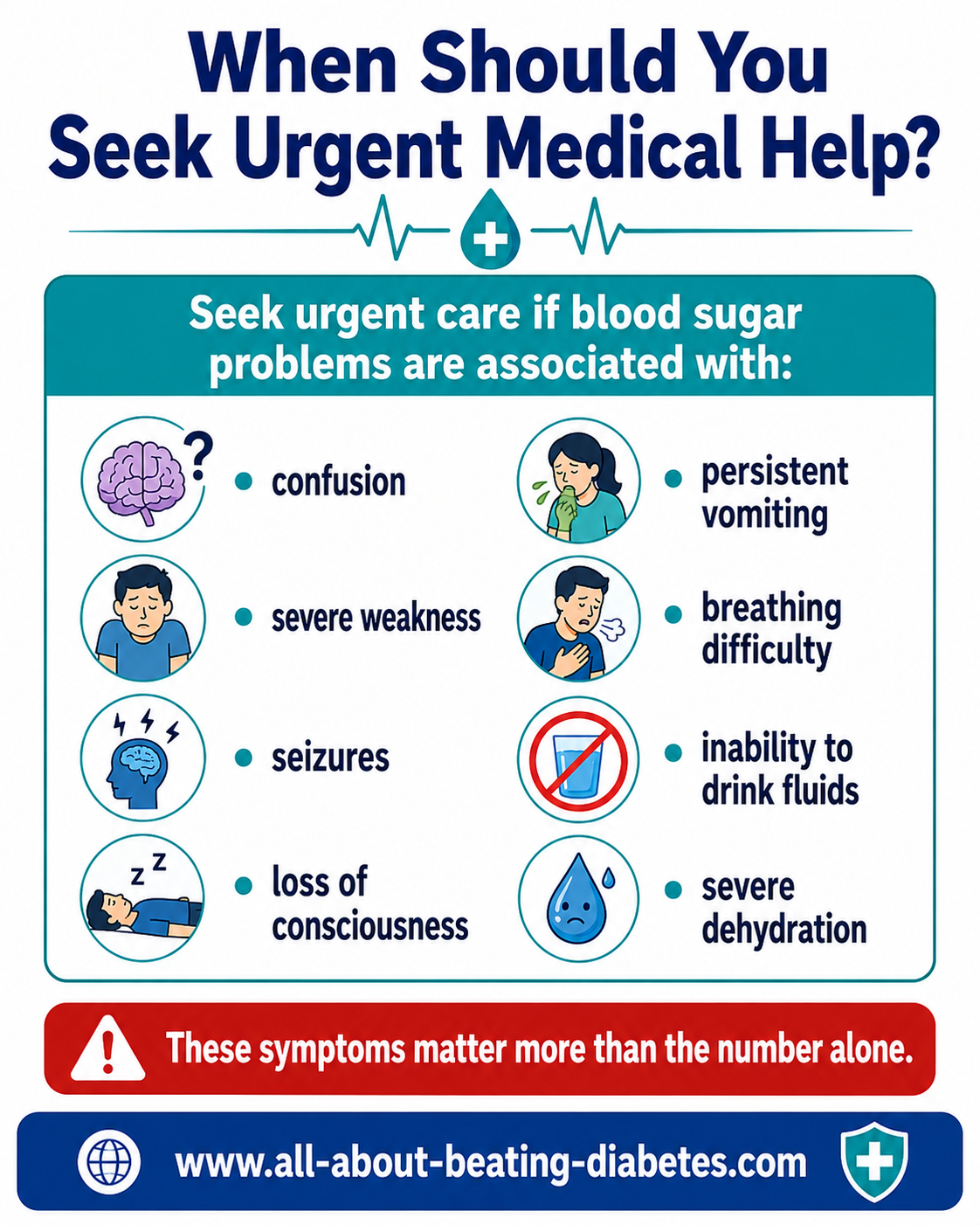
Seek urgent medical care if a high blood sugar reading is associated with warning symptoms such as vomiting, severe weakness, difficulty breathing, confusion, inability to keep fluids down, signs of dehydration, or severe abdominal pain. These symptoms may suggest that high blood sugar is becoming dangerous and that the person needs immediate medical assessment.
This situation can become a medical emergency, particularly if ketones are present in the urine or blood. Ketones may indicate that the body is not using glucose properly and is breaking down fat for energy. Recheck the blood sugar if advised, follow the diabetes care plan, avoid delaying treatment, and contact a doctor or emergency service right away if symptoms are severe.
Read full explanation on Blood sugar over 400 mg/dL: emergency signs and what to do
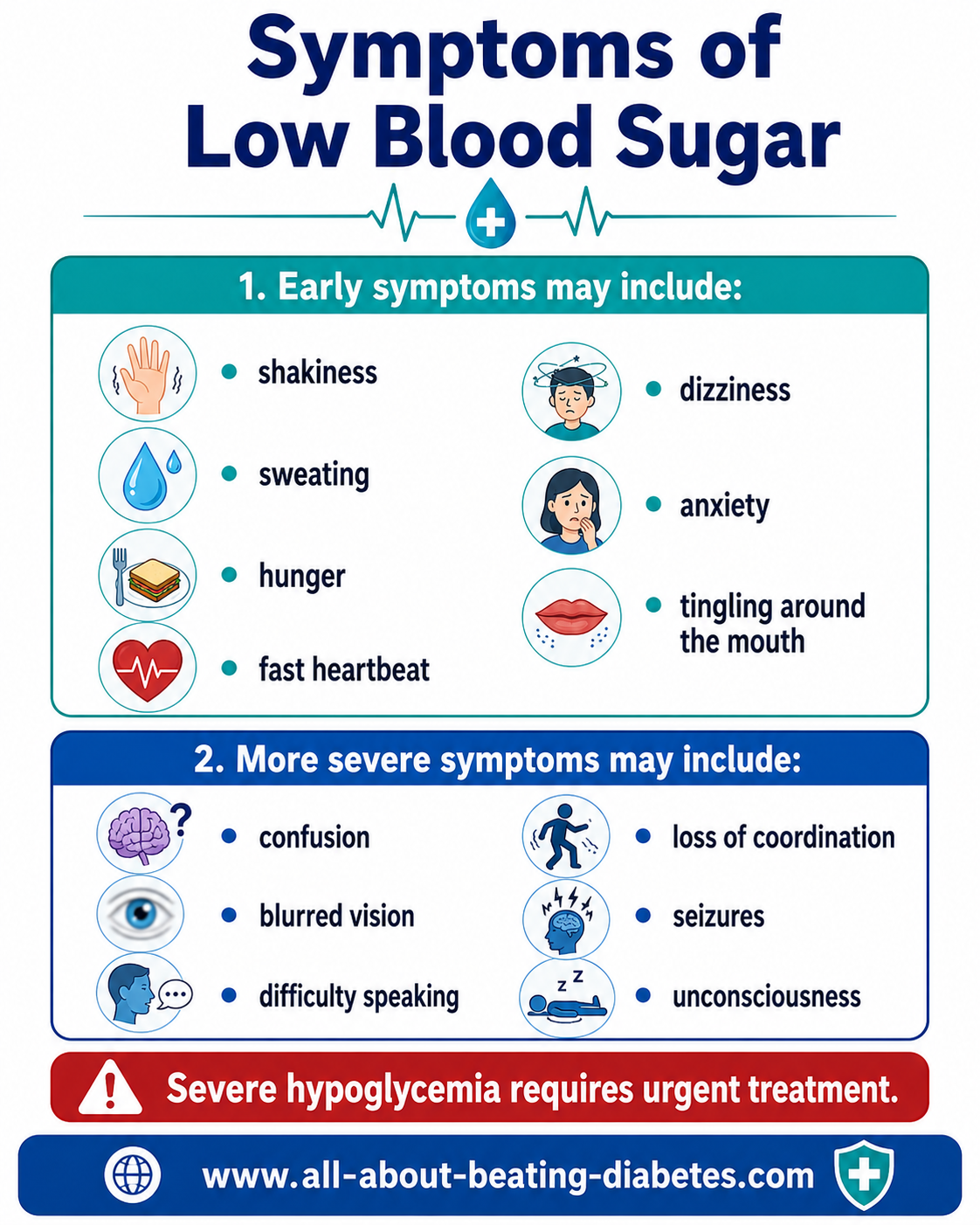
Low Blood Sugar (Hypoglycemia)
|
Low blood sugar happens when glucose falls below what the brain and body need to function normally. Common causes include:
|
 |
Blood sugar 45–69 mg/dL
This range usually requires prompt treatment with fast-acting carbohydrates unless your healthcare team has advised otherwise.
Examples often used:
- glucose tablets
- fruit juice
- regular soda
- sugar dissolved in water
After treatment:
- recheck glucose
- eat a meal or snack if appropriate
- identify the cause to prevent recurrence
Read full explanation on Blood sugar 45–69 mg/dL: symptoms and treatment
Low blood sugar after eating
Some people experience low glucose 1–3 hours after meals. This may happen because of:
- large refined carbohydrate meals
- insulin timing
- reactive hypoglycemia
- medication effects
Symptoms may include:
- shakiness
- sudden fatigue
- sweating
- hunger
You can get more details on Low blood sugar after eating (45–69 mg/dL): why it happens
Low fasting blood sugar
|
Low fasting readings may occur:
Repeated fasting lows should be discussed with your healthcare professional, especially if symptoms occur during sleep or early morning. Learn more on Fasting blood sugar 45–69 mg/dL and its meaning. |
 |
Take-Home Notes
One abnormal reading is not always dangerous. What matters most is:
- the trend
- associated symptoms
- hydration status
- medication use
- and how quickly glucose is changing
The goal is not fear. The goal is recognizing when blood sugar needs attention—and acting early and safely.