Diabetes Medications Explained: Benefits, Side Effects, and What to Expect
Written by: Dr. Albana Greca Sejdini, MD, MMedSc
Medically reviewed by: Dr. Ruden Cakoni, MD, Endocrinologist
Last medically reviewed: May 2026
Diabetes medications can help lower blood sugar, reduce symptoms, and protect long-term health. But many patients feel confused when they hear different names such as metformin, Glucophage, insulin, extended-release tablets, injections, dosage changes, and side effects.
This page explains the most common medication topics in simple language, especially metformin, Glucophage, and insulin. You will learn what these medicines may do, what benefits to expect, what side effects to watch for, and why treatment should always be personalized by your doctor.
Why Diabetes Medications Matter
Diabetes medications are used when blood sugar cannot be controlled safely with lifestyle changes alone, or when the body needs extra help using or producing insulin.
Some medicines help the body use insulin better. Some reduce glucose production by the liver. Some help the body release more insulin.
Insulin treatment directly replaces or supports the body’s insulin needs. Treatment is individualized based on glucose level, weight, heart and kidney health, pregnancy, side effects, cost, and patient needs.
What Are Diabetes Medications?
Diabetes medicines are not all the same. They work in different ways.
Some common goals of diabetes medication include:
- Lowering high blood sugar
- Improving insulin resistance
- Reducing glucose production by the liver
- Helping the pancreas release insulin
- Supporting weight and heart health in selected patients
- Preventing symptoms of high blood sugar
- Reducing long-term diabetes complications
A medicine that works well for one person may not be the best choice for another person. This is why diabetes treatment should be reviewed regularly with your caring doctor.
Metformin Benefits for Type 2 Diabetes
Metformin is one of the most commonly used medicines for type 2 diabetes. It is often used because it helps lower blood sugar without usually causing low blood sugar when taken alone.
Metformin mainly works by reducing how much glucose the liver releases into the blood and by helping the body use insulin more effectively. It is usually taken with meals to reduce stomach side effects. NHS guidance notes that metformin is commonly used for type 2 diabetes and is best taken with meals to reduce side effects.
Possible benefits of metformin may include:
- Lower fasting blood sugar
- Improved insulin resistance
- Lower HbA1c over time
- No usual weight gain
- Possible modest weight loss in some people
- Long experience of use in type 2 diabetes
To learn more, read: Metformin Benefits for Type 2 Diabetes
Metformin Dosage and Timing
Metformin dosage should always be decided by your doctor.
Many patients start with a low dose and increase gradually. This can help reduce stomach symptoms such as nausea, diarrhea, gas, or abdominal discomfort.
There are different forms of metformin, including:
- Immediate-release metformin
- Extended-release metformin
- Combination tablets that include metformin with another diabetes medicine
Patients should not change the dose, stop the medicine, or take extra tablets without medical advice.
To learn more, read Metformin Dosage Guide: Typical Ranges and Timing
Metformin and Weight Loss
Some people lose a small amount of weight while taking metformin. This may happen because metformin can reduce appetite in some patients and improve insulin resistance.
However, metformin is not mainly a weight-loss medicine. Not everyone loses weight on it. Some people remain the same weight, especially if food intake, physical activity, sleep, and insulin resistance are not addressed.
Metformin works best when it is combined with a healthy diabetes plan, including balanced meals, regular movement, and weight management when needed.
To learn more, read:
- Metformin Weight Loss: Why It Happens and Who It Affects
- Metformin for Insulin Resistance: Who Benefits Most
Metformin for Insulin Resistance
Insulin resistance means the body’s cells do not respond well to insulin. The pancreas may need to make more insulin to keep blood sugar controlled.
Metformin may help some people with insulin resistance because it can improve how the body uses insulin and reduce glucose output from the liver.
It may be considered in type 2 diabetes, prediabetes in selected high-risk people, PCOS-related insulin resistance, or other situations decided by a doctor.
However, it is not suitable for everyone. Kidney function, liver disease, alcohol intake, pregnancy status, and other medical conditions must be considered.
To learn more, read Metformin for Insulin Resistance: Who Benefits Most
Glucophage Side Effects
Glucophage is a brand name for metformin. So when people ask about Glucophage side effects, they are usually asking about metformin side effects.
Common side effects may include:
- Nausea
- Diarrhea
- Stomach discomfort
- Gas or bloating
- Loss of appetite
- Metallic taste
Common metformin side effects include feeling sick, diarrhea, stomach ache, and loss of appetite, and also notes that vitamin B12 deficiency can occur with higher doses or long-term use.
Metformin rarely can cause a serious condition called lactic acidosis. Although rare, it still remains life-threatening and that patients should tell their doctor if they have kidney disease or certain serious medical conditions.
To learn more, read Glucophage Side Effects and How to Manage Them
Glucophage and Weight Loss
Some people notice weight loss while taking Glucophage, while others do not.
Weight change may depend on:
- Appetite changes
- Insulin resistance
- Food choices
- Physical activity
- Starting weight
- Other medications
- Digestive side effects
- Hormonal conditions such as PCOS
It is important not to use Glucophage only for weight loss unless your doctor has prescribed it for a medical reason.
To learn more, read Why Some People Lose Weight on Glucophage and Others Don’t.
Metformin in Pregnancy
Metformin may be used in pregnancy in selected situations, such as gestational diabetes or insulin resistance related to PCOS, but this decision must be made by a healthcare professional.
Pregnancy changes blood sugar needs, insulin resistance, and medication safety considerations. A medicine that is appropriate before pregnancy may need review during pregnancy.
Do not start, stop, or change metformin during pregnancy without your doctor’s advice.
To learn more, read Metformin in Pregnancy: When It’s Used and Safety
Insulin Treatment: When It Is Needed
Insulin is a hormone that helps glucose move from the blood into the body’s cells. Some people need insulin because their body does not make enough insulin or because blood sugar remains too high despite other treatments.
Insulin is always needed in type 1 diabetes. It may also be needed in type 2 diabetes, especially when blood sugar remains high, during illness, pregnancy, surgery, or when other medicines are not enough.
Diabetes medications and insulin are used to help manage blood glucose, and that some medicines can cause low blood glucose if not balanced properly with food and activity.
To learn more, read Insulin Treatment: When It’s Needed and What to Expect.
Insulin Side Effects
Insulin can be very effective, but it must be used correctly.
Possible insulin-related problems include:
- Low blood sugar
- Weight gain
- Injection-site irritation
- Lipohypertrophy, or thickened skin areas from repeated injections
- Dosing mistakes
- Timing problems with meals
- Fear of injections
Low blood sugar is one of the most important risks. Symptoms may include shaking, sweating, hunger, fast heartbeat, dizziness, confusion, weakness, or headache.
Patients using insulin should know how to recognize and treat low blood sugar and should follow their doctor’s instructions about dose timing, food, activity, and monitoring.
To learn more, read Insulin Side Effects: Common Problems and Prevention.
Metformin vs Insulin: What Is the Difference?
Metformin and insulin are very different.
| Topic | Metformin | Insulin |
|---|---|---|
| Type of treatment | Oral medicine | Hormone injection or pump |
| Main action | Helps reduce liver glucose output and improve insulin use | Helps move glucose from blood into cells |
| Low blood sugar risk | Usually low when taken alone | Higher if dose, food, or activity are not balanced |
| Weight effect | Usually weight-neutral or modest weight loss in some people | May cause weight gain in some people |
| Used in type 1 diabetes | Not a replacement for insulin | Essential |
| Used in type 2 diabetes | Very common | Used when needed |
www.all-about-beating-diabetes.com
This table is only a general guide. Your doctor will decide what is right for you.
How to Reduce Medication Side EffectsSome side effects can be reduced with better timing, careful dose adjustment, and regular follow-up. Helpful steps may include: 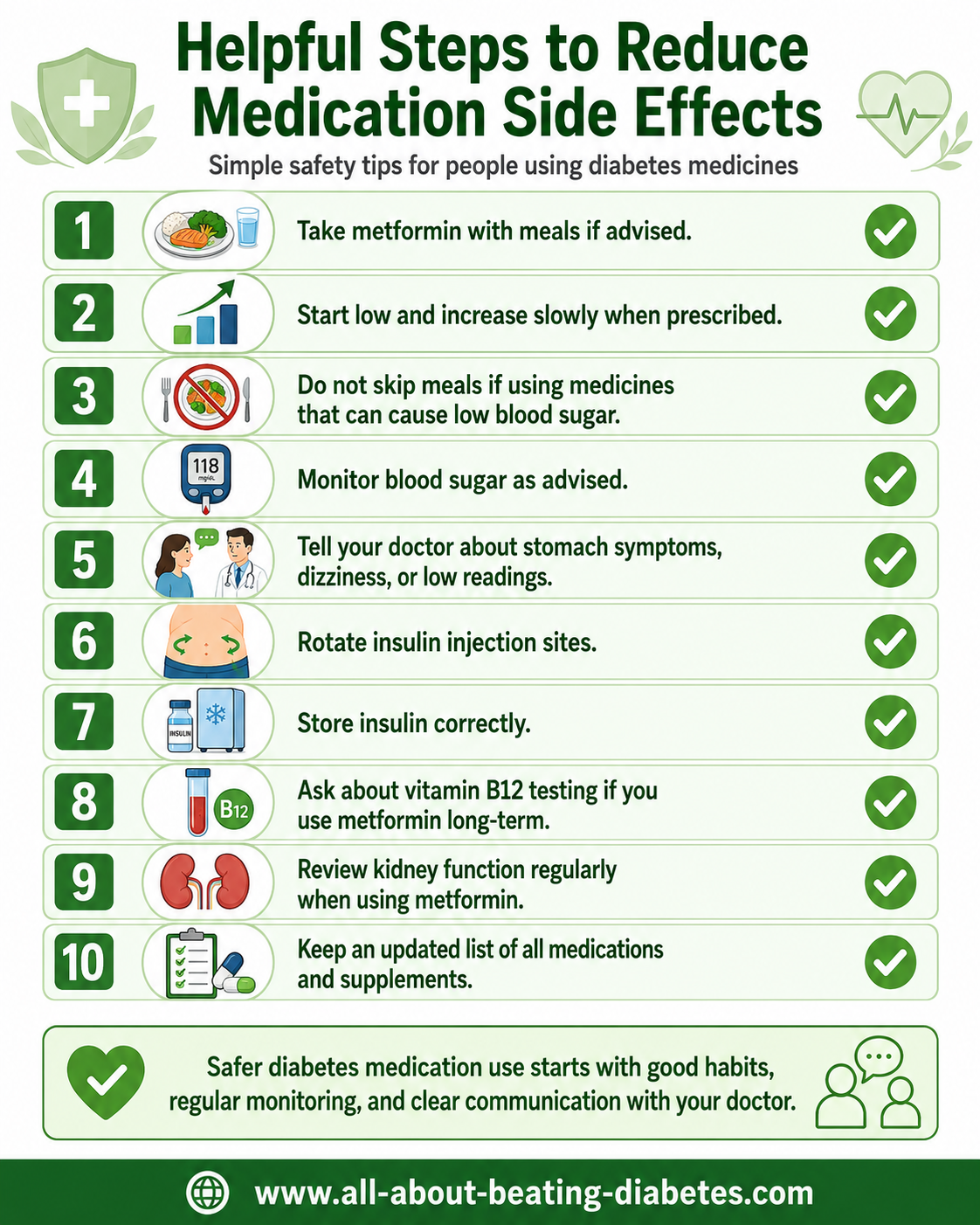 Do not stop diabetes medication suddenly unless your doctor tells you to. |
When to Call Your DoctorContact your doctor if: 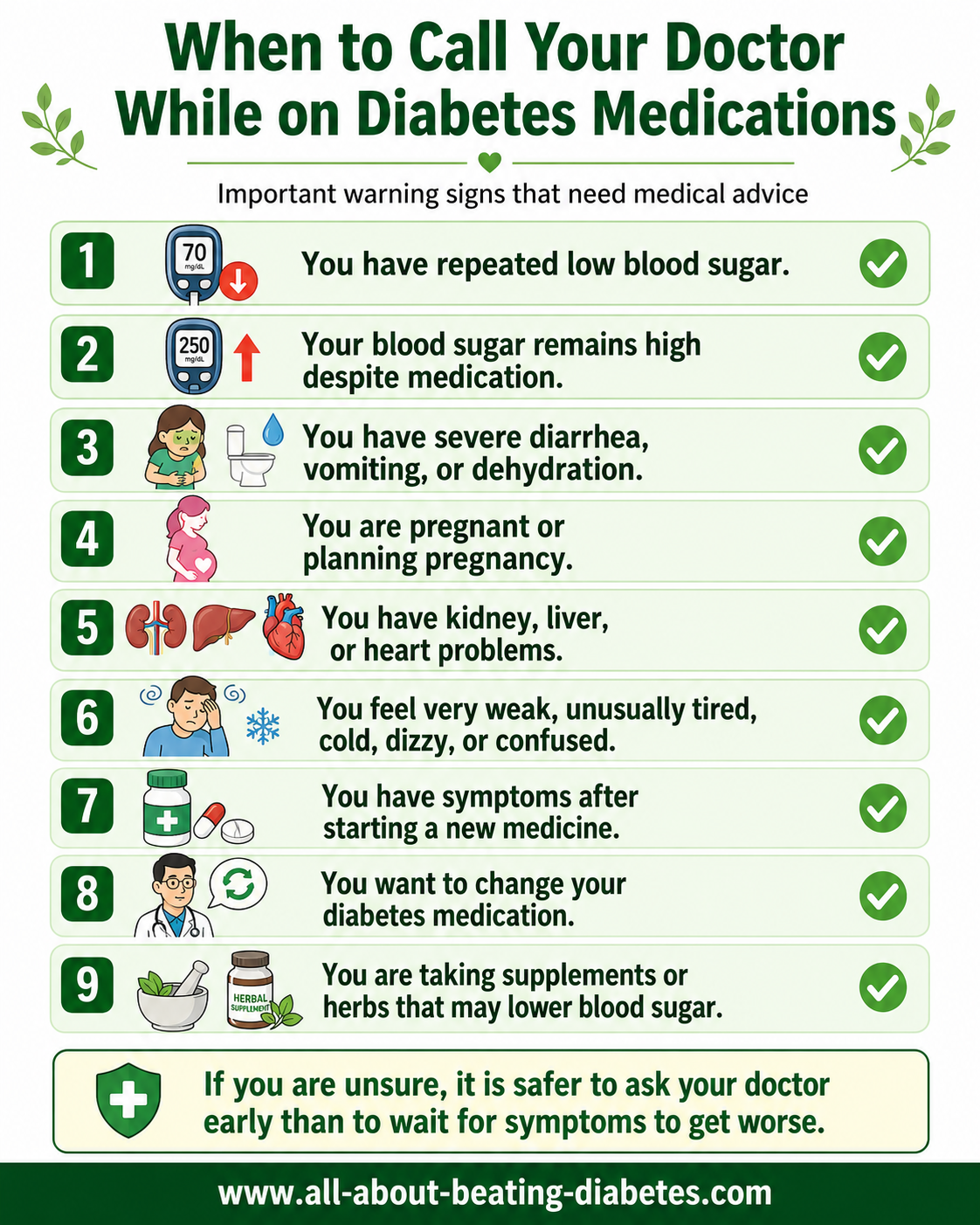 Seek urgent medical help if you have severe low blood sugar, confusion, difficulty breathing, severe weakness, chest pain, or signs of serious illness. |
Key Takeaways
Diabetes medications help control blood sugar, but each medicine works differently.
Metformin is commonly used for type 2 diabetes and insulin resistance.
Glucophage is a brand name for metformin.
Metformin may cause stomach side effects, and long-term use may be linked with vitamin B12 deficiency in some people.
Insulin may be needed in type 1 diabetes, some cases of type 2 diabetes, pregnancy, illness, or when blood sugar remains high.
Insulin can cause low blood sugar if food, activity, and dose are not balanced.
The best diabetes medication plan is individualized and should be reviewed with your doctor.
Medical Disclaimer
This page is for educational purposes only and does not replace medical advice, diagnosis, or treatment. Do not start, stop, or change metformin, Glucophage, insulin, or any diabetes medication without speaking with your doctor or qualified healthcare professional.