Diabetes Foods and Blood Sugar: How Fruits, Nuts, and Drinks Affect Glucose
Fruits, nuts, and drinks can affect blood sugar in very different ways depending on their carbohydrate content, portion size, fiber, and added sugars. Understanding these differences can help you make more balanced food choices, reduce glucose spikes, and build meals that support better diabetes management.
Written by: Dr. Albana Greca Sejdini, MD, MMedSc
Medically reviewed by: Dr. Ruden Cakoni, MD, Endocrinologist
Last medically reviewed: July 2026
People with diabetes can usually include fruit, nuts, berries, and unsweetened drinks in a balanced eating plan. The more useful question is not whether a food is simply “good” or “bad,” but how much carbohydrate it contains, how large the portion is, what it is eaten with, and how your glucose responds.
What affects blood sugar · Foods that raise glucose faster · Grapes · Walnuts · Green tea · Huckleberries · Balancing meals · Checking your response · Practical food tips
What Determines How a Food Affects Blood Sugar?
Carbohydrate has the most immediate effect on blood glucose, but the response is influenced by several factors:
- Portion size: a larger serving usually provides more carbohydrate and may produce a larger glucose rise.
- Food form: whole fruit generally retains more fiber and requires more chewing than juice, smoothies, or dried fruit.
- Meal composition: protein, fat, and fiber can slow digestion, although they do not make carbohydrate disappear.
- Food preparation: finely processed, mashed, overcooked, or liquid carbohydrate may be absorbed more quickly.
- Medicine and insulin: treatment type, dose, and timing affect the glucose response.
- Activity, sleep, stress, and illness: the same food may produce different readings on different days.
No single eating pattern is best for everyone with diabetes. Current guidance supports individualized medical nutrition therapy and emphasizes minimally processed foods, nonstarchy vegetables, whole fruits, legumes, whole grains, nuts, seeds, and unsweetened drinks while limiting sugar-sweetened beverages and heavily processed foods.
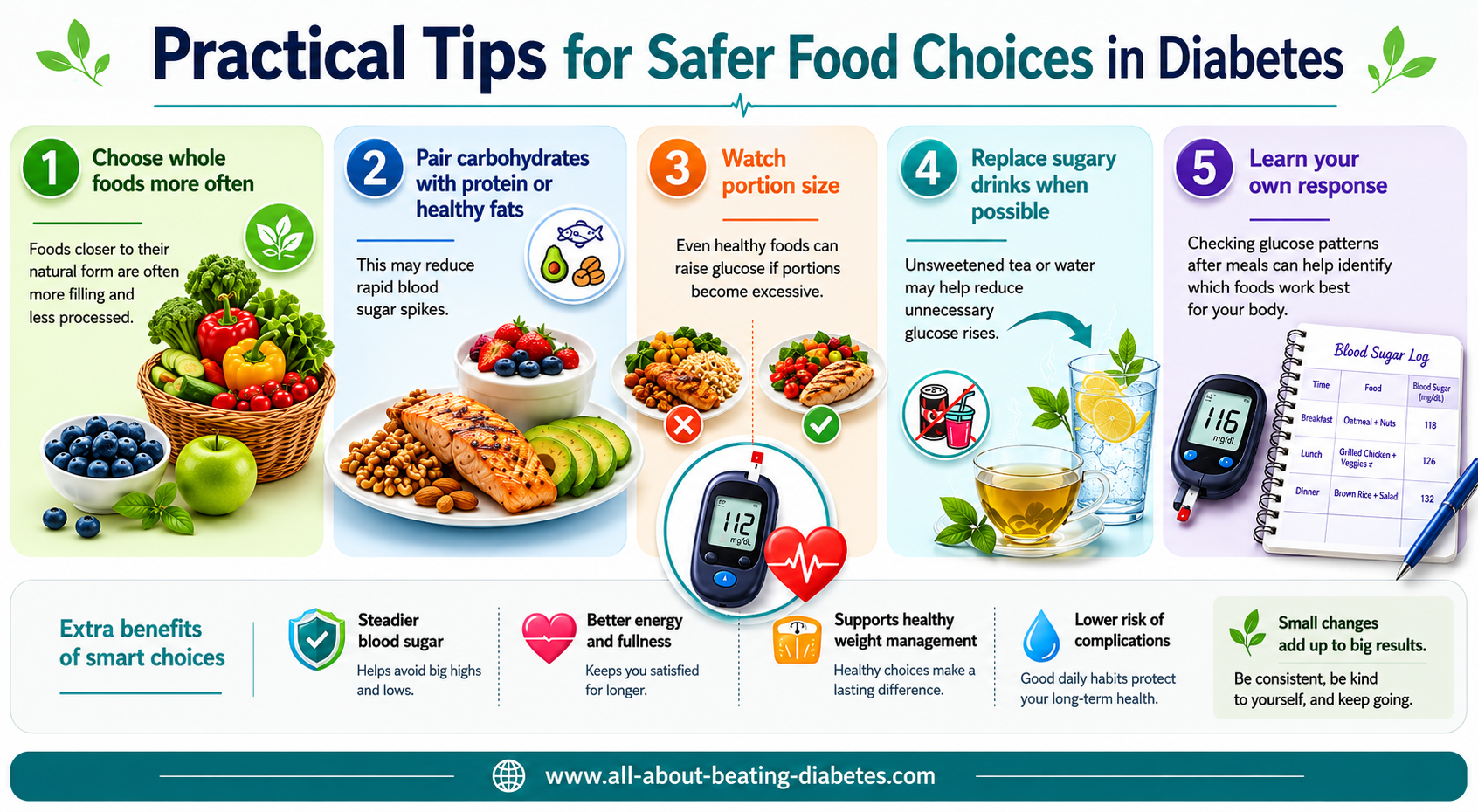
Our diabetic meal-plan guide explains how to build a complete plate rather than judging foods in isolation.
Which Foods and Drinks Usually Raise Blood Sugar Faster?
Foods that deliver a large amount of rapidly absorbed carbohydrate often cause the strongest rise, especially when eaten alone or in large portions.
| Often raises glucose faster | Usually steadier choices | What still matters |
|---|---|---|
| Sugary soda, sweet tea, energy drinks, syrups | Water, sparkling water, unsweetened tea or coffee | Caffeine, medicines, and individual tolerance |
| Fruit juice, large smoothies, sweetened fruit drinks | A measured portion of whole fruit | Total carbohydrate and portion size |
| White bread, refined cereal, sweets, large rice or pasta servings | Smaller portions of higher-fiber carbohydrate with vegetables and protein | The whole meal—not only glycemic index |
| Large servings of dried fruit | Fresh or frozen whole fruit | Dried fruit is concentrated and easy to overeat |
Use the carbohydrate counter when you need help estimating the carbohydrate in a serving. Glycemic index can offer additional context, but it should not replace portion awareness or a balanced meal; see our glycemic index chart.


Grapes and Diabetes
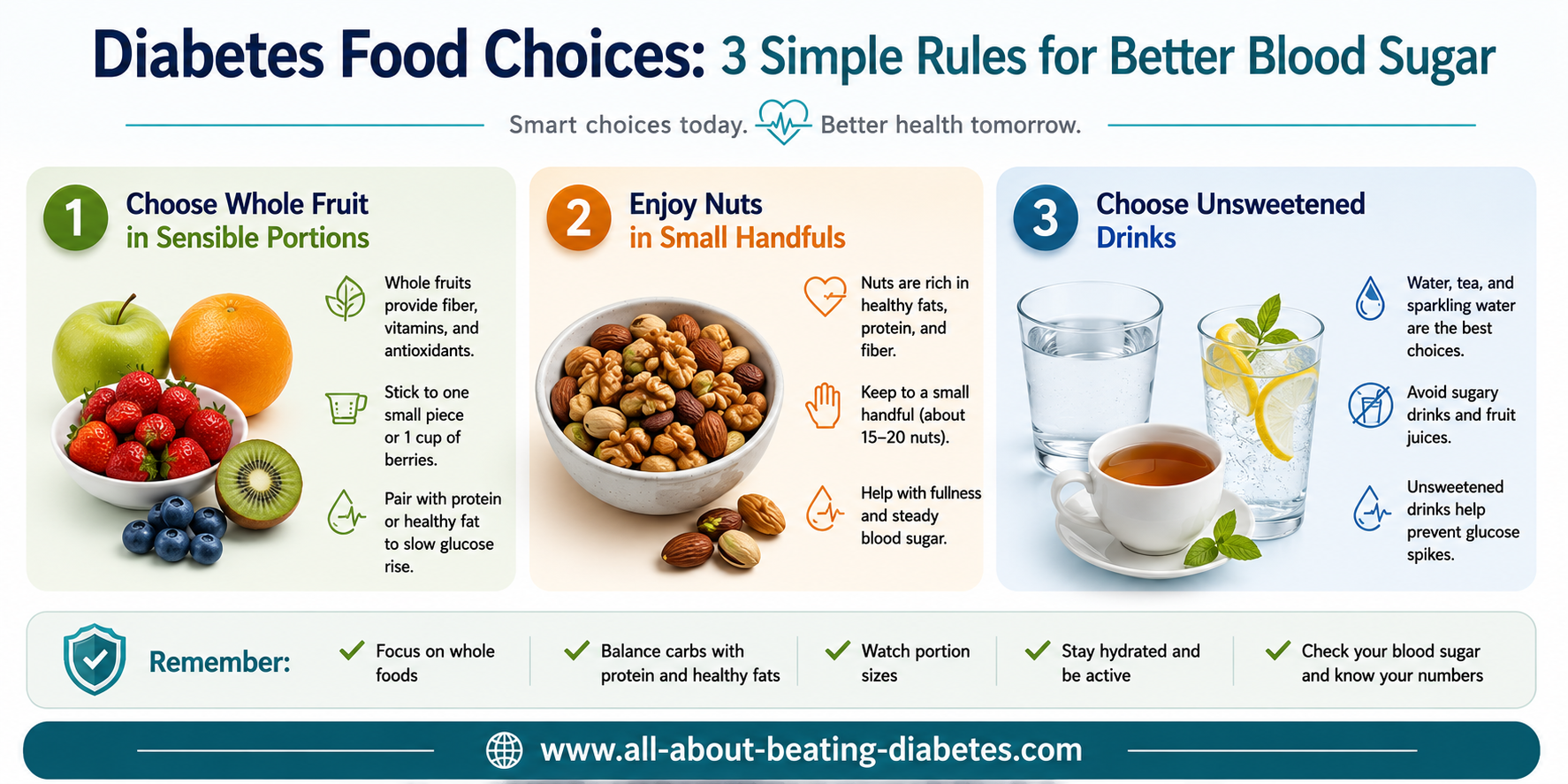
Grapes contain natural sugars, water, fiber, vitamins, and plant compounds. Because they contain carbohydrate, they can raise blood sugar, but this does not mean that everyone with diabetes must avoid them.
A practical portion is more useful than an unrestricted bowl. The exact amount should fit your meal plan, medicine, and glucose goals. Eating grapes as part of a meal or pairing a measured serving with plain yogurt, cheese, or a few nuts may be more satisfying than eating a large quantity alone.
Red and purple grapes contain polyphenols, including resveratrol and anthocyanins. These compounds are being studied, but their presence does not turn grapes into a glucose-lowering treatment. Whole grapes should not replace medicine or be eaten without regard to carbohydrate content.
Read the detailed discussion on grapes and diabetes.
Walnuts and Diabetes
Walnuts contain relatively little carbohydrate and provide unsaturated fat, plant protein, fiber, and alpha-linolenic acid, a plant omega-3 fatty acid. They usually cause a smaller immediate glucose rise than crackers, sweets, or other carbohydrate-heavy snacks.
Research on nuts suggests that including them in a healthy eating pattern may support cardiovascular and metabolic health. However, effects on fasting glucose and HbA1c are not identical in every study, and walnuts do not cure or prevent diabetes by themselves.
Portion size remains important because walnuts are energy-dense. A small handful may fit well as a snack or as a topping for salad, yogurt, or oatmeal. Eating directly from a large bag can make portions difficult to judge.
Continue with our full guide to walnuts and diabetes.
Green Tea and Blood Sugar
Plain brewed green tea contains little or no carbohydrate when it is not sweetened. Its clearest practical advantage is often what it replaces: soda, sweet tea, flavored coffee drinks, or energy drinks.
Green tea contains catechins and caffeine. Studies have explored possible effects on insulin sensitivity, glucose, weight, cholesterol, and cardiovascular risk, but the results are inconsistent and any average metabolic effect appears modest. Green tea should not be used as a substitute for medication, nutrition therapy, exercise, or glucose monitoring.
Caffeine may cause palpitations, anxiety, tremor, reflux, sleep problems, or a temporary change in glucose in sensitive individuals. Decaffeinated tea may be an option when caffeine is a concern.
Read more about green tea and blood sugar.
Huckleberries and Diabetes
“Huckleberry” refers to several related wild berries. Their exact nutrient content varies by species and preparation, but fresh berries generally provide carbohydrate, fiber, water, vitamins, and anthocyanin pigments.
A sensible serving of whole huckleberries may fit into a diabetes eating plan similarly to other berries. However, there is not strong clinical evidence showing that huckleberries specifically lower glucose, increase insulin production, treat diabetic complications, or cure diabetes.
Huckleberry jam, syrup, pie, sweetened dried berries, and juice may contain much more available carbohydrate than fresh or unsweetened frozen berries. The added sugar and serving size often matter more than the berry name.
Do not use huckleberry-leaf tea or concentrated products as diabetes treatment without a professional safety review. The composition and dose may be uncertain, and evidence for glucose benefits is limited.
See the complete explanation of huckleberries and diabetes.
How to Build a More Balanced Meal
A simple plate method can make meal planning easier:
- fill about half the plate with nonstarchy vegetables;
- use about one-quarter for lean protein;
- use about one-quarter for quality carbohydrate;
- add water or another unsweetened drink;
- include fruit, dairy, or healthy fat according to your individual plan.
Protein, fat, and fiber may slow digestion and increase fullness, but they do not “neutralize” carbohydrate. For example, adding walnuts to a large serving of grapes does not make the grapes carbohydrate-free. The total serving still matters.
People using mealtime insulin should follow their prescribed carbohydrate-counting and dosing plan. People with kidney disease, gastroparesis, food allergies, pregnancy, or eating disorders may need a more specialized plan.
How to Check Your Personal Blood Sugar Response
Glucose monitoring can help you understand patterns when it is used consistently and interpreted with your healthcare team.
- Choose a normal portion rather than deliberately overeating the food.
- Check glucose before the meal when your treatment plan recommends it.
- Record the portion, complete meal, medicine or insulin, activity, and meal time.
- Check again at the time recommended for you—often one to two hours after the meal begins.
- Repeat the comparison on another day before drawing a conclusion.
A single reading may be influenced by stress, illness, sleep, activity, meter variation, or medicine timing. Do not remove nutritious foods or change insulin from one isolated result. Our guide to blood sugar levels after eating explains how timing affects interpretation.
Practical Tips for Choosing Diabetes-Friendly Foods
- Choose whole fruit more often than juice.
- Measure concentrated foods such as dried fruit, nuts, syrups, and spreads.
- Read labels for total carbohydrate and added sugar.
- Choose unsweetened drinks most of the time.
- Include protein and nonstarchy vegetables in meals.
- Replace refined snacks with more nutrient-dense options rather than adding extra food.
- Use glucose records to identify repeatable patterns.
- Discuss major diet changes with your clinician or registered dietitian, especially when using insulin or medicines that can cause hypoglycemia.
Related Questions
- What Foods Can a Person With Type 2 Diabetes Eat?
- Why Can Blood Sugar Rise After a High-Fiber Meal?
- Is Blood Sugar of 196 mg/dL Two Hours After Food High?
- How Many Carbohydrates Are Appropriate for Diabetes?
Related Resources
- Diabetic Meal Plan and Plate Method
- Best Diabetes Diet: Building a Sustainable Eating Pattern
- Mediterranean Diet and Diabetes
- Carbohydrates and Diabetes
- Low-Glycemic Diet Guide
Medical disclaimer: This page provides general education and does not replace individualized nutrition therapy, diagnosis, medication review, or advice from your healthcare professional.
References
- American Diabetes Association: Facilitating Positive Health Behaviors and Well-being—Standards of Care in Diabetes 2026
- National Institute of Diabetes and Digestive and Kidney Diseases: Healthy Living With Diabetes
- National Center for Complementary and Integrative Health: Green Tea—Usefulness and Safety
- Effect of Tree Nuts on Glycemic Control in Diabetes: Systematic Review and Meta-analysis
- Effect of Fruit on Glucose Control in Diabetes Mellitus: Meta-analysis of Randomized Controlled Trials
- USDA FoodData Central