Diabetes medicines can lower glucose, prevent symptoms, and reduce serious complications. Every medicine can also have side effects, interactions, or situations in which it needs closer monitoring. My goal is not to make you afraid of treatment. It is to help you recognize problems early and use your medicine with greater confidence.
Quick Answer
The safest diabetes medicine depends on your diabetes type, glucose pattern, heart and kidney health, weight goals, pregnancy status, risk of low blood sugar, other medicines, costs, and preferences. Insulin and sulfonylureas have the greatest routine hypoglycemia risk. Metformin commonly causes digestive symptoms and may lower vitamin B12. SGLT2 inhibitors can cause genital infections and rarely ketoacidosis. GLP-1–based medicines commonly cause nausea and other digestive effects. Never stop or change prescribed treatment without a plan from your healthcare professional.
Why Medication Safety Matters
Diabetes treatment is no longer chosen only by asking, “Which medicine lowers glucose?” We also ask whether the medicine protects the heart or kidneys, helps or worsens weight, can cause hypoglycemia, fits the patient’s daily life, and remains safe as kidney or liver function changes.
Side effects are not the same as allergy. A predictable effect such as mild nausea may improve with dose adjustment, while facial swelling, throat tightness, or difficulty breathing may indicate an emergency allergic reaction. Tell your doctor or pharmacist exactly what happened, when it began, and what dose you were taking.
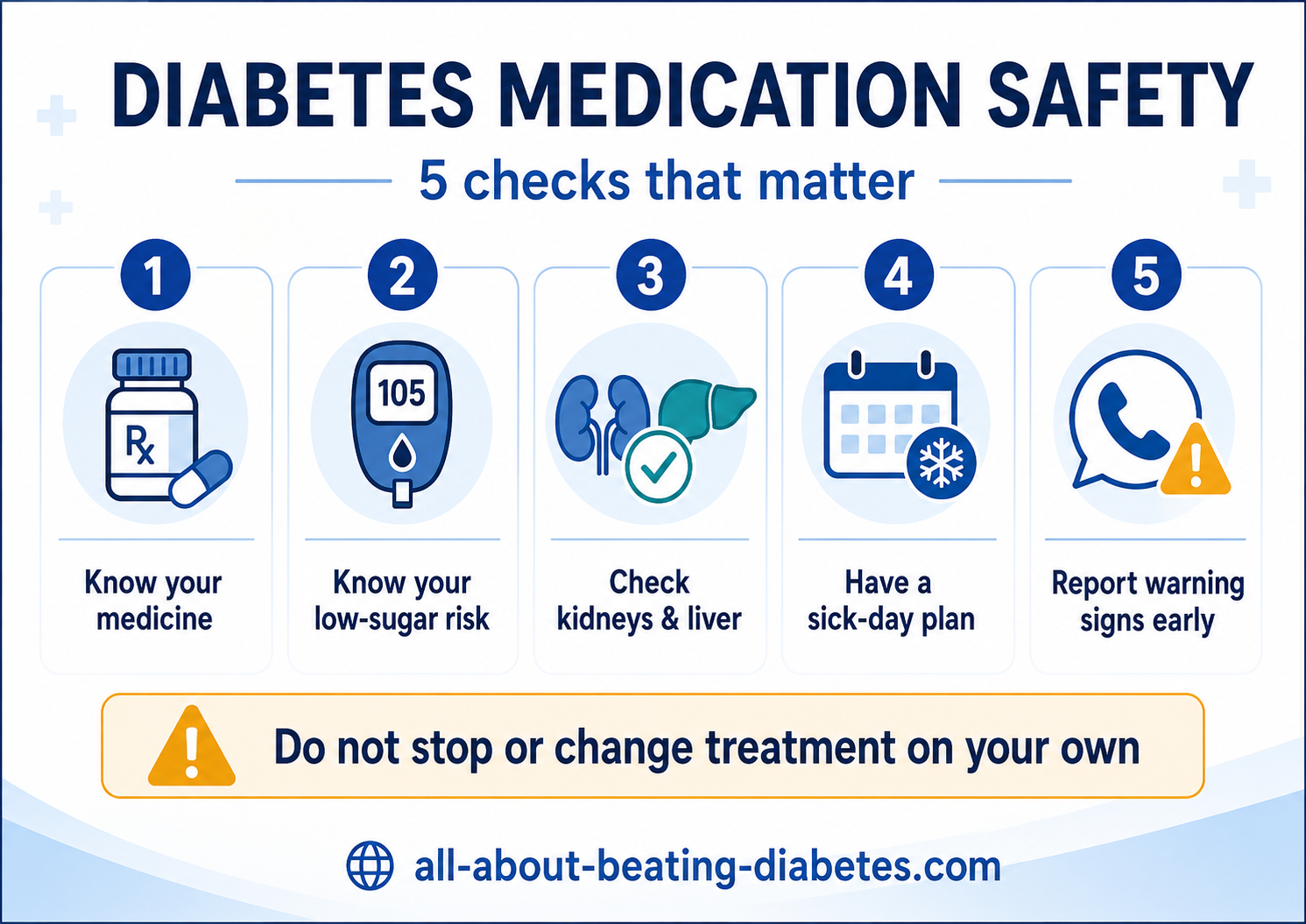

Diabetes Medication Side Effects at a Glance
| Medication class | Common concerns | Important safety considerations |
|---|---|---|
| Metformin | Nausea, diarrhea, bloating, abdominal discomfort | Kidney function; vitamin B12 with long-term use; very rare lactic acidosis in high-risk situations |
| Insulin | Hypoglycemia, weight gain, injection-site reactions | Dose errors, meal/activity mismatch, insulin stacking, storage, sick-day planning |
| Sulfonylureas/meglitinides | Hypoglycemia, weight gain | Greater risk with missed meals, alcohol, older age, or declining kidney function |
| SGLT2 inhibitors | Genital yeast infections, increased urination, volume depletion | Ketoacidosis can occur with only moderately elevated glucose; surgery, fasting, dehydration, and illness precautions |
| GLP-1 receptor agonists and dual GIP/GLP-1 medicine | Nausea, vomiting, diarrhea, constipation, reduced appetite | Dehydration, gallbladder disease, pancreatitis warning, severe gastroparesis considerations, product-specific contraindications |
| DPP-4 inhibitors | Usually well tolerated; headache or upper-respiratory symptoms may occur | Severe joint pain and pancreatitis warnings; heart-failure caution with saxagliptin and alogliptin |
| Thiazolidinediones | Weight gain, fluid retention, swelling | Can worsen heart failure; fracture risk; product-specific bladder and liver considerations |
| Alpha-glucosidase inhibitors | Gas, bloating, diarrhea | Take with first bite; use glucose/dextrose for a low when combined with a hypoglycemia-causing medicine |
This table summarizes major issues and cannot list every contraindication or interaction. Read your current prescription information and ask a pharmacist when a medicine is added, removed, or changed.
Metformin: Digestive Effects, Kidneys, and Vitamin B12
Metformin reduces liver glucose production and improves insulin sensitivity. When used alone, it usually does not cause hypoglycemia. Its most frequent problems are nausea, diarrhea, bloating, and abdominal discomfort, particularly when treatment begins or the dose rises quickly.
Gradual dose titration, taking it as directed with food, or using an extended-release formulation may help selected patients. Kidney function must be reviewed because metformin is cleared through the kidneys. Lactic acidosis is very rare, but risk increases when metformin accumulates during severe kidney impairment, acute kidney injury, major dehydration, hypoxia, or serious acute illness.
Long-term metformin use can reduce vitamin B12. Periodic testing is particularly relevant with anemia, numbness, tingling, neuropathy, memory changes, or other risk factors for deficiency. Learn more about Glucophage and metformin side effects.
Medicines Most Likely to Cause Low Blood Sugar
Insulin
Insulin is essential for everyone with type 1 diabetes and for many people with other forms of diabetes. Its main safety risk is hypoglycemia. A low can follow too much insulin, delayed or smaller meals, extra activity, alcohol, vomiting, incorrect timing, insulin stacking, or changing kidney function.
Insulin also requires safe storage, correct device technique, site rotation, and careful distinction between basal and mealtime products. Never stop basal insulin in type 1 diabetes during illness unless the diabetes team gives explicit instructions. Read our guide to insulin side effects and injection safety.
Sulfonylureas and meglitinides
Sulfonylureas stimulate insulin release and can cause prolonged hypoglycemia, particularly in older adults, people with kidney impairment, those who miss meals, or anyone combining treatment with alcohol or other glucose-lowering medicines. Weight gain can also occur. Repeated lows mean the treatment plan needs prompt review—not simply more snacks to compensate.
SGLT2 and GLP-1–Based Medicines
SGLT2 inhibitors
SGLT2 inhibitors help the kidneys remove glucose in urine and can provide important heart and kidney benefits for selected patients. Common concerns include genital yeast infections, increased urination, and dehydration or low blood pressure in susceptible people.
A rare but serious risk is diabetic ketoacidosis, which may occur even when glucose is below the level many patients expect for DKA. Risk rises with prolonged fasting, very-low-carbohydrate eating, dehydration, heavy alcohol use, acute illness, surgery, insulin-dose reduction, or pump failure. These medicines are not approved in the United States for type 1 diabetes. Patients need individualized instructions about ketone testing and when to pause treatment.
GLP-1 receptor agonists and dual GIP/GLP-1 medicine
These medicines can improve glucose and weight outcomes and may provide cardiovascular or kidney benefits depending on the specific product and patient. Nausea, vomiting, diarrhea, constipation, abdominal discomfort, and reduced appetite are common, especially during dose escalation.
Persistent vomiting can cause dehydration and kidney problems. Severe, persistent abdominal pain—particularly with vomiting—needs urgent assessment for pancreatitis or gallbladder disease. Severe gastroparesis or significant gastrointestinal disease requires careful review. Some products carry a boxed warning and are contraindicated with a personal or family history of medullary thyroid carcinoma or MEN2; follow the specific label and clinician’s advice.
DPP-4 Inhibitors, TZDs, and Alpha-Glucosidase Inhibitors
DPP-4 inhibitors
DPP-4 inhibitors generally have a low hypoglycemia risk when used without insulin or a sulfonylurea. Important warnings include pancreatitis, severe joint pain, and rare hypersensitivity reactions. Saxagliptin and alogliptin carry specific heart-failure warnings; new breathlessness, swelling, rapid weight gain, or unusual fatigue needs prompt review. Read more about saxagliptin, alogliptin, and heart safety.
Thiazolidinediones
Pioglitazone and rosiglitazone improve insulin sensitivity but can cause weight gain, swelling, and fluid retention that may trigger or worsen heart failure. Fracture risk can increase. Pioglitazone also requires individualized consideration of bladder-cancer history or unexplained blood in the urine, while both medicines require attention to liver health. See our pages on Actos side effects and Avandia safety.
Alpha-glucosidase inhibitors
Acarbose and miglitol slow carbohydrate digestion and are taken with the first bite of a meal. Gas, bloating, abdominal discomfort, and diarrhea are common. They do not usually cause hypoglycemia alone, but a low can occur when combined with insulin or a sulfonylurea.
Because these medicines delay the breakdown of table sugar, treat a low with glucose or dextrose rather than relying on sucrose-containing foods. Learn more about alpha-glucosidase inhibitor side effects.
Illness, Dehydration, Surgery, and Sick-Day Rules
Vomiting, diarrhea, fever, dehydration, fasting, surgery, or a serious infection can change medicine safety quickly. Every patient should know:
- Which medicines to continue, pause, or adjust during illness
- How often to check glucose and when to check ketones
- How to maintain fluids and carbohydrates when able
- When to call the medical team or go to emergency care
- When medicines must be paused before surgery or procedures
SGLT2 inhibitors generally require advance interruption before scheduled surgery, with timing depending on the product. Metformin may need temporary interruption for certain acute illnesses, kidney changes, or contrast procedures. Insulin plans require individualized adjustment; type 1 diabetes still needs basal insulin. Ask for written instructions rather than improvising.
Monitoring That May Be Needed
Glucose safety
Meter or CGM patterns, HbA1c, low-glucose episodes, ketones when appropriate, and whether treatment still matches meals and activity.
Organ function
Kidney function, urine albumin, electrolytes, liver tests when indicated, hydration, heart-failure symptoms, and eye or foot status.
Medication review
Prescription and over-the-counter medicines, supplements, injections, duplicated ingredients, dosing technique, affordability, and adherence barriers.
Warning Signs That Need Prompt or Urgent Care
Contact your clinician promptly for repeated hypoglycemia, severe or persistent digestive symptoms, new swelling, rapid weight gain, genital infection symptoms, jaundice, dark urine, unexplained blood in urine, new severe joint pain, or a side effect that prevents you from taking treatment.
Seek urgent or emergency care for:
- Unconsciousness, seizure, severe confusion, or inability to swallow
- Severe allergic reaction, facial or throat swelling, or breathing difficulty
- Persistent vomiting, severe abdominal pain, dehydration, or very little urine
- Fruity breath, deep breathing, moderate/high ketones, or suspected DKA
- Chest pain, stroke symptoms, fainting, or severe shortness of breath
Common Questions
Which diabetes medicines cause low blood sugar?
Insulin, sulfonylureas, and meglitinides carry the greatest routine risk. Other medicines may contribute when combined with them. Kidney impairment, missed meals, alcohol, and unexpected activity can increase risk.
Should I stop medicine when I am vomiting?
Do not guess. Vomiting can make some medicines unsafe, but stopping insulin—especially basal insulin in type 1 diabetes—can cause DKA. Follow your written sick-day plan and contact your diabetes team urgently if you cannot keep fluids down.
Can side effects appear after years on the same medicine?
Yes. Kidney or liver function, body weight, other medicines, diet, alcohol, illness, and age can change how treatment affects you. New symptoms still deserve review.
Should I report a suspected medicine reaction?
Yes. Contact your prescriber or pharmacist. Serious or unexpected events can also be reported to the appropriate national medication-safety program, such as FDA MedWatch in the United States.
Related Questions
Related Resources
References
- Pharmacologic Approaches to Glycemic Treatment: Standards of Care in Diabetes—2026. American Diabetes Association.
- Glycemic Goals, Hypoglycemia, and Hyperglycemic Crises: Standards of Care in Diabetes—2026. American Diabetes Association.
- Insulin, Medicines, and Other Diabetes Treatments. National Institute of Diabetes and Digestive and Kidney Diseases.
- FDA’s Concerns With Unapproved GLP-1 Drugs. U.S. Food and Drug Administration.