Does my sister have diabetes?
by Concern-About-Health


Answer by Dr. Albana Greca, MD, MMedSc
1. Does Your Sister Have Diabetes?
Hello,
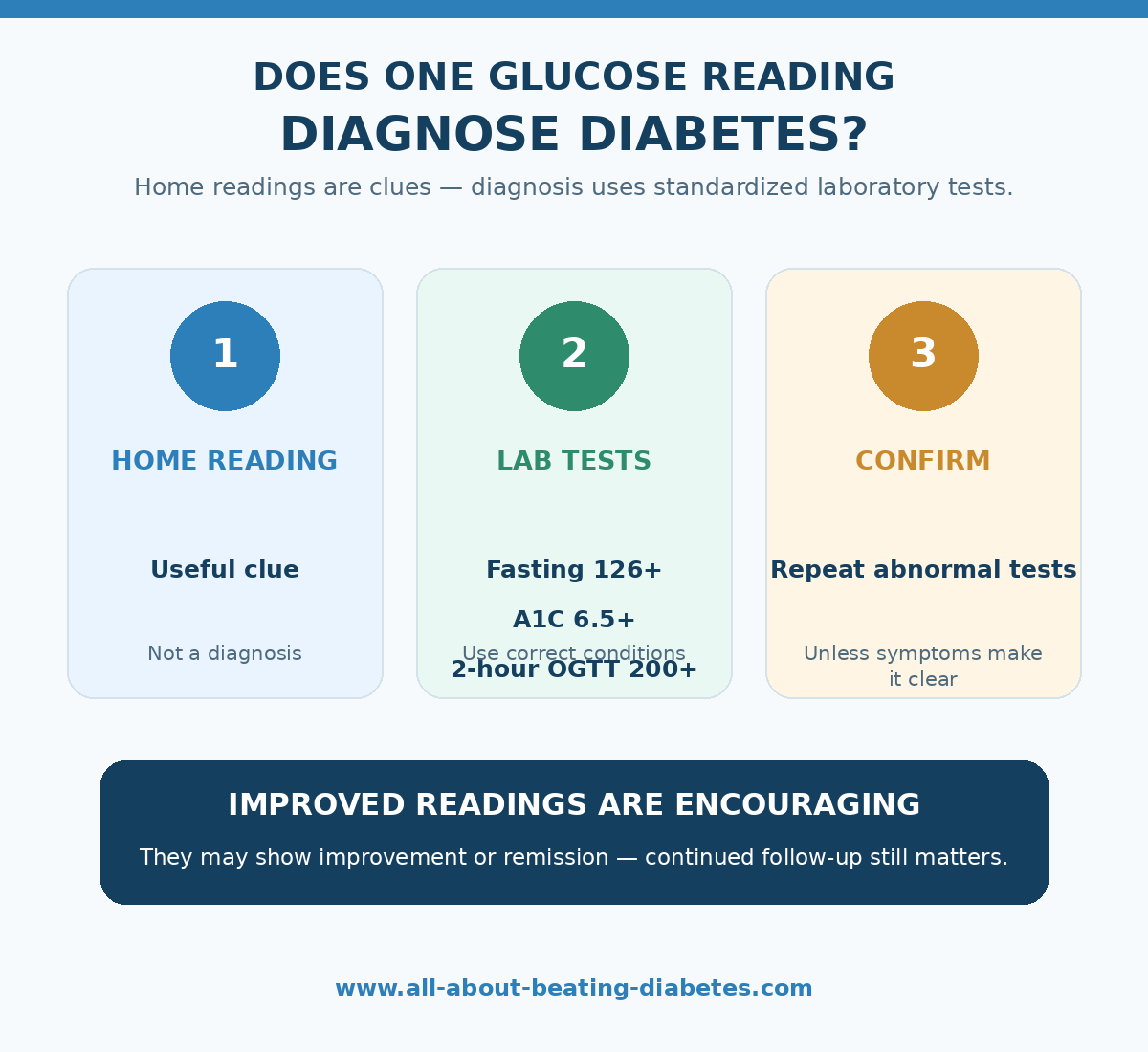
These two readings do not prove diabetes, but they also do not confirm that glucose regulation is normal.
If 144 mg/dL was a true laboratory fasting plasma glucose after at least eight hours without calories, it is in the diabetes range and usually needs confirmation. If it was a random home-meter reading before a meal, previous food, stress, illness, medicines, hand contamination, and meter accuracy matter.
The 97 mg/dL result is reassuring, but an ordinary meal is not a standardized diagnostic test; food, activity, and timing affect it.
Tests Used to Diagnose Diabetes
| Laboratory test | Prediabetes | Diabetes range |
|---|---|---|
| Fasting plasma glucose | 100–125 mg/dL | 126 mg/dL or higher |
| HbA1c | 5.7–6.4% | 6.5% or higher |
| 2-hour 75-g OGTT | 140–199 mg/dL | 200 mg/dL or higher |
A random laboratory glucose of 200 mg/dL or higher can diagnose diabetes when accompanied by classic symptoms or a hyperglycemic crisis. Otherwise, an abnormal result usually needs a repeat or second diagnostic test.
Home meters help with monitoring but should not be used alone for diagnosis. Your sister should arrange laboratory fasting glucose and/or HbA1c. See our guide to blood tests for diabetes.

2. Josh: Was the Original Diagnosis Wrong?
Hello Josh,
A result of 9.2 mmol/L equals about 166 mg/dL. Its meaning depends on the test:
- A fasting laboratory result was in the diabetes range and normally needed confirmation unless symptoms or a crisis made the diagnosis clear.
- A random, after-food, or home-meter result alone was not enough for diagnosis.
Later fasting readings of 3.9–4.2 mmol/L and postmeal readings of 6.3–6.7 mmol/L are reassuring. However, an HbA1c of 5.9% is in the prediabetes range, not proof that there is “no sign of anything.”
There are several possible explanations:
- the first diagnosis may not have been confirmed;
- illness, stress, sleep loss, dehydration, or medicine may have raised the result;
- weight loss and lifestyle changes may have improved genuine type 2 diabetes;
- confirmed diabetes may now be in remission, depending on medicine use and follow-up.
Improvement, Remission, and Cure Are Different
Type 2 diabetes remission generally means HbA1c below 6.5% for at least three months without glucose-lowering medicine. If metformin was still being taken, the formal definition would not apply. If the first diagnosis was never confirmed, it may remain uncertain.
Remission is not a cure. Glucose may rise again with weight regain, illness, aging, steroids, or declining beta-cell function. Continue periodic HbA1c and cardiovascular-risk checks.
Metabolic syndrome does not exclude diabetes; it is a cluster of risk factors that increases diabetes and cardiovascular risk.
Lifestyle Changes Help—Supplements Are Not a Cure
Weight loss, healthier eating, activity, and improved sleep may have had a major effect. Cinnamon, chromium, garlic, and other supplements are not proven cures or substitutes for prescribed treatment and may cause adverse effects or interactions.
Do not stop metformin because home readings improve. Ask your clinician to review the original report, test timing, symptoms, HbA1c history, medicine use, and current results, then repeat standardized testing if needed.
Seek urgent medical care for glucose of 200 mg/dL or higher with marked thirst, frequent urination, unexplained weight loss, vomiting, abdominal pain, deep or rapid breathing, confusion, severe dehydration, or positive ketones. These symptoms require prompt assessment rather than waiting for routine confirmation.
Educational safety note: This answer provides general education and cannot diagnose or exclude diabetes. Do not start, stop, or change metformin, insulin, supplements, or another treatment without a qualified healthcare professional.
Related Questions
- Why Is Glucose Higher Before Eating Than Two Hours After?
- Do Fasting 98 and Two-Hour 142 Mean Prediabetes?
- Does a Fasting Glucose of 107 Mean Diabetes?
Related Resources
- Blood Tests for Diabetes
- Random Blood Glucose Results Explained
- Normal Fasting Blood Sugar Levels
- Convert mmol/L to mg/dL
Last reviewed: July 2026
Click here to post comments or follow up
Ask the Doctor now? Simply click here to return to Type 2 diabetes information.
My doctor misdiagnosed me as type 2 diabetic based on a sugar of 9.2; while now fasting is 3.9-4.2!
by Josh


Question from Josh: My doctor diagnosed type 2 diabetes from a glucose result of 9.2 mmol/L. After major weight loss, healthier eating, exercise, metformin, and supplements, my fasting readings are 3.9–4.2 mmol/L, my after-meal readings are 6.3–6.7 mmol/L, and my HbA1c is 5.9%. Was I misdiagnosed?
Was the Original Type 2 Diabetes Diagnosis Correct?
Hello Josh,
Your later results are encouraging, but they do not prove by themselves that the first diagnosis was wrong. The meaning of the original 9.2 mmol/L result—about 166 mg/dL—depends on how it was obtained.
- If 9.2 mmol/L was a properly performed fasting laboratory plasma glucose after at least eight hours without calories, it was in the diabetes range because the diagnostic threshold is 7.0 mmol/L, or 126 mg/dL. Unless you had classic symptoms or unequivocal hyperglycemia, it should normally have been confirmed with a repeat or second diagnostic laboratory test.
- If it was a random test, taken after food, or measured only with a home glucose meter, that result alone was not enough to diagnose diabetes.
The best way to clarify what happened is to obtain the original laboratory report and review the test name, fasting status, result, symptoms, HbA1c, and whether another diagnostic test confirmed it. A clinician cannot reliably decide whether there was a misdiagnosis from the number 9.2 alone.
How should your current results be interpreted?
Your fasting readings of 3.9–4.2 mmol/L are approximately 70–76 mg/dL. These are at the low end of the usual range. Your after-meal readings of 6.3–6.7 mmol/L are approximately 113–121 mg/dL and are reassuring.
However, an HbA1c of 5.9% is in the prediabetes range. It does not mean “there is no sign of anything.” HbA1c and home glucose readings can also disagree because they measure different aspects of glucose, and certain blood conditions may affect HbA1c accuracy.
If you have symptoms such as shaking, sweating, confusion, weakness, or faintness when glucose is near or below 3.9 mmol/L, discuss this promptly with your clinician. Metformin alone rarely causes hypoglycemia, so repeated low readings or symptoms deserve review rather than being assumed to be beneficial.
Improvement, Remission, and Misdiagnosis Are Different
There are several reasonable possibilities:
- The original diagnosis was not adequately confirmed. This is possible if the result was random, from a home meter, or was a single fasting result without confirmation.
- You had genuine type 2 diabetes that improved substantially. Major weight loss, improved nutrition, physical activity, better sleep, and metformin can lower glucose rapidly, particularly early in type 2 diabetes.
- A temporary factor raised the first glucose. Illness, severe stress, dehydration, sleep deprivation, or medicines such as corticosteroids can cause temporary hyperglycemia.
- You may have achieved remission. This term applies only if type 2 diabetes was previously confirmed and HbA1c remains below 6.5% for at least three months without glucose-lowering medicine.
If you were still taking metformin when the HbA1c of 5.9% was measured, the formal remission definition does not apply. The result still shows very good improvement, but it cannot establish medication-free remission.
Remission is not the same as a cure. Glucose can rise again with weight regain, illness, aging, reduced activity, certain medicines, or declining beta-cell function. Periodic HbA1c and cardiovascular-risk follow-up remain important.
Starting Metformin Was Not Automatically Wrong
There is no universal rule that every newly diagnosed person must try lifestyle measures alone for three months before medicine can begin. Treatment should be individualized according to the diagnostic results, HbA1c, symptoms, glucose severity, kidney and heart health, weight, personal preferences, and risk of complications.
Metformin is a commonly used glucose-lowering medicine with a low risk of hypoglycemia when taken alone. Starting it may have been reasonable if diabetes was confirmed or if your clinician believed your overall risk justified treatment. Whether the diagnosis itself was properly established is a separate question.
Do not stop metformin solely because home readings have improved. Ask your clinician to review whether continued medicine is indicated and, if a supervised trial without it is considered, when HbA1c and laboratory glucose should be repeated.
Lifestyle Changes Likely Made a Major Difference
Reducing excess weight, becoming more active, improving meal quality, and sleeping more can significantly improve insulin sensitivity and glucose control. These changes deserve recognition and should continue in a safe, sustainable way.
However, losing 100 pounds in less than two months would be unusually rapid. If that timeline is accurate, it should have been medically supervised because very rapid weight loss can increase the risk of dehydration, muscle loss, nutritional deficiencies, gallstones, and other complications.
Drinking six liters of diet soda daily was also an extreme intake. Replacing much of it with water was sensible, but diet soda itself does not establish or exclude diabetes.
What About Cinnamon, Chromium, and Garlic?
Cinnamon, chromium, garlic, and similar supplements are not established cures or first-line substitutes for evidence-based diabetes treatment. Research results are inconsistent, products vary in dose and purity, and supplements may cause adverse effects or interact with medicines.
Your improvement is more plausibly explained by substantial weight loss, dietary changes, activity, improved sleep, and metformin than by assuming that supplements cured diabetes. Tell your clinician everything you take, including nonprescription products.
What I Suggest You Do Now
- Ask for copies of the original glucose and HbA1c laboratory reports.
- Confirm whether the 9.2 mmol/L result was fasting, random, laboratory based, or from a home meter.
- Ask whether a second diagnostic test confirmed diabetes at that time.
- Review whether metformin was being taken when the HbA1c reached 5.9%.
- Repeat standardized laboratory HbA1c and fasting glucose at the interval recommended by your clinician.
- Continue sustainable eating, activity, sleep, weight, blood-pressure, and cholesterol care.
- Do not use the term “cured” or stop medical follow-up, even if remission is later confirmed.
Doctor’s Note: I would not label your doctor wrong—or the diagnosis correct—without seeing the original test conditions and confirmation. Your improvement is real and important. The accurate next step is to distinguish an unconfirmed diagnosis from genuine type 2 diabetes that is now well controlled or possibly in remission.
Regarding your later update
A later clinician’s opinion that you have metabolic syndrome does not automatically exclude diabetes. Metabolic syndrome is a group of risk factors—including abdominal obesity, high blood pressure, abnormal triglycerides or HDL cholesterol, and elevated glucose—that increases the likelihood of type 2 diabetes and cardiovascular disease.
The statement that you will “never have to worry about diabetes” is too certain. Your current numbers are favorable, but an HbA1c of 5.9% still warrants ongoing monitoring and attention to weight, blood pressure, cholesterol, nutrition, activity, and sleep.
Seek prompt medical care for marked thirst, frequent urination, unexplained weight loss, repeated vomiting, abdominal pain, deep or rapid breathing, severe dehydration, confusion, or positive ketones. These symptoms require assessment regardless of previous normal readings.
Educational safety note: This answer provides general education and cannot determine whether you were misdiagnosed or are in remission. Do not stop metformin, begin supplements, or change another treatment without a qualified healthcare professional.
Click here to post comments or follow up
Ask the Doctor now? Simply click here to return to Type 2 diabetes information.