- Home
- blood sugar levels
- Sugar Level 250-400 mg/dl
Blood Sugar 250–400 mg/dL: What It Means and What To Do
Written by:
Dr. Albana Greca Sejdini, MD
Medically reviewed by:
Dr. Ruden Cakoni, MD, Endocrinologist
Last reviewed: July 2026
Quick Answer
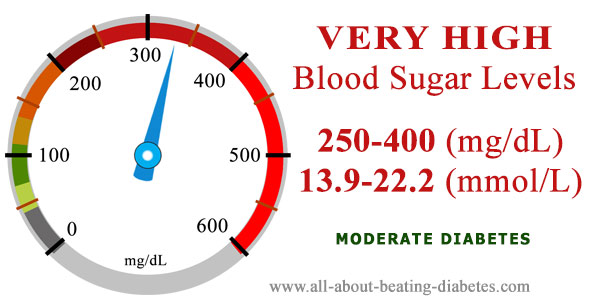
A blood sugar reading between 250 and 400 mg/dL is very high.
In mmol/L, this is about 13.9 to 22.2 mmol/L.
This level does not automatically tell you the type or severity of diabetes, but it does mean you should take the result seriously.
If your blood sugar is in this range:
- Wash your hands and check again.
- Drink water if you can and if your doctor has not restricted fluids.
- Avoid sugary drinks and extra carbohydrate until your level improves.
- Check ketones if you have type 1 diabetes, use insulin, are sick, are pregnant, take an SGLT2 inhibitor, or your doctor has told you to check ketones.
- Do not exercise if ketones are present, if you are vomiting, if you feel very unwell, or if your blood sugar is not coming down.
- Follow your personal diabetes action plan if you have one.
- Contact your doctor if the reading remains high or if you are unsure what to do.
Seek urgent medical help if you have symptoms of diabetic ketoacidosis, dehydration, confusion, chest pain, shortness of breath, vomiting, moderate or large ketones, or very high blood sugar that does not improve.
Important Medical Safety Note
This page is for education only. It cannot diagnose you, replace your doctor, or tell you how much insulin or medicine to take.
Do not change, stop, or double your diabetes medicine unless your doctor has told you to do this.
If you use insulin: follow the correction dose plan given by your diabetes care team. If you do not have a correction plan, contact your doctor for advice.
If you are not sure whether your number is too high, too low, or urgent, this guide may help you understand warning signs: Is My Blood Sugar Too High or Too Low?
Seek Urgent Medical Help Now
Seek urgent medical help now if you have:
- Moderate or large ketones
- Vomiting or inability to keep fluids down
- Severe thirst or signs of dehydration
- Fruity-smelling breath
- Deep or difficult breathing
- Confusion, extreme sleepiness, fainting, or loss of consciousness
- Severe weakness
- Chest pain
- Severe abdominal pain
- Pregnancy with very high blood sugar
- A blood sugar reading around 400 mg/dL or higher
- Blood sugar over 300 mg/dL that stays high despite following your medical plan
- Symptoms of diabetic ketoacidosis or hyperosmolar hyperglycemic state
Do not wait at home if these symptoms are present. These can be signs of a medical emergency.
What Does a Blood Sugar Level of 250–400 mg/dL Mean?
A blood sugar level of 250–400 mg/dL means there is too much glucose in the blood. This is called hyperglycemia.
For many adults with diabetes, common treatment goals are much lower than these levels. Many diabetes care plans aim for fasting or before-meal glucose near 80–130 mg/dL and less than 180 mg/dL about two hours after meals, although your personal target may be different.
So, a reading of 250–400 mg/dL is not a small change. It needs attention.
To understand what is usually considered a normal or expected glucose reading, you may also read: Normal Blood Glucose Reading.
However, one reading alone does not explain the whole situation. Your doctor will consider:
- Whether you already have diabetes
- Whether you have type 1, type 2, gestational diabetes, or another form of diabetes
- Whether the reading was fasting, after a meal, during illness, or after missed medication
- Whether you have symptoms
- Whether ketones are present
- Whether you use insulin
- Whether you are pregnant
- Whether you take medicines that may raise blood sugar
- Whether this is a one-time reading or a repeated pattern
A reading in this range may happen because of missed insulin, too much carbohydrate, infection, stress, dehydration, steroid medicine, pump failure, or diabetes that needs treatment adjustment.
For a broader comparison of fasting, before-meal, after-meal, bedtime, and overnight glucose targets, see our guide: Blood Sugar Levels by Time of Day.
What 250–400 mg/dL Means in mmol/L
Blood sugar can be measured in mg/dL or mmol/L. The table below shows the approximate mmol/L equivalents for very high blood sugar readings between 250 and 400 mg/dL.
If your glucose meter uses mmol/L instead of mg/dL, you can use our simple conversion guide here: Convert mmol/L to mg/dL.
Blood Sugar Conversion Table: 250–400 mg/dL to mmol/L
To convert mg/dL to mmol/L, divide by 18. To convert mmol/L to mg/dL, multiply by 18. These values are approximate and should be interpreted together with your symptoms and your doctor’s advice.
Is Blood Sugar of 250–400 mg/dL Dangerous?
It can be dangerous, especially if it stays high, keeps rising, or happens together with symptoms.
The main short-term risks are:
- Dehydration
- Ketone buildup
- Diabetic ketoacidosis, also called DKA
- Hyperosmolar hyperglycemic state, also called HHS
- Worsening infection or illness
- Confusion, weakness, or medical emergency in severe cases
DKA is more common in type 1 diabetes, but people with type 2 diabetes can also develop it, especially during illness, severe stress, missed insulin, dehydration, or with certain medications.
HHS is more common in type 2 diabetes, especially in older adults or people who become very dehydrated. It often occurs with extremely high glucose, but the risk rises when high blood sugar is ignored.
What Should You Do If Your Blood Sugar Is it 250–400 mg/dL?
If your blood sugar is between 250 and 400 mg/dL, take a calm but careful step-by-step approach. First, confirm the reading, look for possible causes, drink water if it is safe for you, check ketones when needed, and follow your personal diabetes action plan. Very high blood sugar can become serious, especially if ketones, vomiting, dehydration, pregnancy, or symptoms of diabetic ketoacidosis are present.
1. Wash your hands and check again
Sugar, fruit, juice, or food residue on your fingers can make a reading look falsely high. Wash your hands with soap and water, dry them well, and repeat the test.
If you use a continuous glucose monitor, confirm a very high reading with a finger-stick test if your symptoms do not match the sensor result or if the result will guide treatment decisions.
2. Think about timing
Ask yourself:
- Was this before breakfast?
- Was it after a large meal?
- Did I miss insulin or diabetes medicine?
- Am I sick, feverish, or infected?
- Did I take steroids or another new medicine?
- Did my insulin pump or injection pen work properly?
- Did I drink enough water today?
- Have I been under unusual stress?
A high reading after a meal may come down, but 250–400 mg/dL is still higher than expected and should be monitored carefully.
3. Drink water if you can
If you are able to drink safely, water may help prevent dehydration.
Avoid:
- Regular soda
- Fruit juice
- Sweet tea
- Energy drinks
- Sugary coffee drinks
- Large carbohydrate snacks
Do not force fluids if you are vomiting, confused, very short of breath, or unable to swallow safely. In that situation, seek urgent medical help.
4. Check ketones when needed
You should check ketones if:
- You have type 1 diabetes
- You use insulin
- You are sick
- Your blood sugar is 250 mg/dL or higher
- You are pregnant
- You have nausea, vomiting, abdominal pain, fruity breath, or deep breathing
- You use an SGLT2 inhibitor medicine
- Your doctor has told you to check ketones at certain glucose levels
Ketones can be checked with urine strips or a blood ketone meter.
If ketones you should not wait to see what happenswait and see” situation. Contact your doctor urgently or seek emergency care.
5. Do not exercise if ketones are present
Light activity can sometimes help lower blood sugar, but it is not safe for everyone.
Do not exercise if:
- Ketones are present
- You are vomiting
- You have abdominal pain
- You feel very weak or confused
- You are dehydrated
- You have chest pain or shortness of breath
- Your blood sugar is very high and not coming down
- You suspect missed insulin or insulin pump failure
Exercising with ketones can make blood sugar rise higher and may worsen the situation.
6. Follow your personal diabetes action plan
If your doctor has given you a correction insulin plan, a sick-day plan, or a pump troubleshooting plan, follow it exactly.
- Do not guess insulin doses from the internet.
- Do not take extra insulin unless you have been taught how to do it safely.
- Do not take someone else’s diabetes medicine.
- Do not stop prescribed medicines on your own.
If you are not sure what to do, contact your diabetes care team.
When To Call Your Doctor
High blood sugar is common in diabetes, but it should not be ignored when it happens repeatedly or does not improve with your usual care plan. The signs below can help you know when it is safer to contact your doctor or diabetes care team.
Call your doctor or diabetes care team if:
- Your blood sugar is repeatedly above your target.
- Your blood sugar is 250 mg/dL or higher more than once.
- Your blood sugar remains high after following your diabetes plan.
- You have mild ketones.
- You are sick with fever, infection, diarrhea, or vomiting.
- You are eating less but your blood sugar is high.
- You missed insulin or diabetes medicine.
- You suspect your insulin pump, pen, or injection site is not working.
- You recently started steroids or another medicine that may raise blood sugar.
- You are having frequent high readings in the morning.
- You are pregnant or planning pregnancy.
- You do not have a written sick-day or correction plan.
Doctor’s note: Repeated high blood sugar readings may mean your diabetes plan needs adjustment. Do not change your medication dose on your own unless your doctor has already given you a clear written plan.
When To Seek Urgent Medical Help
Very high blood sugar can sometimes become dangerous, especially when it is linked with ketones, dehydration, vomiting, breathing changes, or confusion. The warning signs below mean you should not wait at home.
Seek urgent medical help now if you have:
- Blood sugar around 400 mg/dL or higher.
- Blood sugar over 300 mg/dL that does not improve according to your diabetes plan.
- Moderate or large ketones.
- Vomiting or inability to keep fluids down.
- Severe thirst, dry mouth, dizziness, or signs of dehydration.
- Fruity-smelling breath.
- Fast, deep, or difficult breathing.
- Severe abdominal pain.
- Confusion, fainting, extreme sleepiness, or loss of consciousness.
- Chest pain.
- Sudden weakness, speech trouble, facial drooping, or vision loss.
- Pregnancy with very high blood sugar.
- A child with diabetes and very high blood sugar.
- Very high blood sugar after missed insulin or suspected insulin pump failure.
These signs may suggest diabetic ketoacidosis, severe dehydration, hyperosmolar hyperglycemic state, heart attack, stroke, or another emergency.
Common Symptoms of Blood Sugar 250–400 mg/dL
Some people feel symptoms clearly. Others, especially people with long-standing type 2 diabetes, may have very high readings without strong symptoms.
Possible symptoms include:
- Frequent urination
- Strong thirst
- Dry mouth
- Blurred vision
- Tiredness
- Weakness
- Headache
- Difficulty concentrating
- Nausea
- Abdominal discomfort
- Slow healing
- More frequent infections
- Unexplained weight loss if high blood sugar continues
More serious warning symptoms include:
- Vomiting
- Fruity-smelling breath
- Deep breathing
- Confusion
- Severe dehydration
- Severe abdominal pain
- Loss of consciousness
Why Blood Sugar Can Rise to 250–400 mg/dL
High blood sugar can happen for many reasons. The most common include:
- Missed diabetes medicine
- Not enough insulin
- Insulin dose not matching food intake
- Eating more carbohydrate than planned
- Sugary drinks
- Illness or infection
- Fever
- Stress hormones
- Pain or injury
- Steroid medicines such as prednisone
- Some diuretics and other medicines
- Dehydration
- Insulin pump blockage or infusion site failure
- Expired insulin or insulin exposed to heat
- Incorrect injection technique
- Dawn phenomenon in the early morning
- Progression of type 2 diabetes
- Pregnancy-related insulin resistance
This is why repeated readings in this range should be discussed with a doctor. The solution depends on the cause.
Can a Person Without Diabetes Have a Reading of 250–400 mg/dL?
Yes, it is possible, but it should be taken seriously.
A person without a known diagnosis of diabetes may have a very high reading because of:
- Undiagnosed diabetes
- Severe stress or illness
- Steroid medicine
- Pancreatic disease
- Certain hormonal conditions
- Laboratory or meter error
If you do not have diabetes and your glucose is 250 mg/dL or higher, contact a doctor promptly. If you have symptoms such as vomiting, dehydration, confusion, fruity breath, or difficulty breathing, seek urgent care.
Can Blood Sugar 250–400 mg/dL Happen After Eating?
Yes. A high reading may happen after a large meal, especially one high in refined carbohydrates or sugary drinks. But a post-meal reading of 250–400 mg/dL is still high.
It may mean:
- The meal contained more carbohydrate than your body or medication could manage
- Your diabetes treatment needs adjustment
- You missed medication
- You were less active than usual
- You are sick or stressed
- Your insulin timing or dose needs review
Do not judge yourself from one number. Use the number as information. Write down what you ate, when you tested, what medicines you took, and how you felt. This helps your doctor adjust your plan safely.
Should You Take Extra Insulin?
Only use a correction dose if your doctor has already given you a clear written correction plan.
A correction dose is an additional insulin dose used to help bring high blood sugar back toward your target range. The dose should be based on your personal insulin sensitivity, current glucose level, active insulin still working in your body, recent food intake, illness, hydration status, ketone results, and overall safety risk.
Taking too much insulin can cause serious low blood sugar, including confusion, fainting, seizures, or loss of consciousness.
- Do not copy insulin doses from another person.
- Do not use online advice to decide your insulin dose.
- Do not take repeated correction doses too close together unless your doctor has taught you how to avoid insulin stacking.
If you use insulin and your blood sugar is between 250 and 400 mg/dL, follow your written diabetes plan. If you do not have a correction-dose or sick-day plan, contact your doctor or diabetes care team and ask them to create one for you.
Should You Stop a Medicine That May Be Raising Blood Sugar?
No. Do not stop any prescribed medicine without medical advice.
Some medicines can raise blood sugar, including corticosteroids such as prednisone, some diuretics, certain psychiatric medicines, and other treatments. However, stopping these medicines suddenly can be unsafe and may worsen the condition they were prescribed to treat.
If you think a medicine is raising your blood sugar:
- Do not stop the medicine on your own.
- Write down the medicine name, dose, and the date you started taking it.
- Check your blood sugar more often if your doctor has advised you to do so.
- Contact your doctor or diabetes care team to ask whether your diabetes treatment needs a temporary adjustment.
What About SGLT2 Inhibitors?
SGLT2 inhibitors are diabetes medicines that may also be used for heart or kidney protection in some patients. Examples include medicines such as empagliflozin, dapagliflozin, and canagliflozin.
These medicines can rarely be linked with diabetic ketoacidosis, sometimes even when blood sugar is not extremely high.
If you take an SGLT2 inhibitor and you have vomiting, abdominal pain, fruity breath, deep breathing, dehydration, or feel very unwell, check ketones if available and seek medical advice urgently.
Do not stop or restart this medicine without your doctor’s guidance.
What If the Reading Is 250–299 mg/dL?
A reading of 250–299 mg/dL is very high.
You should:
- Recheck the reading
- Drink water if safe
- Review missed medicine, meals, illness, and stress
- Check ketones if you are sick, use insulin, have type 1 diabetes, are pregnant, or were told to do so
- Avoid exercise if ketones are present
- Follow your diabetes action plan
- Contact your doctor if it happens repeatedly or does not improve
What If the Reading Is 300–399 mg/dL?
A reading of 300–399 mg/dL is very high and may become dangerous, especially if it continues.
You should:
- Recheck with clean hands
- Check ketones if appropriate
- Drink water if safe
- Avoid exercise if ketones are present or if you feel unwell
- Follow your correction plan if you have one
- Contact your doctor if it remains high or if you do not know what to do
Emergency note: Seek urgent medical help if you have vomiting, moderate or large ketones, dehydration, fruity-smelling breath, breathing difficulty, confusion, severe weakness, chest pain, pregnancy, or symptoms that are getting worse.
What If the Reading Is 400 mg/dL?
A reading around 400 mg/dL is a high-risk reading. Do not ignore it.
Recheck with clean hands. If it is still around 400 mg/dL, follow your emergency or sick-day plan and contact urgent medical care, especially if you have symptoms or ketones.
If you feel very unwell, have vomiting, confusion, dehydration, shortness of breath, chest pain, or moderate or large ketones, seek emergency care now.
Blood Sugar 250–400 mg/dL in Children
Children with diabetes can become dehydrated or develop ketones faster than adults.
If a child has blood sugar 250 mg/dL or higher, follow the child’s diabetes sick-day plan and check ketones as advised by the diabetes team.
Emergency note: Seek urgent medical help if the child has:
- Vomiting.
- Moderate or large ketones.
- Fast or deep breathing.
- Fruity-smelling breath.
- Severe tiredness.
- Confusion.
- Signs of dehydration.
- Blood sugar that remains very high.
- Suspected missed insulin or insulin pump failure.
Do not delay care in a child with high blood sugar and ketones.
Blood Sugar 250–400 mg/dL During Pregnancy
Very high blood sugar during pregnancy needs prompt medical advice.
If you are pregnant and your blood sugar is in this range, contact your pregnancy or diabetes care team. Do not wait several days to see if it improves.
Emergency note: Seek urgent medical help if you have vomiting, ketones, dehydration, abdominal pain, difficulty breathing, reduced fetal movement, or if you feel very unwell.
How To Prevent Repeated Readings of 250–400 mg/dL
Prevention depends on the reason your glucose is rising. Helpful steps may include as in the following:
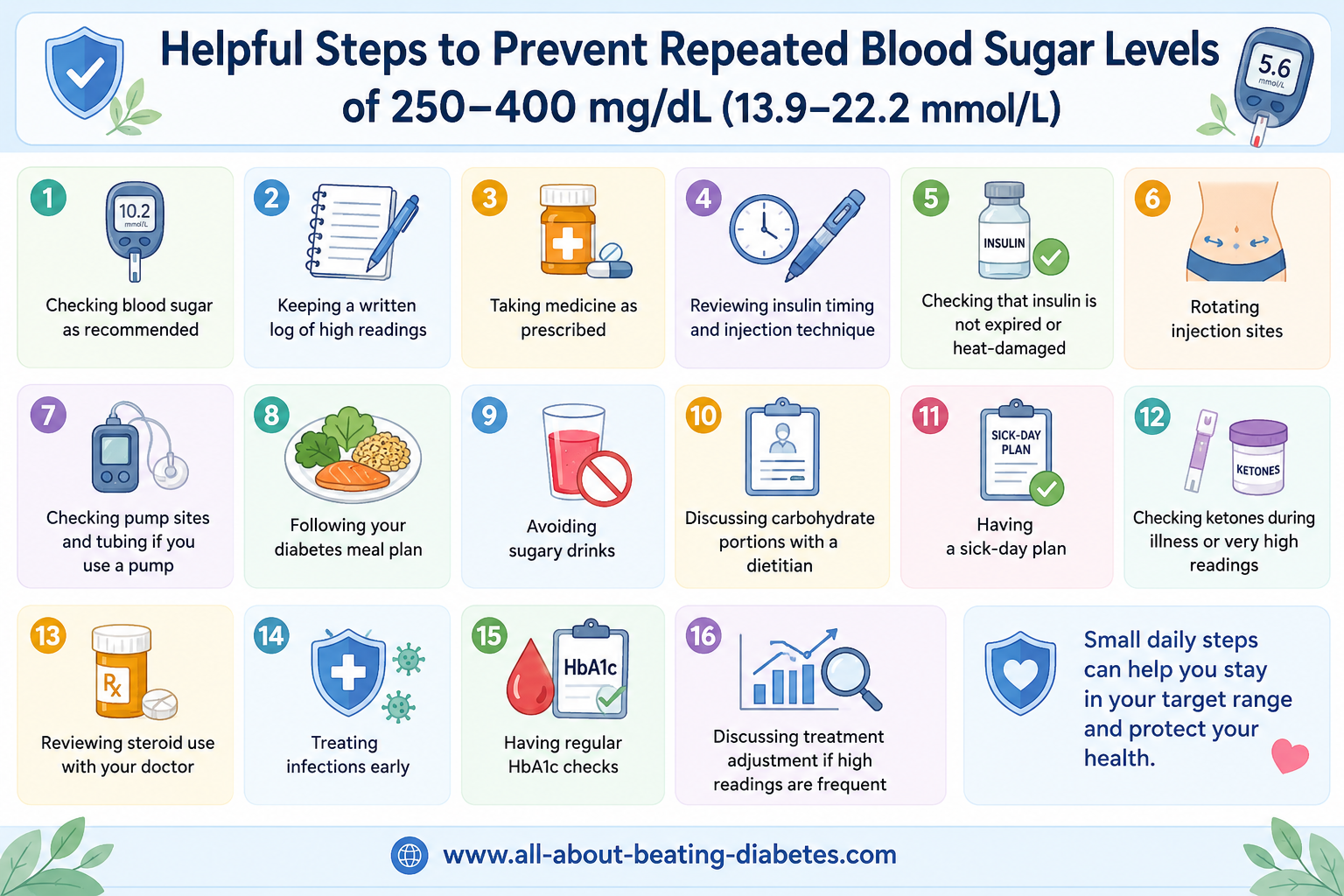


Do not blame yourself. High blood sugar is information. It tells you and your doctor that the plan may need adjustment.
One high reading is important, but your HbA1c gives a better picture of your average blood sugar over the past 2–3 months. You can estimate this using our HbA1c to Average Glucose Calculator.
What To Write Down Before Calling Your Doctor
Before contacting your doctor or diabetes care team, write down the following information:
- Your blood sugar readings and the time each reading was taken.
- Whether the readings were fasting, before meals, after meals, or at bedtime.
- What you ate or drank recently.
- Your diabetes medicines, doses, and when you last took them.
- Whether you missed any diabetes medicine or insulin.
- Whether you used insulin, including the type, dose, and time taken.
- Your ketone result, if checked: negative, small, moderate, or large.
- Any symptoms you are having, such as thirst, frequent urination, nausea, vomiting, abdominal pain, weakness, dizziness, or breathing changes.
- Whether you are sick, feverish, dehydrated, or have signs of infection.
- Any new medicines you recently started, especially steroids.
- Whether you are pregnant.
- Whether you use an insulin pump, CGM, or both, and whether there may be a device, site, sensor, or tubing problem.
This information helps your doctor give safer advice.
Patient-Friendly Summary
If your blood sugar is between 250 and 400 mg/dL, please do not panic, but also do not ignore it.
First, confirm the number. Then look at your symptoms. If you use insulin, are sick, are pregnant, or feel unwell, ketone testing is very important.
Water, careful monitoring, and following your personal diabetes plan may help in some situations. But vomiting, ketones, dehydration, fruity breath, breathing problems, confusion, chest pain, or a reading that stays very high need urgent medical help.
The safest message is this: high blood sugar is not a failure. It is a signal. Your body is asking for attention, and your diabetes plan may need review.
Frequently Asked Questions
Is 250 mg/dL blood sugar dangerous?
Is 250 mg/dL blood sugar dangerous?
Yes, 250 mg/dL is high. It may not always be an emergency, but it needs attention. If you are sick, use insulin, have type 1 diabetes, are pregnant, or have symptoms, check ketones and contact your doctor if you are unsure.
Is 300 mg/dL blood sugar an emergency?
Is 300 mg/dL blood sugar an emergency?
It can become an emergency, especially if it stays high or comes with symptoms. Seek urgent help if you have vomiting, ketones, dehydration, fruity breath, shortness of breath, confusion, chest pain, severe weakness, or if your blood sugar does not improve according to your medical plan.
Is 400 mg/dL blood sugar dangerous?
Is 400 mg/dL blood sugar dangerous?
Yes. A reading around 400 mg/dL is high risk. Recheck with clean hands. If it remains around 400 mg/dL, follow your emergency plan and seek urgent medical advice, especially if symptoms or ketones are present.
Should I exercise if my blood sugar is 250–400 mg/dL?
Should I exercise if my blood sugar is 250–400 mg/dL?
Not until you know whether ketones are present. If your blood sugar is above 240 mg/dL, ketone testing is recommended before exercise. Do not exercise if ketones are present or if you feel unwell.
Should I drink water when blood sugar is high?
Should I drink water when blood sugar is high?
If you can drink safely and your doctor has not restricted your fluids, water can help reduce dehydration risk. Do not use sugary drinks. If you are vomiting or cannot keep fluids down, seek urgent medical help.
Can stress raise blood sugar to 250–400 mg/dL?
Can stress raise blood sugar to 250–400 mg/dL?
Yes. Illness, emotional stress, pain, infection, poor sleep, and some medicines can raise blood sugar. But readings in this range still need monitoring and medical review if repeated.
Can steroids raise blood sugar this high?
Can steroids raise blood sugar this high?
Yes. Steroid medicines can raise blood sugar significantly in some people. Do not stop steroids suddenly. Contact your doctor because your diabetes plan may need temporary adjustment.
What is 250–400 mg/dL in mmol/L?
What is 250–400 mg/dL in mmol/L?
250–400 mg/dL is about 13.9–22.2 mmol/L.
Related Pages
- Blood Sugar Levels by Time of Day
- Is My Blood Sugar Too High or Too Low
- Convert mmol/L to mg/dL
- Normal Blood Glucose Reading
- HbA1c to Average Glucose Calculator
References:
- American Diabetes Association. Hyperglycemia: High Blood Glucose.
- Centers for Disease Control and Prevention. Diabetic Ketoacidosis.
- Mayo Clinic. Hyperglycemia in Diabetes: Symptoms, Causes, Diagnosis, and Treatment.
- American Diabetes Association. Standards of Care in Diabetes—2026.
- High sugar during exercise
- Dangerous diabetes blood sugar levels
- Challenges and perspectives in continuous glucose monitoring.
- Professional flash continuous glucose monitoring as a supplement to A1C in primary care.