Blood glucose level of 40mg/dl, what method of treatment is suggested?
Question: Blood glucose level of 40 mg/dL—what method of treatment is suggested?
Quick Answer
A blood glucose level of 40 mg/dL, or about 2.2 mmol/L, is dangerously low and needs immediate treatment. If you are awake and can swallow safely, take 15–20 grams of fast-acting glucose, wait 15 minutes, and check again. Repeat if the level is still below 70 mg/dL. If you are confused, unable to swallow, having a seizure, or unconscious, someone should give glucagon and call emergency services. Do not give food or drink to an unconscious person.
Answer by Dr. Albana Greca, MD, MMedSc
Hello,
A reading of 40 mg/dL is not a mild low. It is below the 54 mg/dL threshold used to identify clinically significant hypoglycemia. At this level, thinking, coordination, vision, and the ability to treat yourself may become impaired.
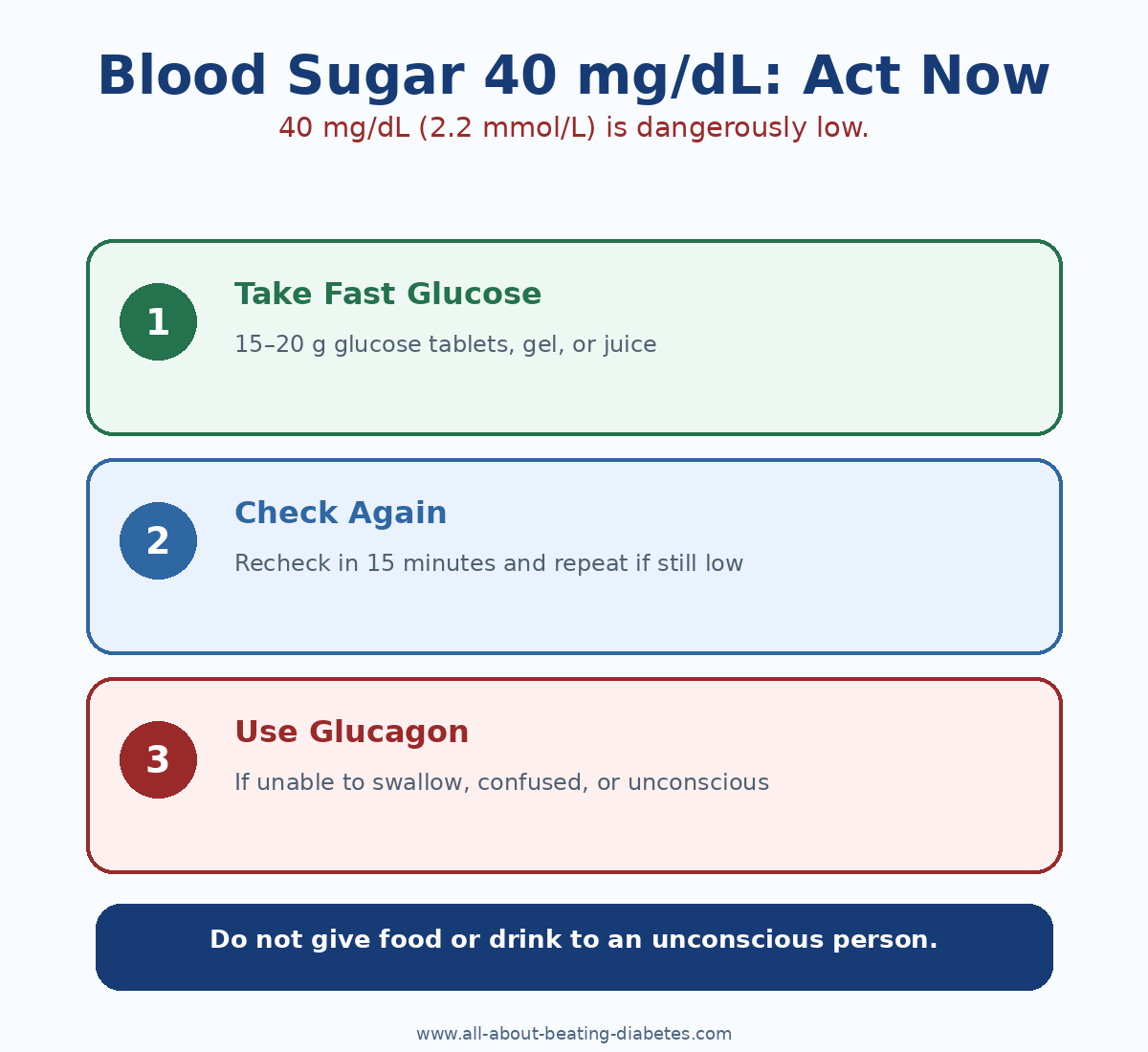

What to Do Immediately
If you are awake and can swallow safely
- Take 15–20 grams of fast-acting carbohydrate.
- Wait 15 minutes.
- Check your glucose again.
- Repeat if it remains below 70 mg/dL.
Good choices include glucose tablets, glucose gel, about 4 ounces of regular juice or soda, or one tablespoon of sugar or honey. Check the package because tablet and candy sizes differ.
Do not use chocolate as the first treatment. Its fat can slow glucose absorption. If you take acarbose or miglitol, use pure glucose or dextrose rather than table sugar.
When to Use Glucagon and Call Emergency Services
Use glucagon if the person cannot swallow safely, is very confused, is having a seizure, is unconscious, or is not improving with oral glucose. Place the person on their side because glucagon may cause vomiting, call emergency services, and stay with them.
Important Emergency Rule
Never put food, drink, honey, or candy into the mouth of someone who is unconscious, having a seizure, or unable to swallow safely. This can cause choking.
After the Glucose Improves
Once your glucose is above 70 mg/dL and you are thinking clearly:
- Eat your planned meal if it is due soon.
- If the next meal is not soon, follow your care plan for a small snack.
- Continue checking because the glucose can fall again.
- Do not drive, exercise, or operate machinery until you have fully recovered.
A low caused by long-acting insulin or a sulfonylurea may return for several hours. Severe, repeated, or prolonged lows need urgent medical assessment.
Why Might Blood Sugar Fall to 40 mg/dL?
Common causes include:
- Too much insulin or a sulfonylurea
- A delayed or skipped meal
- Eating fewer carbohydrates than expected
- More exercise than usual
- Alcohol, especially without food
- Vomiting, diarrhea, or poor appetite
- Weight loss without medication adjustment
- Kidney or liver impairment
- An insulin-pump or insulin-selection error
Do not simply eat extra sweets every day to cover repeated lows. The cause should be corrected. If you use insulin or a medicine that can cause hypoglycemia, contact your diabetes team promptly for a dose and timing review. Do not make a permanent dose change on your own unless your written plan tells you to do so.
Read our insulin side-effects guide or sulfonylurea safety guide if either treatment may be involved.
What if You Do Not Have Diabetes?
A meter can occasionally give an inaccurate result, but at 40 mg/dL you should treat first rather than delay. After treatment, wash and dry your hands and check again with a new strip.
If you are not taking insulin or a glucose-lowering medicine, a confirmed reading of 40 mg/dL needs prompt medical evaluation. Possible causes include prolonged fasting, alcohol, severe illness, liver or kidney disease, hormone deficiency, malnutrition, previous stomach surgery, or—rarely—excess insulin production.
When to Get Same-Day Medical Advice
Please seek same-day advice if this was your first unexplained low, the glucose stays low or falls again, you took too much medicine, the low occurred overnight or while driving, you are pregnant, you have kidney or liver disease, or you needed another person’s help.
How to Prepare for Another Low
- Carry glucose tablets or glucose gel.
- Keep fast glucose beside your bed.
- Ask whether you should have ready-to-use glucagon.
- Teach family or coworkers how to use glucagon.
- Record the reading, time, food, activity, alcohol, and medicine dose.
Doctor’s Note
At 40 mg/dL, I advise you to treat first and investigate second. Once you are safe, we need to understand why the low happened. Repeatedly eating sweets without reviewing insulin, medicines, meals, activity, alcohol, and kidney function can hide the problem rather than solve it.
Educational safety note: This answer provides general emergency guidance. Follow your personal hypoglycemia plan when it differs, especially for a child, pregnancy, an insulin pump, or automated insulin delivery.
Related Questions
- Why Are My Glucose Levels Between 30 and 50 mg/dL?
- When Does Low Blood Sugar Need Emergency Care?
- Why Is My Blood Sugar Low in the Morning?
Related Resources
- Is My Blood Sugar Too High or Too Low?
- Dangerous Blood Sugar Levels
- Insulin Side Effects
- Sulfonylurea Side Effects
Last reviewed: July 2026
Click here to post comments or follow up
Ask the Doctor now? Simply click here to return to Diabetes Test and Levels.