Sweet Potato Glycemic Index?
by Addisson
Question
I am used to eat sweet potato and I love it. Five years ago, diagnosed with type 2 diabetes, and my doctor advised to stop eating sugary foods. I love sweet potato, but I don't know its glycemic index and if I can still eat?
Another thing: What has more sugar, white or yellow sweet potato? What about baked potato glycemic index? Do they have any difference?
Could you provide any diabetic sweet potato recipe?
Thank you!
—Addisson
Quick Answer
Yes, Addisson—you can usually include sweet potato in a diabetes eating plan. It is a starchy carbohydrate, so the portion, cooking method, and foods eaten with it matter more than calling it simply “good” or “bad.”
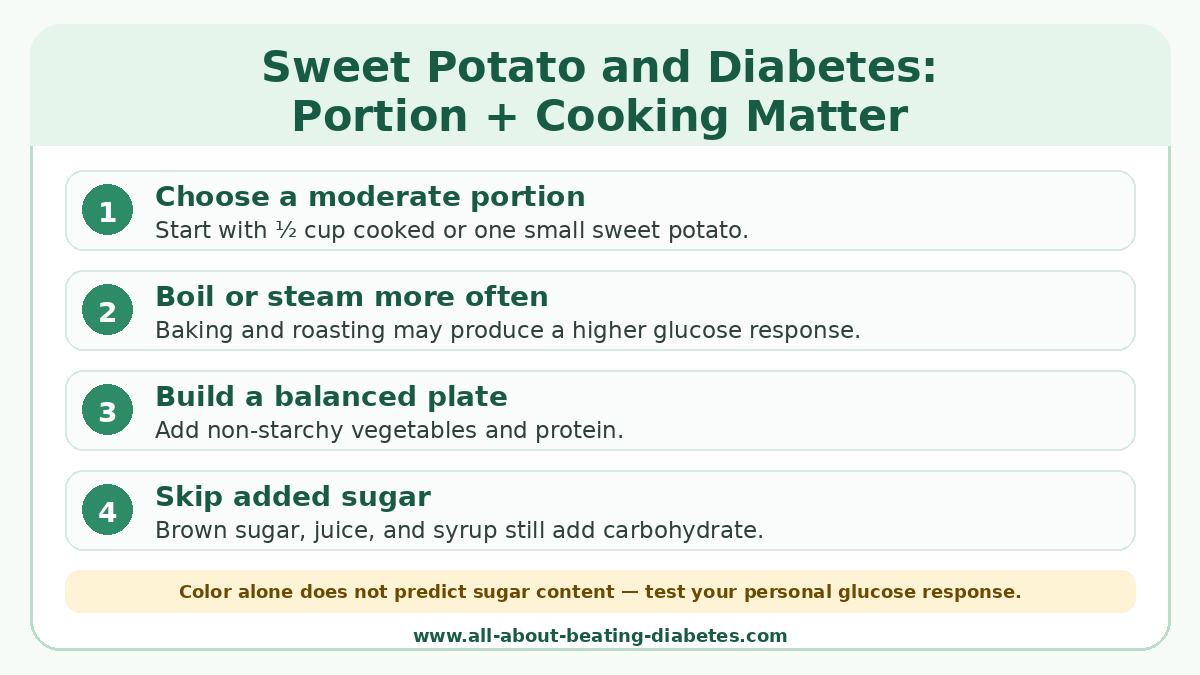
Sweet potato has no single glycemic-index value; results range from low to high by variety and preparation. Boiling commonly produces a lower glucose response than baking or roasting. A practical starting portion is about ½ cup cooked or one small sweet potato, eaten with non-starchy vegetables and protein.
Answer by Dr. Albana Greca, MD, MMedSc
Hello Addisson,
I often explain to my patients that having diabetes does not mean every naturally sweet food must disappear from the plate. Sweet potato contains carbohydrate and can raise blood glucose, but it also provides fiber, potassium, and useful plant nutrients. The goal is to choose a suitable portion and see how your own glucose responds.
What Is the Glycemic Index of Sweet Potato?
A single GI value of 54 is too definite. In one controlled study of ten sweet-potato cultivars, GI ranged from approximately 41 to 94. Boiled samples were generally lowest, while baked and roasted samples were highest. Other testing also shows that variety can change the result.
| Preparation | Likely glucose effect | Practical advice |
|---|---|---|
| Boiled | Often lower GI than baked or roasted | Boil until just tender; avoid turning it into a large, very soft mash. |
| Baked or roasted | May have a higher GI because starch becomes easier to digest | Use a smaller portion and combine it with vegetables and protein. |
| Mashed | Can be absorbed faster, especially when very soft | Avoid added sugar, syrup, juice concentrate, or marshmallows. |
GI measures the speed of the glucose rise under test conditions, not fully the amount eaten. For daily decisions, total carbohydrate and glycemic load are often more useful. Our guide to carbohydrates, GI, and blood sugar explains this difference.
White, Yellow, Orange, or Purple: Which Has More Sugar?
Flesh color alone cannot reliably tell you which sweet potato contains the most sugar. Sugar and starch vary by cultivar, maturity, storage, and cooking, so I would not choose only by color.
- Orange flesh is usually richer in beta-carotene, which the body can convert to vitamin A.
- Purple flesh contains anthocyanin pigments.
- White or yellow flesh may differ in texture, starch, and sweetness, but is not automatically lower in carbohydrate.
Choose the type you enjoy, keep the serving moderate, and judge it by your glucose response rather than color alone.
What About Regular Baked Potato?
Regular white potato also has no single GI value; variety, cooking, cooling, and processing matter. Baked russet and instant mashed potatoes often test in the high-GI range, while some cooled or reheated preparations may produce a lower response.
This does not mean sweet potato is unlimited or white potato is forbidden. A small serving in a balanced meal may work better than a large potato eaten alone.
How to Eat Sweet Potato More Safely
- Begin with about ½ cup cooked cubes or one small sweet potato.
- Fill half the plate with non-starchy vegetables.
- Add protein such as fish, chicken, eggs, tofu, lentils, or plain Greek yogurt.
- Use olive oil, herbs, pepper, garlic, paprika, or a little cinnamon instead of added sugar.
- Do not add brown sugar because it is not meaningfully safer than white sugar for diabetes.
- If you monitor at home, compare your glucose before and about two hours after the start of the meal.
Diabetes-Friendly Savory Sweet Potato Bowl
One serving
Ingredients:
- ½ cup cooked sweet-potato cubes
- 1–2 cups spinach, broccoli, peppers, or mixed non-starchy vegetables
- ½ cup chickpeas or 90–120 g grilled chicken, fish, or tofu
- 1 teaspoon olive oil
- Lemon juice, garlic, paprika, black pepper, and fresh herbs
Method: Boil or steam the sweet-potato cubes until just tender. Sauté or steam the vegetables. Add the protein, olive oil, lemon, and seasonings. Serve the sweet potato as the quarter-plate carbohydrate not the main volume of the meal.
This replaces orange juice, apple-juice concentrate, and brown sugar, which add unnecessary rapidly available carbohydrate.
Check Your Personal Response
People may respond differently to the same serving. Keep the meal similar on two occasions and check glucose before eating and two hours after the meal begins. If the rise is repeatedly above your agreed target, reduce the portion or review the meal with your diabetes clinician or dietitian. Do not change insulin or medication solely to accommodate a food without professional guidance.
Related Questions
Related Resources
- Diabetes diet, carbohydrates, and glycemic index
- Glycemic index of common foods
- How to plan a lower-glycemic-load diet
References
- ADA Standards of Care 2026: Nutrition and Health Behaviors
- Processing Method and Glycemic Index of Sweet-Potato Cultivars
- Glycemic Index of Commonly Consumed Potatoes
Educational safety note: General education only. Needs differ with insulin, kidney disease, pregnancy, gastroparesis, or hypoglycemia risk.
Click here to post comments or follow up
Ask the Doctor now? Simply click here to return to Low Glycemic Diet.