Genital itching and diabetes
Original question:
“What causes genital itching in diabetes, and how should it be handled?”
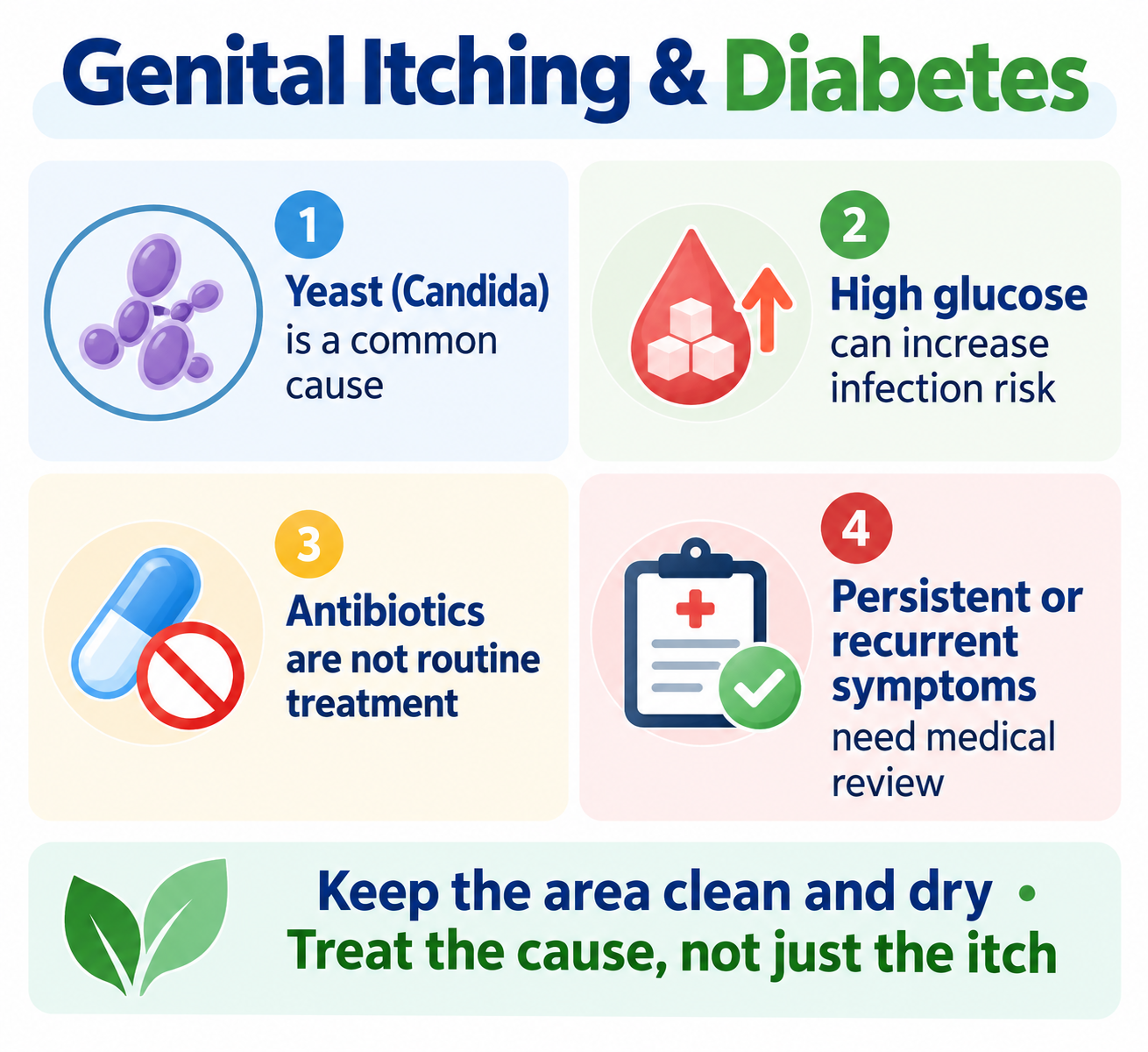
Quick Answer: Genital itching in someone with diabetes is often caused by a yeast infection such as Candida, especially when glucose is running high, but yeast is not the only possibility. Irritation, bacterial infection, dermatitis, sexually transmitted infections, vaginal dryness, balanitis, and other skin conditions can cause similar symptoms. Treatment should match the cause, so antibiotics should not be started automatically.
Written by Dr. Albana Greca, MD, MMedSc
Hi there,
I want to correct one common misunderstanding: genital itching in diabetes is not usually something I would assume is bacterial. Yeast, particularly Candida, is a frequent cause of genital itching and irritation. Diabetes can increase the risk of yeast infections, especially when blood glucose is above the person's target range.
High glucose can also lead to more glucose in the urine. Together with warmth and moisture around the genital area, this can create conditions in which yeast grows more easily. However, itching by itself does not prove that yeast is the cause, so persistent symptoms deserve proper evaluation.

What Can Cause Genital Itching in Diabetes?
The cause can differ from person to person. Common possibilities include yeast infection, irritation from soaps or fragranced products, bacterial skin infection, dermatitis, sexually transmitted infection, vaginal dryness or hormonal changes, and inflammation of the penis or foreskin such as balanitis.
People with diabetes may be more prone to fungal infections when glucose is high. Our guide to balanitis in people with diabetes explains one important cause of genital itching and inflammation in men.
Do You Need Antibiotics?
Not necessarily. Antibiotics treat bacterial infections; they do not treat yeast infections. In fact, antibiotic use can sometimes increase the risk of vaginal yeast overgrowth. If candidiasis is confirmed or strongly suspected, treatment is usually antifungal rather than antibacterial.
For women with diabetes, recurrent or severe vulvovaginal symptoms may need examination and testing because itching, soreness, burning, discharge, and redness can occur with several different conditions. This is especially important when symptoms return after treatment or do not improve.
What Can You Do at Home?
Keep the genital area gently clean and dry, change out of damp clothing, and avoid harsh soaps, perfumes, deodorant sprays, and unnecessary antiseptic products. Breathable underwear may help reduce moisture and irritation.
At the same time, work toward your individual blood glucose target. Better glucose management can reduce the conditions that favor repeated yeast infections, but glucose control alone will not treat every cause of itching.
If you use an SGLT2 inhibitor, such as empagliflozin or dapagliflozin, tell your clinician about repeated genital yeast infections because this medication class can increase that risk. Do not stop the medicine on your own.
When Should You See a Clinician?
Please arrange an examination if the itching is severe, keeps returning, lasts despite treatment, or is accompanied by unusual discharge, sores, blisters, marked redness or swelling, pain with urination, pelvic pain, penile discharge, or fever. Symptoms after a new sexual exposure should also be assessed because some sexually transmitted infections can look similar to yeast or dermatitis.
You can also compare these symptoms with our vaginal itching and pain in diabetes question page and our broader guide to diabetes complications, including skin and genital infections.
Important Safety Note: Do not repeatedly self-treat genital itching with antibiotics, steroid creams, or antifungal medicines without reassessment if symptoms persist or recur. The wrong treatment can delay diagnosis of another infection or skin condition. Pregnancy, severe pain, fever, spreading redness, ulcers, or significant swelling require prompt medical advice.
Doctor’s Note: When a patient with diabetes tells me about genital itching, I do not assume it is simply “because of diabetes.” I first think about the most likely local causes—especially yeast—but I also look for irritation, bacterial infection, balanitis, vaginal conditions, medication effects, and sexually transmitted infections. Treating the correct cause is much more effective than treating the itch alone.
Educational safety note: This information is for general education and does not replace examination, testing, diagnosis, or individualized treatment from your healthcare professional.
Related Questions
Related Resources
Last reviewed: September 2026
Click here to post comments or follow up
Ask the Doctor now? Simply click here to return to Complications from diabetes.
Diabetes & Baldness, Itching Dry Scalp
Original question:
“Can diabetes cause hair loss, baldness, dry scalp and itching? Why?”
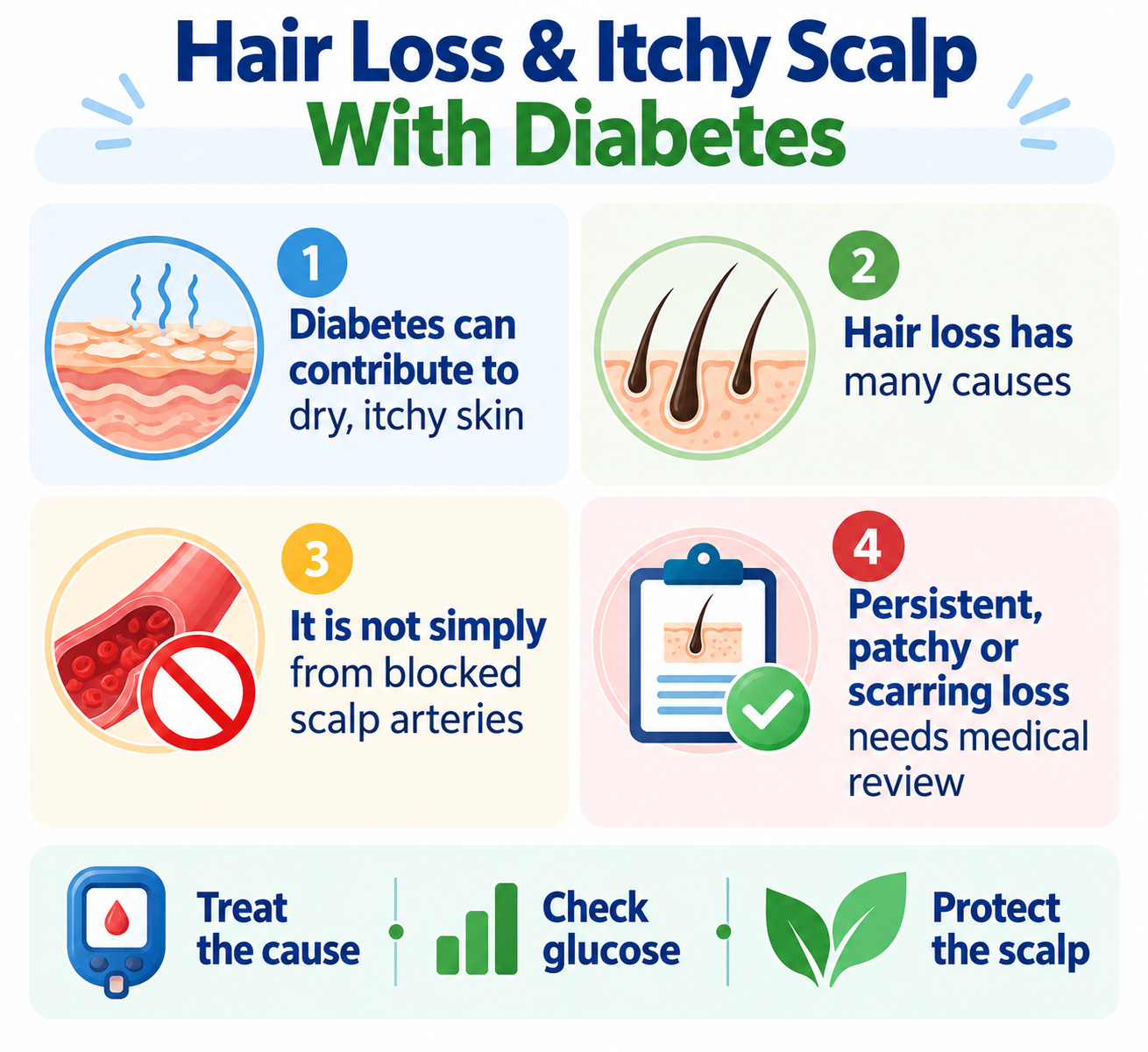
Quick Answer: Diabetes can contribute to dry or itchy skin and may indirectly be associated with some types of hair loss, especially when glucose is persistently high or when illness, rapid weight loss, thyroid disease, infection, or another medical condition is present. However, diabetes does not usually cause baldness simply because scalp arteries become blocked or because hair follicles “die.” Hair loss has many possible causes, so the pattern and the condition of the scalp matter.
Written by Dr. Albana Greca, MD, MMedSc
Hi there,
I want to clarify this because hair loss and an itchy scalp are common problems, but diabetes is only one possible part of the picture.
Diabetes can affect blood vessels, skin hydration, healing, and the body's ability to fight some infections. High glucose can also contribute to dry, itchy skin. But I would not assume that scalp hair loss means the arteries supplying the scalp are obstructed or that the follicles are dying from lack of blood.

Can Diabetes Cause Hair Loss?
There is no single condition called “diabetic baldness.” Hair loss may occur for many reasons, including hereditary pattern hair loss, thyroid disease, iron deficiency, hormonal changes, autoimmune alopecia areata, scalp inflammation, certain medicines, major illness, rapid weight loss, or nutritional problems.
Severe illness or metabolic stress can also trigger a temporary shedding pattern called telogen effluvium, sometimes appearing a few months after the illness. Our detailed guide to diabetes and hair loss explains these causes and the tests that may be useful.
Why Can the Scalp Become Dry or Itchy?
Diabetes can contribute to dry skin, particularly when glucose is running high. However, an itchy scalp is often caused by something more specific, such as dandruff or seborrheic dermatitis, eczema, psoriasis, contact irritation, or a fungal infection.
A fungal scalp infection can sometimes cause scaling, broken hairs, and patches of hair loss. Bacterial folliculitis may cause tender bumps, crusting, or pus. These conditions need different treatments, so it is better to identify the cause rather than assume every itchy scalp is a bacterial infection.
This is similar to other itching and skin problems in diabetes: glucose control is important, but the skin condition itself may still need specific treatment.
What Can You Do?
Keep your glucose as close as safely possible to your individual target, use gentle hair and scalp products, and avoid scratching or repeatedly applying strong antiseptics, steroid creams, or antifungal products without knowing the cause.
If the scalp is simply dry, a gentle fragrance-free shampoo and avoidance of very hot water may help. If you have obvious dandruff, a medicated anti-dandruff shampoo may be appropriate, but persistent symptoms should be assessed by a clinician or dermatologist.
When Should Hair Loss Be Checked?
I recommend medical review if hair loss is sudden, rapidly worsening, patchy, persistent, or accompanied by significant itching, redness, scaling, pain, crusting, sores, pus, or shiny scarred areas. Smooth round bald patches may suggest alopecia areata, while scarring hair loss needs prompt dermatology assessment because permanent follicle damage can occur in some conditions.
Your clinician may review your glucose control, medicines, recent illnesses, weight changes, nutrition, thyroid symptoms, anemia risk, and the pattern of hair loss before deciding whether blood tests or dermatology evaluation are needed.
Important Safety Note: Do not assume that hair loss is caused by diabetes alone, and do not stop diabetes medicine or start supplements, antibiotics, antifungal medicines, or steroid treatments solely because of hair shedding or scalp itching. A painful, swollen, draining, or rapidly worsening scalp should be assessed promptly.
Doctor’s Note: When a patient with diabetes comes to me with hair loss, I look first at the pattern of loss and the scalp itself. Diabetes may contribute, but hereditary hair loss, thyroid disease, nutritional deficiencies, autoimmune disease, infection, inflammation, recent illness, or weight change may be much more important. Finding the cause is what determines whether the hair is likely to regrow and which treatment is appropriate.
Educational safety note: This information is for general education and does not replace an examination, diagnosis, or individualized treatment from your healthcare professional.
Related Questions
- Diabetes and Itching Skin
- Blood Sugar Level and Itching Pruritus
- Specific Diabetes Skin Complications?
Related Resources
Last reviewed: September 2026
Click here to post comments or follow up
Ask the Doctor now? Simply click here to return to Complications from diabetes.