Can Fasting Sugar of 200 Be Controlled through Diet?
by Ashutosh
(Delhi)
Question from Ashutosh: My fasting blood sugar is 200 mg/dL. Can it be controlled through diet?
Quick Answer
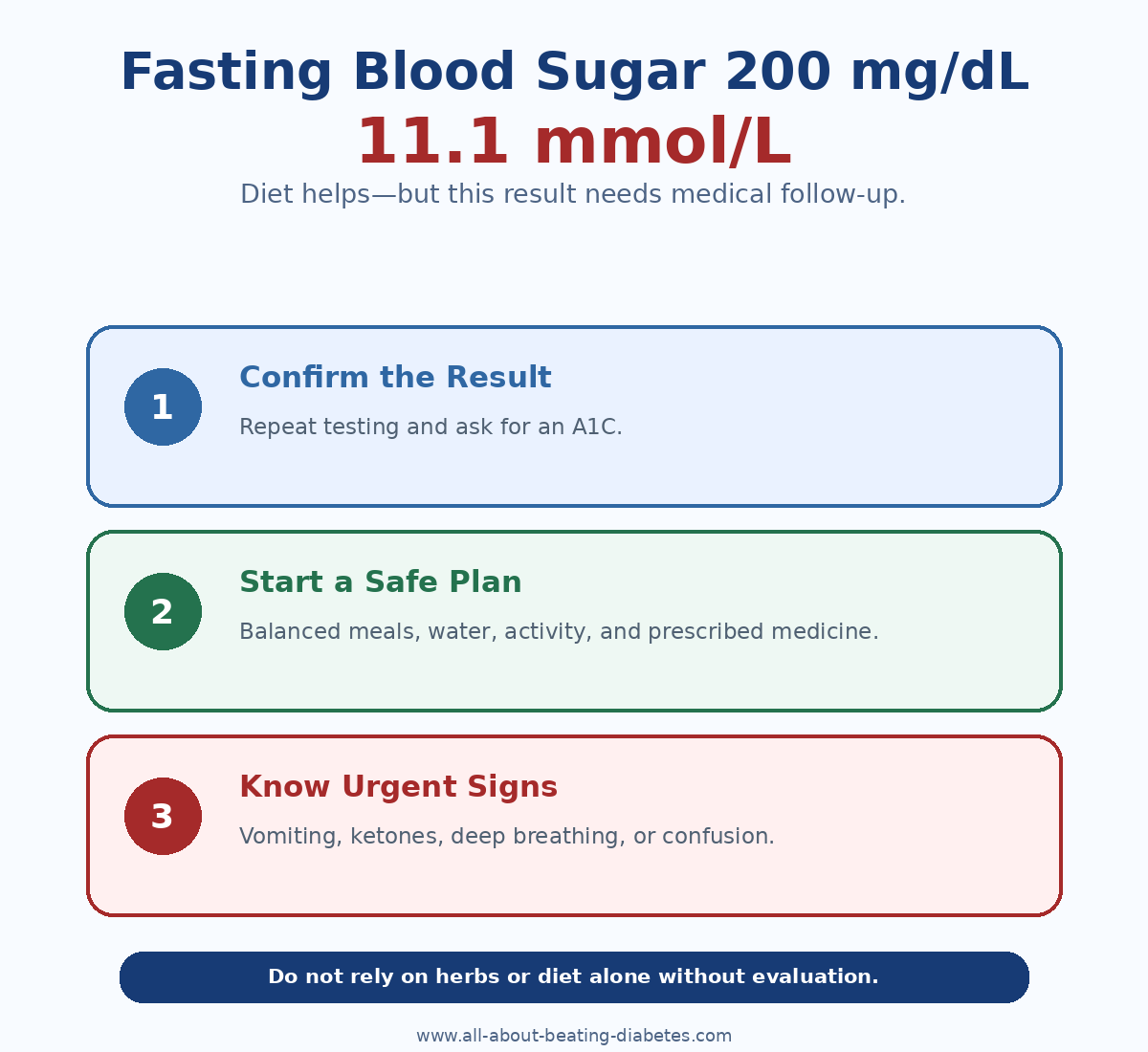
Ashutosh, a fasting blood sugar of 200 mg/dL, or about 11.1 mmol/L, is in the diabetes range and should not be managed with diet alone without medical evaluation. Healthy eating, activity, weight management, and good sleep can lower glucose substantially, but many people at this level also need medication. Please arrange a prompt appointment for repeat laboratory testing, an HbA1c test, and a treatment plan.
Answer by Dr. Albana Greca, MD, MMedSc
Dear Ashutosh,
I am glad you checked your fasting blood sugar. A fasting result of 200 mg/dL is well above the usual diabetes threshold of 126 mg/dL. One home-meter reading does not always confirm a diagnosis, but it is high enough that I would not advise waiting several weeks to see whether diet alone will fix it.

What Should You Do Next?
Please arrange a medical appointment soon—ideally within the next few days. Your clinician may recommend:
- A repeat fasting laboratory glucose
- An HbA1c test
- Kidney and liver tests
- Blood pressure and cholesterol assessment
- A review of symptoms, medicines, weight, and family history
- A treatment plan that may include medication
If you already have diabetes, a fasting level of 200 mg/dL usually means your current plan needs review.
Can Diet Lower It?
Yes, diet can make an important difference, especially if large carbohydrate portions, sugary drinks, excess calories, or weight gain are contributing. Some people with newly diagnosed type 2 diabetes improve considerably through nutrition, activity, and weight loss.
However, I cannot promise that diet alone will bring a fasting level of 200 mg/dL into a safe range. The result may reflect significant insulin resistance, reduced insulin production, illness, medication effects, or another cause. Delaying needed treatment allows high glucose to continue affecting the eyes, kidneys, nerves, blood vessels, and heart.
A Safer Eating Plan
You do not need an extreme “zero-carb” or very low-fat diet. Start with a balanced plate:
- Half: non-starchy vegetables
- One quarter: fish, eggs, chicken, tofu, beans, or another protein
- One quarter: beans, lentils, oats, whole grains, or another measured carbohydrate
- Drink: water or an unsweetened beverage
Reduce sugary drinks, sweets, large portions of white bread, refined rice, pastries, and heavily processed snacks. Whole fruit can usually fit in a sensible portion; fruit juice raises glucose more quickly.
See my diabetic meal plan provide practical meal examples.
What About Exercise?
Regular activity can improve insulin sensitivity and lower glucose. If you feel well, a gentle walk after meals is often a reasonable starting point. Build gradually rather than beginning with hard running or intense exercise.
Do not exercise to “burn off” a very high reading if you feel ill or have ketones. If glucose rises above about 240 mg/dL, especially with type 1 diabetes, illness, vomiting, or insulin deficiency, check ketones if you have been instructed to do so. Avoid vigorous exercise when ketones are present.
Should You Use Herbs?
I do not recommend relying on cinnamon, bitter melon, Gymnema, or Ayurvedic products to treat a fasting glucose of 200 mg/dL. Evidence is inconsistent, products vary in strength and purity, and some can interact with medicines or affect the liver or kidneys.
Herbs should never delay diagnosis or replace prescribed treatment.
When Medicine May Be Needed
Many people with fasting glucose around 200 mg/dL need medication in addition to lifestyle changes. The choice depends on HbA1c, symptoms, kidney and heart health, weight goals, cost, and whether type 1 diabetes is possible.
Medication is not a failure. It helps reduce glucose while healthy eating and activity improve the underlying risk factors. Read our diabetes medication comparison.
When to Seek Urgent Help
Seek urgent medical care if high glucose occurs with:
- Vomiting or inability to keep fluids down
- Abdominal pain
- Deep or rapid breathing
- Confusion, severe weakness, or unusual sleepiness
- Moderate or large ketones
- Severe dehydration
- Rapid unexplained weight loss
DKA is more likely when there is major insulin deficiency, ketones, illness, vomiting, dehydration, or the symptoms above.
What to Record Before Your Appointment
- Fasting and after-meal glucose readings
- The date and time of each test
- What you ate the evening before
- Thirst, frequent urination, blurry vision, fatigue, or weight loss
- All medicines and supplements
- Any steroid treatment or recent illness
Doctor’s Note
Ashutosh, I would begin healthy food changes today, but I would not wait for diet alone to prove whether treatment is needed. A fasting glucose of 200 mg/dL deserves confirmation and a complete plan. Early treatment can protect your health and may reduce the amount of medication you need later.
Educational safety note: Do not start, stop, or change diabetes medicine based only on this answer. A laboratory test and individualized medical assessment are needed.
Related Questions
- Does Fasting Blood Sugar 152 mg/dL Mean Diabetes?
- Why Is Fasting Glucose High but the Two-Hour Reading Normal?
- Can Type 2 Diabetes Be Controlled Naturally With Diet?
Related Resources
- Fasting Blood Sugar 127–200 mg/dL
- Best Diabetes Diet
- Dangerous Blood Sugar Levels
- Diabetes Medicines: Benefits and Side Effects
Last reviewed: July 2026
Click here to post comments or follow up
Ask the Doctor now? Simply click here to return to Contribute to All About Beating Diabetes.