- Home
- Natural Remedies for Diabetes
- Vitamin C and Diabetes Benefits for Blood Sugar and Safety
Vitamin C And Diabetes Benefits
Written by Dr. Albana Greca, MD, MMedSc, Family Physician
Medically reviewed by Dr. Ruden Cakoni, MD, Endocrinologist
Last medically reviewed: July 2026
Vitamin C is an essential nutrient that supports collagen production, wound healing, iron absorption, immune function, and antioxidant defenses. If you have diabetes, you can usually obtain enough vitamin C from vegetables and whole fruits without taking a high-dose supplement.
Researchers have studied whether vitamin C supplements can improve blood sugar control in people with type 2 diabetes. Although some short-term studies suggest possible benefits, the evidence is not strong enough for me to recommend vitamin C as a diabetes treatment or as a substitute for medication, nutritious meals, physical activity, and glucose monitoring.
Quick Answer
Vitamin C is important for everyone, including people with diabetes, but taking more does not necessarily provide more benefit. Most adults need 75–90 mg daily, which can usually be obtained from food. Routine high-dose vitamin C supplements are not recommended for treating diabetes. Large supplemental doses may cause digestive problems, increase kidney-stone concerns in susceptible people, and interfere with some glucose meters or continuous glucose monitors.
On this page:
What Is Vitamin C?
Vitamin C, also called ascorbic acid, is a water-soluble vitamin. Your body cannot produce it, so you must obtain it from food or supplements.
Vitamin C helps your body:
- Produce collagen for skin, blood vessels, cartilage, bones, and wound healing
- Support normal immune function
- Absorb iron from plant-based foods
- Protect cells from oxidative damage
- Produce certain chemical messengers and support normal metabolism
Because vitamin C is water-soluble, your body does not store large amounts of it. However, this does not mean that unlimited doses are harmless. Very large supplemental doses can cause side effects and may create additional risks for some people.
What Are Antioxidants and Oxidative Stress?
During normal metabolism, your body produces reactive molecules often called free radicals. Smoking, pollution, inflammation, and prolonged high blood sugar can increase oxidative stress.
Antioxidants help control these reactions. Vitamin C is one of several antioxidants found naturally in food, but it does not work alone. Vegetables and whole fruits also provide fiber, minerals, and many other beneficial plant compounds.
Diabetes can be associated with increased oxidative stress, especially when blood sugar remains above the individual target range. This does not prove that taking a large dose of one antioxidant will prevent or reverse diabetes complications.
The most effective ways to reduce the risk of complications remain appropriate blood sugar management, blood pressure and cholesterol control, nutritious eating, physical activity, not smoking, and recommended screening.
Does Vitamin C Lower Blood Sugar?
Some short-term clinical trials and meta-analyses have found small improvements in fasting glucose, A1C, or blood pressure among people with type 2 diabetes who took vitamin C. Other analyses have found inconsistent or uncertain results.
A review published in Diabetes Care concluded that the available trials were generally small and short. Although some outcomes improved, the evidence was not strong enough to recommend vitamin C supplementation as a diabetes therapy.
More recent reviews have also reported possible improvements, particularly with longer supplementation periods. However, differences in dose, study quality, baseline diet, medications, and participant characteristics make it difficult to identify a safe and effective dose for routine diabetes care.
My clinical recommendation: Do not use vitamin C supplements to replace insulin, metformin, or another prescribed treatment. If you want to try a supplement, discuss the product and dose with your doctor or pharmacist first.
What Benefits Does Vitamin C Provide?
Collagen production and wound healing
Vitamin C is necessary for collagen formation and normal wound healing. A severe deficiency can cause fragile skin, bleeding gums, bruising, and poor healing.
However, taking more vitamin C than your body needs has not been proven to heal diabetic foot ulcers or other chronic wounds. These wounds require proper medical assessment, pressure relief, infection management, circulation evaluation, glucose management, and appropriate wound care.
Immune function
Vitamin C supports normal immune function, but routine supplementation does not prevent every cold or infection. Regular supplementation may slightly shorten the duration of a common cold in some people, but starting vitamin C after symptoms begin does not consistently provide a major benefit.
Vitamin C should not be presented as a treatment or preventive cure for influenza or COVID-19. Follow current vaccination, testing, and treatment advice from your healthcare professional.
Skin, blood vessels, and iron absorption
Vitamin C contributes to healthy skin and blood vessels and improves the absorption of non-heme iron found in plant foods. This is a normal nutritional role, not evidence that a high-dose supplement prevents heart attacks, kidney disease, eye disease, or nerve damage.
Foods High in Vitamin C
I prefer food sources because they provide vitamin C together with fiber and other nutrients. Good choices include as in the following chart:
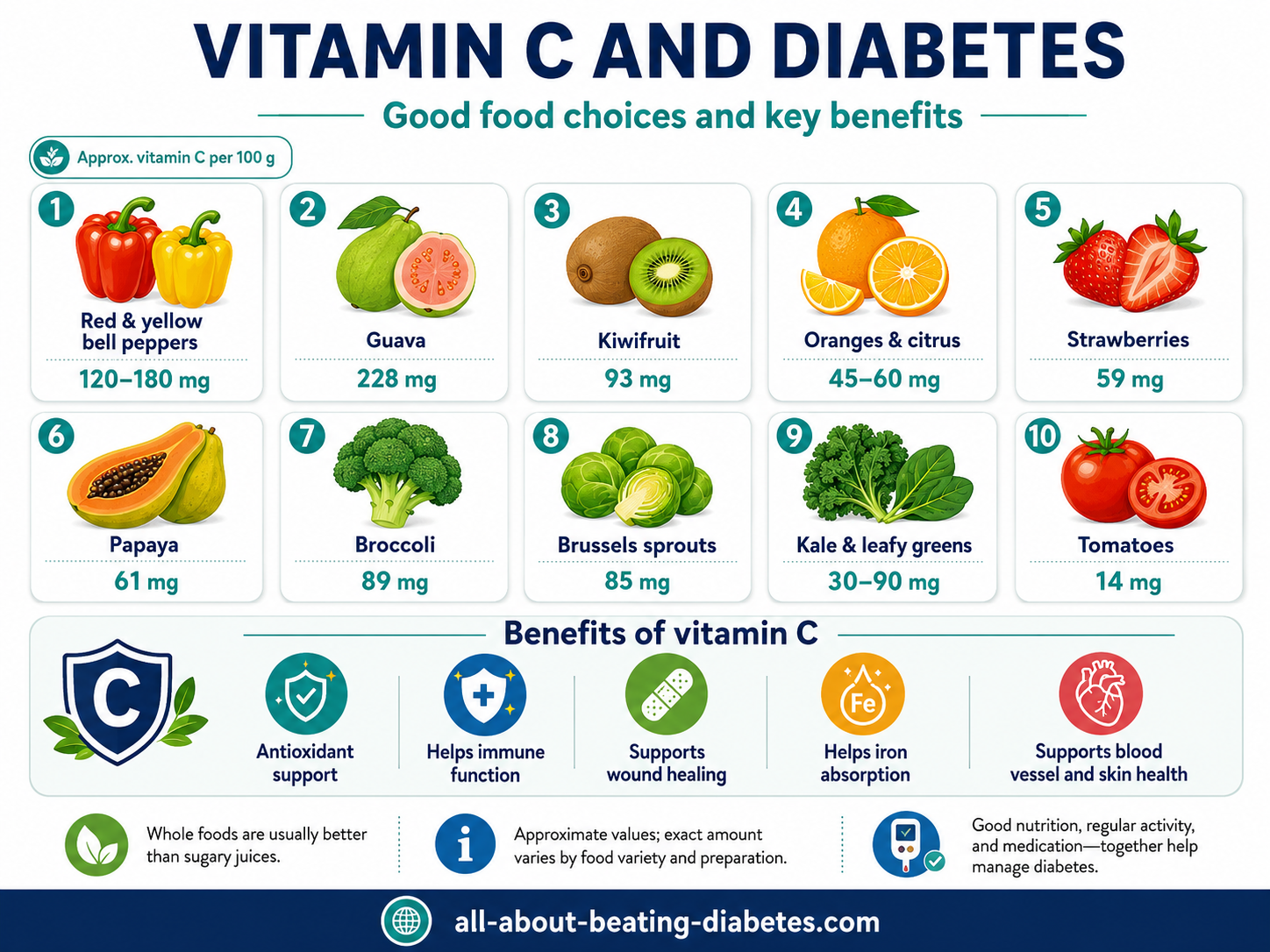

The exact amount varies according to variety, portion, storage, and cooking method. Vitamin C can be lost during prolonged storage and cooking because it is sensitive to heat and dissolves in water.
Are fruits high in vitamin C safe for diabetes?
Yes, whole fruit can usually be included in a diabetes meal plan. The portion and total carbohydrate still matter. Whole fruit is generally preferable to juice because it contains fiber and is easier to consume in a controlled portion.
For example, choose a small orange or an appropriate portion of berries instead of a large glass of orange juice. Juice can deliver considerably more carbohydrate and raise blood glucose faster.
See my diabetic meal plan for help balancing fruit with other foods.
How Much Vitamin C Do You Need Each Day?
| Group | Recommended daily amount |
|---|---|
| Adult women | 75 mg |
| Adult men | 90 mg |
| Pregnancy | 85 mg |
| Breastfeeding | 120 mg |
| People who smoke | An additional 35 mg |
Diabetes alone does not create an official recommendation to take 250 mg of vitamin C daily. Most adults can meet their needs through a balanced diet containing vegetables and fruit.
The tolerable upper intake level for adults is 2,000 mg per day from food and supplements combined. This is an upper safety boundary—not a recommended target.
Do People With Diabetes Need Vitamin C Supplements?
Not routinely. The American Diabetes Association does not recommend routine vitamin C or vitamin E antioxidant supplementation for people with diabetes because there is not enough evidence of benefit and there are concerns about long-term safety.
A supplement may be appropriate if you have a confirmed deficiency, a highly restricted diet, poor food intake, malabsorption, or another medical reason. Your clinician can help determine whether you need one.
Before taking a supplement, check your multivitamin, cold remedies, effervescent drinks, and fortified products. You may already be receiving vitamin C from several sources.
Can Vitamin C Affect Glucose Meter or CGM Readings?
Yes. High supplemental doses of vitamin C can interfere with certain glucose meters and continuous glucose monitors, sometimes producing falsely high readings. The degree of interference depends on the device and dose.
A falsely high reading could cause you to take too much insulin or overlook an actual low blood sugar. Check the instructions for your meter or CGM for warnings about ascorbic acid.
Important monitoring warning
If a glucose reading does not match your symptoms or expectations, do not make a large treatment decision based on that reading alone. Follow your device instructions, confirm the result with an approved method when advised, and contact your diabetes team.
Vitamin C Supplement Side Effects and Precautions
High-dose vitamin C supplements may cause:
- Nausea
- Abdominal cramps
- Diarrhea
- Heartburn
- Interference with some laboratory or glucose tests
- Increased urinary oxalate and possible kidney-stone concerns in susceptible people
Talk with your doctor before taking a high-dose supplement if you have kidney disease, a history of kidney stones, iron-overload disease such as hemochromatosis, are receiving cancer treatment, are pregnant, or take medicines that could interact with supplements.
If you have diabetic kidney disease, do not assume that a water-soluble vitamin is automatically safe. Reduced kidney function can change how your body handles supplements.
My bottom line
Eat a variety of vegetables and whole fruits to obtain vitamin C naturally. I do not recommend high-dose vitamin C as a treatment for diabetes or its complications. If you are considering a supplement, review the dose, kidney health, medicines, and glucose-monitor instructions with your healthcare professional.
Related Questions
- Ask about diabetes foods and nutrition
- Ask about diabetes vitamins and supplements
- Ask about preventing diabetes complications
- Ask about your glucose readings
Related Resources
- Diabetic meal plan
- Low-glycemic diet guide
- Diabetes and kidney health
- Diabetic eye problems
- Diabetic foot ulcers and wound care
References
- NIH Office of Dietary Supplements: Vitamin C—Fact Sheet for Health Professionals
- American Diabetes Association: Facilitating Positive Health Behaviors and Well-being—Standards of Care in Diabetes—2026
- Effects of Vitamin C Supplementation on Glycemic Control and Cardiovascular Risk Factors in People With Type 2 Diabetes
- The Effects of Vitamin C Supplementation on Glycemic Control in Patients With Type 2 Diabetes
- FDA: Blood Glucose Monitoring Devices and Substances That May Affect Results
This information is for general education and does not replace individual medical advice, diagnosis, or treatment.