This is way too many carbs for most prediabetics/diabetics - why is that?
by Dixie
(Springfield,OR,USA)
Original question from Dixie (Springfield, OR, USA):
“For me to keep my blood sugar levels steady I cannot do this diet, and I would think most people with prediabetes or diabetes could not either. It seems like way too many carbohydrates. Why is that?”
Quick Answer: You are right to question a meal plan that contains more carbohydrate than your body can comfortably handle. There is no single carbohydrate amount that is correct for everyone with prediabetes or diabetes. The amount should be individualized according to your glucose response, medicines or insulin, activity, body size, health goals, food preferences, and other medical conditions.
Written by Dr. Albana Greca, MD, MMedSc, Family Physician, IDF Fellow
Hi Dixie,
I want to clarify something important. A diabetes meal plan should not force every person to eat the same amount of carbohydrate. If a particular plan repeatedly pushes your blood sugar above your target range, it may simply contain more carbohydrate than is appropriate for you in those portions.
Carbohydrates are not automatically “bad,” and people with diabetes do not necessarily need to eliminate bread, fruit, beans, grains, or other carbohydrate foods. However, carbohydrate has the greatest immediate effect on blood glucose, so the amount, quality, portion, and distribution through the day matter.
There is no single carbohydrate amount that works for everyone
with prediabetes or diabetes. Your needs depend on your blood
glucose patterns, medications, activity level, nutritional
needs, and personal health goals.
For a broader explanation of how carbohydrates, food choices,
and meal planning affect glucose levels, visit our
Diabetes Foods and Blood Sugar guide.
There Is No Universal Carb Target
Current diabetes nutrition guidance does not recommend one ideal percentage of calories from carbohydrate for everyone. Some people do well with a moderate amount of carbohydrate, while some adults improve their glucose control by reducing carbohydrate intake. The plan still needs to provide enough nutrition and be realistic enough to continue long term.
A practical place to start is the plate method: about half the plate as non-starchy vegetables, one quarter as protein, and one quarter as a carbohydrate food. Our diabetic meal plan and plate-method guide explains how to build this more flexibly.
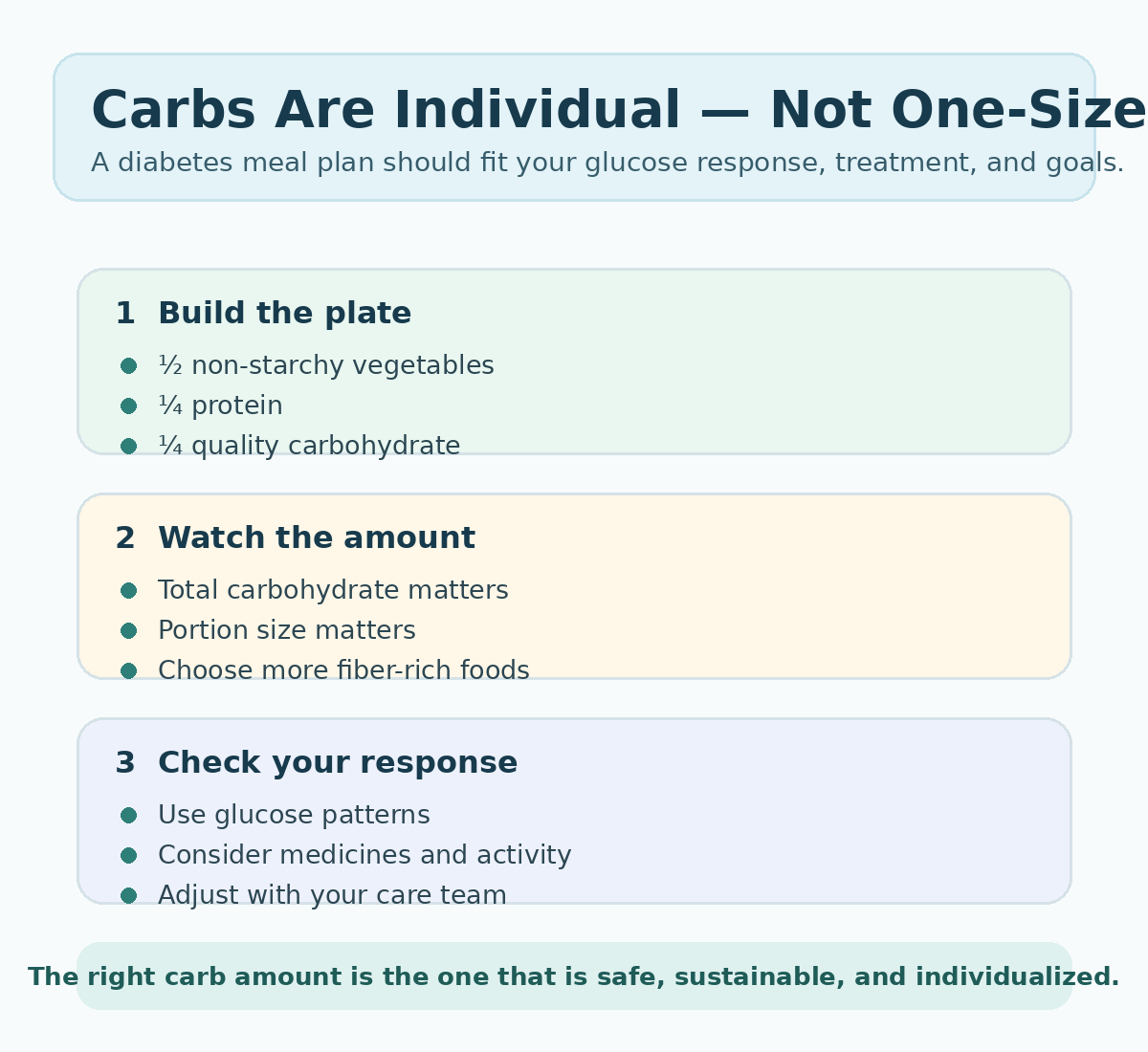

Why the Same Meal Can Work Differently for Two People
Your blood sugar response depends on more than the name of the food. A larger serving of rice, bread, pasta, potatoes, fruit, or cereal can raise glucose more than a smaller serving. Fiber, protein, fat, activity, sleep, stress, illness, and medication timing also influence the result.
This is why I prefer to look at repeated patterns rather than prescribe one fixed menu. If you check glucose, compare similar meals and portions over several days. Our guide to blood sugar levels after eating can help you interpret those patterns, and the carbohydrates and glycemic-index guide explains why total carbohydrate and food quality both matter.
What I Would Change Instead of Simply “Eating Less”
I would first reduce the foods that deliver a large carbohydrate load quickly, especially sugary drinks, juice, sweets, refined bread, large rice or pasta portions, and heavily processed snacks. Then I would keep more non-starchy vegetables, lean or plant protein, beans, whole fruit, and higher-fiber carbohydrate foods in portions that fit your glucose goals.
Portion size matters, but it is not the only issue. The best plan is one that fits your treatment, nutrition needs, appetite, weight goals, and glucose response. A registered dietitian or diabetes educator can help set an individualized carbohydrate range if you need a specific number.
Important Safety Note: If you use insulin, a sulfonylurea, or another medicine that can cause low blood sugar, a major reduction in carbohydrate may require medication adjustment. If you take an SGLT2 inhibitor, do not start a ketogenic or very-low-carbohydrate diet without discussing it with your prescribing clinician because ketoacidosis risk can increase. Do not change diabetes medicine or insulin on your own.
Doctor’s Note: I would not tell you that you must follow a meal plan that clearly does not work for your glucose pattern. I would use the plan as a starting framework, then adjust the carbohydrate portions and food choices to fit your readings, treatment, and daily life. The goal is not to fear carbohydrates; it is to find an amount and pattern that you can manage safely and consistently.
Educational safety note: This page provides general education and does not prescribe a personal carbohydrate target, calorie level, medication dose, or insulin dose. Pregnancy, kidney disease, gastroparesis, eating disorders, childhood diabetes, and insulin-treated diabetes may require specialized nutrition guidance.
Related Questions
- Can you suggest a sample diabetic eating menu?
- How should carbohydrates be planned for a child with type 1 diabetes?
- How can rice and traditional meals fit into a diabetes meal plan?
Related Resources
- Diabetic Meal Plan: Plate Method, Portions, Carbohydrates, and Sample Menu
- Best Diabetes Diet: Foods, Plate Method and Meal Plan
- Diabetes Diet, Carbohydrates, Glycemic Index, and Glycemic Load
- Blood Sugar Levels After Eating
Last reviewed: September 2026
Click here to post comments or follow up
Ask the Doctor now? Simply click here to return to Diabetic Meal Plan.