- Home
- What Are the Side Effects of Insulin Injections and Lantus?
Insulin Side Effects: Hypoglycemia, Lantus, Injections, Pumps, and Pregnancy
This medically reviewed guide provides clear, evidence-based information about the most important insulin side effects, how to recognize warning signs, and when to seek medical or emergency care.
Medically reviewed by: Dr. Ruden Cakoni, Endocrinologist
Last reviewed: July 2026
Insulin is a life-saving treatment for people with type 1 diabetes and an important treatment option for many people with type 2 diabetes. Like every medicine, insulin can cause side effects, but careful glucose monitoring, correct dosing, proper injection technique, and regular review with your diabetes care team can reduce many of these risks.
What Are the Main Side Effects of Insulin?
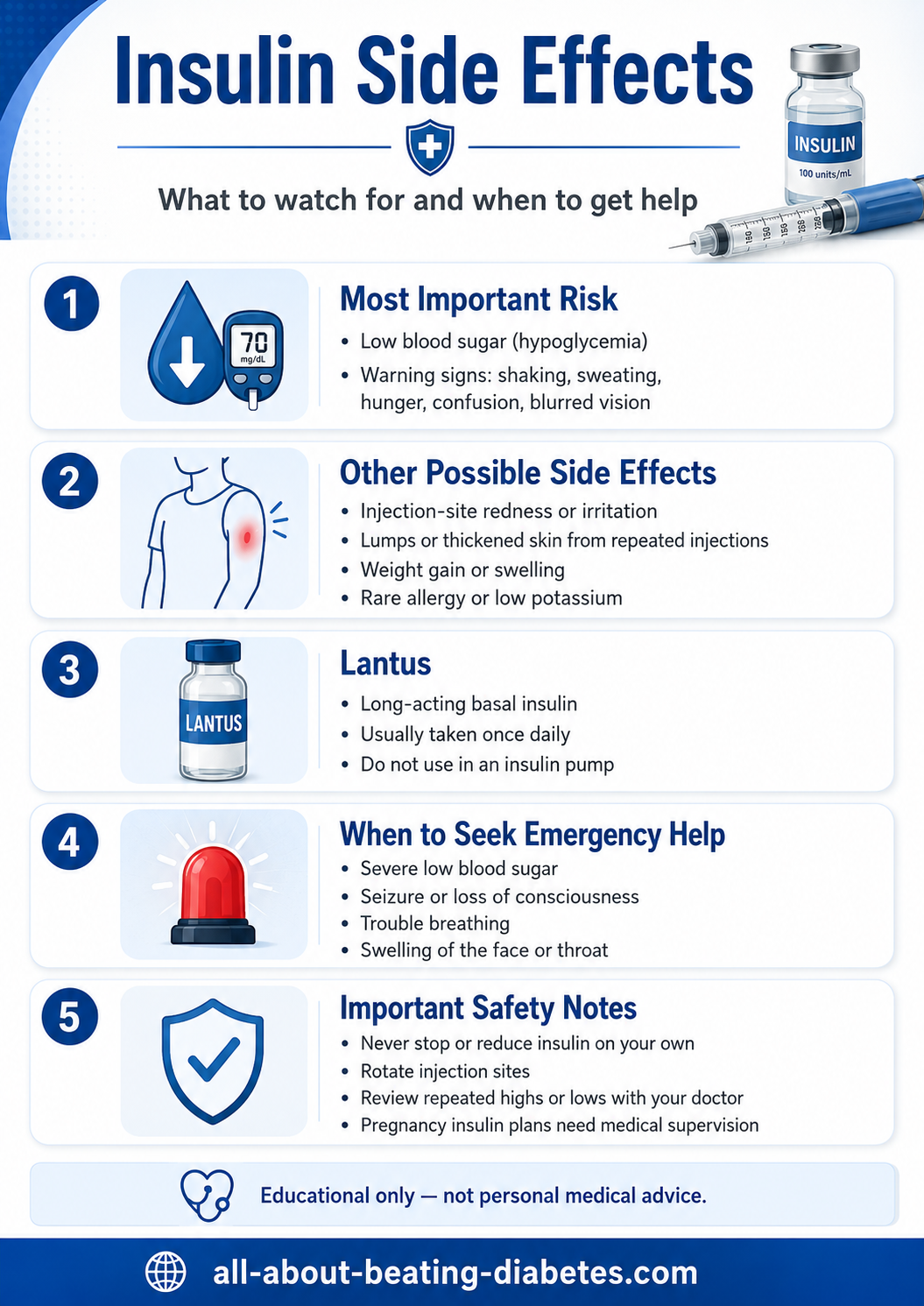
Insulin can cause several side effects, ranging from mild injection-site reactions to more serious problems that require urgent care. The most common and clinically important side effect is low blood sugar, but insulin may also cause skin changes, weight gain, swelling, allergic reactions, and low potassium.

1. Low Blood Sugar — Hypoglycemia
Hypoglycemia is the most common adverse effect of insulin. It may occur when the insulin dose is too high for the amount of food eaten, physical activity increases, a meal is delayed or missed, alcohol is consumed, kidney or liver function changes, or another medicine affects blood sugar.
Possible symptoms include sweating, shaking, hunger, headache, dizziness, anxiety, weakness, blurred vision, confusion, difficulty concentrating, unusual behavior, slurred speech, seizures, or loss of consciousness.
Repeated episodes of hypoglycemia, nighttime lows, severe lows, or reduced awareness of warning symptoms require prompt review of the insulin plan. Do not simply continue lowering the dose without understanding why the episodes are occurring.
2. Injection-Site Irritation
Mild redness, itching, discomfort, bruising, or swelling may occur where insulin is injected. These reactions are often temporary, but persistent or worsening symptoms should be discussed with a healthcare professional.
Insulin should be injected into the fatty tissue beneath the skin—not into the abdominal muscles. Follow the instructions for your insulin product and rotate injection points within the recommended areas, such as the abdomen, thigh, or upper arm.
Use a new needle as directed, allow alcohol on the skin to dry before injecting, and avoid injecting through clothing or into skin that is bruised, scarred, tender, inflamed, or infected.
3. Thickened, Pitted, or Lumpy Skin
Repeated injections into the same small area may cause lipohypertrophy, in which fatty tissue becomes thickened or lumpy, or lipoatrophy, in which the tissue becomes indented. Repeated injections may also contribute to localized cutaneous amyloidosis, which can form a firm lump beneath the skin.
Insulin may be absorbed unpredictably when injected into abnormal tissue. This can contribute to unexplained high or low glucose readings. Do not continue injecting into a lump or thickened area.
When changing from an affected area to normal skin, glucose should be monitored more closely because insulin absorption may improve and hypoglycemia may occur. Ask your diabetes care team to review your injection sites and technique.
4. Weight Gain and Fluid Retention
Some people gain weight after beginning insulin, especially when previously high glucose levels improve and fewer calories are lost through the urine. Repeated treatment of low blood sugar, eating more than the body needs, and taking more insulin than necessary may also contribute.
Insulin can occasionally cause fluid retention or swelling, particularly after treatment begins or glucose control improves rapidly. Swelling of the ankles, feet, hands, or face should be discussed with your healthcare professional.
Seek prompt medical assessment for sudden swelling, rapid weight gain, shortness of breath, chest discomfort, or difficulty breathing while lying down. The risk of fluid retention and heart failure may be greater when insulin is combined with thiazolidinediones such as pioglitazone or rosiglitazone.
5. Allergic Reactions
A mild local skin reaction is different from a severe generalized allergy. Serious insulin allergy is uncommon, but it can occur.
A person with type 1 diabetes should not remain without insulin. After treating the emergency, the medical team must arrange a safe insulin plan or alternative product when necessary.
6. Low Potassium and Medication Interactions
Insulin moves potassium from the bloodstream into the cells and can occasionally contribute to hypokalemia, or low blood potassium. The risk may be greater in people taking potassium-lowering medicines or those with other medical conditions.
Symptoms can include muscle weakness, cramps, constipation, palpitations, or an abnormal heart rhythm. Potassium levels may require monitoring in people at increased risk.
Some medicines can increase insulin’s glucose-lowering effect, while others can reduce it. Beta-blockers and certain other medicines may also make hypoglycemia warning symptoms less noticeable. Alcohol can affect glucose unpredictably and may increase the risk of delayed hypoglycemia.
Tell your doctor and pharmacist about all prescription medicines, over-the-counter products, vitamins, and supplements you take. Do not make automatic insulin changes based on a general interaction list.
Insulin Pump Side Effects and Safety Problems
An insulin pump does not deliver insulin by inhalation. It is a small device that provides insulin through a cannula or infusion set placed beneath the skin.
Possible pump-related problems include skin irritation, bleeding, infection, infusion-set blockage or displacement, air in the tubing, an empty reservoir, battery or software problems, accidental over-delivery, and interrupted insulin delivery.
Because pumps generally use rapid-acting insulin, an interruption can cause glucose to rise quickly and may lead to ketones or diabetic ketoacidosis. People using a pump should have a written backup plan, ketone-testing supplies, and another way to administer insulin.
Inhaled Insulin Is Not an Insulin Pump
Inhaled insulin is a separate rapid-acting mealtime insulin administered through an inhaler. It may cause cough, throat irritation, breathing symptoms, or a decline in lung function.
Inhaled insulin is not appropriate for people with chronic lung disease such as asthma or chronic obstructive pulmonary disease because of the risk of acute bronchospasm. Lung-function testing is required before treatment and periodically during use.
In people with type 1 diabetes, inhaled mealtime insulin does not replace basal insulin. It must be used together with a long-acting insulin as prescribed.
What Are the Possible Side Effects of Lantus?
Lantus is the brand name for insulin glargine, a long-acting basal insulin used in adults and children with diabetes. It may be prescribed for type 1 or type 2 diabetes and is usually injected once daily at approximately the same time each day.
In type 1 diabetes, Lantus provides background insulin and must be combined with rapid-acting or short-acting insulin for meals and corrections, according to the individual treatment plan.
Possible Lantus side effects include hypoglycemia, injection-site reactions, skin thickening or lumps, weight gain, swelling, allergic reactions, and low potassium. Because Lantus is long acting, recovery from a low glucose episode may sometimes take longer.
Insulin Side Effects During Pregnancy
Insulin is an established treatment for diabetes during pregnancy. Good glucose management is important because uncontrolled high glucose and severe hypoglycemia can affect both the pregnant patient and the developing baby.
Available human studies of insulin glargine have not identified a clear association with major developmental harm, but no medicine should be described as having absolutely no possible risk. The decision about which insulin to use should be individualized by the obstetric and diabetes care teams.
Insulin requirements often change throughout pregnancy and may fall quickly after delivery. Frequent glucose monitoring and timely dose adjustments are therefore essential.
The former FDA pregnancy categories A, B, C, D, and X are obsolete and should not be used. Current medicine labels provide a narrative summary of available pregnancy evidence, potential risks, and clinical considerations.
Can Natural Remedies Reduce the Need for Insulin?
No herb, vitamin, mineral, restrictive diet, or other natural remedy can replace insulin in type 1 diabetes. Stopping or reducing insulin without a safe medical plan can cause severe hyperglycemia, ketones, diabetic ketoacidosis, coma, or death.
Healthy eating, physical activity, adequate sleep, weight management, and appropriate treatment of other health conditions may improve overall diabetes management. However, insulin adjustments must be based on glucose patterns, carbohydrate intake, activity, illness, and the individualized instructions provided by the diabetes care team.
Most Asked Questions
Does everyone taking insulin develop side effects?
No. Side effects vary from person to person. Hypoglycemia is the most common concern, but many people use insulin safely with appropriate education, glucose monitoring, and dose adjustment.
Should I stop insulin if I develop redness at an injection site?
Do not stop insulin automatically. Avoid the affected spot, inspect the skin, and contact your healthcare professional if the reaction is persistent, painful, spreading, infected, or accompanied by generalized symptoms.
Can Lantus be used in an insulin pump?
No. Lantus is a long-acting insulin intended for subcutaneous injection and should not be placed in an insulin pump.
Can insulin cause weight gain?
Yes, weight gain can occur, particularly when glucose control improves. A review of insulin doses, hypoglycemia episodes, food intake, physical activity, and other medicines can help identify practical ways to manage it safely.
Related Diabetes Medication Information
- Insulin Treatment for Type 1 Diabetes
- Actos Side Effects and Heart Failure Risk
- Avandia Side Effects
- Alpha-Glucosidase Inhibitor Side Effects
- Sulfonylurea Side Effects
References
- American Diabetes Association Professional Practice Committee. Glycemic Goals, Hypoglycemia, and Hyperglycemic Crises: Standards of Care in Diabetes—2026.
- American Diabetes Association Professional Practice Committee. Management of Diabetes in Pregnancy: Standards of Care in Diabetes—2026.
- U.S. National Library of Medicine. Lantus—Insulin Glargine Prescribing Information.
- U.S. Food and Drug Administration. Afrezza—Insulin Human Inhalation Powder Prescribing Information.
- National Institute of Diabetes and Digestive and Kidney Diseases. Type 1 Diabetes.
- U.S. Food and Drug Administration. Pregnancy and Lactation Labeling Resources.