ADA & EASD 2026 Diabetes Guidelines: What Patients Need to Know
- Type 2 diabetes treatment is moving beyond simply lowering HbA1c. Protecting the heart, kidneys, liver, body weight and long-term health is now central to treatment decisions.
- For many people with type 2 diabetes, SGLT2 inhibitors and/or GLP-1-based treatments may be considered earlier, potentially from diagnosis, particularly when cardiovascular, kidney or weight-related risks are present.
- Weight management, healthy eating, physical activity, sleep, CGM and preservation of muscle are receiving much more attention, while technology continues to transform type 1 diabetes care.
The ADA and EASD 2026 diabetes guidelines mark an important change in how doctors are being encouraged to think about diabetes care. The updated joint ADA/EASD consensus goes beyond blood sugar control and places greater emphasis on protecting the heart, kidneys and liver, managing weight, preserving physical function and choosing treatment around the individual patient.
As a family physician, I have reviewed the major conclusions from the 2026 American Diabetes Association (ADA) and European Association for the Study of Diabetes (EASD) meetings with one question in mind: What do these changes actually mean for my patients?
The ADA Scientific Sessions were held in New Orleans in June 2026. A draft of the updated joint ADA/EASD recommendations for type 2 diabetes was discussed there. The final consensus report was then published on October 2, 2026, at the time of the EASD Annual Meeting in Milan.
After reviewing these updates, my main conclusion is this: modern diabetes care is becoming less about chasing one blood sugar number and more about protecting the whole person.
HbA1c still matters. Blood glucose still matters. But good diabetes care should also address body weight, heart disease, kidney disease, fatty liver disease, muscle health, sleep, physical activity, emotional wellbeing and each person's individual circumstances.
1. The biggest change: diabetes is no longer treated as just a blood sugar problem
For many years, patients were understandably taught to think mainly about glucose: fasting glucose, after-meal glucose and HbA1c.
Those measurements remain important. You can use our blood sugar level chart to understand common glucose ranges and our diabetes treatment targets guide for typical goals used during treatment.
But the 2026 ADA/EASD consensus takes a broader approach. The question is increasingly not simply:
“How do we lower this person's HbA1c?”
It is:
“How do we reduce this person's lifetime risk of heart attack, heart failure, kidney disease, liver disease and other diabetes complications while helping them live well?”
This is an important change in thinking.
2. Some protective diabetes medicines may be used much earlier
One of the most important 2026 conclusions concerns SGLT2 inhibitors and GLP-1-based therapies.
The new consensus says that many people with type 2 diabetes may benefit from introducing an SGLT2 inhibitor and/or GLP-1-based treatment early in their care, potentially from the time of diagnosis.
Why?
Because some of these treatments do considerably more than lower glucose. Depending on the medication and the patient's condition, they can help protect the heart or kidneys, support weight loss and reduce cardiovascular risk.
This does not mean that everyone newly diagnosed with diabetes should automatically receive the same drug.
It means doctors are encouraged to look earlier at questions such as:
- Does this person already have cardiovascular disease?
- Is there chronic kidney disease or albumin in the urine?
- Is heart failure present?
- Is overweight or obesity contributing to diabetes?
- Is fatty liver disease present?
- Which treatment provides the greatest long-term protection for this particular patient?
What about metformin?
Metformin has not disappeared.
It remains an effective, well-established glucose-lowering medication and continues to be useful for many people with type 2 diabetes.
The important change is that treatment does not necessarily have to follow the old sequence of starting metformin, waiting for control to worsen, and only then considering medicines with cardiovascular or kidney benefits.
When there is a good clinical reason for organ-protective treatment, the newer therapies can be considered much earlier.
My message to patients: Do not stop metformin—or any other diabetes medicine—because you have read about a newer treatment. The correct choice depends on your kidney function, cardiovascular risk, body weight, other medical conditions, pregnancy plans, side effects, cost and personal treatment goals.
3. Weight is now a treatment target alongside HbA1c
This is perhaps one of the clearest changes in the 2026 consensus.
The ADA and EASD state that developing appropriate weight targets is as essential as developing glycemic targets.
This is not about appearance.
It is about metabolic health.
In some people with type 2 diabetes and overweight or obesity, substantial and sustained weight loss can improve insulin sensitivity, blood pressure, liver health, sleep apnea and cardiovascular risk.
In people with relatively recent type 2 diabetes, losing around 10% or more of body weight through an intensive structured programme may sometimes make diabetes remission possible.
Remission does not mean that diabetes has been permanently “cured.” It means glucose levels can remain below the diabetes range without glucose-lowering medication for a period of time. Continued monitoring remains important because diabetes can return.
If you are working on weight management, our BMI and waist-to-height calculator can help put body weight and abdominal fat into better context than weight alone.
4. Protecting muscle matters when losing weight
Another message I believe patients should hear more often is that successful weight management is not simply about making the number on the scale smaller.
With substantial weight loss—whether through lifestyle treatment, obesity medications or metabolic surgery—some lean tissue can also be lost.
The 2026 consensus therefore emphasizes adequate protein intake and resistance exercise to help preserve muscle.
This is particularly important as we get older.
My practical message: If you are losing a significant amount of weight, do not think only about eating less. Think about preserving strength.
5. The new “Five S” approach to physical activity
The ADA/EASD report introduces a useful way of thinking about movement over the entire 24-hour day.
It describes five areas:
- Standing – reducing prolonged sitting.
- Stepping – increasing everyday movement and walking.
- Sweating – structured moderate or vigorous physical activity.
- Strengthening – resistance exercise to maintain muscle and function.
- Sleep – recognizing sleep as part of metabolic health.
I like this approach because it moves us away from the idea that exercise only counts when you spend an hour in a gym.
A patient who walks more, interrupts long periods of sitting, performs resistance exercises and improves sleep is changing several important metabolic signals throughout the day.
6. There is still no single “diabetes diet” for everyone
The new consensus does not declare one universal carbohydrate, protein and fat ratio for all people with type 2 diabetes.
Instead, nutrition should be sustainable, nutritionally adequate and adapted to the individual.
The Mediterranean dietary pattern continues to have particularly strong evidence for cardiometabolic health and is specifically favored for people with type 2 diabetes and established cardiovascular disease when appropriate.
Lower-carbohydrate approaches can also improve glucose and weight in some people, especially in the shorter term.
The important word is sustainable.
For practical food choices, see our guide to foods for diabetes and what to limit.
And what about herbs and supplements?
This is an area where I want to be particularly careful because many patients understandably search for natural ways to improve glucose.
The 2026 ADA/EASD review examined supplements including berberine, curcumin, fenugreek, okra, probiotics and resveratrol. The evidence was considered insufficient or inconsistent for recommending specific dietary supplements to control blood glucose.
That does not mean nutrition and plant foods are unimportant. They are extremely important.
It means that eating a healthy dietary pattern and taking an isolated supplement marketed as a “natural diabetes treatment” are not the same thing.
7. Heart and kidney protection should start earlier
One of the strongest messages from 2026 is the importance of finding cardiovascular and kidney risk before severe complications develop.
The EASD meeting reinforced this concern with large real-world analyses showing that serious kidney and cardiovascular complications can occur relatively early after type 2 diabetes is diagnosed.
This makes regular monitoring important even when you feel perfectly well.
Depending on your individual situation, your diabetes review may need to include:
- blood pressure;
- cholesterol and other cardiovascular risk factors;
- kidney function;
- urine albumin;
- heart failure symptoms;
- eye examination;
- foot examination;
- liver risk assessment; and
- weight and waist-related risk.
The goal is not to frighten patients with a longer list of complications. It is to identify problems while we still have the greatest opportunity to prevent progression.
8. Fatty liver disease is becoming part of routine diabetes thinking
Metabolic dysfunction-associated steatotic liver disease, or MASLD, is extremely common in people with type 2 diabetes.
The 2026 consensus places considerably more emphasis on recognizing and treating liver disease as part of diabetes care.
Weight reduction remains fundamental. Physical activity and a Mediterranean-style dietary pattern can help, while certain GLP-1-based therapies now have increasingly strong evidence in people with diabetes and significant liver disease.
The practical lesson for patients is that diabetes does not stop at the pancreas. Your liver is also part of the metabolic picture.
9. CGM is becoming relevant to more people with type 2 diabetes
Continuous glucose monitoring, or CGM, is no longer a technology discussed only for type 1 diabetes.
The 2026 ADA/EASD consensus says CGM should be considered for people with type 2 diabetes, particularly those using insulin.
Instead of seeing one glucose value at a particular moment, CGM shows trends across the day and night. This can reveal how meals, activity, sleep, medication and illness affect glucose.
A common CGM target for many adults is spending more than 70% of the time between 70 and 180 mg/dL (3.9–10.0 mmol/L), although targets must always be individualized.
This is another reason why I expect patients and doctors to talk increasingly about time in range, not HbA1c alone.
10. Type 1 diabetes technology has reached another important milestone
The ADA and EASD also published an updated 2026 consensus report on the management of type 1 diabetes in adults.
Its message on technology is very strong.
Continuous glucose monitoring is now described as the standard of care for glucose monitoring in adults with type 1 diabetes.
And when available and appropriate, automated insulin delivery systems are considered the optimal method of insulin delivery when used consistently.
These systems combine CGM, an insulin pump and an algorithm that adjusts insulin delivery according to glucose trends.
Insulin remains absolutely essential in type 1 diabetes. Technology does not replace insulin—it helps deliver it more intelligently.
Earlier identification of type 1 diabetes is also changing
Another important development is recognizing type 1 diabetes before the traditional stage when symptoms and severe hyperglycemia appear.
Screening for diabetes-related autoantibodies can identify earlier stages of autoimmune type 1 diabetes in selected people.
For eligible people with stage 2 type 1 diabetes, disease-modifying treatment such as teplizumab can delay progression to clinical stage 3 diabetes.
This is one of the clearest examples of diabetes care beginning to move from treating established disease toward delaying disease progression.
11. The future diabetes medicines presented in 2026 are impressive—but we need perspective
The ADA and EASD meetings also presented major research involving next-generation obesity and diabetes treatments.
These included triple-hormone medicines such as retatrutide, combinations targeting both GLP-1 and amylin pathways such as CagriSema, and newer oral GLP-1 medicines.
Some studies produced very large improvements in body weight and glucose control.
These findings are scientifically important because they show how quickly metabolic treatment is evolving.
Important: Conference results are not the same as a personal treatment recommendation. Some treatments discussed at scientific meetings may still be investigational, may be approved only for certain indications or may still need additional long-term safety and outcomes data. Never buy an unapproved “research peptide” online or alter treatment because of a conference headline.
12. What I would like my patients to take away from ADA and EASD 2026
If I had to reduce hundreds of presentations and the new consensus documents to one consultation with a patient, I would say this:
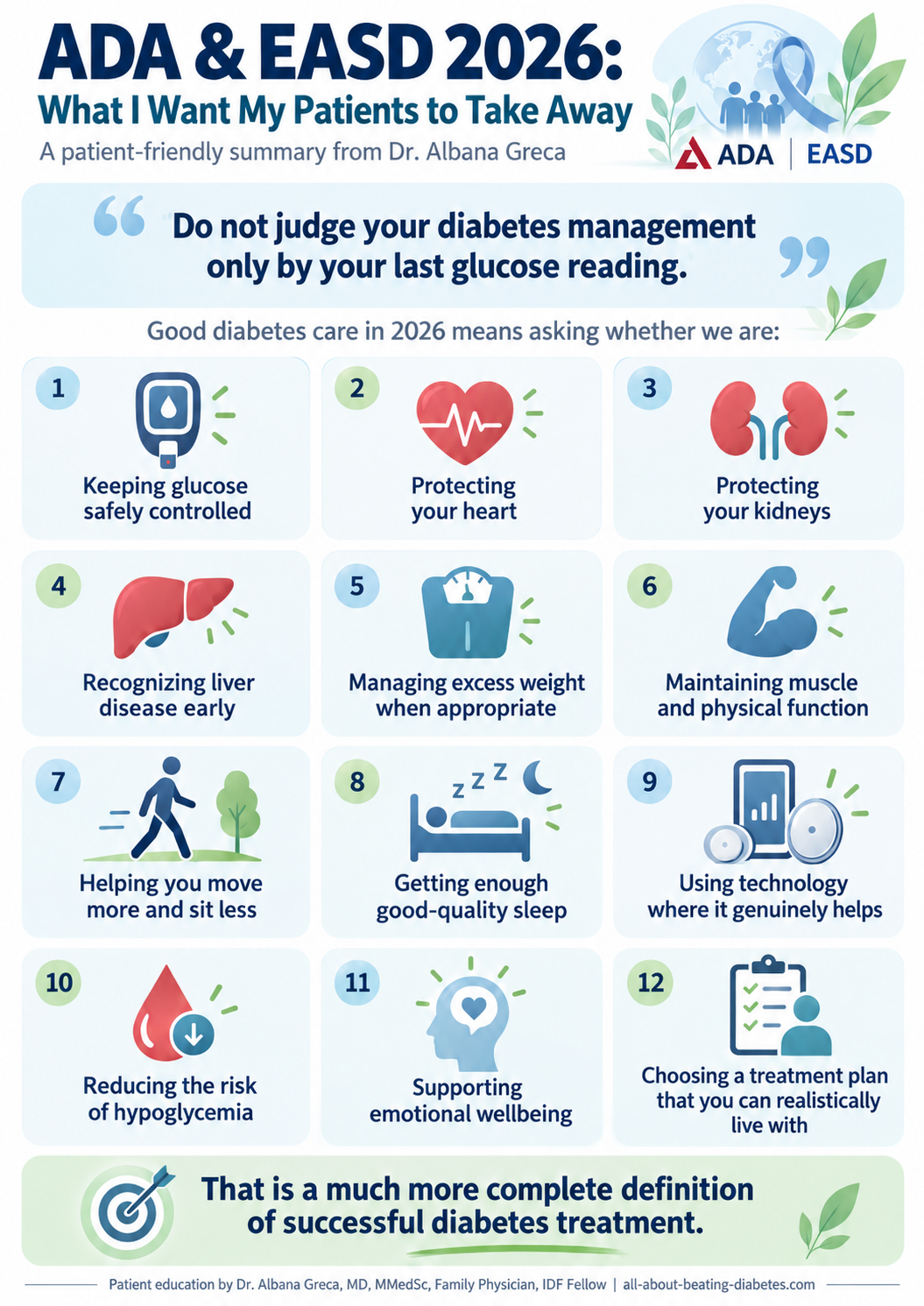
Do not judge your diabetes management only by your last glucose reading.
Good diabetes care in 2026 means asking whether we are:
- keeping glucose safely controlled;
- protecting your heart;
- protecting your kidneys;
- recognizing liver disease early;
- managing excess weight when appropriate;
- maintaining muscle and physical function;
- helping you move more and sit less;
- getting enough good-quality sleep;
- using technology where it genuinely helps;
- reducing the risk of hypoglycemia;
- supporting emotional wellbeing; and
- choosing a treatment plan that you can realistically live with.
That is a much more complete definition of successful diabetes treatment.
Questions to ask at your next diabetes appointment
You can also explore our diabetes answers and calculators to better understand your glucose readings and other diabetes-related measurements before discussing them with your healthcare professional.
Frequently Asked Questions
Did ADA and EASD change the diabetes guidelines in 2026?
Yes. The ADA and EASD published updated joint consensus reports for both type 1 and type 2 diabetes in 2026. The type 2 report places substantially greater emphasis on early organ protection, weight management, cardiovascular and kidney disease, liver health, physical behaviour, sleep and individualized care.
Is metformin no longer recommended for type 2 diabetes?
No. Metformin remains an effective and valuable medicine for many people. The change is that doctors do not necessarily need to wait for metformin treatment to fail before considering SGLT2 inhibitors or GLP-1-based therapies when these provide important cardiovascular, kidney, weight or other benefits.
Can type 2 diabetes go into remission?
Yes, remission is possible in some people, particularly earlier in the course of type 2 diabetes and following substantial sustained weight loss. The 2026 consensus recommends considering intensive lifestyle treatment aiming for at least 10% weight loss when appropriate and recognizes the potential long-term benefits of achieving remission.
Should everyone with type 2 diabetes use a CGM?
Not necessarily. CGM should be individualized, but the evidence supporting its use in type 2 diabetes is growing. The 2026 consensus particularly recommends considering CGM in people using insulin.
What is the biggest message from ADA and EASD 2026?
The biggest message is that diabetes treatment should protect the whole person—not simply lower blood sugar. Glucose control remains essential, but weight, cardiovascular health, kidney health, liver health, physical function, sleep, technology, emotional wellbeing and individual circumstances now form part of a much broader treatment strategy.
My final perspective
When I started working with patients, diabetes care often felt like a sequence of numbers: fasting glucose, HbA1c, cholesterol and blood pressure.
Those numbers remain useful, but the science is now helping us understand what they were always meant to represent: a person's future health.
The most encouraging message I take from the ADA and EASD meetings in 2026 is that we have more opportunities than ever to intervene earlier.
We can identify risk earlier. We can protect organs before they fail. We can use technology to see glucose patterns rather than isolated readings. We can treat obesity as part of the disease rather than simply telling people to “lose weight.” And in type 1 diabetes, we are beginning to discuss delaying disease progression itself.
But better medicines and better technology do not eliminate the foundations of diabetes care: healthy food, daily movement, muscle strength, sleep, education, regular monitoring and a trusting relationship between the patient and healthcare team.
For me, that is the real conclusion of 2026.
Dr. Albana Greca, MD, MMedSc
Family Physician · IDF Fellow
Medical Sources
1. Davies MJ, Aroda VR, Bajaj M, et al. Management of type 2 diabetes, 2026. A consensus report by the American Diabetes Association (ADA) and the European Association for the Study of Diabetes (EASD). Diabetologia and Diabetes Care. Published October 2, 2026. DOI: 10.1007/s00125-026-06855-7 / 10.2337/dci26-0141.
2. Holt RIG, DeVries JH, Hess-Fischl A, et al. The management of type 1 diabetes in adults. The updated 2026 consensus report by the American Diabetes Association and the European Association for the Study of Diabetes. Diabetologia and Diabetes Care. Published September 2026. DOI: 10.1007/s00125-026-06833-z / 10.2337/dci26-0122.
3. American Diabetes Association Professional Practice Committee. Standards of Care in Diabetes—2026. Diabetes Care. 2026;49(Suppl 1).
4. American Diabetes Association. 86th Scientific Sessions, New Orleans, June 5–8, 2026.
5. European Association for the Study of Diabetes. 62nd Annual Meeting, Milan, September 28–October 2, 2026.
Medical disclaimer: This article is for education and does not replace individualized medical advice. Diabetes medications should not be started, stopped or changed without discussing the decision with your doctor or diabetes care team.